Features
ANDRZEJ WAJDA. The Complete Works of a Polish Master
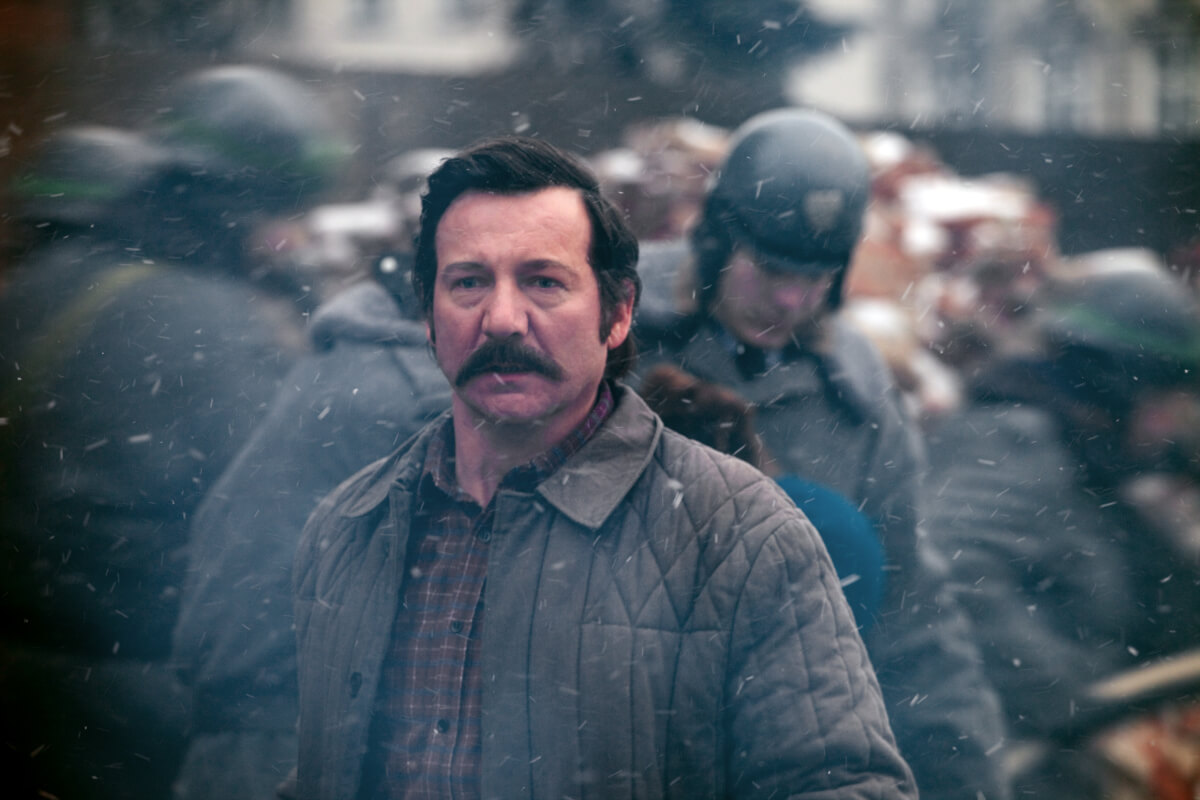
Andrzej Wajda ‘s recognition goes beyond the honorary Oscar. He is a director whose films are listed among the best in the history of cinema.


He is a true veteran of contemporary cinema, acclaimed both in Poland and internationally. This recognition goes beyond the honorary Oscar for lifetime achievement, which was a mere formality. He is a director whose films are listed among the best in the history of cinema. Importantly, this acclaim comes not from popularity rankings, which follow different rules, but from voices such as Martin Scorsese and Francis Ford Coppola, who count Ashes and Diamonds among their favorite films (both of whom are also veterans, though they debuted several to many years later than Wajda).
Is he the best Polish director? Here, he would have to compete with Roman Polanski for the throne, but when it comes to directors who created in Poland, Wajda has no equal. One can elevate individual films by Has, Kieślowski, Munk, Kawalerowicz, Różewicz, Bareja, and Machulski, but the rich oeuvre of Wajda, its significance for Polish culture, and his ability to comment on history and contemporary times cannot be ignored.
He achieved this status very quickly – his first three films already laid the foundation for the monument of a great cinema Artist. There is no exaggeration in these words. Proof? The following list of 38 films, which we discuss individually, along with an evaluation.
A Generation (1954)
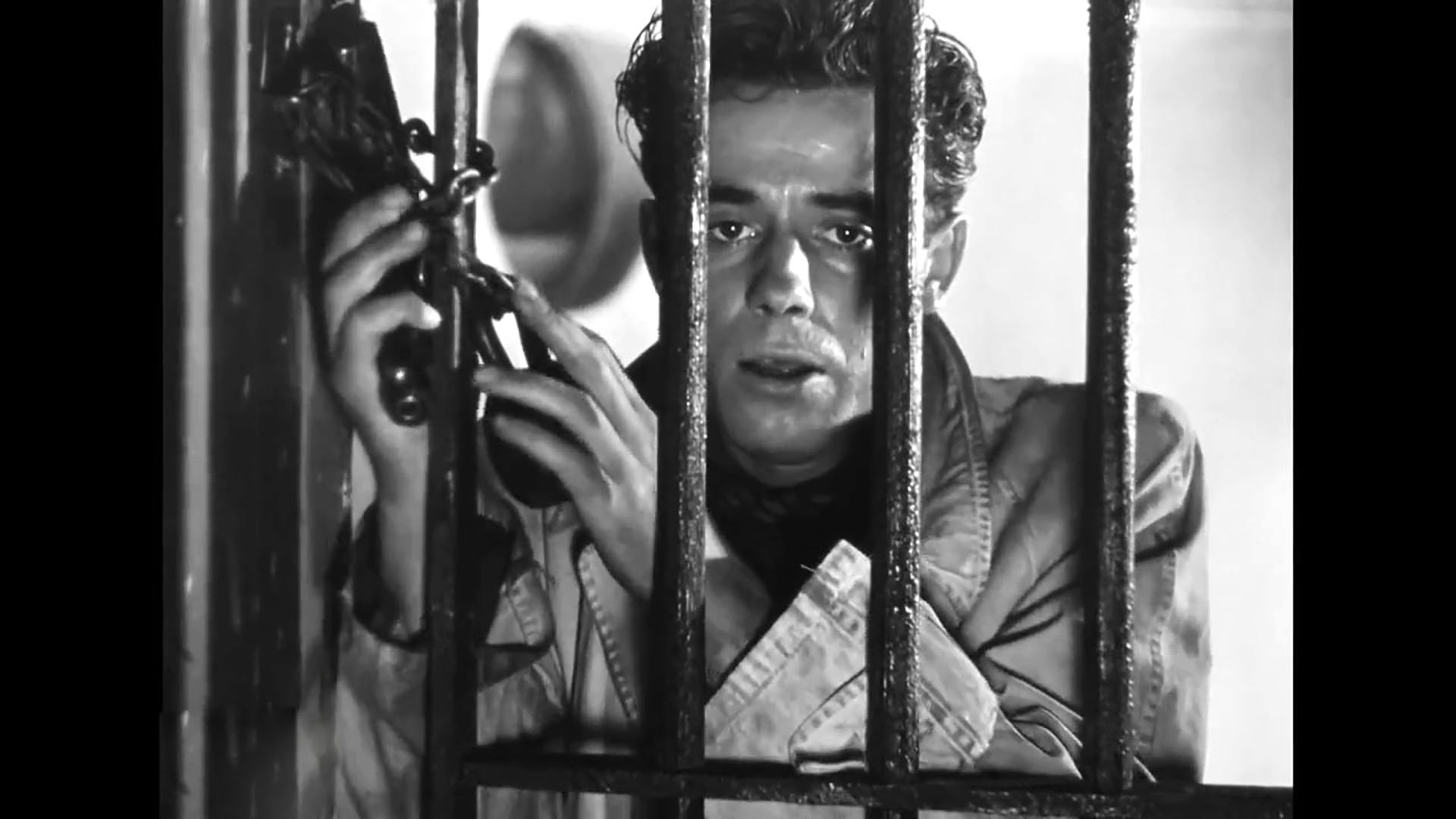
Starring: Tadeusz Łomnicki, Tadeusz Janczar, Ryszard Kotys, Urszula Modrzyńska, Roman Polanski
Major awards: Łagów (Lubuskie Film Summer) – award for Andrzej Wajda for the debut of the decade, State Award special mentions for Tadeusz Janczar and Tadeusz Łomnicki (best male roles), State Award special mention for Andrzej Wajda (direction), State Award special mention for Andrzej Lipman (cinematography)
A Generation heralded the Polish Film School. It was made during the era of socialist realism in art and while the post-war trauma was still palpable. The director’s feature debut is still widely discussed today, considering its propaganda message, historical portrayal, and artistic form. Wajda depicts a generation coming of age during World War II in German-occupied Warsaw. The youth face the dilemma of whether to fight in defense of the country. The choice of which group to join – the People’s Guard or the Home Army – is not a dilemma; the former is favored and wins. Wajda presents the inner turmoil of the young, their naivety and maturation, their engagement, optimism, and the joys and sorrows of daily life in the occupied city.
The youth contrast with the generation of their parents. The action takes place mainly on the city streets and in a carpentry shop where young apprentices and old hands meet, conspire, and secretly engage in political activities. It’s a mix of political, historical, and patriotic themes. The film features future stars of Polish cinema both on-screen (in main and minor roles) and behind the scenes (J. Lipman, K. Kutz, A. Ford). The acting is generally good, though some scenes are overly theatrical. A Generation has moments of weak narration and sometimes overly pompous, unrealistic dialogues. However, elements like neo-realistic framing and lighting (e.g., the beginning of the film), internal editing, symbolic shots (the scene with Jaśek and the stairs!), tension-building music (moments of joy and dread), and group shots are surprising and original in this black-and-white film, making it worth watching.
[Ewelina Świeca]
Kanal (1957)

Starring: Tadeusz Janczar, Teresa Iżewska, Wieńczysław Gliński, Tadeusz Gwiazdowski, Emil Karewicz, Stanisław Mikulski, Władysław Sheybal, Teresa Berezowska
Major awards: Special Jury Prize at Cannes (and a nomination for the Palme d’Or), Gold Medal in the category of young directors’ feature films at the World Festival of Youth and Students in Moscow, Golden Duck (awarded by the magazine “Film”) for best Polish film, award from the Brazilian Association of Film Critics
It’s September 25, 1944, the 56th day of the Warsaw Uprising.
A unit under the command of Lieutenant “Zadra” attempts to break through the sewers from Mokotów to the city center. Wajda’s film, based on a story by the insurgent Jerzy Stefan Stawiński, is a harrowing study of tragedy. There is no chance of a happy ending – for anyone. The uprising is dying out, and the hope of the first days has vanished. What remains is exhaustion, doubt, wounds, and a sense of duty battling with indifference, revealing all weaknesses and character flaws. Much of the film takes place in the suffocating, closed space of the sewers, creating a claustrophobic atmosphere of entrapment. We can only helplessly watch as the characters gradually head toward doom, which they are doomed to from the start.
This doom takes various forms, but each reflects failure: the failure of this lost underground group and the decimated uprising units facing death, captivity, camps, executions, and ruins. It is hard to shake off the impression Kanal leaves. For a long time, the melody played by the despairing Michał, the sound of a shot from a small Walther, the image of “Korab” and “Stokrotka” dying of exhaustion while clinging to a grate, and above all, the figure of “Zadra” staggering and turning back to save his soldiers, none of whom survived, linger in the memory. [Karolina Chymkowska]
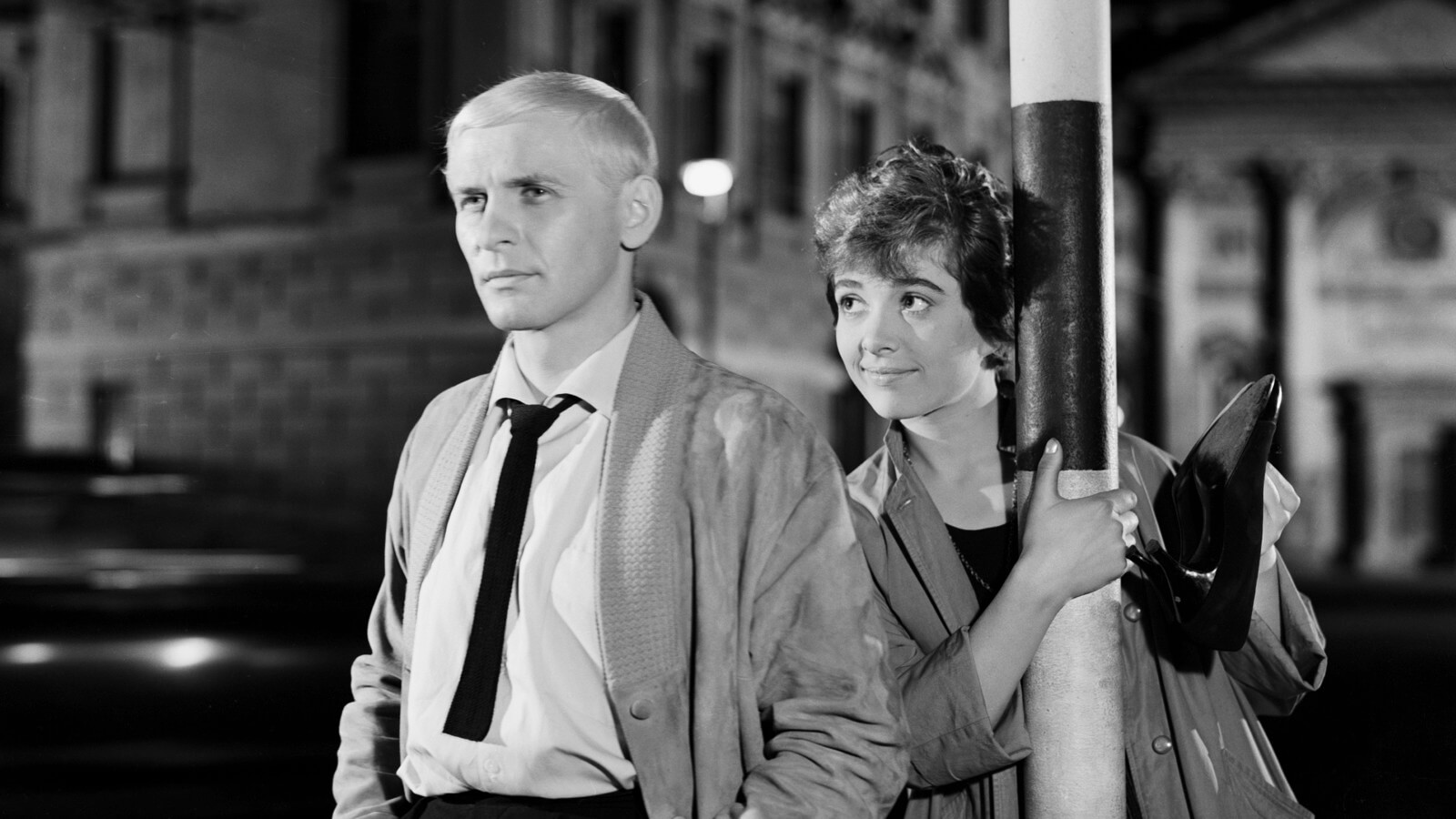
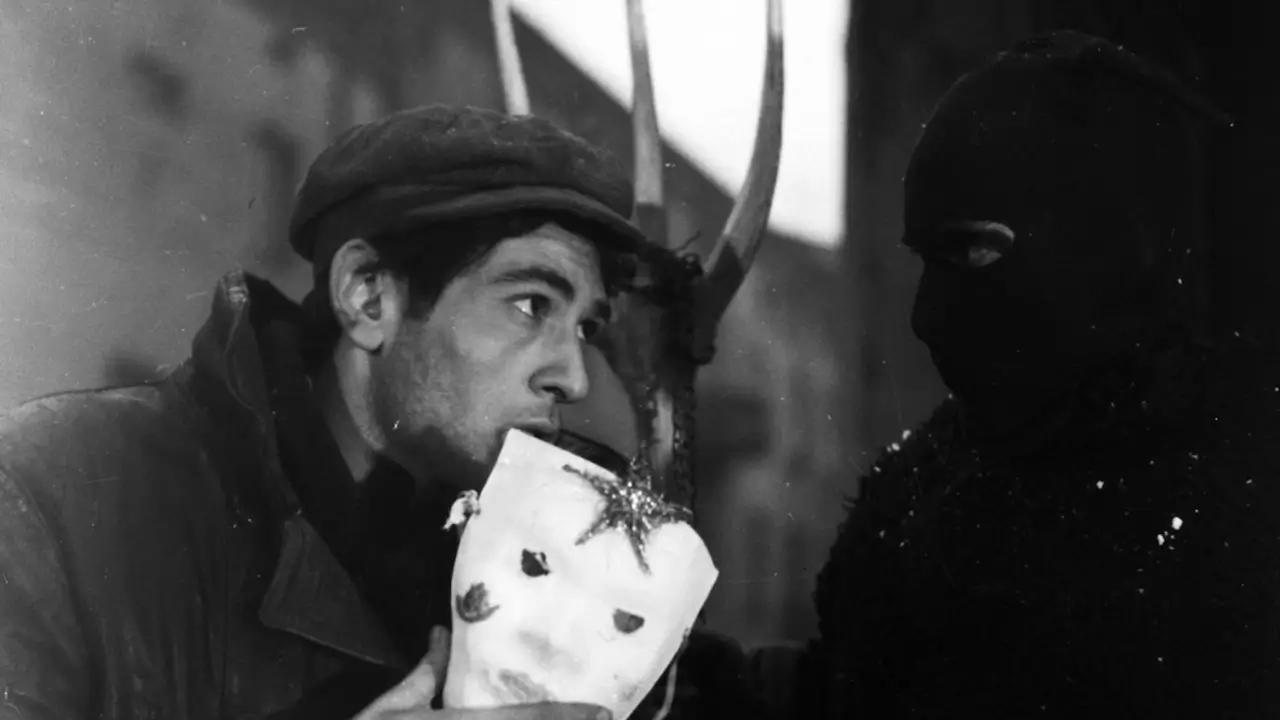
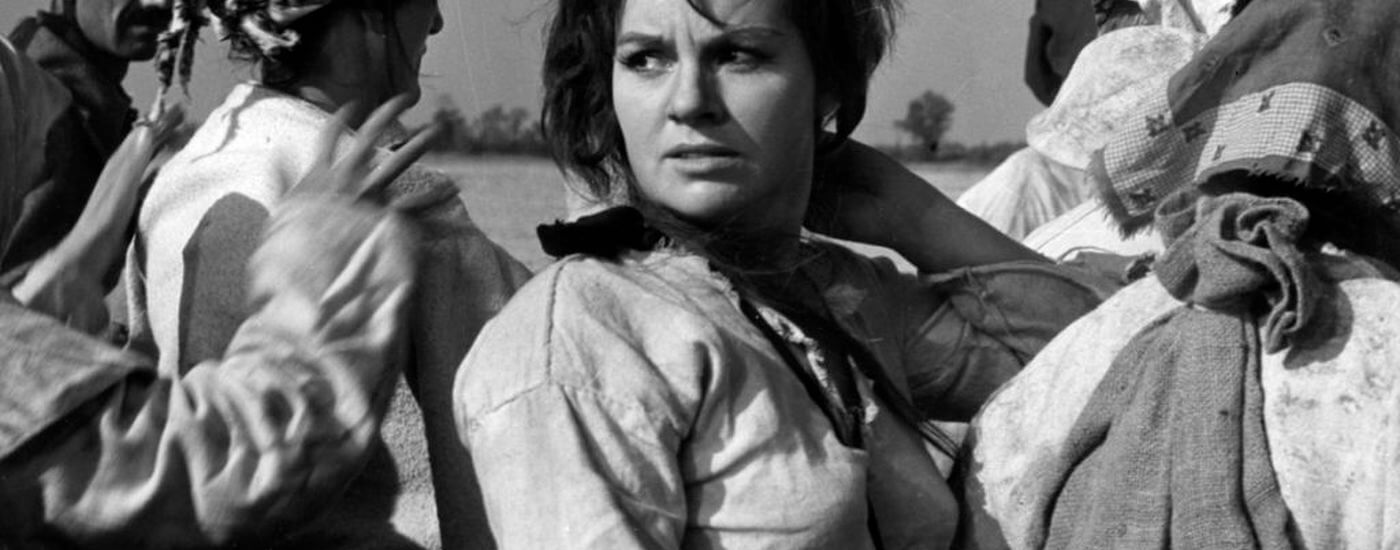
The Ashes (1965)
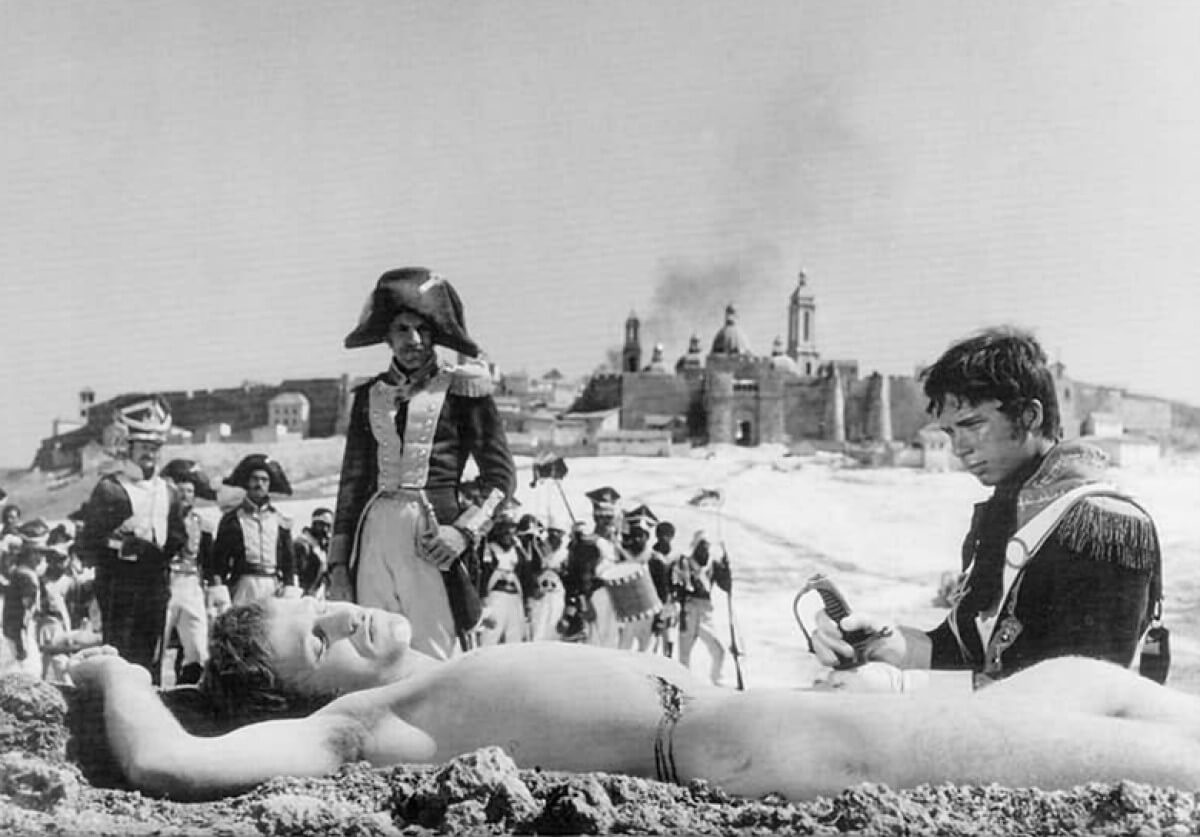
Main Cast: Daniel Olbrychski, Bogusław Kierc, Piotr Wysocki, Beata Tyszkiewicz, Pola Raksa, Władysław Hańcza, Jan Świderski
Major Awards: Cannes (nominated for the Palme d’Or), Golden Duck (Best Polish Film)
The year 1965 and the premiere of The Ashes mark a significant point in Andrzej Wajda’s artistic journey.
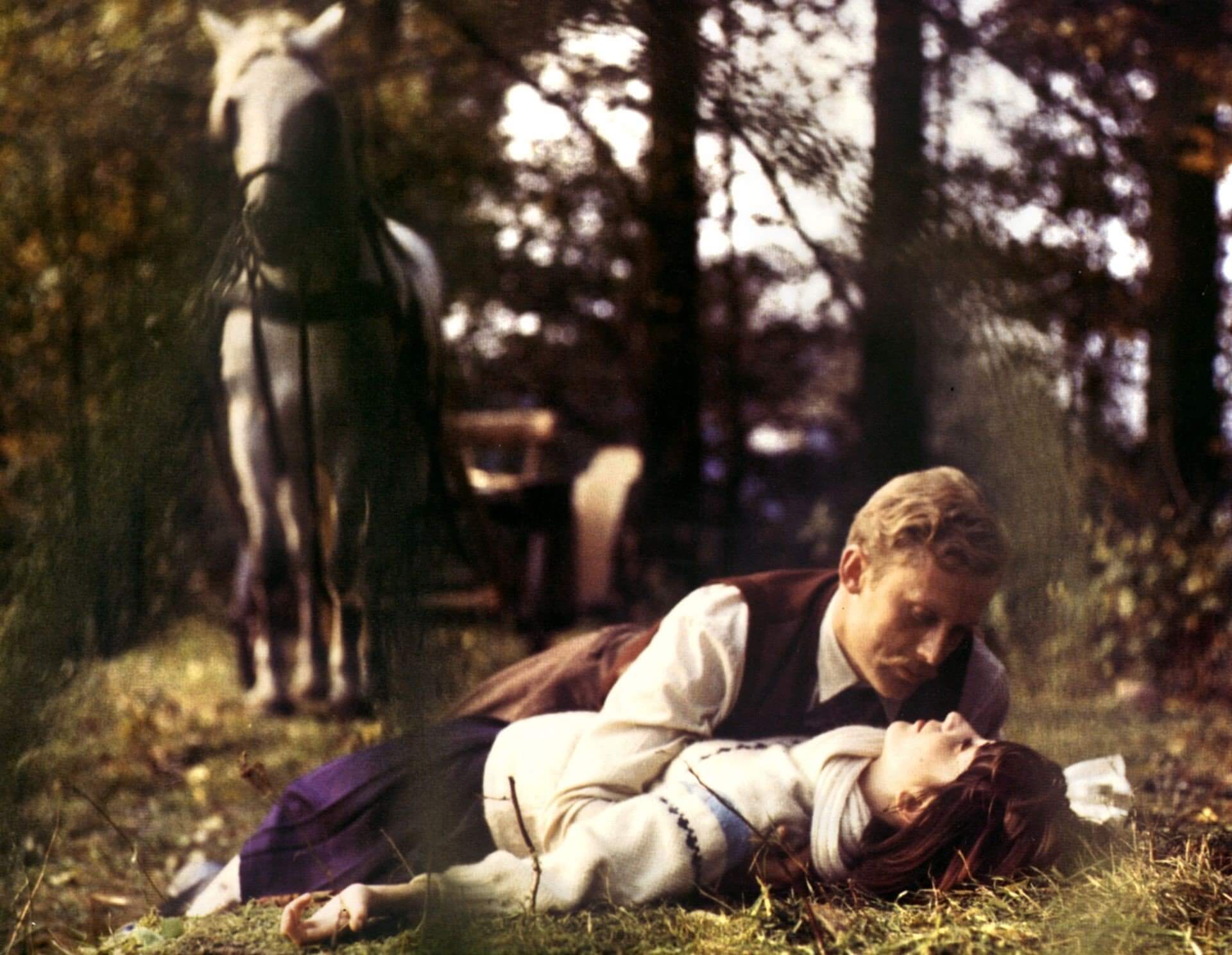
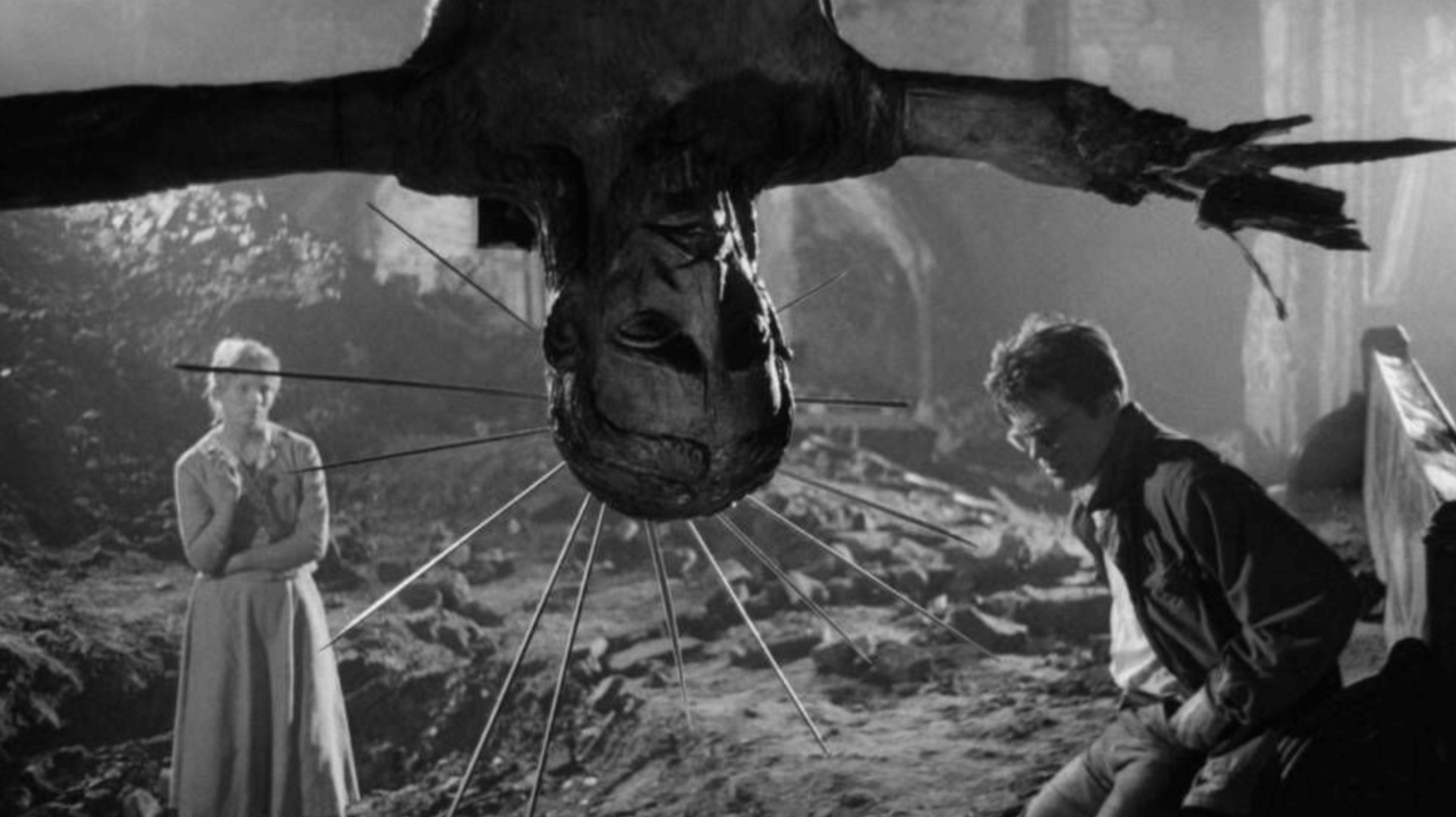
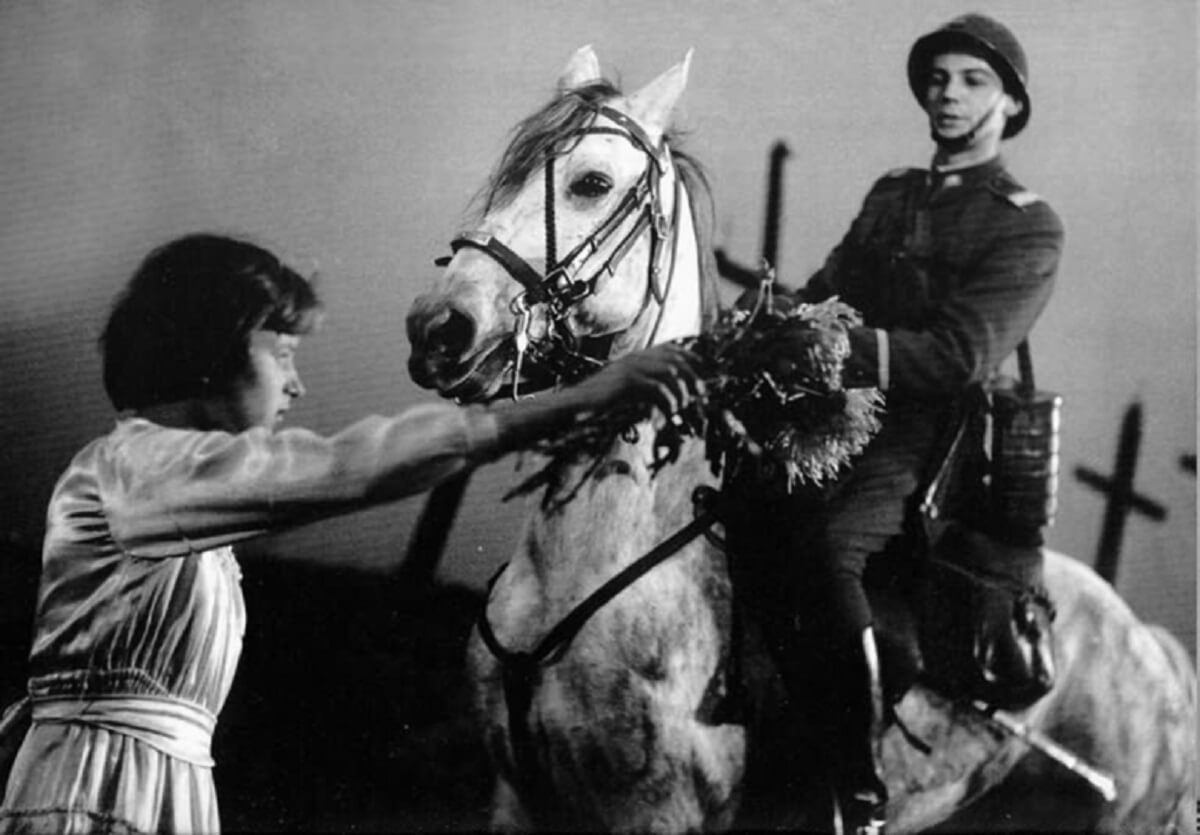
This film was the first collaboration with Daniel Olbrychski, who would become one of Wajda’s favorite actors in the following years. It is Wajda’s first cinematic fresco, a nearly four-hour epic overshadowing all his previous works in scale. Even today, the film remains controversial. At the time of its release, critics claimed that the adaptation of Żeromski’s work failed due to poor emphasis distribution. Wajda was accused of allegorically emphasizing Polish weaknesses, particularly heroism. Over the years, the film is mostly remembered for the unfortunate horse that died during filming, in the name of realism and artistic vision. The horse’s death is indeed regrettable, and the criticisms of the time are hard to dispute.
However, Wajda managed to create a memorable and suggestive film, despite its moments of incoherence and unclear direction. [Filip Jalowski]
Gates to Paradise (1968)
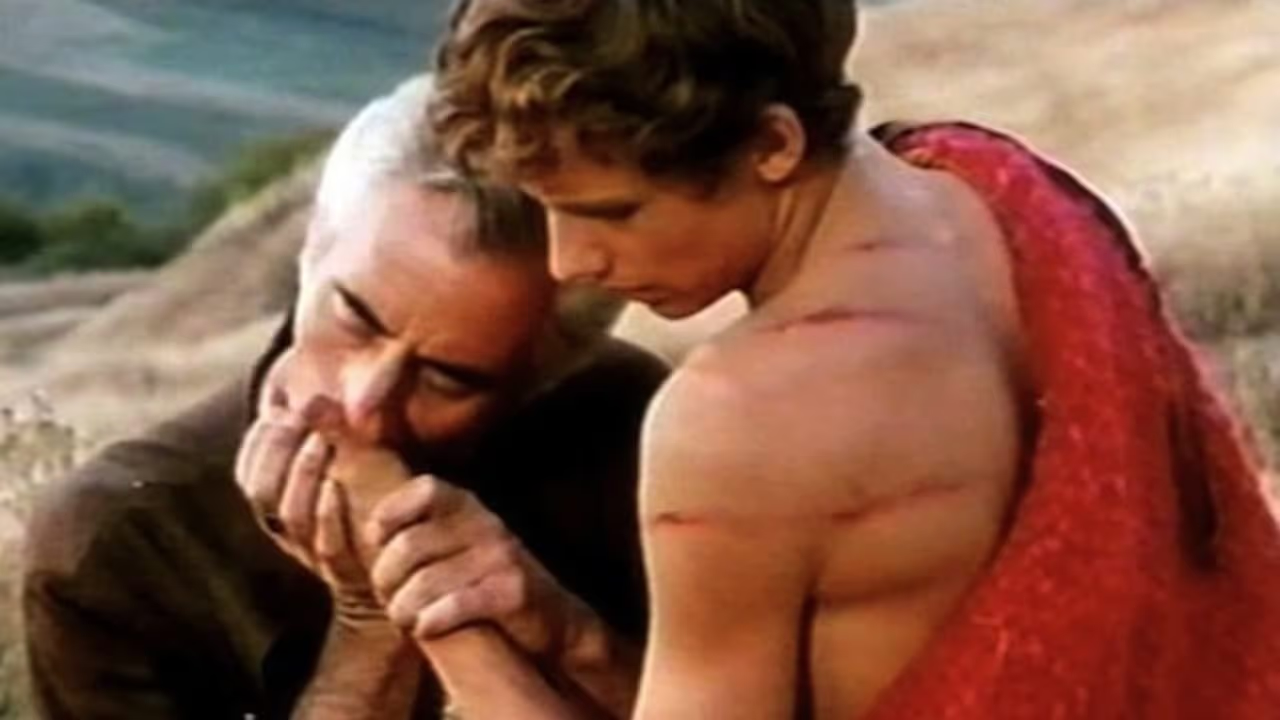
Main Cast: John Fordyce, Lionel Stander, Mathieu Carrière, Pauline Challoner
Major Awards: Berlin (nominated for the Golden Bear, Best Film category)
Andrzejewski’s Gates to Paradise is essentially an anti-cinematic novel, composed of two sentences. One stretches over a hundred pages, while the other is brief: And they walked all night.
Wajda dreamed of adapting this book since he first read it. Securing funding was difficult, as Andrzejewski’s novel tackled the theme of children’s crusades, hinted at homosexuality, and analyzed the behavior of a crowd blindly following a strong leader—a topic uncomfortable for the PRL. Eventually, Wajda received the green light from Yugoslavian producers. The cast included foreign actors, and the film was made in English. The result is unsatisfactory. Wajda failed to capture the avant-garde essence of Andrzejewski’s text, creating a historical film that only hints (mainly through the cinematography of Mieczysław Jahoda) at the controversial themes of the novel. Overall, Gates to Paradise lacks the sharpness that pierced through the pages of its literary foundation.
[Filip Jalowski]
Layer Cake / Roly Poly (1968)
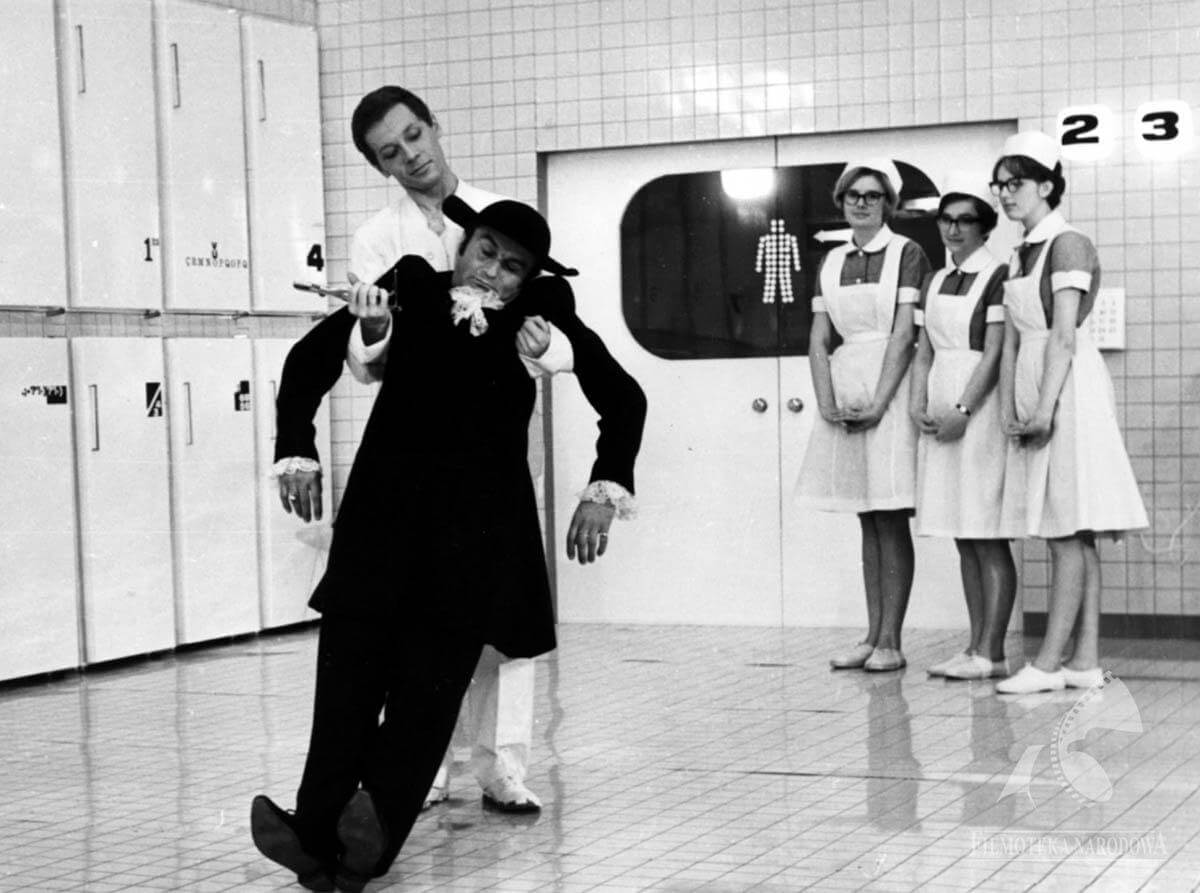
A frame from the movie “Przekładaniec” directed by Andrzej Wajda, 1968, Filmoteka Narodowa – Audiovisual Institute / www.fototeka.fn.org.pl
Main Cast: Bogumił Kobiela, Ryszard Filipski, Anna Prucnal
Major Awards: Chairman of the Committee for Radio and Television Award
Unexpectedly, Andrzej Wajda decided to continue the tradition of adapting Lem’s works for the screen. After the strenuous task of making the outstanding film Everything for Sale, Wajda created the 35-minute Layer Cake for Polish Television. The screenplay was written by Lem himself, based on his story Do You Exist, Mr. Jones?. The comedy revolves around the then-fantastic issue of transplantation. Race car driver Richard Fox repeatedly survives severe accidents thanks to Dr. Burton, who replaces his damaged body parts with organs from the fatal victims of his crashes. Fox’s survival depends on the number of spectators he inadvertently kills, leading to a psychological crisis as he takes on the traits of his organ donors.
This raises the classic Lemian question of where Fox ends and his donors begin.
In the story, the theme was cyborgization. Literary Mr. Jones successively replaces his body parts with artificial ones, raising the question of when a man ceases to be human and becomes a machine. Wajda’s film swaps cyborgization for a transplantation spiral with no end in sight. The film is delightful, with excellent humor and fitting futuristic decorations, despite its tongue-in-cheek approach. The irreplaceable Bogumił Kobiela shines as Fox. Only the racing sequences appear somewhat chaotic. Layer Cake is the only film based on Lem’s work that the author himself praised, likely because he had control over the project as the screenplay writer.
[Adrian Szczypiński]
Everything for Sale (1969)
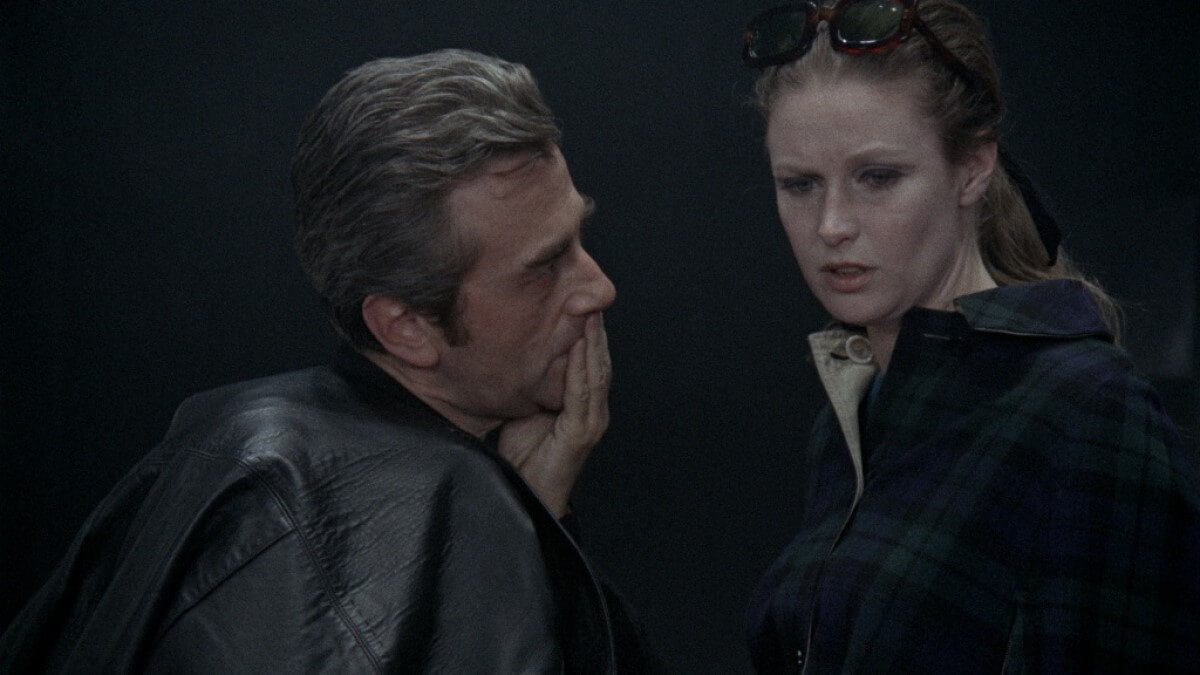
Main Cast: Beata Tyszkiewicz, Elżbieta Czyżewska, Andrzej Łapicki, Daniel Olbrychski, Witold Holtz, Małgorzata Potocka, Elżbieta Kępińska
Major Awards: Warsaw Mermaid (Film Critics Club Award)
Just as Fellini has his 8½, Wajda has Everything for Sale, a kind of film essay and diary focusing on the death of actor Zbigniew Cybulski. This film tells the story of Maciek from Ashes and Diamonds and the myth he created.
It’s not so much a tribute as an attempt to confront the memory of those who pass away—what remains of them, who they truly were, and how they will be remembered. It reflects on culture, art, and the people behind the scenes. The film juxtaposes truth with falsehood, hypocrisy, masks, and rituals, serving as a commentary on the March 1968 events and a self-documentary of Wajda. The film features handheld camera work, much improvisation, and actors playing themselves, making it a truly unique film-essay. It’s intriguing not only for its bold content but also for its form—classic cinéma vérité with numerous excellent episodes (such as the hussar attack). [Rafał Oświeciński]
Hunting Flies (1969)

Starring: Zygmunt Malanowicz, Małgorzata Braunek, Hanna Skarżanka, Ewa Skarżanka, Józef Pieracki, Daniel Olbrychski, Irena Dziedzic, Leszek Drogosz
Major Awards: Hanna Skarżanka – Łagów (Lubuskie Lato Filmowe) – Award for Best Supporting Actress
Another attempt to break the myths that have shaped Wajda’s status as a creator. Perhaps not a classic comedy, but more of a dramedy with a strong ironic edge. No wonder, as the screenplay is based on a short story by Janusz Głowacki (the screenwriter of Wałęsa), who brilliantly plays with the world of illusions created by early PRL – although here Wajda softened the satirical tone in favor of a slightly misogynistic commentary.
This is a story about characters whose roles are stereotypically reversed – he is the failure, she is the tough one. The whole female family are like mantises. But it’s not just the fair sex that turns life into hell – everyone around stifles the main character, setting him straight, while he, poor and defenseless, submits to their will. Zygmunt Malanowicz is very good, although Bogumił Kobiela was initially planned for the role of Włodek (ah, what a performance that would have been!), and Małgorzata Braunek is excellent in the role of an insane mythomaniac. It is a great pleasure to see the future Olenka from The Deluge in such a bold role. The form of Hunting Flies is once again a romance with New Wave influences – fragmented editing, lots of improvisation, and a rough composition.
Viewers practically ignored the film, as did critics, who generally considered it a failure in the filmography of the already renowned director. [Rafał Oświeciński]
Landscape After Battle (1970)
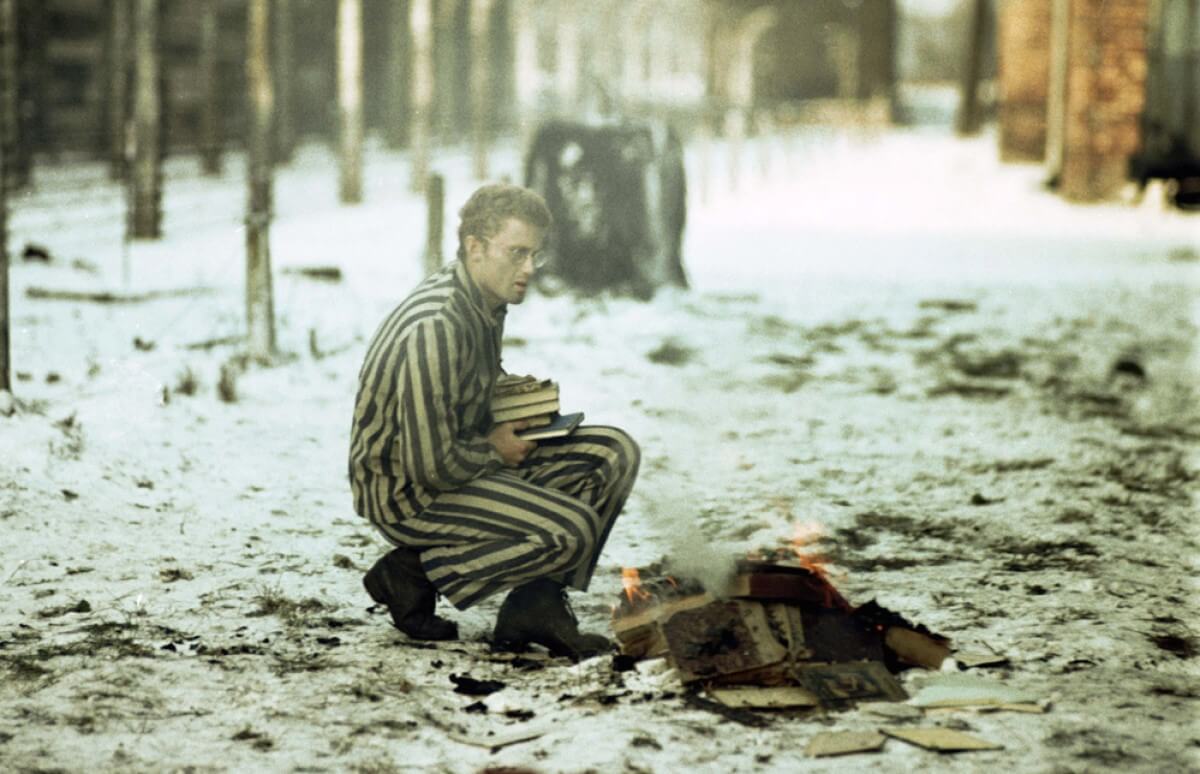
Starring: Daniel Olbrychski, Stanisława Celińska, Jerzy Zelnik, Stefan Friedmann, Małgorzata Braunek
Major Awards: Cannes (nominated for the Palme d’Or), Golden Duck (Best Polish Film)
In Landscape After Battle, Wajda tackles the texts of Tadeusz Borowski, particularly the short story Battle of Grunwald.
The merciless realism of Borowski’s vision is not fully reflected in Wajda’s cinematic world. Literature serves only as a starting point for creating a film that – despite a clear critique of the national flaws of Poles – mainly focuses on a delicately conducted, almost melodramatic love story between Tadeusz (Daniel Olbrychski) and a young Jewish woman, Nina (Stanisława Celińska). The couple meets in a German concentration camp liberated by Allied forces. Freedom is within reach, but Wajda makes it clear that the real bars and boundaries are not made of mesh, metal, and concrete.
“Landscape After Battle does not present a very cheerful vision to the viewer. Liberated Poles do not behave like angels freed from the yoke of oppressors.
It turns out that national myths still prevent them from looking at reality soberly, and a full stomach is more important than freedom and ideas. On one hand, it’s understandable, as Borowski’s prose is literal, far from romantic exaltations. On the other hand, especially in contrast to Samosiuk’s excellent cinematography and the subtly conducted love story, such a diagnosis hurts and is uncomfortable. Landscape After Battle is, in my opinion, one of Wajda’s best films. [Filip Jalowski]
The Birch Wood (1970)
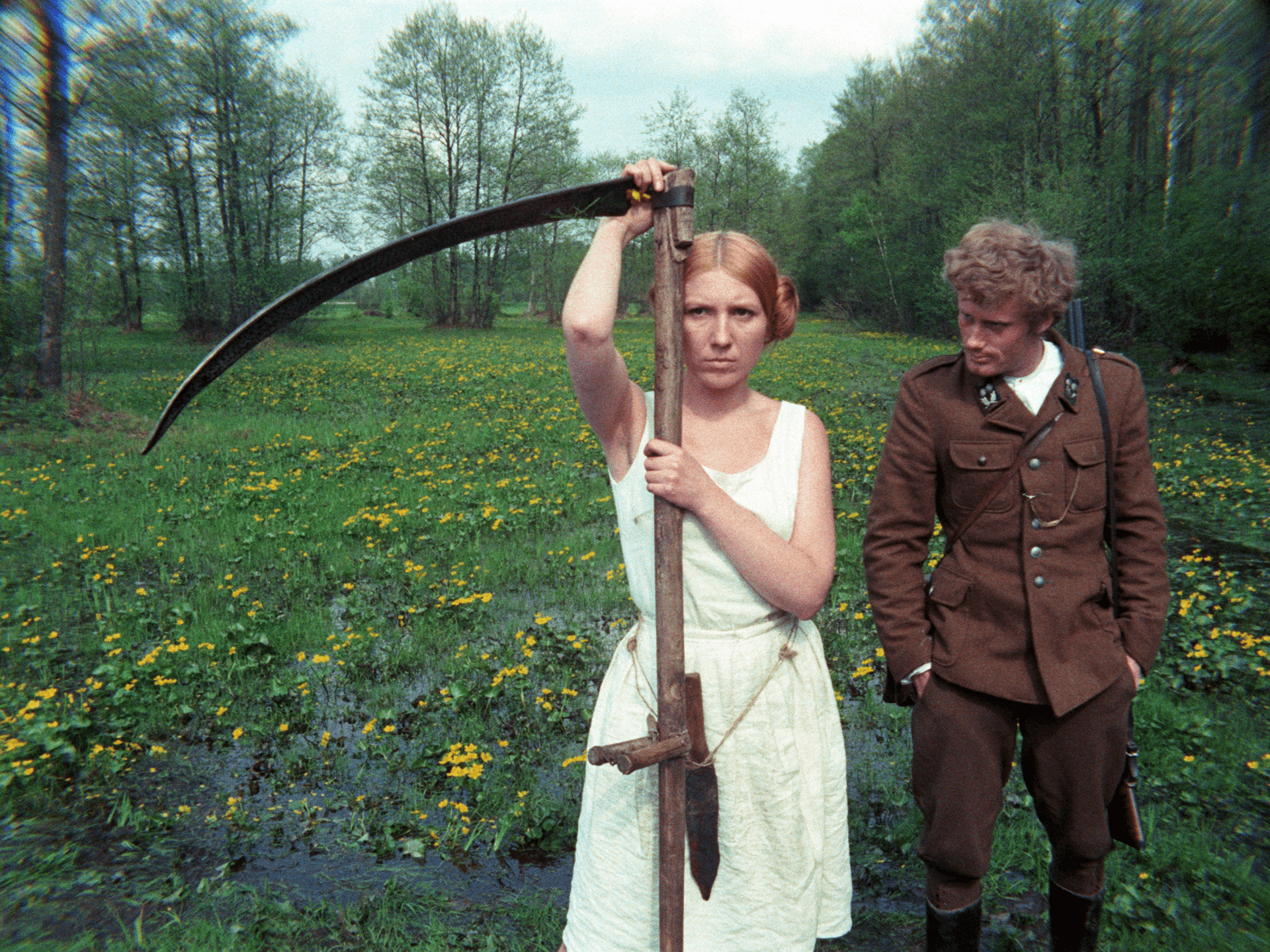
Starring: Daniel Olbrychski, Olgierd Łukaszewicz, Emilia Krakowska
Major Awards: Milan (International Film and Television Fair MIFED) – FIPRESCI award, Łagów (Lubuskie Film Summer) – award for Andrzej Wajda for directing and award for Best Male Lead Role for Daniel Olbrychski, Moscow (IFF) – Gold Medal, Moscow (IFF) – award for Best Male Role for Daniel Olbrychski, Finnish Film Association “Filmaur” award – honorary diploma, Milan (IFF) – “Golden Seal” (City of Milan award) award at the VII IFF organized by the Italian Film Archive in Milan
This is one of the director’s best films.
This time, Wajda is not conventional, not formulaic, but symbolic, poetic, painterly, and philosophical. The film is brilliant in its form. The shots, interior set design, landscapes, makeup, and costumes are like paintings. There is no randomness in framing and mise-en-scène, all elements and movements are thoughtful and meaningful, referring to something. Wajda, along with the cinematographers, and in collaboration with the set designer, decorator, and costume designer, invokes the paintings of Malczewski in his film. The director is also responsible for the screenplay, based on Iwaszkiewicz’s prose. He manages to show the impressionism, allusiveness, eroticism, and deep philosophical reflections from the writer’s work.
The characters are coherent and complex, and the narrative is smooth (without flashbacks). The Birch Wood presents a complicated relationship between brothers: to the forester Bolesław, a widower grieving after his wife, comes his terminally ill brother Stanisław, who wants to die here. The brothers are opposites, but there is a visible bond between them. The director juxtaposes Stanisław’s desperate cheerfulness and sensitivity with Bolesław’s depression and nervousness. Their relationship is complicated by a young neighbor – Malina, beautiful and primitive. The film touches on the themes of death and love. People’s entanglement in passion – love, jealousy, sadness, desire derived from biology – is contrasted with the inevitable, ruthless, also biological, death.
The film raises questions: where does desire come from? How to reconcile the desire for life and love with the inevitability of death? Excellent performances by Krakowska (Malina) and Łukaszewicz (Staś), with only Olbrychski’s (Bolesław) star performance seeming overly exaggerated, feeling pompous, as if the actor directed himself. This exaggeration seems to be the only drawback of the film. [Ewelina Świeca]
Pilate and Others (1971)

Starring: Jan Kreczmar, Daniel Olbrychski, Wojciech Pszoniak
Major Awards: No information available
An extremely original screen adaptation of the Jerusalem part of Mikhail Bulgakov’s Master and Margarita.
It is more an inspiration from the conversation between Pilate and Jesus than an adaptation of fragments of the novel. Jesus is portrayed as a rebel, a modern hippie – his trial takes place in Nuremberg, similar to the rallies of the Third Reich; Jerusalem is an urban jungle (Frankfurt), and the crucifixion happens in a dump next to a highway. The result? Unfavorable comments in the German press (despite the West German television ZDF being the producer) and only one copy of the film in Poland, screened only in art-house cinemas for a short time – Prime Minister Jaroszewicz reportedly pulled the film due to the outrage of Catholics at such a blasphemous vision… To this day, it is very difficult to find Pilate and Others anywhere – I myself saw it once, nearly 15 years ago at a single screening.
Brilliant Daniel Olbrychski, excellent Wojciech Pszoniak, and the late Jan Kreczmar, who died before the film’s premiere. [Rafał Oświeciński]
The Wedding (1972)
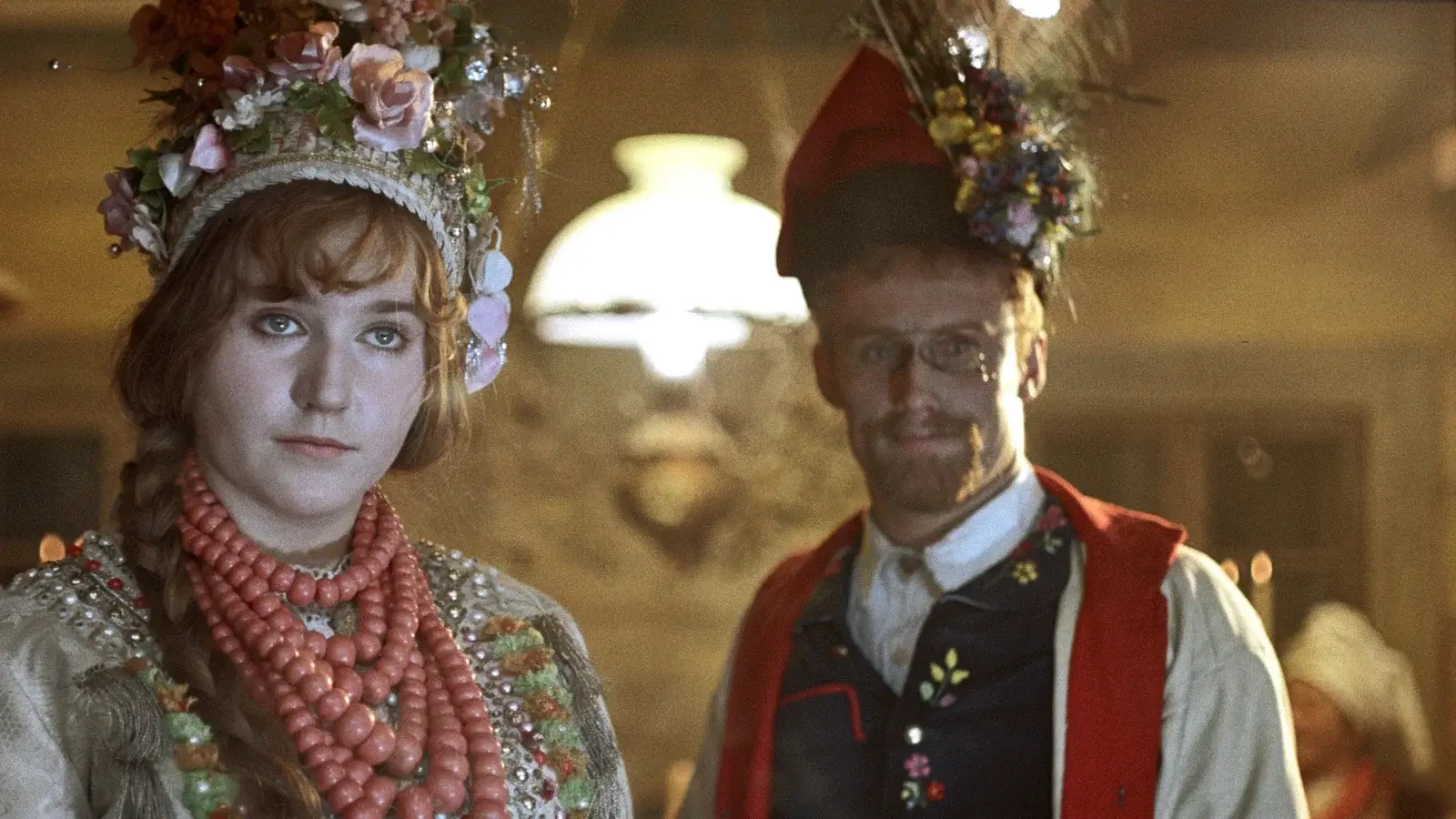
Starring: Daniel Olbrychski, Ewa Ziętek, Wojciech Pszoniak, Andrzej Łapicki, Marek Walczewski
Major Awards: San Sebastian International Film Festival (Best Feature Film)
Andrzej Wajda enjoys drawing from immortal Polish texts, often interpreting them in his works. However, The Wedding is an example of a nearly literal adaptation in terms of text and form.
Wyspiański’s play is an observation of late 19th-century society, capturing the essence of Young Poland with its historical complexes (failed uprisings, the Galician slaughter) and fascinations (rural culture, the lifestyle of provincial people). This is precisely what the film portrays. The combination of Stanisław Wyspiański’s text with Wajda’s directorial skill and technical professionalism was bound to succeed. Unlike any other film, The Wedding makes one feel stifled, sweaty, and desperate to step out of the Bronowice cottage for fresh air. In terms of content, similar to the play, it forces reflection and a reassessment of one’s view of history. It is certainly a heavy film that one returns to occasionally, but each time, it astonishes with its visual artistry (use of color, vision, and dreamlike quality) and execution (moving camera and editing).
[Maciej Niedźwiedzki]
The Promised Land (1974)

Starring: Daniel Olbrychski, Andrzej Seweryn, Wojciech Pszoniak, Anna Nehrebecka
Major Awards: Oscar nomination for Best Foreign Language Film, Chicago International Film Festival – Grand Prix “Gold Hugo”, Łagów (Lubuskie Film Summer) – Grand Prix “Golden Grapes”, Moscow International Film Festival – Gold Medal, Golden Duck (awarded by “Film” magazine) “Golden Duck” of the 50th anniversary in the category: Best Film, End of the Century – “Polityka” magazine survey – 4th place in the survey of “The Most Interesting Polish Films of the 20th Century”
A completely different work from anything Wajda had done before.
Instead of neo-romantic raptures, it’s a romance with the positivist ideas of Reymont. Instead of national allegories, it focuses on individual matters, personal needs, and theories of freedom. The result? The best, most mature film by Andrzej Wajda, where everything plays perfectly: beautiful cinematography by Sobociński, expressive music by Kilar, grand production scale, and the crème de la crème: the cast. Olbrychski, Seweryn, and Pszoniak are outstanding as Lodz entrepreneurs, creating the roles of their lives. Wajda himself admits it was one of the happiest periods of his life: he gathered an excellent team around him and worked without looking back at the judgment of the people’s government, which was proud to “own” such a recognized creator as Wajda.
Despite this, the Ideological and Educational Department of the Central Committee of the Polish United Workers’ Party had much work in combating the capitalist message of The Promised Land. Nonetheless, the film achieved tremendous success – an Oscar nomination (it lost to Kurosawa‘s Dersu Uzala) and today is considered one of the best films in the history of Polish cinema (voted the greatest in history in “Film” magazine in 1996). [Rafał Oświeciński]
The Shadow Line (1976)
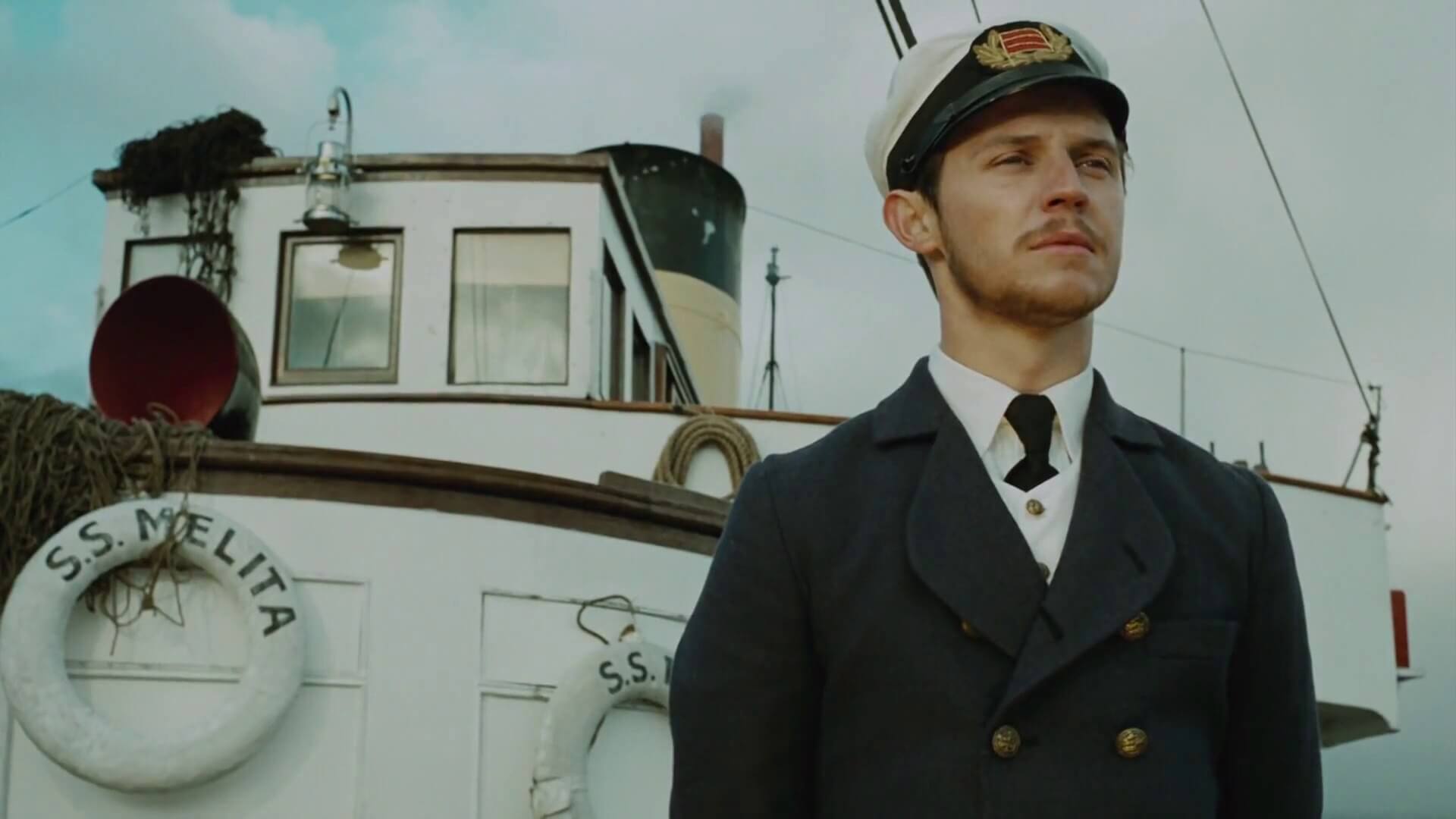
Starring: Marek Kondrat, Graham Lines, Tom Wilkinson, Bernard Archard
Major Awards: Silver Lion at the Gdańsk Polish Film Festival
Adapting Joseph Conrad requires a creative approach. The best adaptations of his prose are characterized by their departure from slavishly adhering to the text, even significantly deviating from the literary original. This is what Francis Ford Coppola did by setting the action of Heart of Darkness during the Vietnam War in Apocalypse Now; similarly, Ridley Scott made The Duellists more dramatic by focusing on the two adversaries rather than the witnesses to their duels, as in the story.
Meanwhile, Wajda’s English-language The Shadow Line feels like a very cautious attempt to transfer Conrad’s work to the screen, losing the main idea in the process. The story of an ill-fated voyage under a newly appointed captain has an overly prolonged prologue in the port and an unsatisfactory finale. The constant off-screen thoughts of the main character, played by a young Marek Kondrat, don’t help either. Fortunately, what’s best in the book is also present in Wajda’s film – the helplessness of the sailors (including the debuting Tom Wilkinson), especially their captain, stranded at sea without wind or quinine, awaiting their inevitable end. For these scenes, as well as Witold Sobociński’s cinematography and Wojciech Kilar’s music, The Shadow Line is worth watching, though they cannot save the film from being a failure.
[Krzysztof Walecki]
Man of Marble (1976)
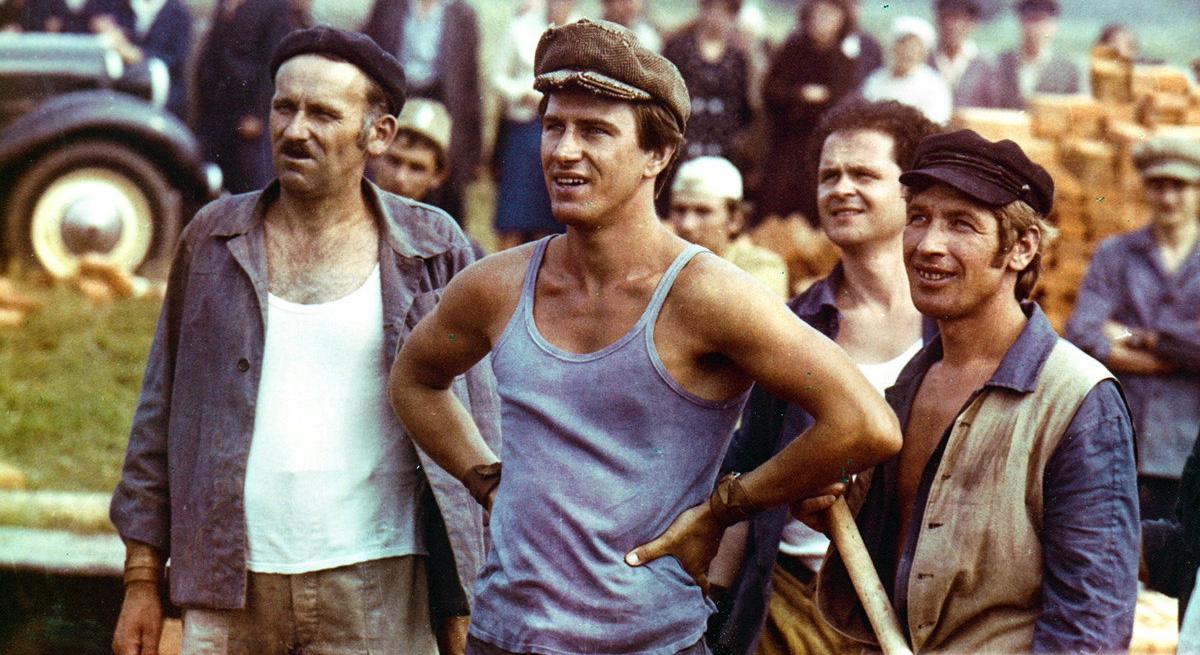
Starring: Krystyna Janda, Jerzy Radziwiłowicz, Tadeusz Łomnicki, Jacek Łomnicki, Michał Tarkowski
Major Awards: Cannes Film Festival – FIPRESCI Prize, Belgrade (FEST) – Grand Prize
Significant troubles with the people’s government. The film was so inconvenient that the script was constantly debated, its tone and accents were changed until finally, after much struggle, it was accepted.
As it turned out, Wajda stabbed a dagger in the back, openly criticizing the era of lies and mediocrity, which did not end with the distorted Stalinist period (as they later tried to explain) but continued for many years. The story of Mateusz Birkut, a classic Stakhanovite celebrated by the government, becomes a starting point for reflections on the nature of rebellion. Birkut (an excellent Radziwiłowicz) becomes aware of how the socialist world is constructed, and Agnieszka (a stunning, remarkable debut by Krystyna Janda) also matures while conducting her investigation. A brilliant film by Wajda, one of the best and most intelligent works of Polish cinema. A sharp slap in the face during the Gierek era.
[Rafał Oświeciński]
Without Anesthesia (1978)
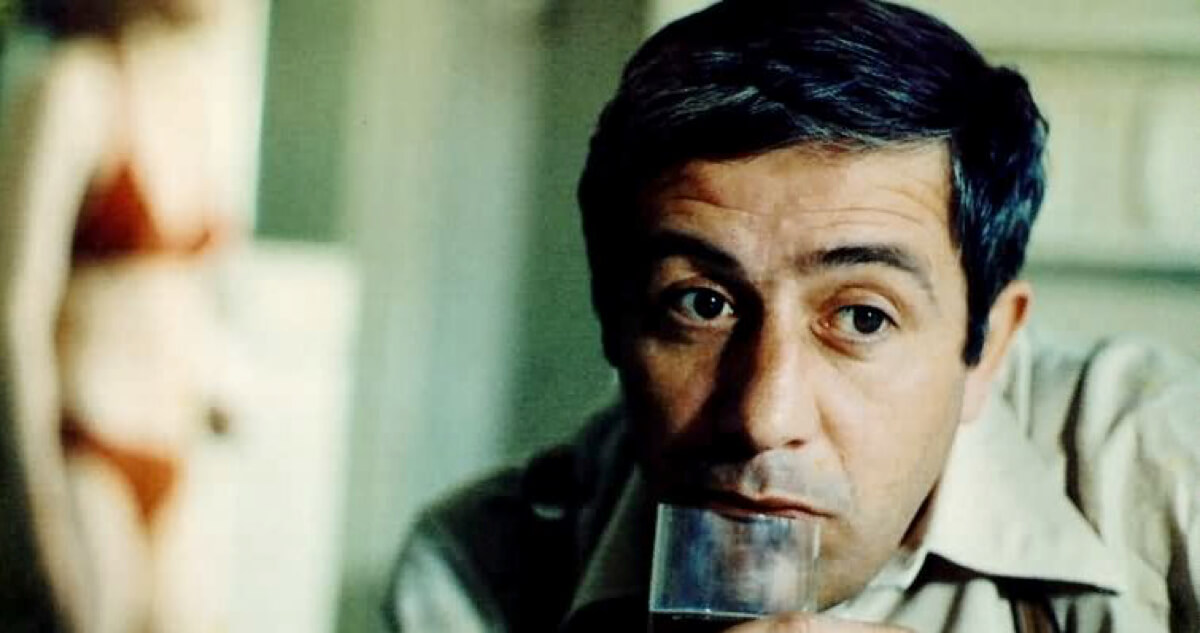
Starring: Zbigniew Zapasiewicz, Ewa Dałkowska, Andrzej Seweryn, Krystyna Janda, Emilia Krakowska, Roman Wilhelmi
Major Awards: Cannes Film Festival – Ecumenical Jury Prize, Cannes (nomination for the Palme d’Or), Golden Duck (nomination for Andrzej Wajda), Golden Lion (Best Film)
The year 1978, Polish screens are stormed by the cinema of moral anxiety. Agnieszka Holland directs Provincial Actors, three years have passed since the premiere of Krzysztof Kieślowski’s Personnel, two since Zanussi‘s Camouflage, one since Feliks Falk’s Top Dog. Wajda’s Without Anesthesia is an inseparable child of these times (worth noting, the screenplay was written by Agnieszka Holland). The story of the downfall of a popular journalist combines an intimate individual drama with a sharp satire of the communist government. Family tragedy and social tragedy sometimes merge too easily, complementing each other too straightforwardly, and like all cinema of moral anxiety, they are made with an anti-system key. What is truly great in Without Anesthesia is the role of Zbigniew Zapasiewicz, one of the best performances in the history of Polish cinema.
[Filip Jalowski]