
Review
GANGSTER’S LAW. The Forgotten Prototype of Reservoir Dogs
The similarities between Gangster’s Law and Reservoir Dogs are so striking that it’s hard to believe they’re coincidental.

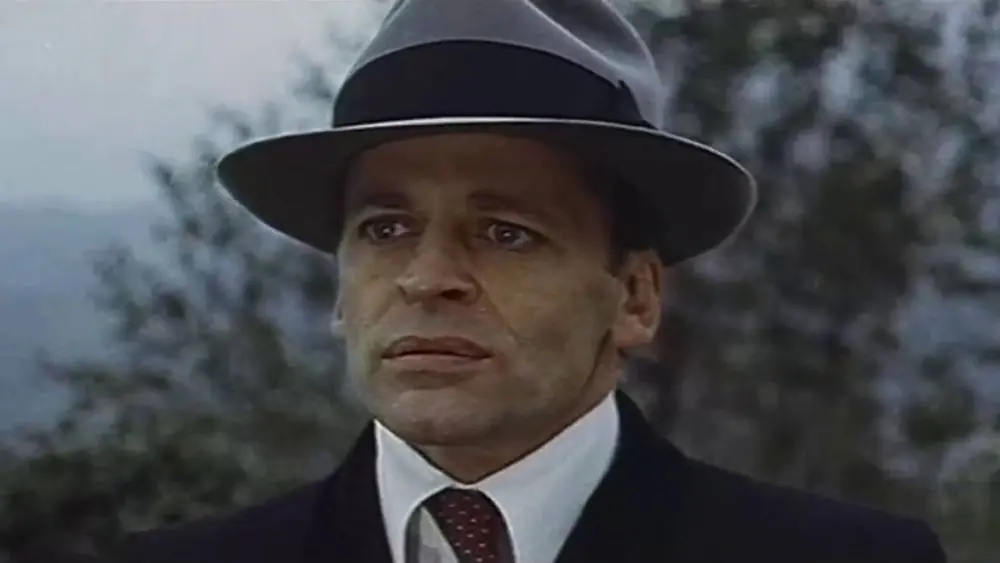
The similarities between Gangster’s Law and Reservoir Dogs are so striking that it’s hard to believe they’re coincidental. After being released from prison, seasoned thief Rino Quintero immediately returns to a life of crime: with the help of Italian mobster Rigani and French gangster Renier, he plans a bank heist in Genoa. His partners Franco, Renato, and Bruno also participate. Renier agrees to finance the job in exchange for thirty percent of the loot, which amounts to tens of millions of dollars. After the heist and a bloody shootout with the police that leaves Rigani dead, the criminals retreat to a secluded location to divide the money — only to fall victim to betrayal.
Renier breaks their deal and forces them to hand over half of the stolen cash. Quintero vows revenge, aided by Maide, Rigani’s widow, while Renier begins killing off his accomplices one by one to keep the entire take for himself. The final confrontation between Quintero, Renier, and the pursuing police unfolds in the port of Genoa. 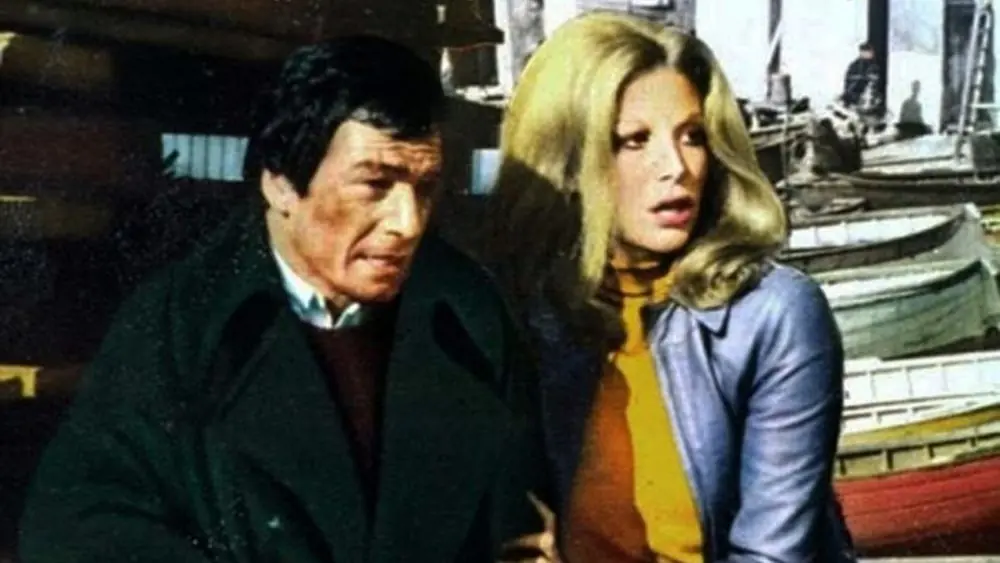 Siro Marcellini began his career as a theater director in the 1940s before transitioning to film, initially working as an assistant director (notably on Heaven Over the Marshes [1949] by Augusto Genina, and Red Shirts [1952] by Goffredo Alessandrini and Francesco Rosi). In the early 1950s, Marcellini debuted as a film director with the romantic comedy Siamo ricchi e poveri (1953); he also directed musicals (Ci sposeremo a Capri, 1956), social dramas (Il bacio del sole [Don Vesuvio], 1958), adventure films (The Devil’s Cavaliers, 1959; Hero of Babylon, 1963), and spaghetti westerns (The Man from the Cursed Valley, 1964; Lola Colt, 1967). His final feature film was Gangster’s Law (1969). Later, he co-directed a TV stage production of Romeo and Juliet (1978) with Orazio Costa — and then disappeared from the public eye. If he is still alive, he would turn 104 this September. Gangster’s Law stands out among Italian crime films from the late ’60s and early ’70s not only because of its cast (Klaus Kinski is outstanding, as usual, as Renier; Maurice Poli plays Quintero, and Franco Citti portrays Bruno — the latter known to cinephiles from Pasolini’s The Decameron [1971] and Coppola’s The Godfather [1972]), but also because of Piero Umiliani’s excellent jazz soundtrack and, most importantly, its narrative structure. After the opening heist sequence, the film presents a series of flashbacks showing events leading up to the botched robbery. The timelines shift so frequently and fluidly that the viewer must pay close attention to follow the chronology — but that only heightens the film’s appeal. Once the plot returns to the present, the pace slows down and the focus shifts to Renier eliminating the remaining criminals.
  When Gangster’s Law was made, nonlinear storytelling wasn’t new to cinema — filmmakers like Akira Kurosawa, Jean-Luc Godard, Federico Fellini, Alfred Hitchcock, and Billy Wilder had already used it. Quentin Tarantino later adopted this technique with great success, beginning with Reservoir Dogs (1992), and has used it in nearly every film since.
It’s intriguing how much Tarantino’s debut shares with Marcellini’s film: beyond the flashbacks, both involve a heist, betrayal, and even entire scenes — like the one featuring a mortally wounded gangster in the backseat of the getaway car. It’s well known that Tarantino draws inspiration from Italian cinema — for example, his The Hateful Eight (2015) echoes Giuseppe Vari’s Escape to Mexico (1971). It’s quite plausible that Gangster’s Law, along with Ringo Lam’s City on Fire (1987), served as a blueprint for Reservoir Dogs.

