
Review
Looking Back at BRIMSTONE: The Stench of Hell
Brimstone is not only intelligent, exciting, thought-provoking and engaging, but it also tastes, sounds and looks good.

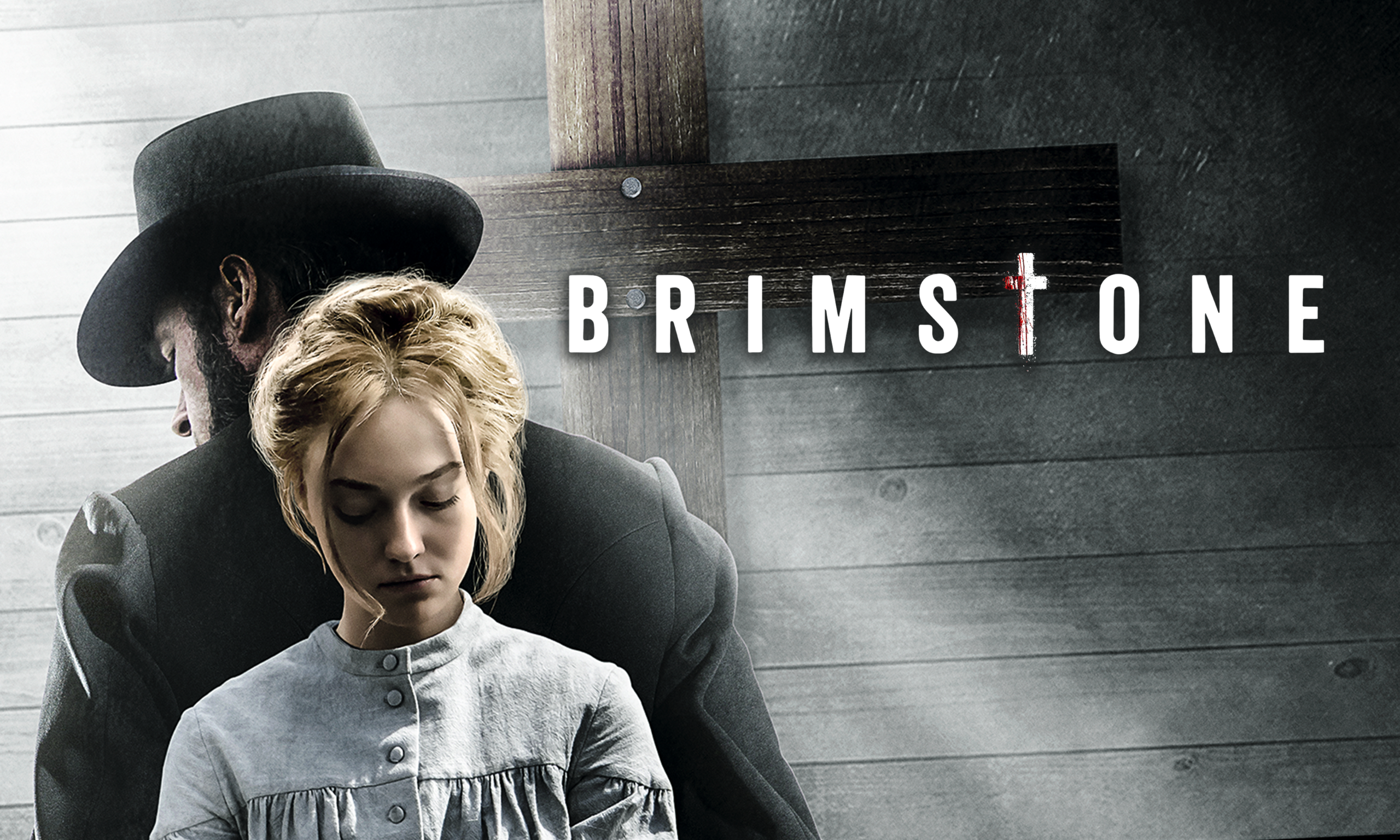
Brimstone literally means sulfur. This certainly brings to mind for horror fans unclean forces, the gates of hell. It is not a wrong trail. In many respects, this Dutch production is quite a formidable frightener set in pioneer times in the wild territories of North America. The horror connotations are further emphasized by a strong focus on faith and religion – so eagerly propagated at that time among settlers arriving from Europe. It is also not without significance that the entire story has been divided into chapters whose names are taken directly from the Bible.
Revelation (New Testament), Exodus and Genesis (both Old Testament), and completing the whole, typically human, written only symbolically in blood upon the soul, Vengeance – this is what Brimstone looks like in a nutshell. However, it does not fully convey the film, which is realized in a very interesting way. We observe various time periods, edited together in such a way that at first it is difficult to connect them with one another by any logical sequence.

And although at the very beginning the director gives us a glimpse of the finale of this story, it is truly difficult to predict the further development of events, and the actual ending of them is not at all as obvious as it might seem. But the trick of disrupting the narrative is not merely an empty whim of the creators. It primarily develops the character of the main heroine perfectly. Or rather: heroines, because although everything here is deeply interconnected, we in fact observe several women – each at a different age, with different emotional and physical maturity, state of mind…
One might even venture to say that each chapter represents successive stages of womanhood, and the entire Brimstone is a kind of circle of life from the perspective of the fair sex. And it all begins with the mute Liz (Dakota Fanning in perhaps her best adult role), who, being part of a small, peaceful community, goes to church with her family. There it turns out that a new pastor (utterly unsettling Guy Pearce) has just arrived at this house of God, immediately arousing enormous terror in Liz. She quickly returns home with her loved ones, trying to convince her husband that they should flee as soon as possible.
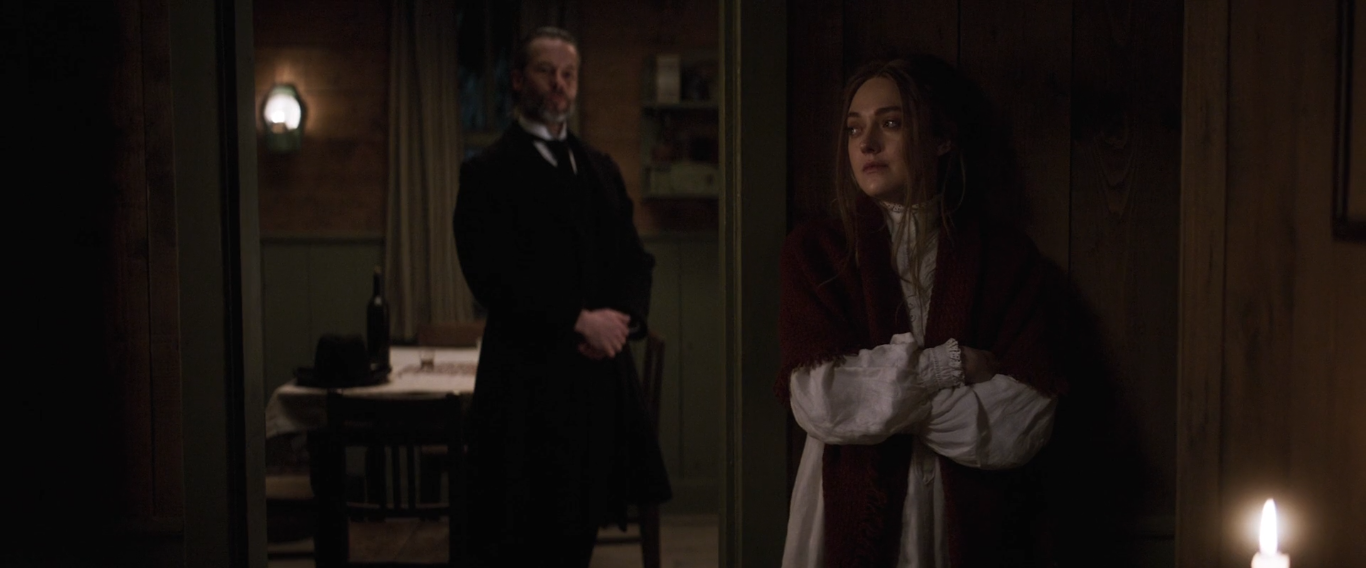
A few minutes of extremely dramatic action later, there is a cut and we observe a young girl, Joanna (the good Emilia Jones), wandering through the desert, exhausted. Rescued by encountered Chinese men, she is then sold to a certain Frank (Paul Anderson) – the owner of a brothel in a nearby mining town…
Absolutely nothing more can be revealed, because the main strength of Brimstone lies not only in the disruption of chronology and plot surprises, but above all in the details that we come to know over time. And it must be admitted that Koolhoven serves us successive fragments of this specific puzzle with extraordinary skill, perfectly gradating tension, calmly pushing the action forward and allowing its individual elements to resonate properly. For nearly two and a half hours of screening, he manages to maintain the viewer’s unwavering interest. Without a single moment of boredom, he effectively stimulates curiosity – and that, as we know, is the first step to hell.

And hell indeed permeates Brimstone, subtly perceptible in almost every frame, driving its characters, even defining some of them. And on several levels. The typically earthly one, where there is no forgiveness and one must kill in order to survive. The female one, prepared by men (mostly truly vile and/or cold). The psychological aftermath of radical religion and narrow social norms, and the most real one – the mythical place of pure evil known from beliefs.
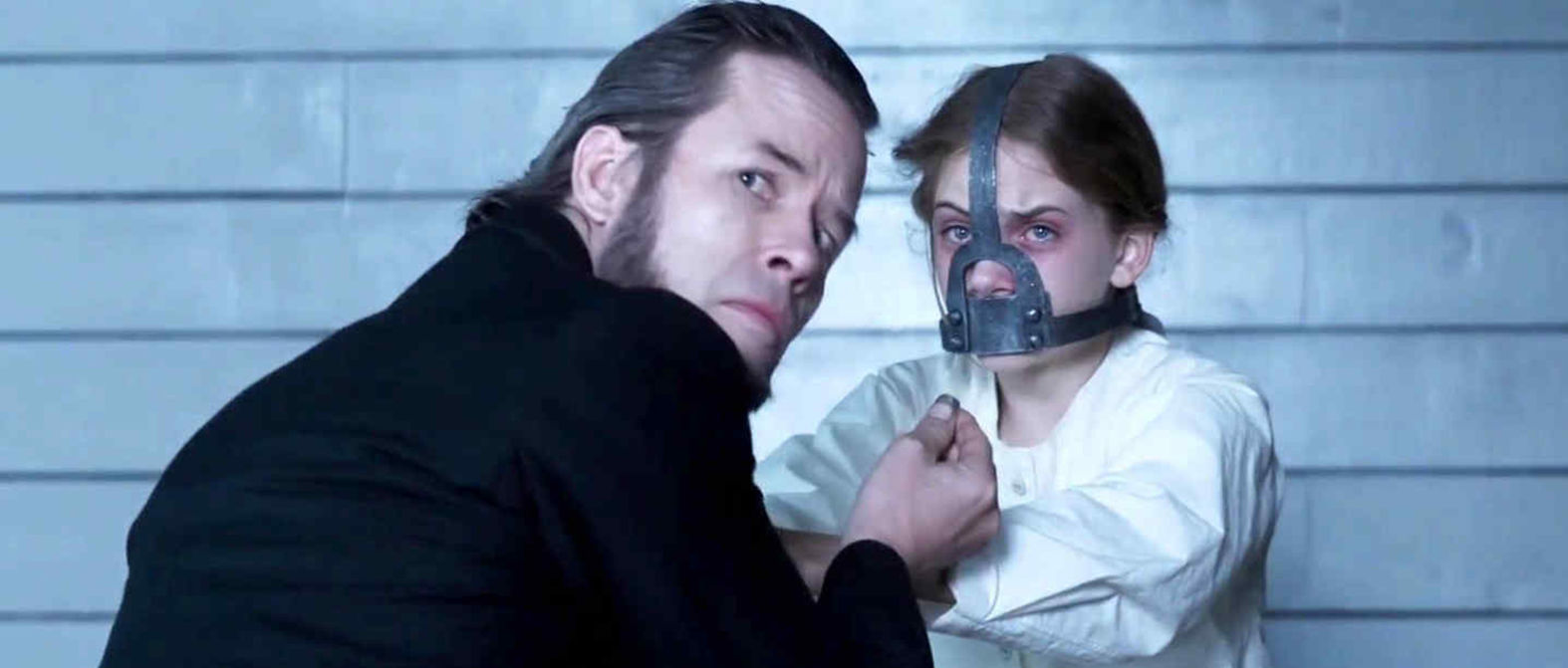
Is its merciless emissary truly the priest so charismatically preaching the word of God, with a face scarred by wounds? Or perhaps it is merely an individual lost in his madness, who has experienced hell on his own skin, seen it with his own eyes? Or some spirit of the past, taking revenge for sins? A clear answer to this question never falls and one can only guess, spin theories. But here too the devil is in the details. Suffice it to write that Pearce’s organ of sight is in fact crucial for the perception of his character, subtly giving the entire project a second layer.
The actor is truly hypnotizing in his diabolical nature. His pastor causes shivers by his mere presence on screen, even in those seemingly calm sequences in which we are able to believe in his good intentions, enlightened goals, noble motives of seemingly cruel conduct. Without a shadow of exaggeration, this is one of the best, most interesting and at the same time so ambiguous antagonists in the cinema of recent years, and even the excellent performance of the Australian actor alone is worth the screening – by no means exorcistic. Although who knows, who knows…
In general, the entire cast is perfectly chosen, full of colorful, memorable strong characters. The lead is naturally taken by the excellent, also not obvious relationship between Liz and the pastor, but the remaining threads can only be praised as well. Among them there was a place for two stars of the popular television spectacle Game of Thrones – Carice van Houten and Kit Harington. They do not have scenes together, but fans should be satisfied with their presence. Beautiful Carice feels like a fish in water, embodying her compatriot abroad – Anna.
It is not an easy role, so different from the memorable Melisandre, full of physical and psychological suffering, but also marked by the warmth of the heroine, at times as if the only one understanding and not opposing the pastor in his crusade. It is also telling that this engagement resulted for her in… a successful relationship with Pearce, to whom she gave birth to a son five days before the film’s premiere (later christened by the director as Brimbaby).
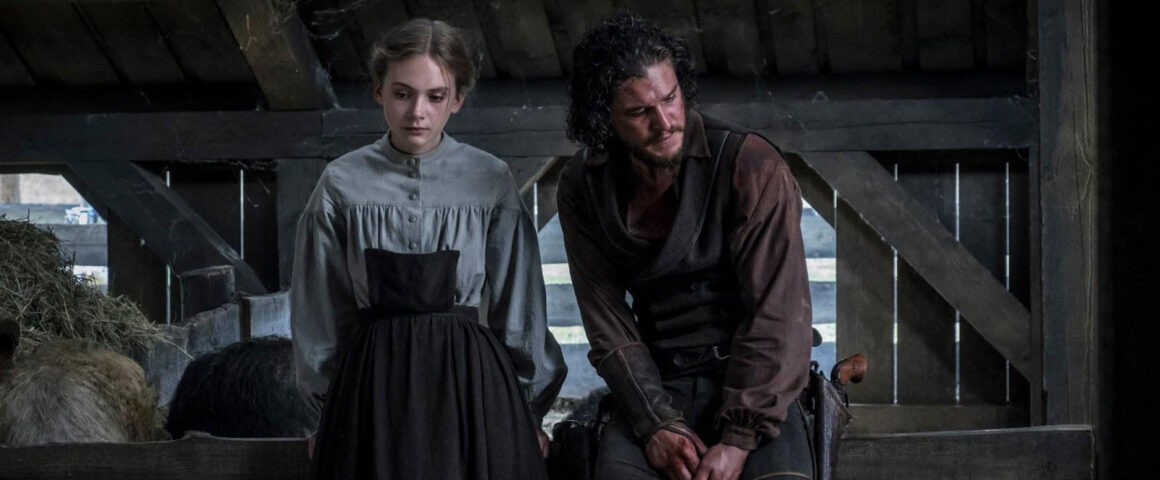
Kit, in turn, delivers a solid episode as a charismatic bandit – without scruples, but with a moral backbone and principles allowing him to fight incarnate evil. Through his characteristic image (accent, diction and curly hair) he does not escape too far from the Jon Snow created in the series, but he significantly enriches his part of the film. Interestingly, Harington together with Fanning replaced originally cast in their roles Mia Wasikowska and Robert Pattinson.
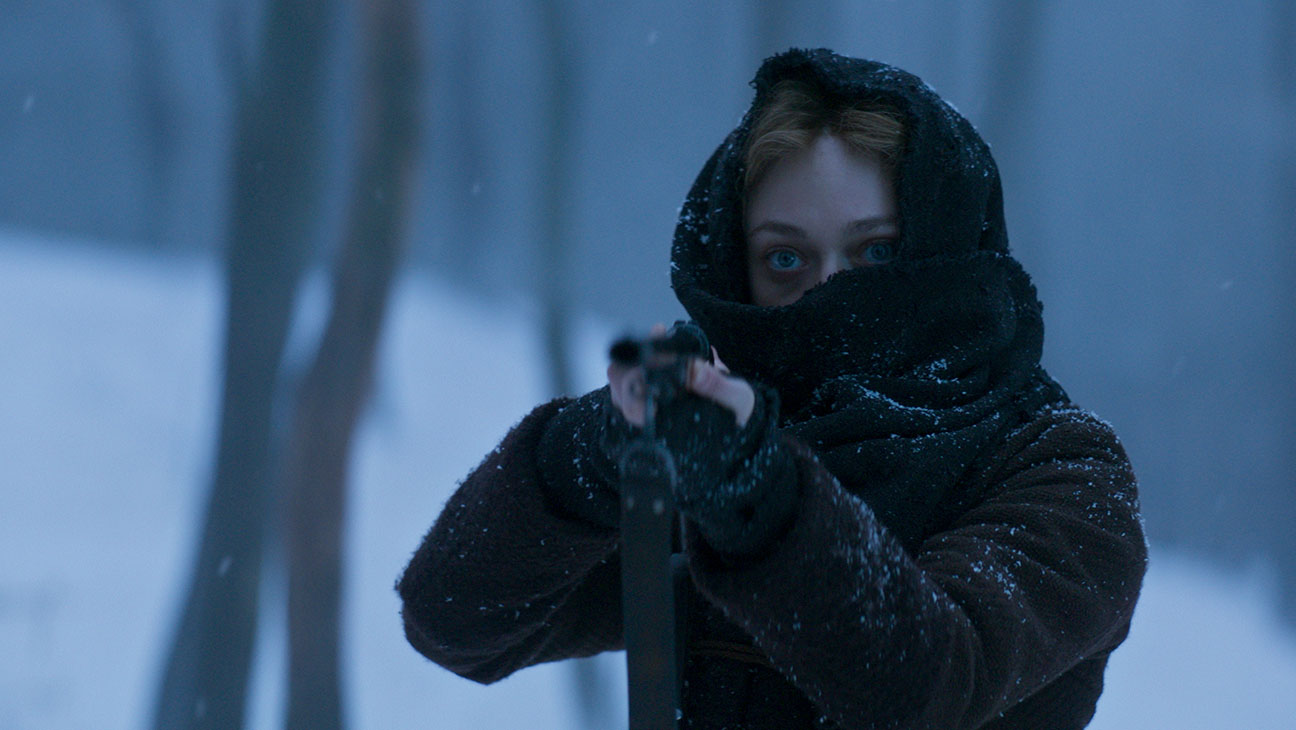
Looking at the final shape of the film, they were intriguing choices. Mia, moreover, withdrew from this production due to exhaustion, which says something about the nature of the entire project, which was not a walk in the park for Koolhoven either.
In total, the director prepared his work for as many as seven years. When he managed to gather the entire required budget and was about to enter the set, one of the producers withdrew at the last moment, almost ruining all the efforts and significantly delaying further plans. Fortunately, somehow it was possible to patch up the financial deficiencies and thus, for twelve million euros, in the territories of Austria, Germany, Hungary and the Spanish Almería so well known from old Italian spaghetti westerns, one of the most expensive Dutch films was created, also being one of the few, if not the only representative of a given genre from that country.

In honor of its Italian counterparts, the creator called it a stamppot western (from the traditional national dish consisting of mashed potatoes with vegetables). Unlike the enormous boom for titles from sunny Italy, however, it is rather difficult in this case to count on the birth of a new, equally popular trend in cinema. The one-of-a-kind Brimstone did not sell particularly well on the main market, that is, in the United States. Not very extensive promotion, modest distribution and a strict R rating – well used by the director – allowed it to collect only just under two million dollars at the box office.
In addition, American critics probably did not fully buy this film, strongly wavering in their assessment of it. In this respect, Brimstone fared much better on the Old Continent, receiving mostly very positive reviews. The premiere at the 73rd festival in Venice was crowned with a deserved nomination for the Golden Lion (the laurels ultimately went to the Philippine The Woman Who Left), after which the film was successfully sold to many other countries.

Brimstone is not only intelligent, exciting, thought-provoking and engaging, but it also tastes, sounds and looks good. The moving, ambitious, at times based on compositions by Bach, truly mystical music of Tom Holkenborg – known on a daily basis as Junkie XL, that is, the master of pounding from Mad Max – and the plastic, very western, panoramic cinematography by Rogier Stoffers (shot of course digitally, on an Arri Alexa XT camera) create, together with the rest of the high-class technical sphere, an extraordinary, stifling, dense atmosphere and a fascinating spectacle. Just right for the big screen.
As we remember from chemistry lessons, sulfur only begins to enter into any interactions at elevated temperature. It should therefore not be surprising that Martin Koolhoven’s film is an ideal position for winter evenings – it can ignite in the viewer a fire of expectations and at the same time, with the passage of time, heat its recipient to red hot. And, more importantly, it by no means leaves behind indifferent reactions. High-octane cinema.


