
Review
GOOD LUCK, HAVE FUN, DON’T DIE. Log off and live your life
Unfortunately, Good Luck, Have Fun, Don’t Die turns out to be the worst kind of joke: one that’s fun to tell but less fun to hear.

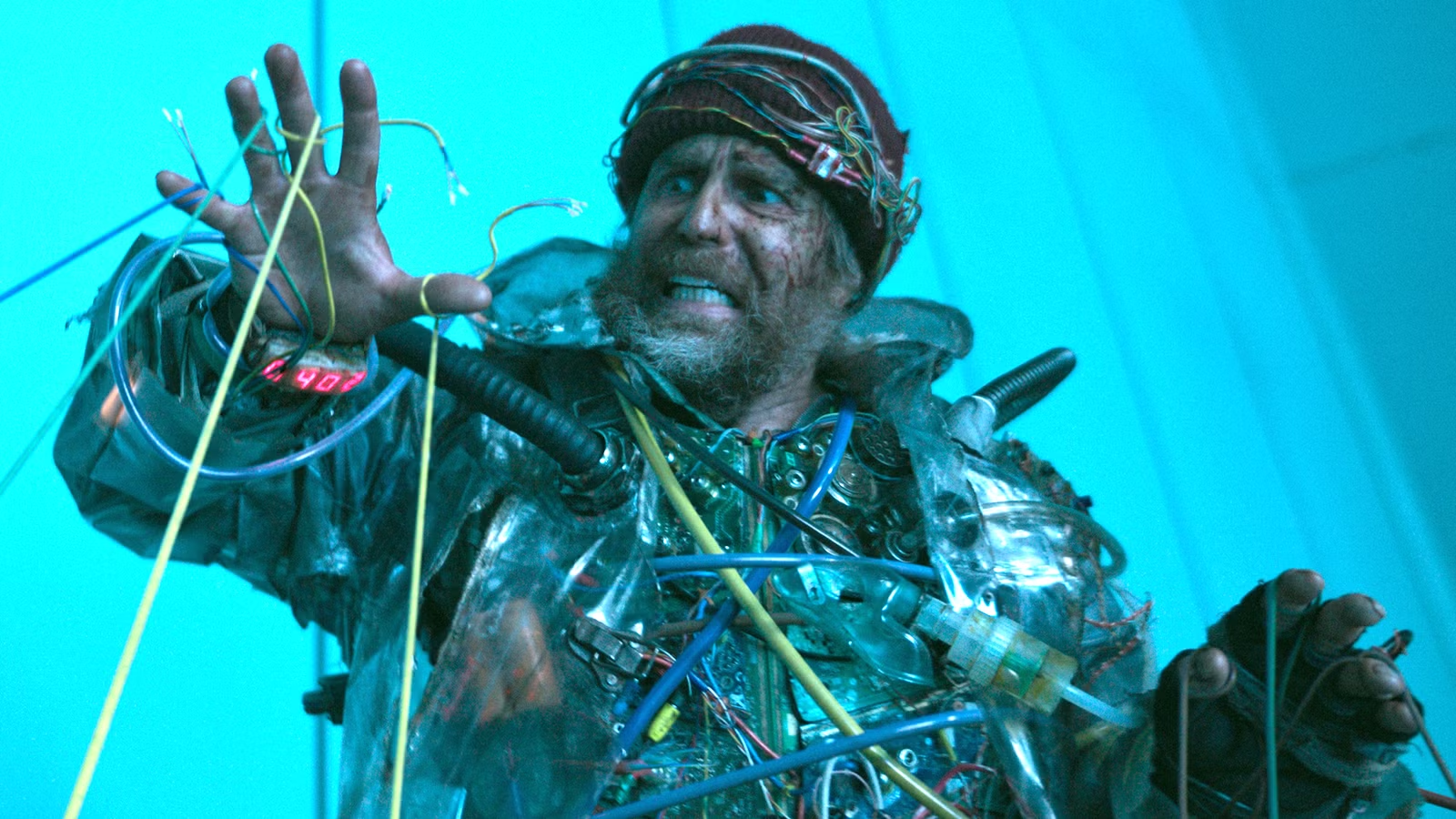
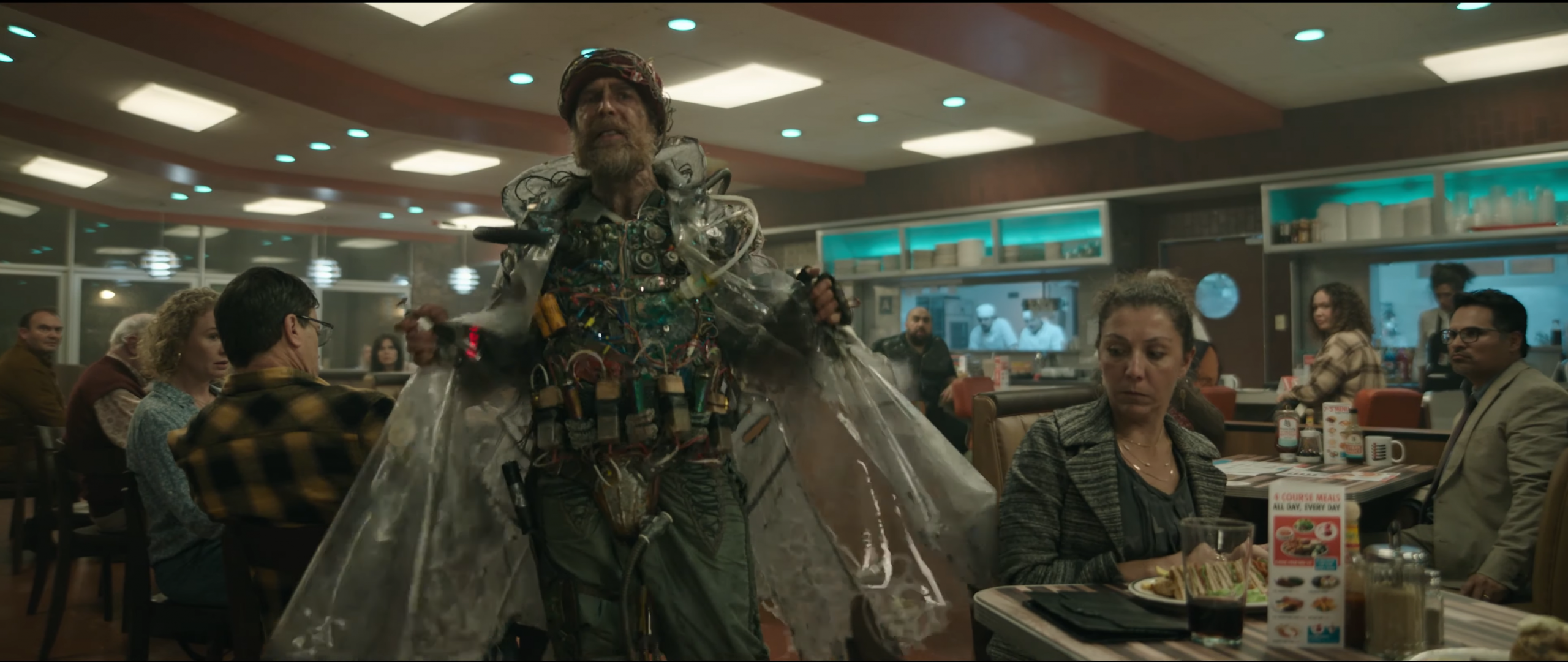
A guy walks into a bar, jumps onto a table, and announces that he comes from a future where artificial intelligence has taken over the world. Join the rebellion, or face total annihilation. Sounds like the setup for a bad joke? And, in a way, it is. In Good Luck, Have Fun, Don’t Die, Gore Verbinski, returning to feature films after nearly a decade-long hiatus, has given us something resembling a cinematic gag. Like any joke, it’s full of twists, false punchlines, and, more or less subtle, Easter eggs for the initiated.
The director multiplies storylines, introduces new characters, constantly complicating an already tangled situation. All of this is meant to entertain, mislead, surprise—and warn us—yes, this joke is didactic. But what good is that if, in the end, the audience doesn’t collapse in laughter but merely shrugs slightly? Unfortunately, Good Luck, Have Fun, Don’t Die turns out to be the worst kind of joke: one that’s fun to tell but less fun to hear.
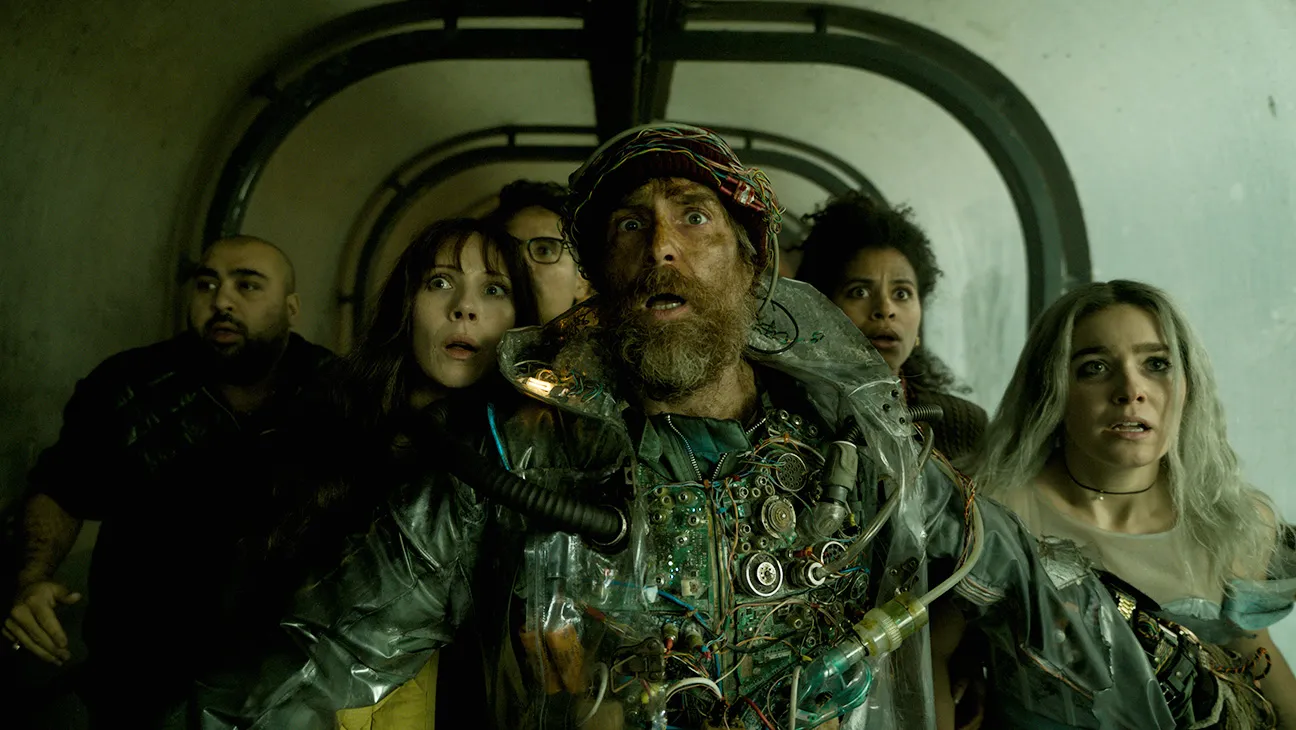
There are at least a few reasons for this. First and foremost: we’ve heard this joke before. Matthew Robinson’s script landed on Verbinski’s desk in 2020—two years before the first version of ChatGPT hit the market, three years before Grok was born. Since then, AI has stomped into the mainstream, embedding itself firmly in pop culture.
Countless films and series exploring artificial intelligence have emerged, usually set in a grim, dystopian atmosphere—led, of course, by Black Mirror. For most of its runtime, Good Luck, Have Fun, Don’t Die feels like a compilation of several mid-tier episodes of Charlie Brooker’s series.
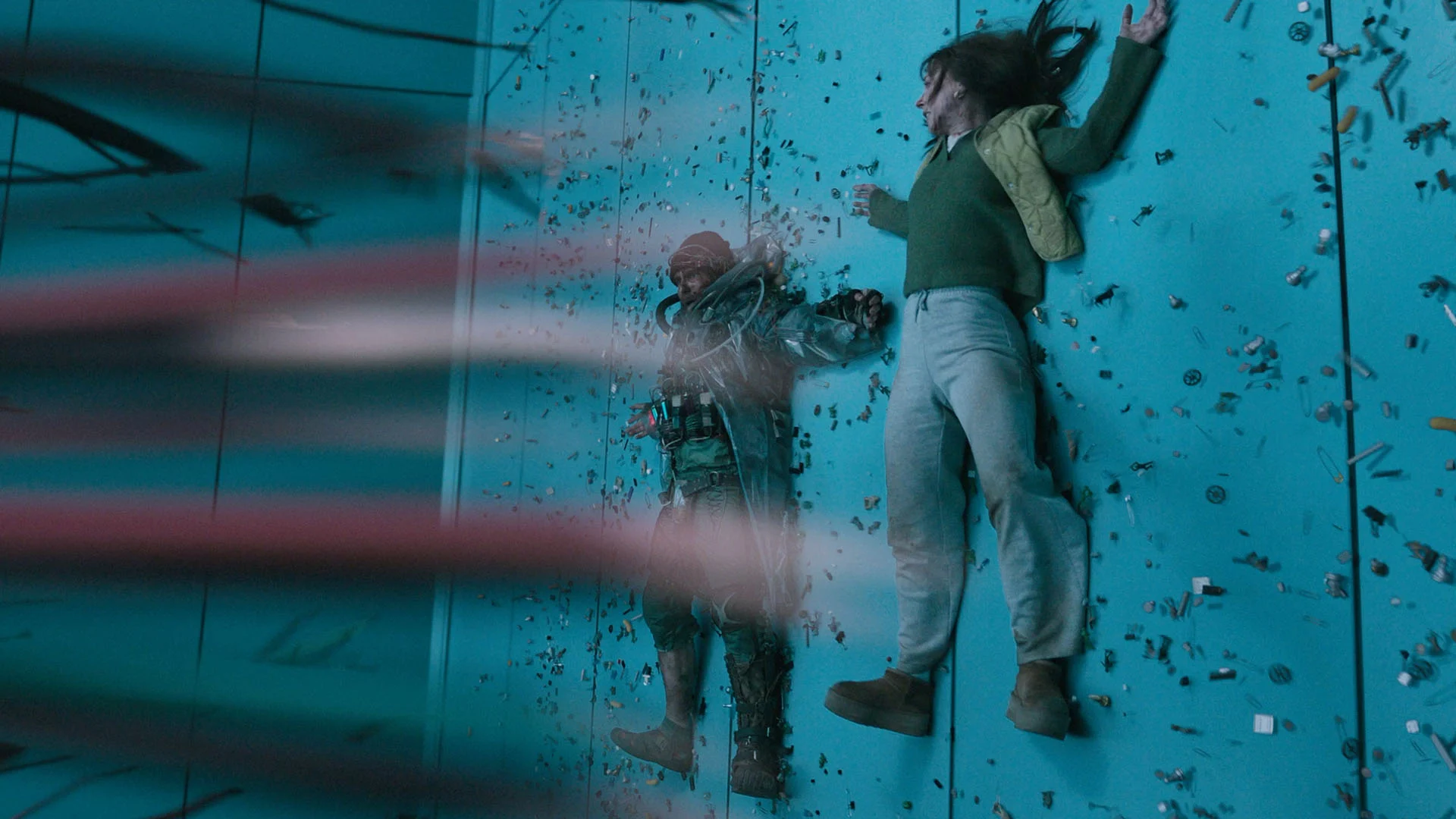
This comparison is reinforced by the film’s episodic structure: every so often, the name of a character appears on screen, followed by a several-minute flashback focused on another horrifying technological innovation. An app turning teenagers into zombies? Check. A mysterious agency cloning children? Check. VR goggles that make it impossible to tell the real world from the virtual one? Check. You see for yourself: none of these ideas feels particularly fresh in 2026—except maybe the clones, which are framed in a phenomenal, darkly comedic context of school shootings.
While thematically a bit stale, Good Luck, Have Fun, Don’t Die attempts to be formally modern. Verbinski openly references the aesthetics of video games. The original title already signals this: Good Luck, Have Fun, Don’t Die, a nod to the classic gamer greeting, reinforced by the time-traveler’s perspective. Played with charm by Sam Rockwell, the protagonist arrives in the past for the 117th time. Every previous attempt to save the world has failed. In his hand, he holds a button that can reset past events and start the mission (or gameplay) from the beginning.
The obstacles the characters encounter are nothing more than increasingly difficult levels. Flashbacks introduced periodically are side quests that expand our knowledge of the world and its inhabitants. As the difficulty ramps up, the number of companions steadily dwindles—but the time traveler remains unfazed. He alone has a saved game state; the others are, in his eyes, mere cannon fodder—NPCs who can be sacrificed pro publico bono.
The video game aesthetics could have worked well if Verbinski and Robinson had handled the most basic thing: a coherent construction of the fictional world. But the two spectacularly fail in this crucial aspect. The closer the film gets to its finale, the more the director and writer trip over themselves. Twists contradict previously established rules, and the internal logic begins to crumble. Eventually, a suggestion appears—functioning like a “get out of jail free” card—that everything we’ve seen might be a simulation, a hallucination generated by a cunning AI. Instead of confirming or disproving this, Verbinski casually hits the reset button and creates a compositional loop—the path of least resistance.
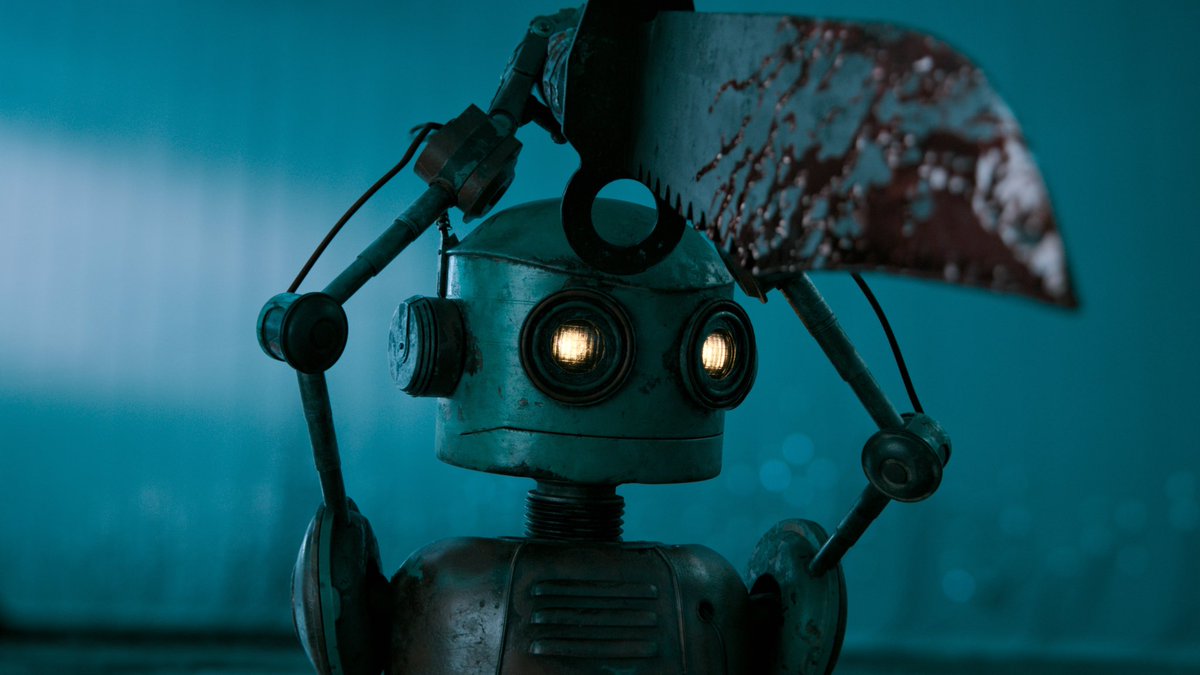
The strategy for fighting AI in Good Luck, Have Fun, Don’t Die is clear: defeat the enemy with its own weapons. Fast editing, surprising (or, as some would say, random) plot twists, episodic structure, a narrative model borrowed from video games—these elements are all here for a reason. The problem is that the sharp satire of AI itself sometimes resembles a film that could have been generated: it lacks logic, and its core consists of banal, pop-culture-recycled clichés.
“Log off and live your life!” Verbinski shouts in his film, explaining in interviews that soon AI will be having sex and breathing for us. I have no doubt that in an era of monstrosities like Darren Aronofsky’s On This Day, we need loud and decisive voices of dissent. I only wish they would appear in the world in the form of slightly better films.


Looking back at DEAD SNOW: A Blizzard of Nazi Gore Fun

DEAD SUSHI: Exotic, Spicy, and Wildly Entertaining

Revisiting ALICE, SWEET ALICE: Dread and Religious Symbolism

PUPPET MASTER: LITTLEST REICH – Achtung! It’s Good!
