
Review
BAMBI. This Disney Classic Has Aged
Bambi has undeniably aged. 83 years since its release are clearly felt — and not so much in the animation technique, which only falters in the most dynamic scenes.


Sometimes childhood memories — even the most beautiful ones — are best left undisturbed. I’ll admit that I didn’t remember Bambi particularly well. I couldn’t recall many plot details, most of the characters, or the songs, yet the very thought of the film evoked something magical: those early-1990s days at the height of the VHS rental boom. My uncle ran one of those rental stores, which meant I had nearly unlimited access to animated features and family films. Watching them was my first real encounter with cinema — back then pure entertainment to pass the time, today one of my greatest passions.
I still remember many of those films clearly, though some only vaguely. Sometimes, when I come across a DVD of an older Disney production in a store and browse the cover descriptions and photos, individual scenes and characters resurface. A smile appears on my face, and for a brief moment the magic of childhood returns. Unfortunately, when you take it a step further and actually rewatch such a film after twenty years, that magic can disappear forever. That is exactly what happened when I revisited one of Disney’s biggest classics — supposedly timeless — Bambi.
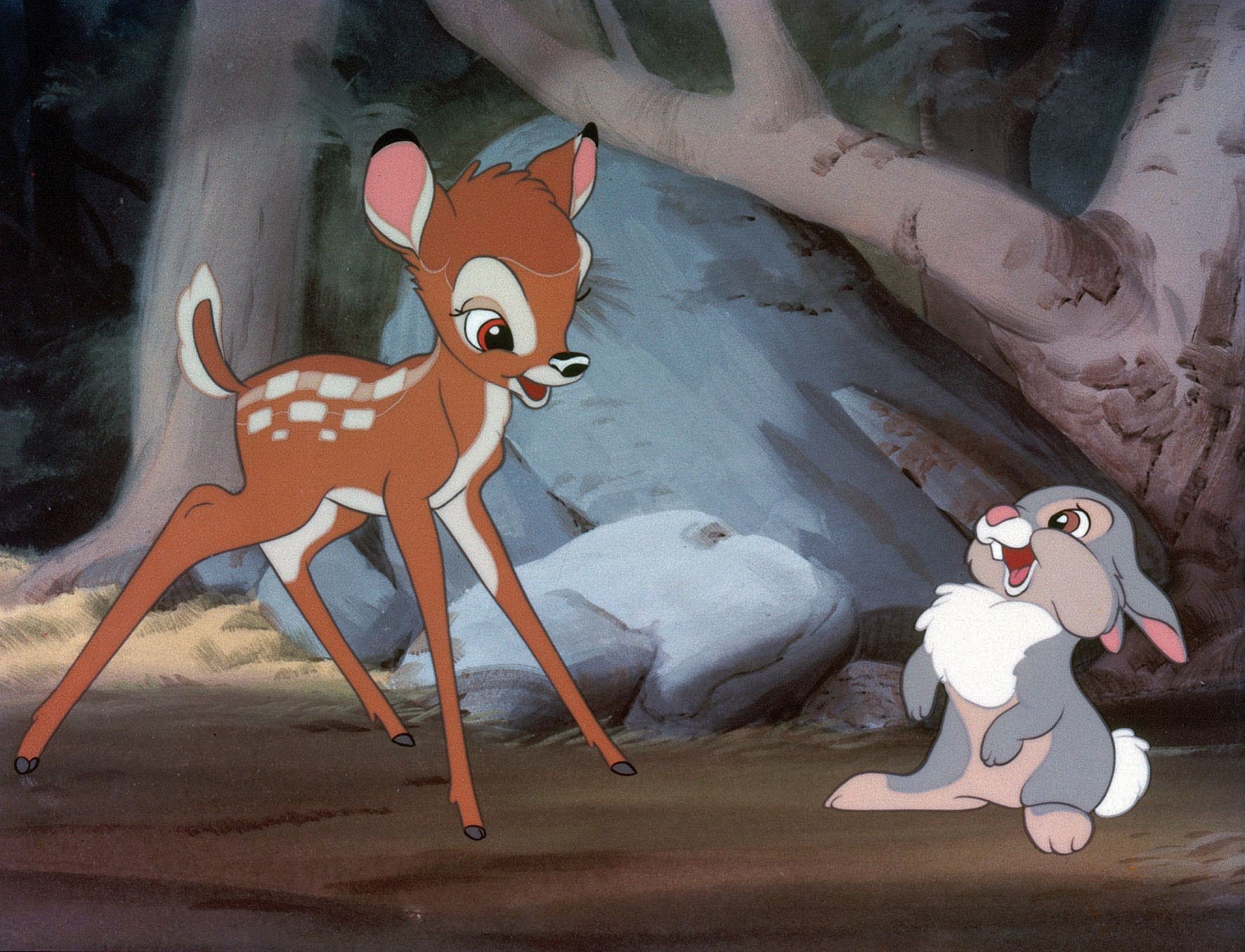
It begins pleasantly enough. A morning in the forest, animals waking from sleep. It brings back a time when the anthropomorphizing of animals in film wasn’t taken quite as far as it is today. Because while we all love donkeys who chatter endlessly, sharks struggling with mafia-style family crises, or penguins of every kind — tap-dancing, singing, surfing, and running espionage operations — these stories ultimately tell young viewers very little about animals and their real lives. Bambi relatively faithfully presents the stages of the animal life cycle and, through subtle parallels with the human world, allows audiences to identify with its characters. Unfortunately, beyond that, the film offers very little.
I spent a long time wondering who the target audience might be — and got nowhere. Certainly not teenagers or adults, who mainly seek entertainment in animated films. There is almost none here. Dialogue is practically nonexistent (from beginning to end, only around 800 words are spoken), and the individual scenes are filled with loud, highly suggestive music dictating their emotional tone. The old-fashioned songs (after all, the film dates back to 1942) lack charm, and their Polish renditions resemble the Sunday performances of a drunken church organist. In theory, a story about discovering the world around us and learning to navigate its good and bad sides should be perfect as a first film for young children.
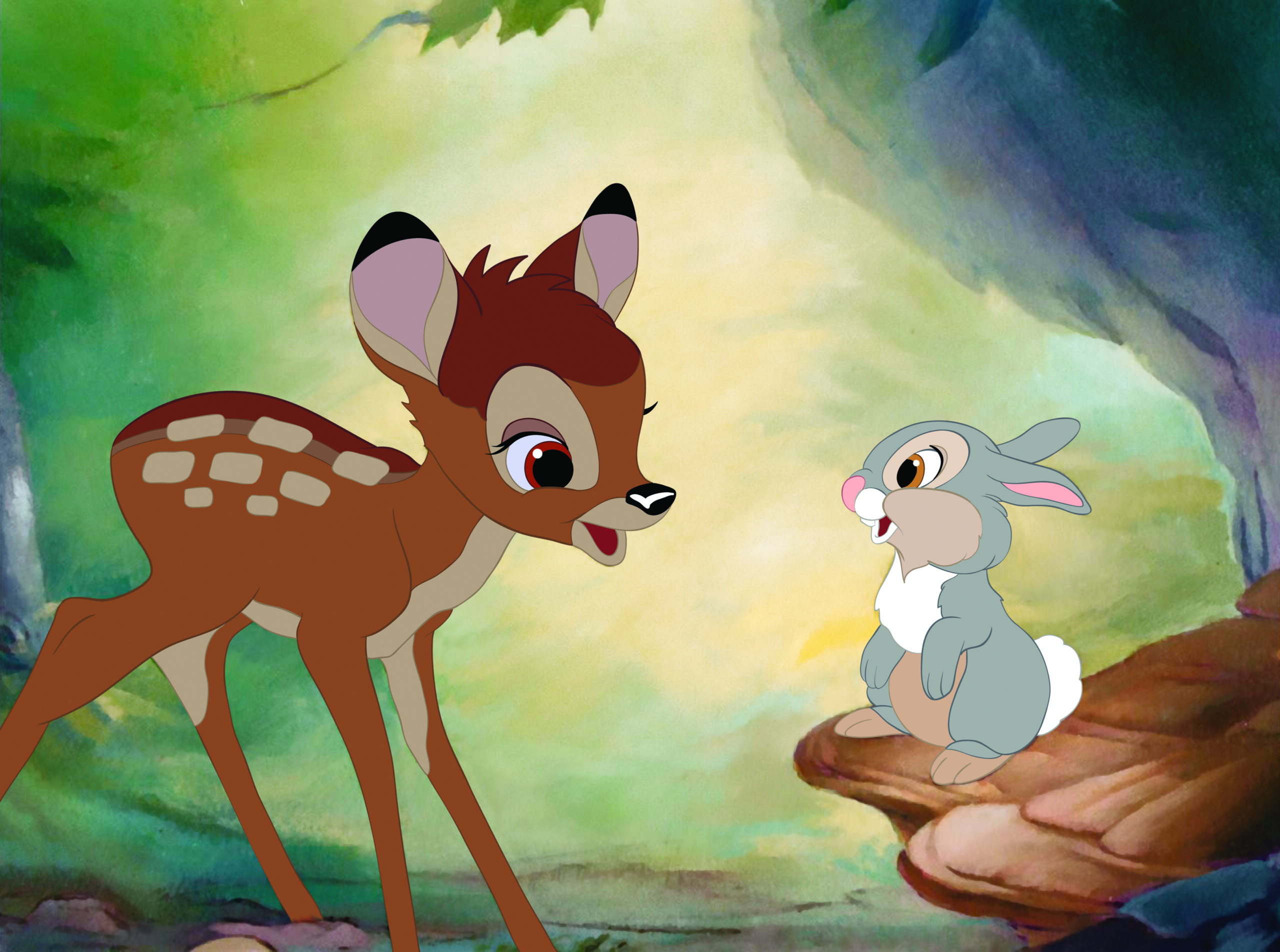
Yet even for them, Bambi is not entirely suitable. While its first half works well enough for children, after the death of Bambi’s mother (a scene that arguably still ranks far too highly on lists of the most moving moments in cinema history), the film becomes simply too brutal and sad — and, importantly, somewhat untruthful.
Humans are portrayed as horrible creatures who care nothing for animals or nature. They destroy everything in their path, kill any animal within sight at random, and are so careless and indifferent that entire forests burn because of them, leaving rabbits, frogs, and deer miraculously homeless. Not once does the word “hunters” appear — they are the true antagonists of Bambi. Instead, it is simply “people” who are evil. The only animals shown in an unfavorable light are dogs, trained by us humans into brainless, bloodthirsty beasts. The rest live in perfect harmony, supporting one another and forming lifelong friendships. No one eats anyone else, because in Bambi’s forest there are no carnivores.
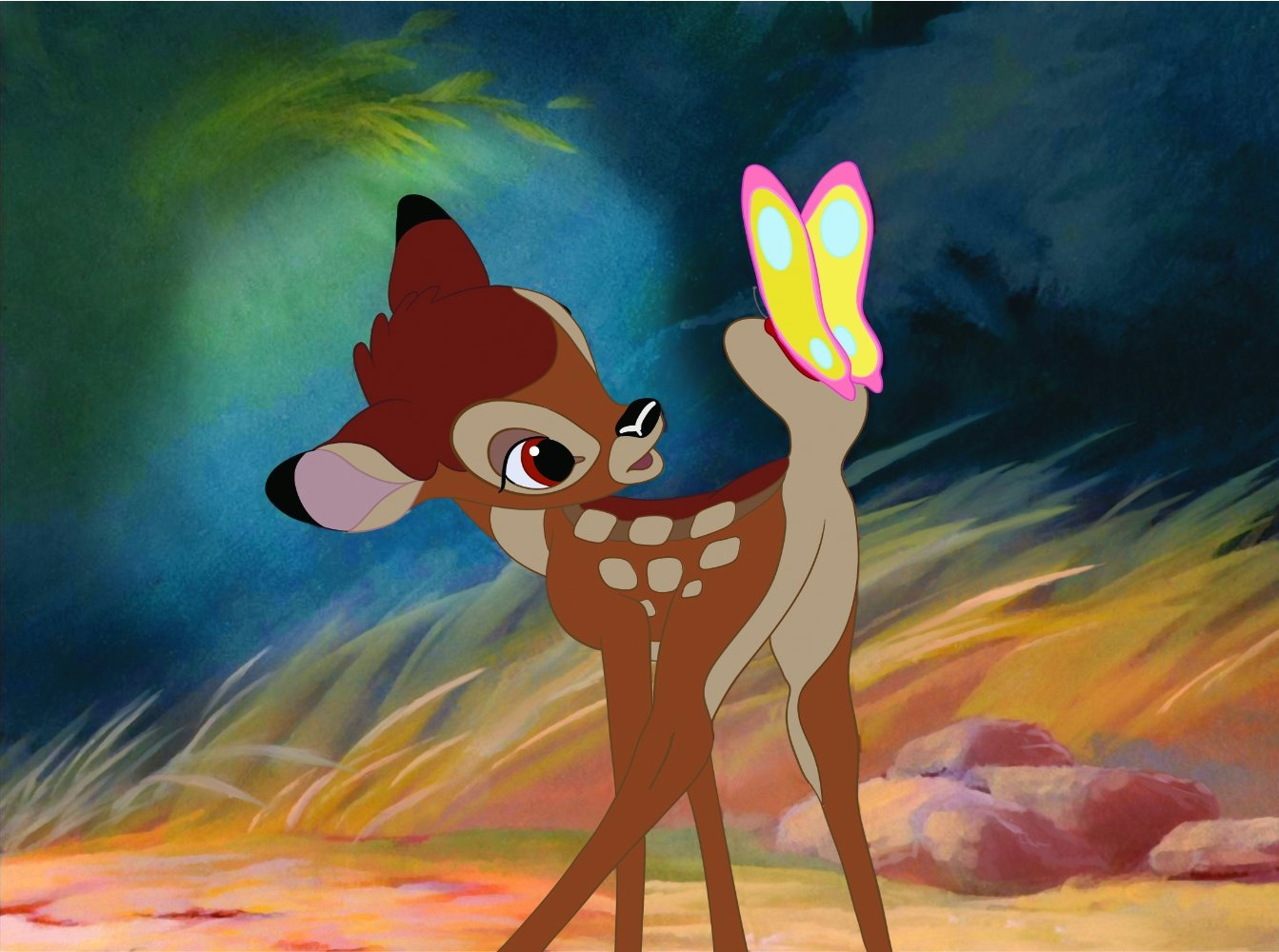
It turns out that only the sweet, fluffy, smiling, colorful little creatures who sing songs exist here. So if the creators intended to make a realistic film, one that would show children life as truthfully as possible — including its darker sides — they failed at that as well. Who, then, is this film for? I have no idea. Perhaps today it is for no one. Bambi has undeniably aged. 83 years since its release are clearly felt — and not so much in the animation technique, which only falters in the most dynamic scenes, but in its inconsistent, tedious, and unremarkable storyline (if one can even call it that).
Watching it brings little enjoyment — and even less afterward. Is it truly uplifting, or even truthful, to suggest that humans are bloodthirsty beasts preying on innocent, helpless, adorable animals?
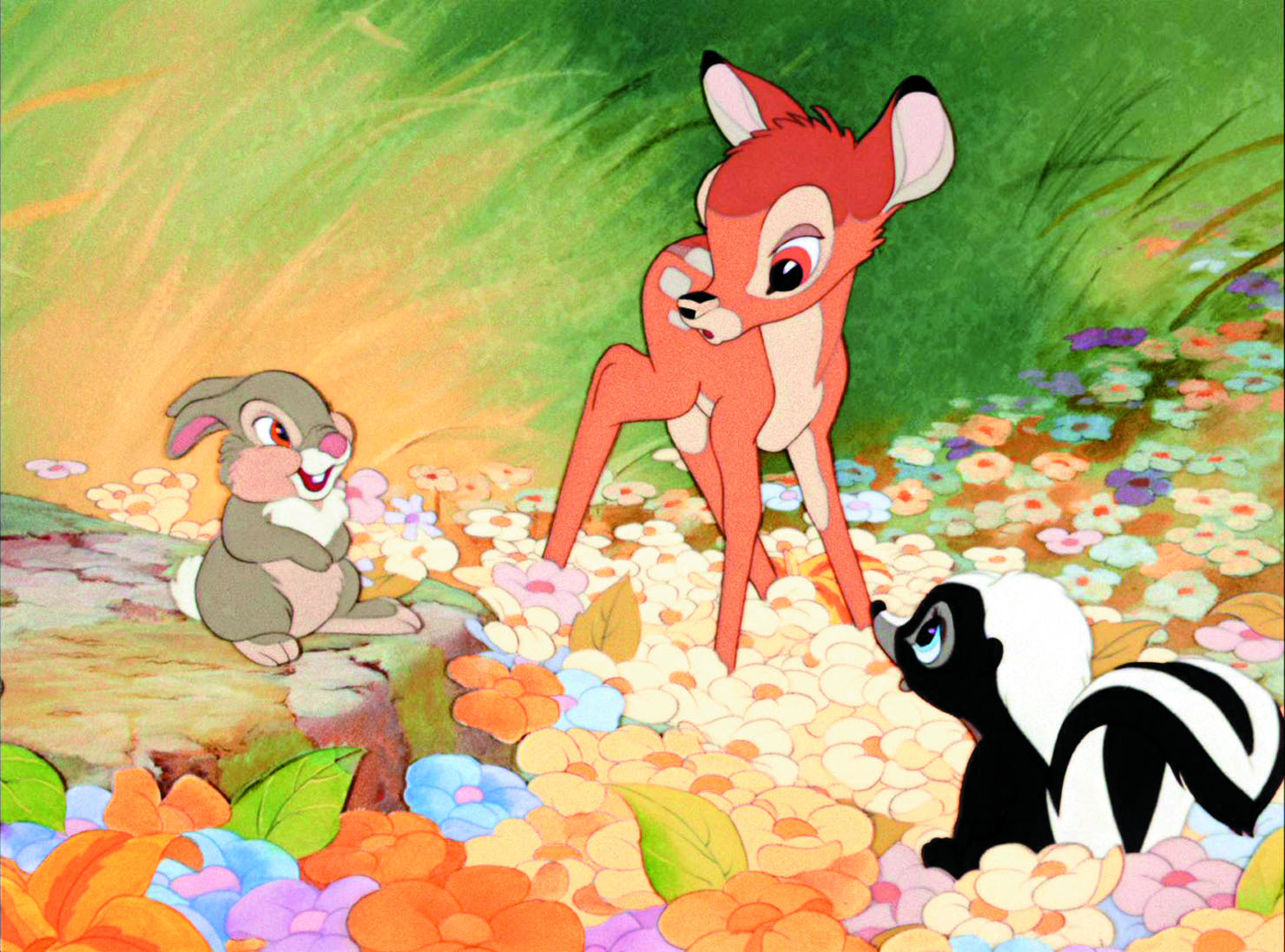
And frankly, as long conservatists are still around, I wouldn’t be surprised if children were soon issued a mandatory ban on watching Bambi. What are we to make of the skunk living in Bambi’s forest? Flower — that’s his nickname (!) — moves in an overtly feminine way, speaks in a high, squeaky voice, and enjoys sniffing colorful blossoms. Around Bambi he seems shy, batting his eyelashes flirtatiously, his body language clearly suggesting he has a crush on his friend. When the owl assures Bambi and his friends one by one that in spring someone of the opposite sex will fall in love with them, she pauses and hesitates when it comes to Flower. Apparently even the forest inhabitants are aware of the little skunk’s different orientation.
The other animals aren’t exactly role models either. The alluring rabbit — reminiscent of a Hooters waitress — seems not to value herself much; I’d even say she’s easy. She poses and wriggles in front of the first rabbit she meets, immediately proceeding to kisses. Bambi and his beloved Faline aren’t much better — they sleep together on the very first night! But what can we expect, when the example from above is hardly ideal? Bambi’s father seems only to impregnate one doe after another, leaving them alone with their offspring. Pure sodomy and Gomorrah — worse than an oversexed Ariel with her barely covered chest and Mulan grappling with gender identity issues… combined.

