
Review
HIGH LIFE. Could Have Been Science Fiction Epic
High Life could have been a contemporary dialogue with genre masters, an absorbing science-fiction epic, or at the very least a solid adventure drama.


Looking back, High Life marked Claire Denis’s bold but deeply flawed foray into outer space. Known for films such as Chocolat, White Material, and Let the Sunshine In, Denis seemed an unlikely yet intriguing candidate to direct a stark science-fiction drama. Early announcements and trailers promised an uncompromising story about people trapped in an extreme, hopeless situation far from home — a setup meant to strip away social conventions and unleash raw human instincts.
It sounded original, even daring, but there was never any inherent reason why Denis, a filmmaker so attuned to emotional nuance and human fragility, couldn’t translate her sensibility to the unsettling confines of a spacecraft, especially with a high-profile cast led by Robert Pattinson and Juliette Binoche. At least, that was the expectation going in.

The film opens with a lone man — later named Monte — tending to a drifting spaceship and a small child. The mysterious mission he is part of becomes the narrative backbone, gradually revealing how the infant ended up light-years away from Earth and what purpose the voyage serves. Denis appears to have aimed for a triptych structure: a first and third act framing an extended flashback meant to explain how the story arrived at its starting point. Even if we assume the scattered chronology and the oddly inserted Earth-bound scenes were intentional, the three segments of High Life never cohere into a meaningful whole.
There is no convincing bridge between the intimate portrait of a father and daughter and the collective study of group pathology that dominates the central section. As a result, the film fractures into two separate stories — neither of which functions particularly well as a self-contained narrative.
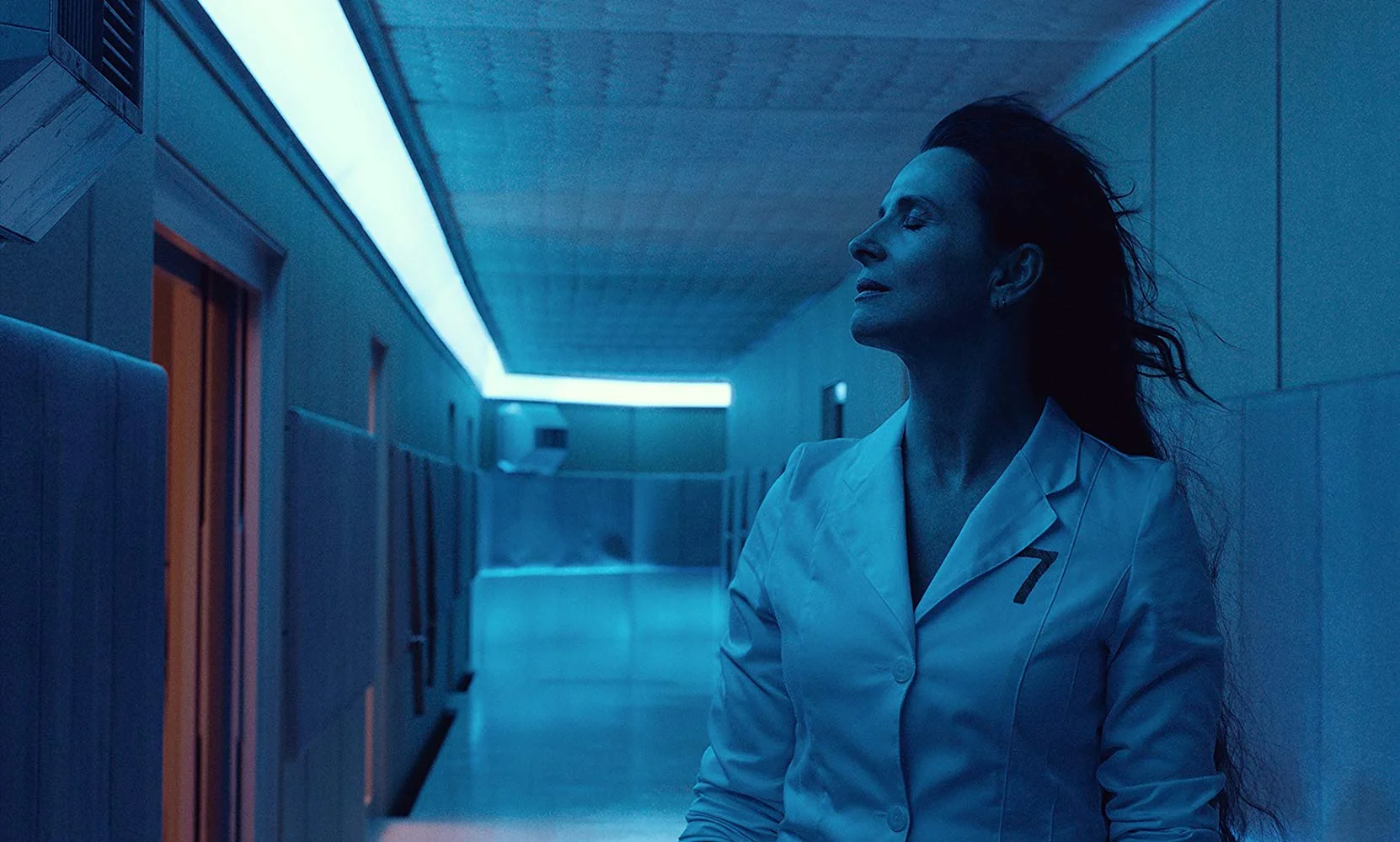
What should have been the film’s dramatic core — the relationships between characters subjected to the extreme conditions of a space expedition — is barely explored. Instead, Denis offers vague gestures toward a social and moral dystopia, painfully schematic character archetypes among the crew, and an obsessive fixation on sex and reproduction. The purpose of the mission itself, as well as the rationale behind sending these particular individuals into space, is best left untouched.
Equally squandered is the potential of the girl born aboard the ship, a strangely “Earth-like” presence who ultimately feels more like narrative filler than a meaningful attempt to naturalize the claustrophobic space environment. Exploring her perspective might have added texture; instead, the film keeps circling the already transparent psychology of its protagonist.
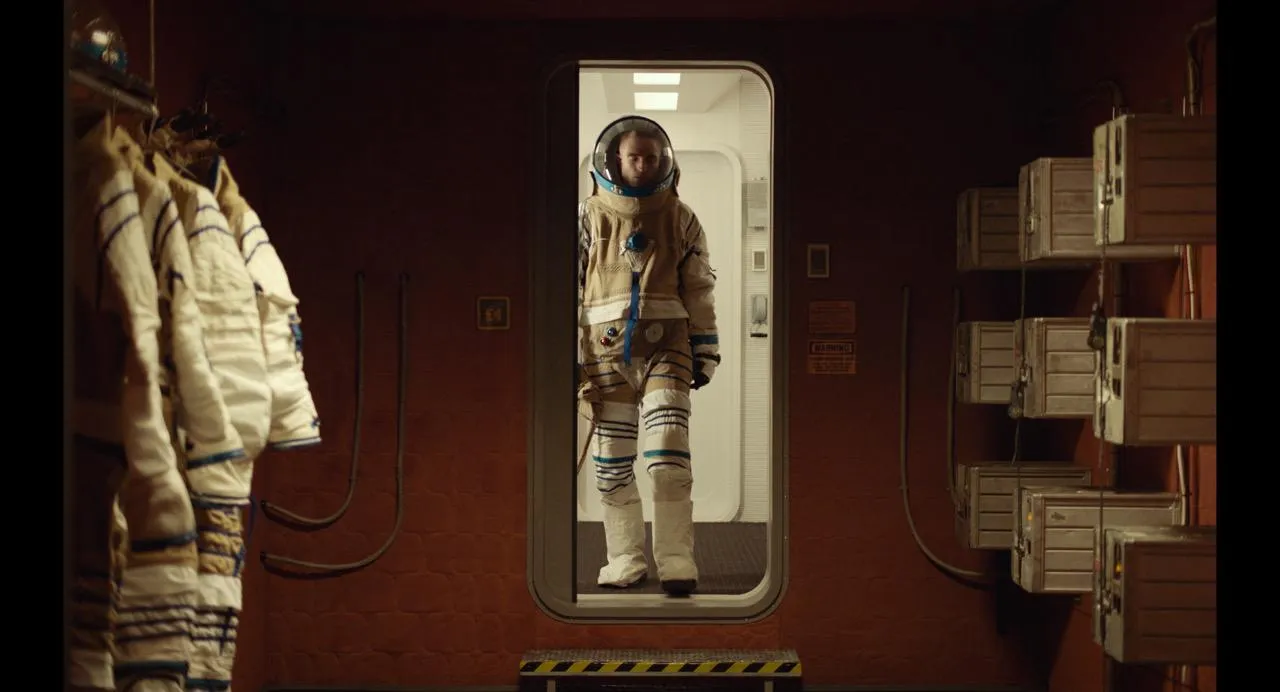
At first, Denis’s intentions seem clear. High Life positions itself as an ambitious, claustrophobic psychodrama set in space. The problem is that it cannot withstand comparison with the genre’s defining works. Staying within the film’s reproductive imagery, High Life resembles a bastard child raised by Duncan Jones’s Moon and the legacies of Solaris and 2001: A Space Odyssey. Like Tarkovsky and Kubrick, Denis treats outer space as a sterile laboratory for examining human nature — but neither master would have resorted to heavy-handed voiceover explanations or burdened their characters with such grotesquely banal dialogue. Denis, along with co-writer Jean-Pol Fargeau, does both.
The film’s philosophical layer is strikingly shallow, collapsing into a handful of muddled platitudes. Many narrative threads are underdeveloped or abruptly abandoned, creating an impression of chaos — and, paradoxically, relief that the audience is spared even more clumsy dialogue. Having established an intriguing premise, Denis seems uncertain about what the film actually wants to say, resulting in a work that gestures toward everything and ultimately commits to nothing.

Black holes, overpopulation, modern paranoia, the ethics of space exploration, cynical authorities, isolation versus group dynamics — all are present, yet none are clearly articulated or meaningfully resolved. The narrative momentum effectively evaporates shortly after the prologue, leaving the film to recycle its themes for over an hour before arriving at a conventionally symbolic finale that feels predictable, schematic, and emotionally hollow.
The screenplay leaves little room for ambiguity or interpretation, spelling out its meanings with blunt insistence. Worse still, almost nothing occurs that genuinely complicates the characters or alters the dynamics between them. Occasional bursts of action attempt to simulate development, but without proper groundwork they feel arbitrary, imposed by the script rather than arising organically from the situation.
The performances do little to salvage the experience. Juliette Binoche’s turn as Dr. Dibs — a grotesquely exaggerated figure spouting vulgarities and playing at demonic hysteria — is particularly disheartening. Even allowing for the caricatured nature of the role, Binoche opts for excess over nuance, flattening what little potential complexity the character might have had. Her storyline is so absurd it could almost support an interpretation of High Life as an ambitious parody — if only the rest of the film showed any awareness of irony.
Pattinson avoids outright embarrassment, but his performance is hardly a success. Despite having built an increasingly interesting filmography in the years prior (The Childhood of a Leader, Good Time), here he appears constrained by the script and, more troublingly, retreating into familiar mannerisms and a reliance on austere physicality.

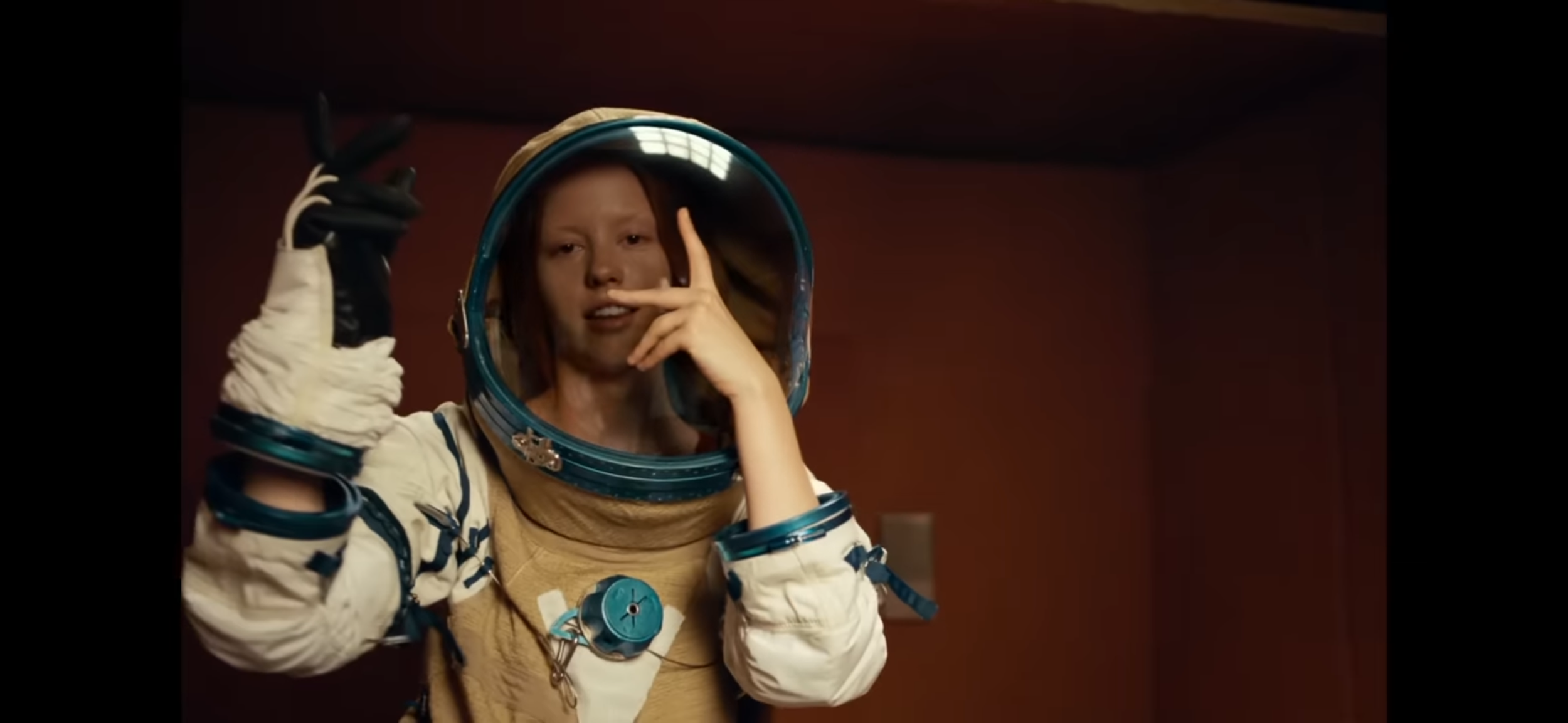
In contrast, the supporting performances by Agata Buzek and Mia Goth stand out. Both deliver striking, credible characters that hint at what High Life might have been — a film driven by vivid, ambiguous personalities thrown into a hostile environment. Unfortunately, they remain sidelined, reduced to background texture for protagonists who never truly come alive. Denis’s film is also aided by Yorick Le Saux’s elegant cinematography and Stuart A. Staples’s evocative score, but these elements alone cannot mask the film’s conceptual emptiness.
Seen in retrospect, High Life is an irritating, tedious, and exhausting experience. The atmosphere established in the opening moments ultimately works against the film, amplifying the sense of disappointment once it dissipates and leaves behind lifeless, crudely sketched figures. The visuals never quite achieve visionary transcendence, and following the plot offers little intellectual or emotional reward. Like the drifting spaceship it depicts, the narrative floats aimlessly, going nowhere in particular, while its clumsy attempts at profundity provoke more laughter than curiosity.
High Life could have been a contemporary dialogue with genre masters, an absorbing science-fiction epic, or at the very least a solid adventure drama. It is none of these. Denis set out to reach Jupiter and beyond — and failed to make it even as far as the Moon.

