
Review
JOE KIDD. One of Eastwood’s Weakest Performances
Joe Kidd is an entertaining film that can easily be watched and even recommended. Although it is not particularly engaging, it is also not boring.


Elmore Leonard is one of Hollywood’s favorite writers. Out of nearly fifty books he has written, American cinema (and television) have adapted almost half. It is therefore no surprise that over time Leonard was also hired to write screenplays. In total, he wrote nine, though usually based on his own novels. Those that were entirely original numbered only a few, and the first of them was Joe Kidd from 1972.
The titular Joe (Clint Eastwood, of course!) is a typical “self-made man” from the early twentieth century – seemingly avoiding trouble, yet always appearing to be on the wrong side of the law. We meet the former bounty hunter in a prison cell in one of the towns of New Mexico. It so happens that at the same time the town is attacked by a local revolutionary, Luis Chama (John Saxon), who seeks justice for his people, who are being repressed by wealthy landowners. One of them – Frank Harlan, portrayed by the reliable Robert Duvall – stages a veritable hunt for Chama, during which he intends to kill him with his own hands. He asks Kidd for help, as Kidd knows the surrounding terrain well. Kidd naturally refuses, though he changes his mind after Chama’s gang also attacks his ranch and his workers…

The plot is therefore not particularly original. The short, barely ninety-minute film focuses almost entirely on the pursuit of / confrontation with Chama and his entourage. In the process, further boundaries of Kidd’s personal code are crossed, and he is eventually forced to choose a side (his own). Although romantic subplots are, unusually, left aside, politics serves as the backdrop here. Unfortunately, much like the relationships between the main players, it is poorly outlined, not very engaging, and flat. This is the result of abandoning the dominant thread from Leonard’s original story – interestingly inspired by real events from 1967, from which the script’s original title derived: The Sinola Courthouse Raid – namely the character of Luis Chama, in favor of emphasizing Eastwood’s hero. A hero, it should be added, who does not even wish to be one.
For his part, Leonard seems to be more interested in the tools his characters use to kill their opponents than in fully developed, flesh-and-blood figures. Frank Harlan’s special Savage Model 99 rifle, the sporting Remington-Keene in .45-70 caliber carried by Mingo, the distinctive Mauser C96 with an extended grip belonging to Lamar Simms, or finally the Ross Model M-10 rifle used by Joe – Leonard made every effort to ensure that each of these weapons received its moment in the spotlight and remained historically accurate to the film’s setting. And indeed, the presentation of the individual models and their performance in the field can impress – especially enthusiasts. The downside is that they sometimes manage to steal entire sequences from the actors.
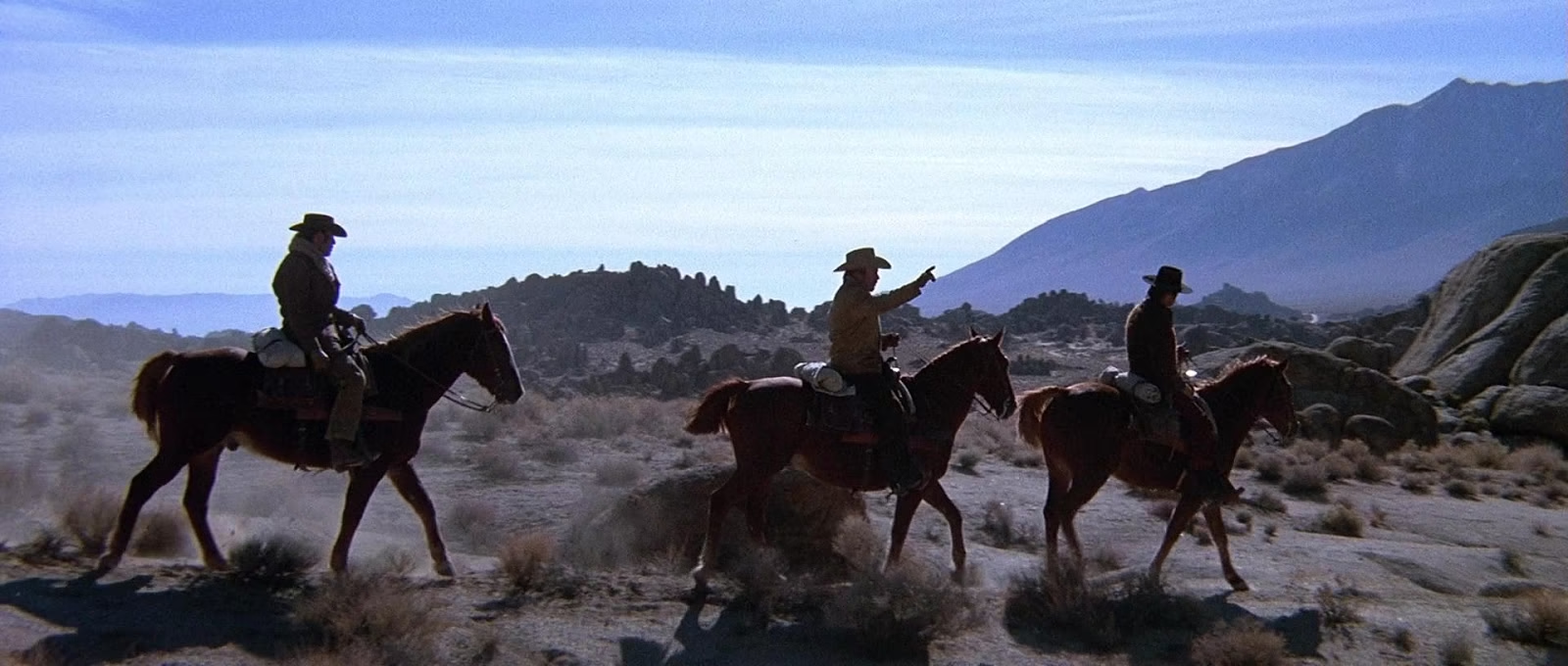
None of the characters makes much of an impression. Clint has innate charisma, and people like him simply because he is Clint. That plus a few obligatory one-liners does the job, yet among all the legendary tough-guy roles, Joe Kidd is arguably one of Eastwood’s weakest and least distinctive performances. Eastwood certainly did not remember the shoot fondly either, as during most of the production he suffered from bronchitis and recurring panic attacks, which undoubtedly affected his commitment to the role. Director John Sturges reportedly had many problems working with him, ultimately making Joe Kidd the last western in which Clint was directed by someone other than himself.
The rest of the cast is also unremarkable. Duvall performs on half throttle and, although he plays a real scoundrel, it is hard to genuinely hate him. Saxon, meanwhile, is absent from the screen for most of the time, so what lingers in memory are mainly his thick moustache and solid tan — the Brooklyn-born son of Italian immigrants. James Wainwright, Dick Van Patten, and the exotic Stella Garcia who appear in the background remain static and unremarkable. The only one who stands out is Don Stroud as the slightly unhinged Lamar – but even then, mainly because he overacts and possesses a distinctive “villainous mug” that Eastwood fans may also remember from the earlier Coogan’s Bluff (and other cinephiles from the later Licence to Kill).
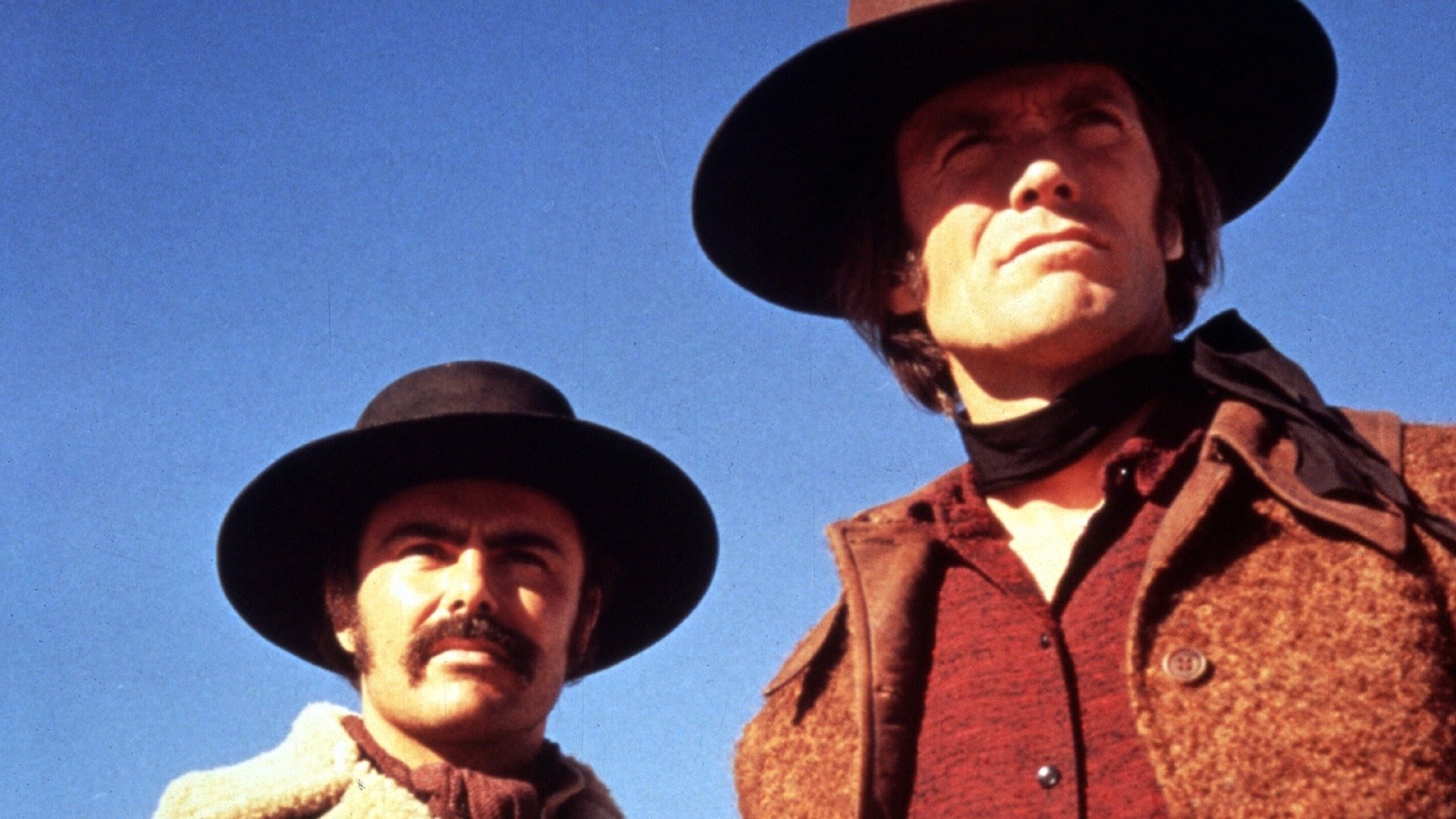
Given all this, at a certain point the filmmakers seem to abandon the core of the story altogether, focusing solely on action – predictable and truly thrilling only at moments. And, worse still, heavily exaggerated, resulting in a spectacular finale that feels as if taken from a different film, featuring a train that joyfully demolishes half the town – a gimmick not originally part of the script, but an ironic idea from producer Robert Daley, whose joke the crew took completely seriously and simply filmed. After all, it was his money…
Unfortunately, this is not the only flaw of Joe Kidd, whose problematic and loosely controlled production clearly transferred to the finished product. Although director of The Magnificent Seven was supported by his regular collaborators — Bruce Surtees (cinematography) and Lalo Schifrin (music) — even here it is difficult to speak of full satisfaction. Arizona standing in for New Mexico looks, as always, magnificent on the big screen, and the main theme helps create a prairie atmosphere.
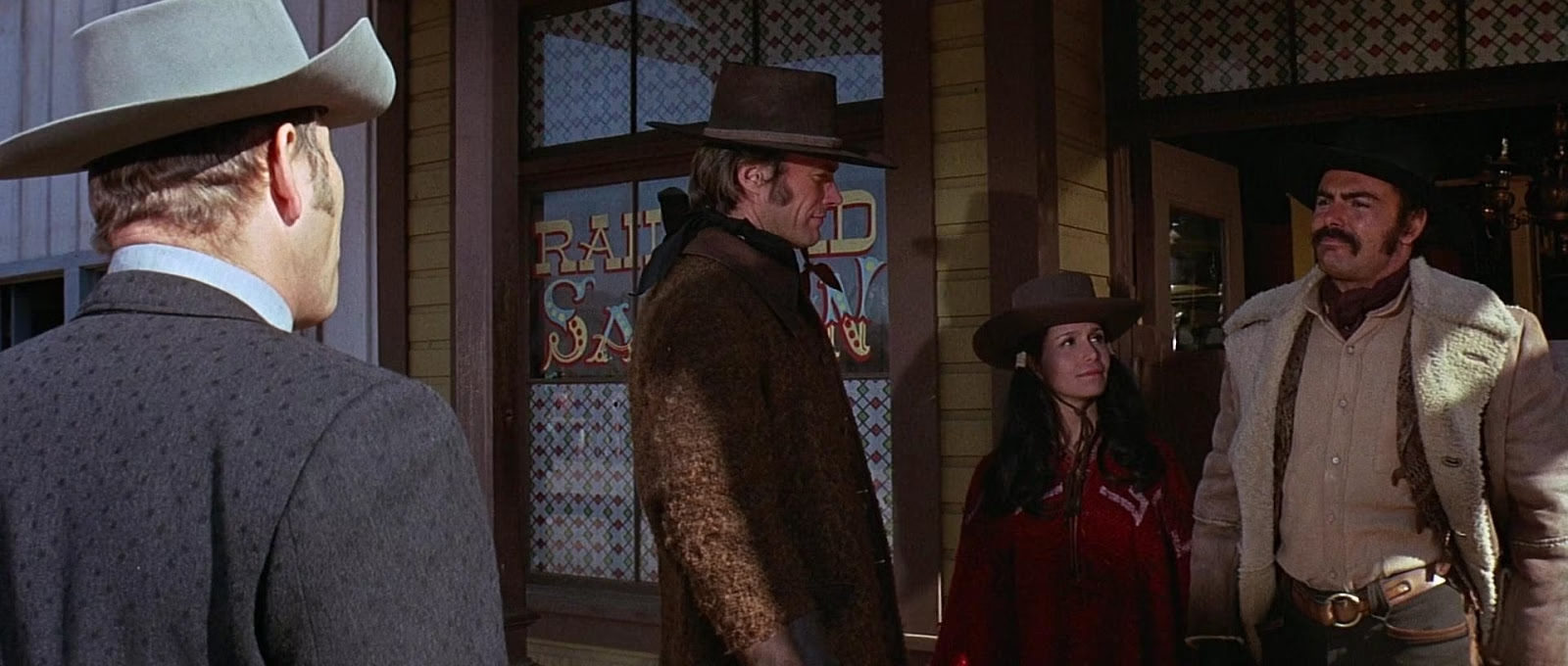
Yet despite those few spectacular scenes, the entire project feels very intimate, almost studio-bound, overly cautious and, sadly, hollow at its core. It lacks greater emotion, not to mention any deeper reflection on the theme introduced at the very beginning of the film.
This did not prevent Sturges’s work from becoming a moderate box-office hit (and it is worth noting that it was the year when Dirty Harry dominated theaters). It later earned money on the home video market as well, although on the other hand the budget of Joe Kidd remains a studio secret at Universal, so it is unclear how much profit it truly generated (for comparison, the debuting Jeremiah Johnson in December of the same year cost over three million dollars, while the aforementioned Dirty Harry cost four).
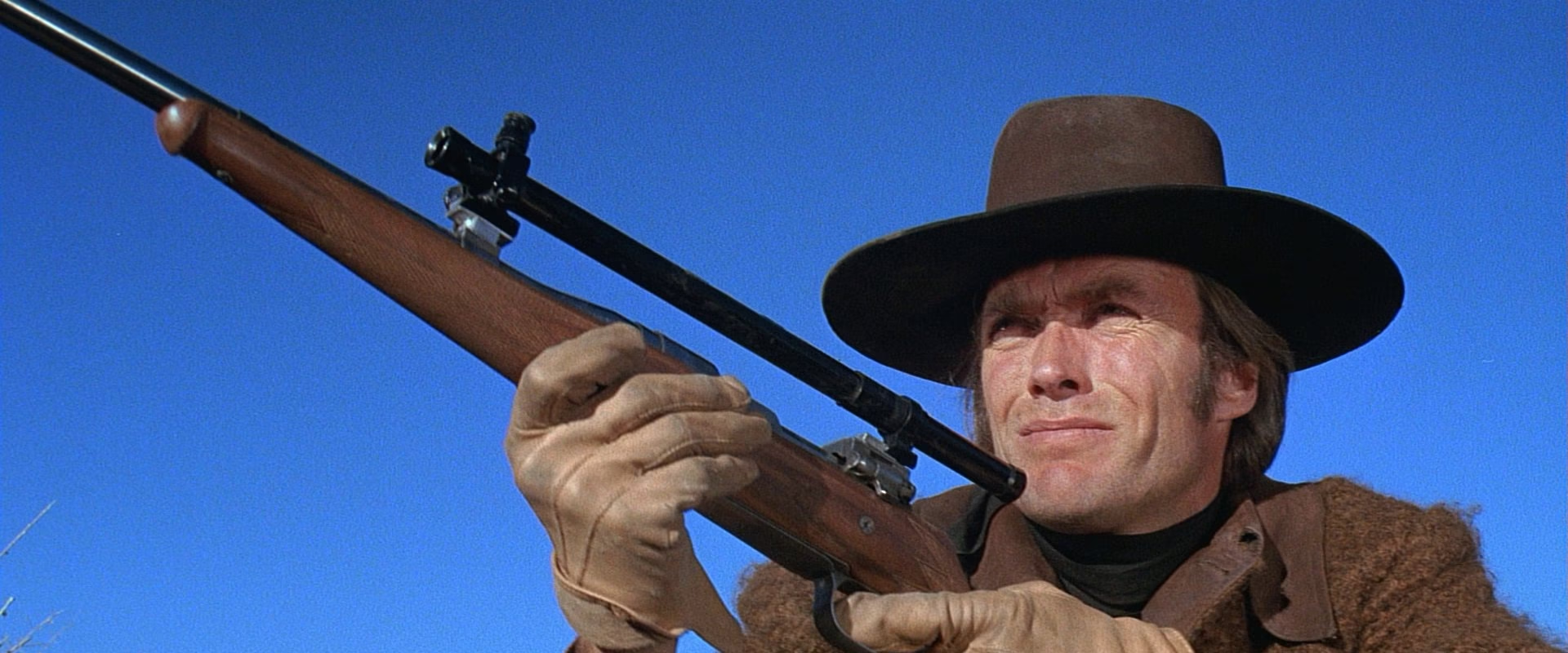
Financial results, however, did not go hand in hand with artistic success, and the whole project quickly faded into obscurity, giving way to later productions by both Eastwood and Sturges. For the latter, it was one of the final projects of his career — before retiring at the end of the decade, he directed only two more films: John Wayne’s crime response to the adventures of Dirty Harry, McQ, and the war epic with a Polish accent, The Eagle Has Landed.
Ultimately, Joe Kidd is an entertaining film that can easily be watched and even recommended. Although it is not particularly engaging, it is also not boring, and with the right mindset and suspension of disbelief, one can quite enjoy this gunslinger fetish. Sometimes that is enough. That said, there is no doubt that with such a team involved, it could and should have been much better.

