Horror Movies
SHIVERS Revisited: Cronenbergian Table of Bodily Macabre
From the perspective of time, Shivers is a handful of crumbs from the Cronenbergian table of bodily macabre. All the necessary elements are there.

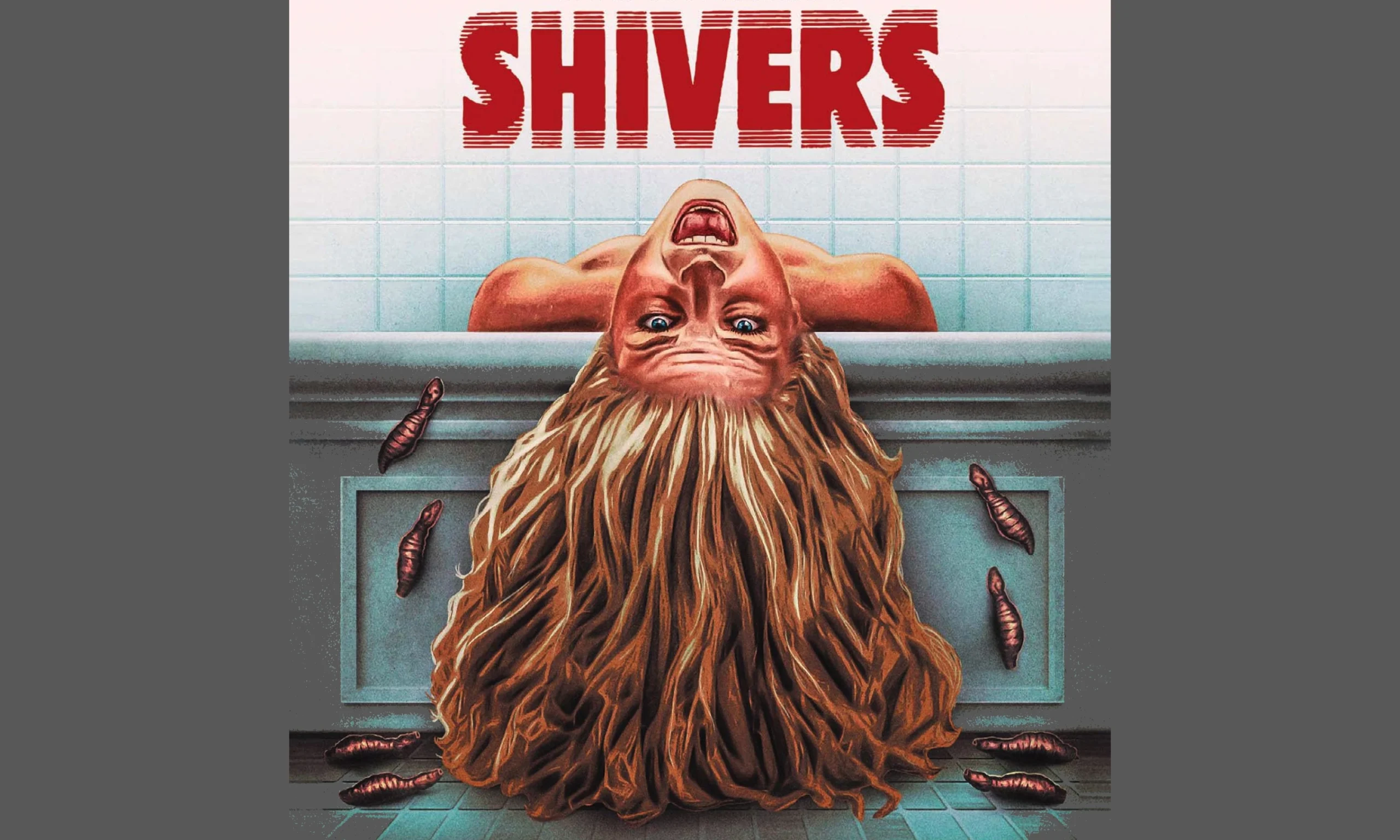
The Starliner skyscraper on an island near Montreal is a luxurious place. Furnished apartments encourage settling in, and once you are there, you actually do not have to go outside. There is no shortage of shops, services, or entertainment on the building’s premises. There is even a medical clinic with qualified staff. There is nothing left to do but enjoy the isolation from city noise and burdensome traffic jams. From the first scenes of Shivers, the Starliner is advertised like a previously unsurpassed dream that can finally be fulfilled – all you have to do is sign a lease agreement.
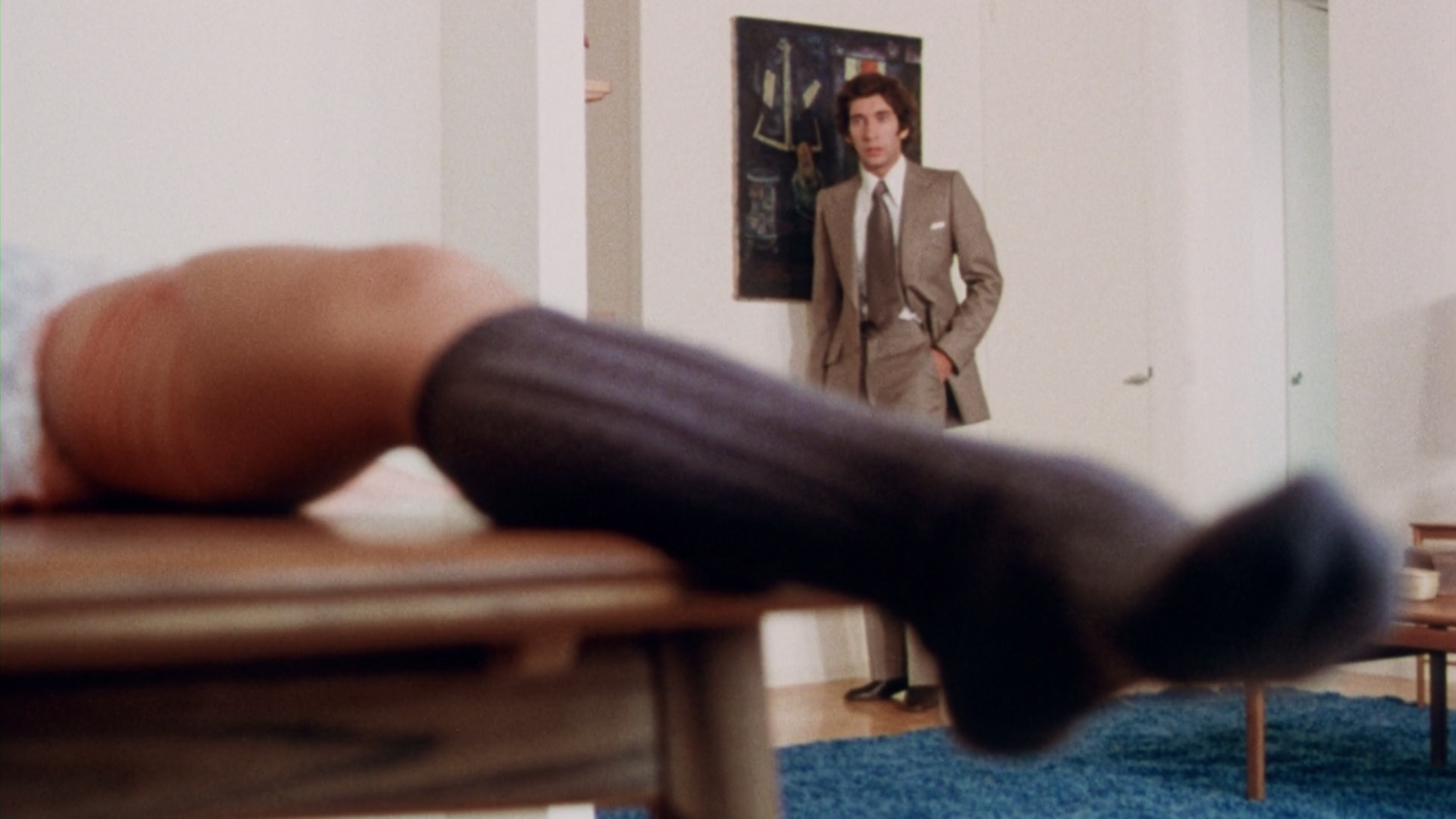
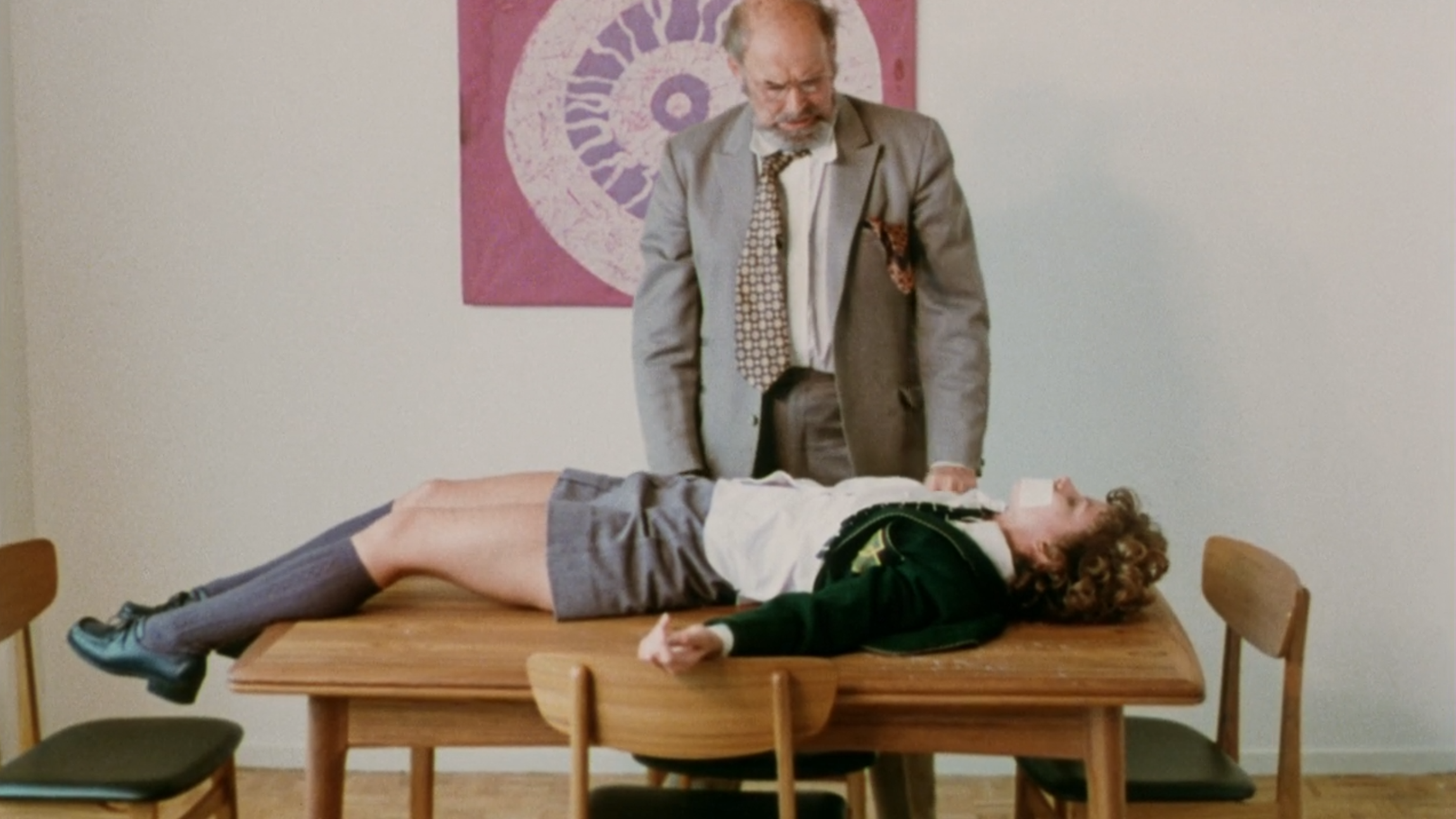
When the eloquent and charming real estate agent Merrick (Ronald Mlodzik) shows a pair of potential tenants around the building, everything seems to be in perfect order. However, at the same time, a macabre crime occurs in one of the apartments: a burly older man strangles a young girl in a school uniform. When she loses consciousness, he places her on a table, undresses her, cuts open her stomach with a scalpel, and pours in corrosive acid. A moment later, he slits his own throat and dies.
The tragic event most affects the local doctor, Doctor St. Luc (Paul Hampton), who knew the deceased man, Emil Hobbes – a specialist urologist and venereologist who was a recognized medical authority. Gathering further interviews from the building’s patients and consulting with a professional colleague (Joe Silver), St. Luc learns many disturbing things about the suicide victim and the girl he murdered, Annabelle Brown.
She was seen many times in the skyscraper in the company of older men, with whom she was said to have had sex despite her young age. In turn, Doctor Hobbes’s scientific research proves to be disturbing. In his opinion, man is an animal that thinks too much. Instead of that, it would be best to stimulate one’s instincts, especially sexual ones. Shortly after his and Annabelle’s deaths, further strange events occur in the Starliner building – residents complain of bulging, movable tumors in the stomach.

One of the patients mentions that he saw similar bulges in the deceased girl, with whom he had sex at one time. Doctor St. Luc suspects that Annabelle, by sleeping with the tenants, infected them with some kind of parasite. Soon, an epidemic of sexual madness overcomes the tenants.
Shivers is simultaneously the debut and directorial exposé of David Cronenberg, a cinematic statement in which he presented the foundations of his work. The most important of them is the threat coming from inside the human organism, and not from the outside, as was usually the case in horror films. Within this specific subgenre characteristic of Cronenberg – body horror, also known as venereal horror – the director of Shivers could most emphatically show what interests him most.

The film’s parasite combines an aphrodisiac and a venereal disease, so it embodies two of Cronenberg’s obsessions: fascinations with the body and its possibilities, limitations, and eventual extensions. This is the core of each of his films, and anyone who has seen The Fly knows that few people can deal with the hero’s physicality so precisely. In Shivers, the debauched heroine is the carrier of a parasitic organism causing morbid desire, which turns civilized, cultured people into sexual zombies.
However, as is typical with Cronenberg, even the genre is a pretext for something more complex. Paradoxically, Shivers is best watched precisely in search of further meanings and tropes. The idyllic skyscraper on the island is meant to give the tenants a sense of elitism, of being better. But the parasite does not choose – it infects everyone, it discriminates against no one.

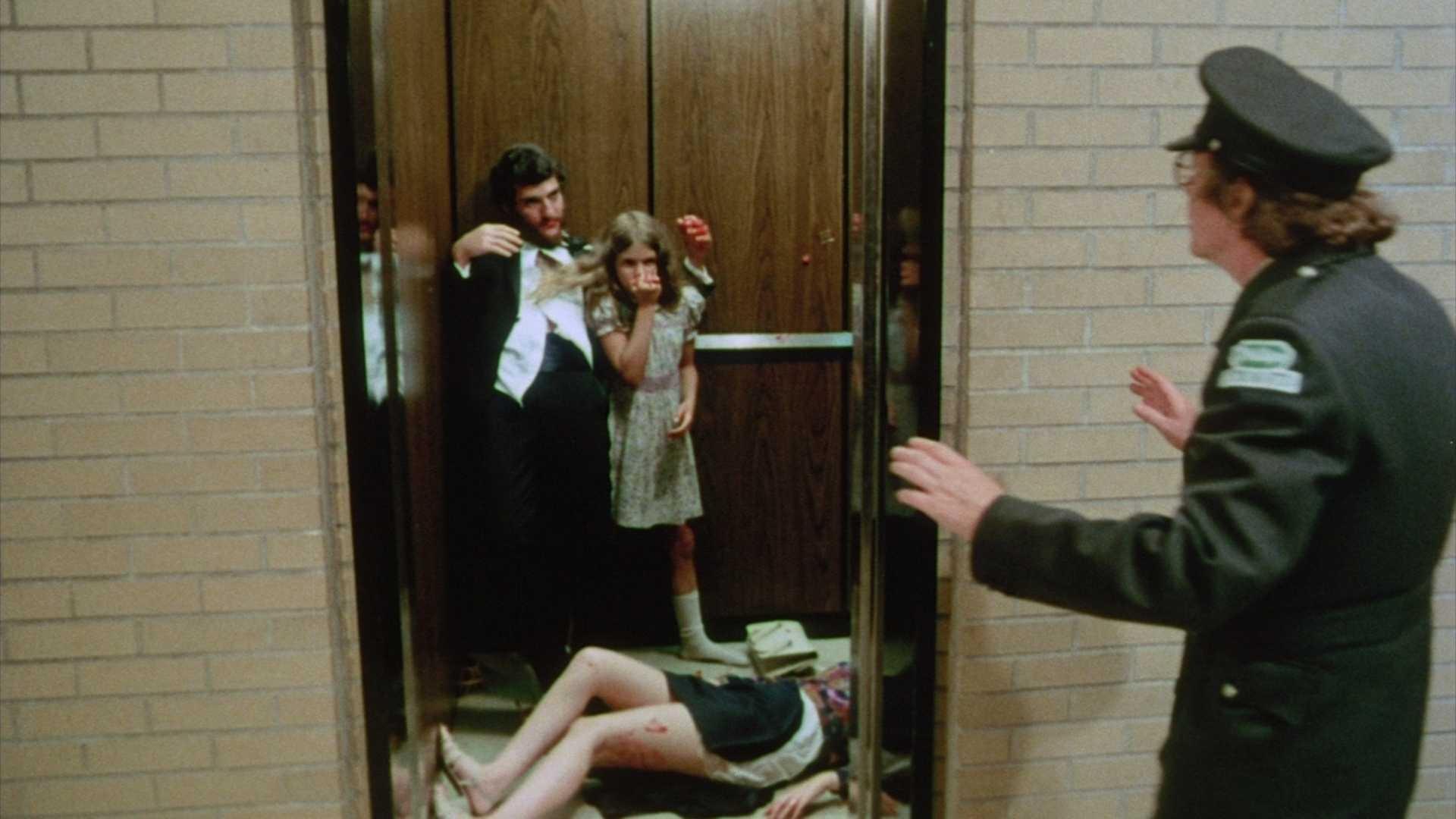
Initially unacquainted people unite in a mass orgy according to the principle that every body – young, old, beautiful, and ravaged – is a sexual object. The abandonment of conventions and the satisfaction of one’s needs using another person is associated, on one hand, with a critique of consumerism, and on the other, with misunderstood freedom (in this case, sexual).
Cronenberg does not shy away from serious themes like rape, incest, and pedophilia, but hides them skillfully in the horror convention, and moreover, in single scenes. Ultimately, the parasite spreading in the film leads to an inevitable sex-apocalypse and the collapse of society, which the grim ending suggests.
The low budget, uneven cast, and production haste, as well as the director’s still incomplete workshop, did not, however, affect the timelessness of the film. Today, it is quite difficult to watch. Not every dialogue was necessary, not every actor was up to their role, and not every shot is sharp and well-framed.
From the perspective of time, Shivers is a handful of crumbs from the Cronenbergian table of bodily macabre. All the necessary elements are there, but they form a chaotic, incomplete whole. It is a successful debut, but not the best film, which is much more interesting to watch through the prism of the director’s later work than as a standalone piece.