
Horror Movies
Looking Back at APOSTLE: A Grim and Moody Folk Horror
Apostle maintains tension and possesses a grim energy, strengthened by occasional bursts of violence so that it does not bore for a single moment.


The beginning of the twentieth century. A kidnapped woman sends her father a letter demanding ransom, which he is to deliver to an island inhabited by a sect. The task, however, is undertaken by her brother, Thomas, a supposedly deceased man, carrying scars on his back and in his heart, his gaze suggesting pain or hatred, perhaps both. The settlement he reaches promises peace, harmony, and abundance, yet it quickly proves to be a façade—Malcolm, who speaks with the voice of the island’s god, is an inspired orator who nevertheless hides dark secrets. Thomas, meanwhile, realizes that something more than human may indeed be watching over the island. The Apostle by Gareth Evans.
It is a tempting treat for lovers of folk horror, that variety of horror cinema which draws precisely on folklore, rurality, provincial beliefs, and tales. The very description of the plot brings clear associations with the famous The Wicker Man by Robin Hardy, while at the same time presenting a much darker version of being a member of a sect. In that film, the cheerful atmosphere of the island and the genuine sense of community acted as a mobilizing force, both to sing merry songs, participate in various ceremonies, and above all to offer a sacrifice to the powerful Wicker Man.
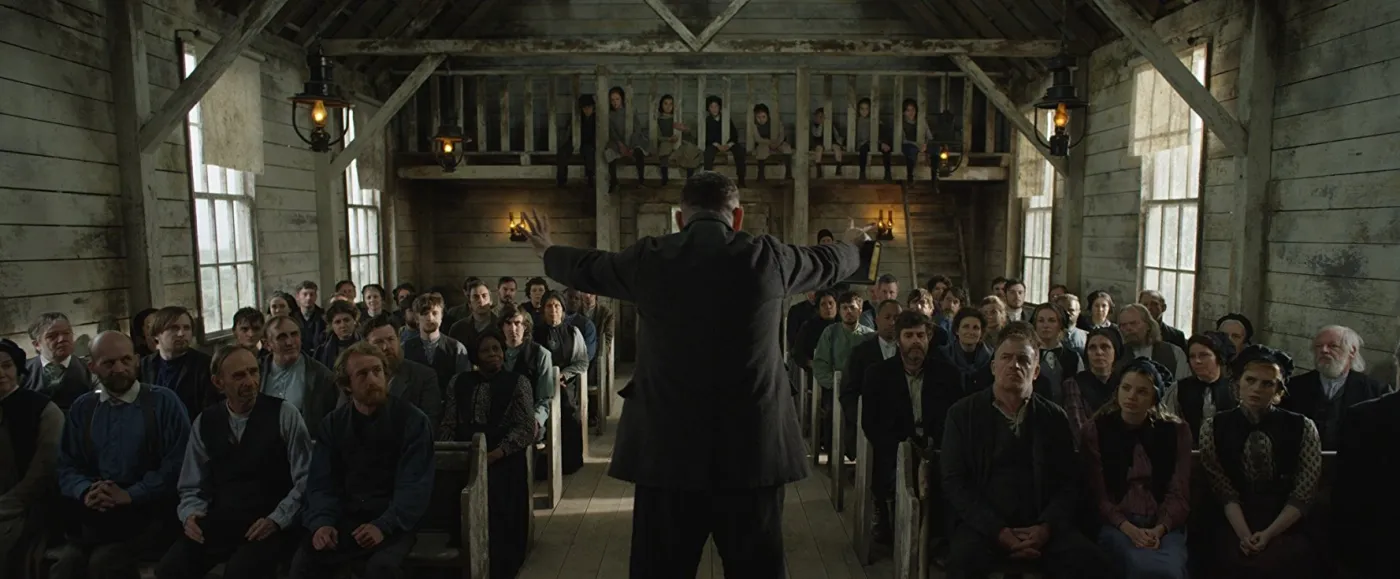
In Evans’s film, the sky is always overcast, people are forced to feed the land with their own blood because it has ceased to yield crops, and animals are born sick and malformed. Malcolm, as portrayed by Michael Sheen, is inspiring only at first glance; in reality he is a realist resorting to desperate ideas merely to save his people. Danger may come from many directions—crop failure threatens famine, royal assassins continue to seek the life of the heretic and rebel Malcolm is called in England, and the arrival of Thomas on the island, whose true purpose no one knows, further complicates the already difficult situation of the prophet.
It is a great pity that the director and screenwriter did not decide to make Sheen’s character the protagonist of his film. All the more so because the closer we get to the finale, the more Malcolm’s situation becomes decidedly more interesting and more difficult than that of Thomas.
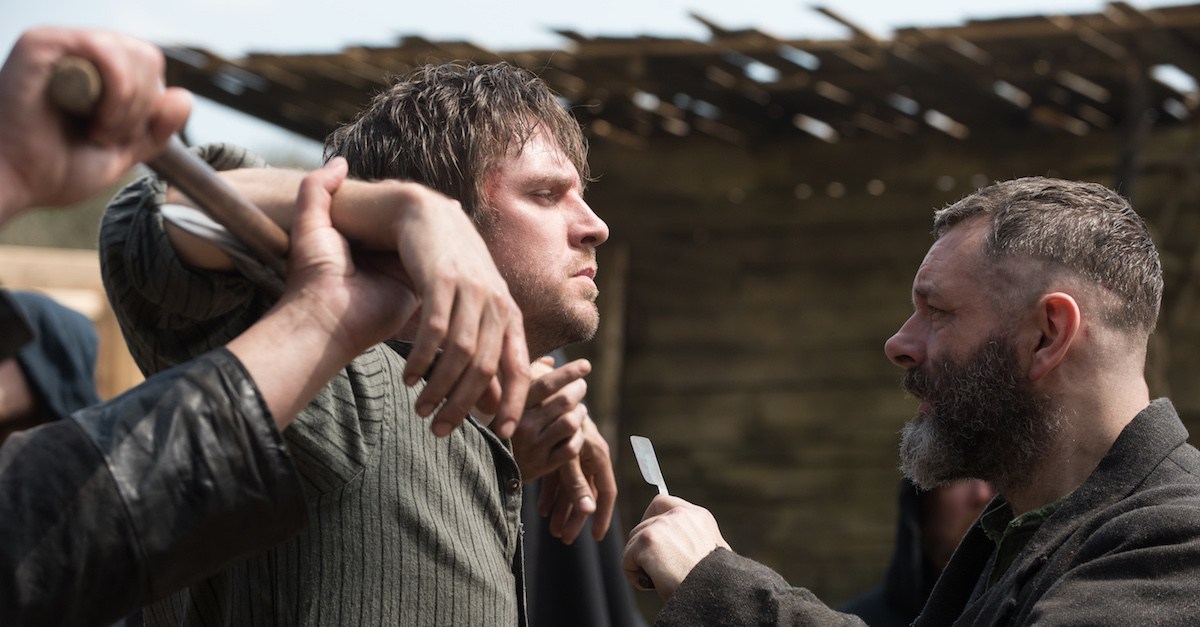
He fulfills the pattern of the mysterious stranger, about whom we know from the beginning that he is a dangerous gentleman, treating his own tragedy with laudanum, yet pursuing a clear and noble goal. Dan Stevens too often casts sidelong glances (in Malcolm’s place and that of his people, I would have searched Thomas before he even unpacked), though he is able to make convincing his character’s problem of faith, his departure from the Christian God and his finding himself in a place that recognizes another deity. Perhaps a more tangible one.
In any case, the fantastic elements in Apostle, specifically the understanding of the principles on which they operate, seem crucial to fully comprehending the film. This occurs only after the halfway point, following a scene that changes the balance of power, reveals a hidden conflict, and makes the final forty-five minutes truly exciting.
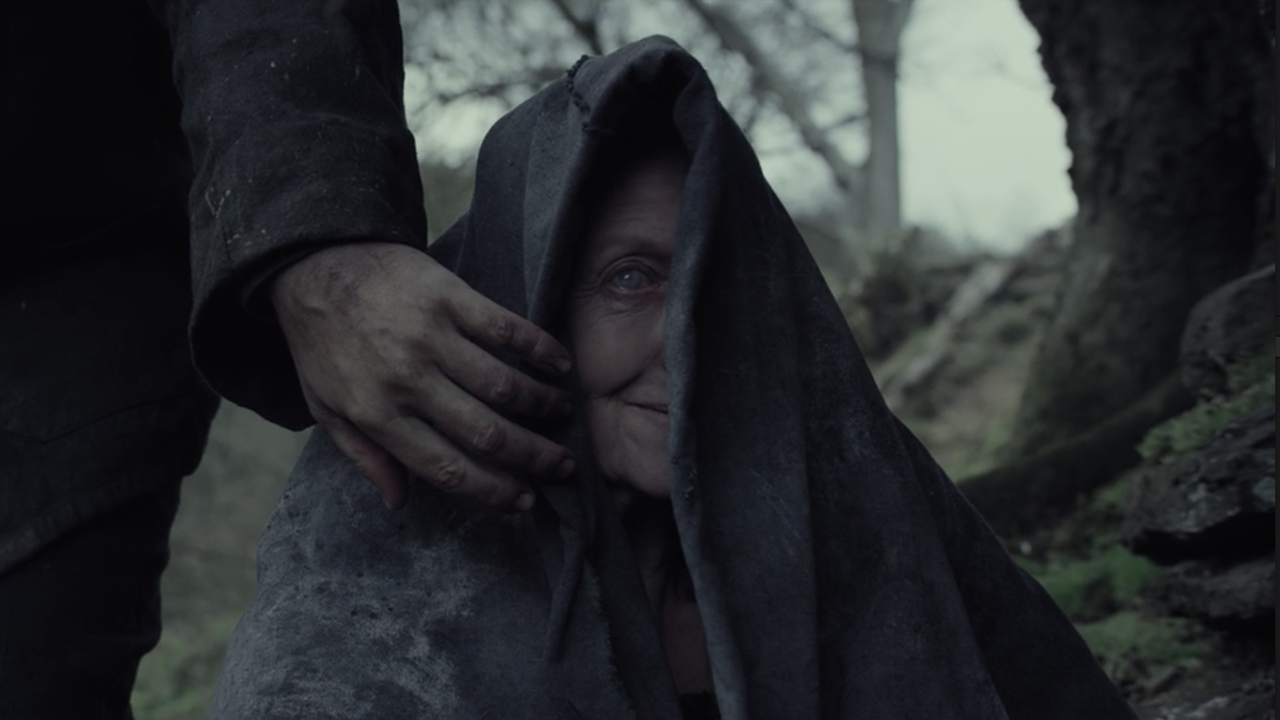
But even then Evans is more interested in the physical danger threatening the protagonists than in their spiritual transformation; questions about faith that can be rebuilt through the miraculousness of another religion, or about the relationship between god and man and who serves whom, seem to remain on the margins of Thomas’s story and his mission to save his sister.
The banality of the statement that religion in the hands of hateful people leads to cruelty is exploited here in the full glory of gore cinema, yet more interesting things happen where Evans does not point his camera.
This does not mean, however, that the film itself is unsuccessful. In terms of execution, it is a work that surpasses most Netflix productions, and it would certainly look magnificent on the big screen, if anyone had the opportunity to see it there. Apart from the aforementioned reservations, Stevens performs very well as the tormented protagonist, accompanied by Sheen and the increasingly horror-associated Lucy Boynton (I Am the Pretty Thing That Lives in the House, The Blackcoat’s Daughter), as Malcolm’s daughter sympathetic to Thomas.
The story maintains tension and possesses a grim energy, strengthened by occasional bursts of violence so that it does not bore for a single moment, although it is difficult to justify its 130-minute running time; unfortunately, the Welsh director too often focuses on obvious and overused elements, neglecting what is most interesting in his screenplay, which is only sketched.

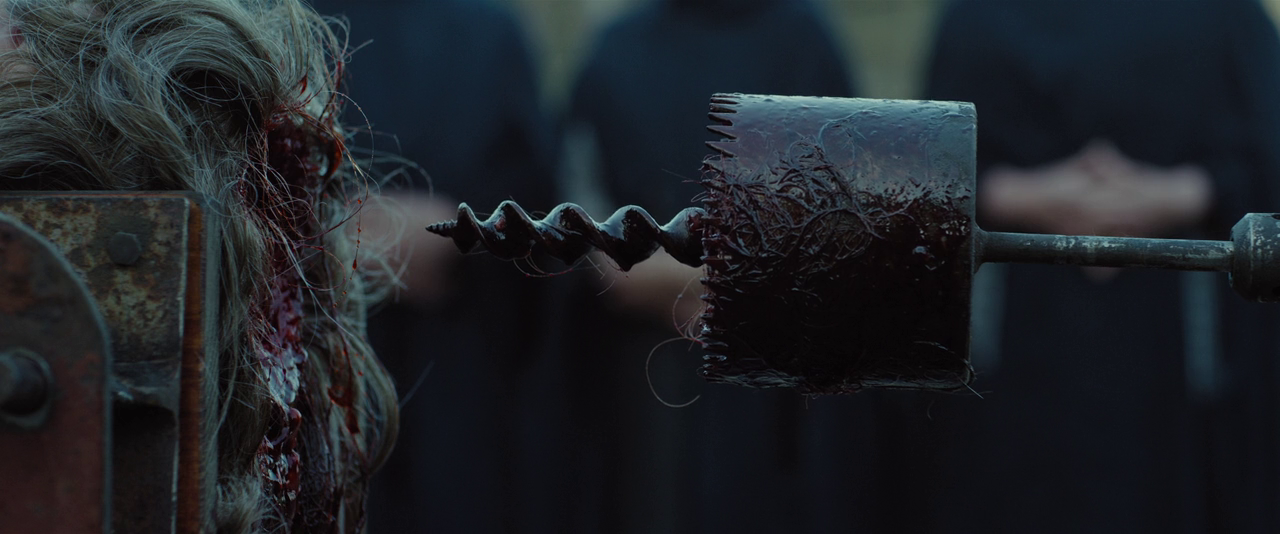
As an author of uncompromising action cinema, he finds himself surprisingly well in the moody style of folk horror. He rarely reaches for the tools at his disposal when directing both parts of The Raid, although one cannot deny Apostle its bloody imagery—a drill sinks into a head, throats are slit with a razor, fingers are lost in exceptionally macabre circumstances, and a stomach is ripped open along its entire length.
It is also worth noting that this is not the first time Evans has addressed the subject of religion and sects. In his segment of V/H/S 2, he showed how the apocalyptic beliefs of a certain cult take on real form. That story, full of manic vigor and outlandish ideas, differs greatly from the calm narration of his new film, although in both the director shows the devastating consequences of surrendering to religion, where the presence of a deity depends solely on man. A grim conclusion, especially for a believer.


