
Horror Movies
THE HAUNTING OF HILL HOUSE Revisited: A Chilling Ghost Story
The Haunting of Hill House is an outstanding ghost story, drawing both from the classics and from a modern reading of the haunted house motif.

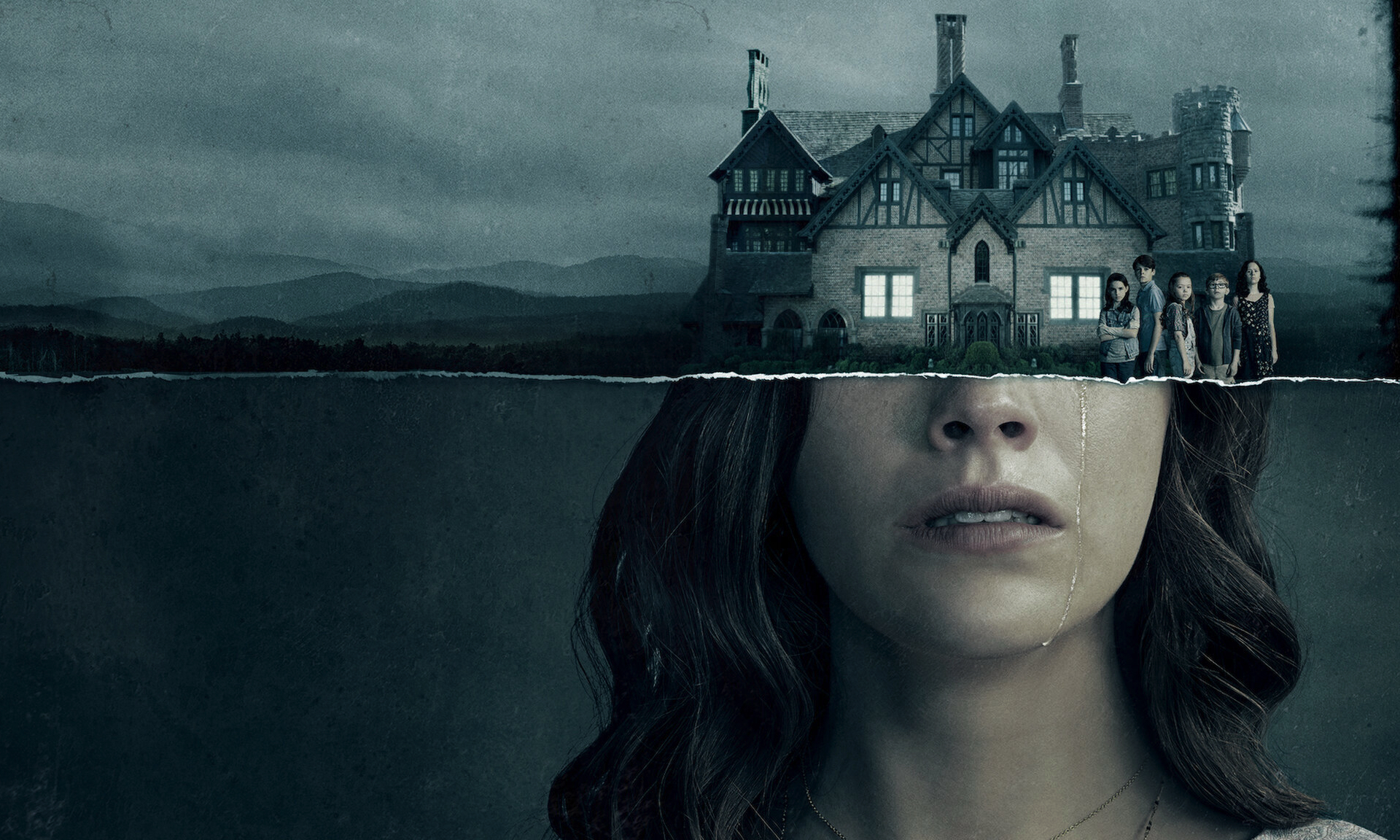
I believe that the timeless quality of haunted house stories stems from the conviction of the creators of such works about the inevitability of very specific individuals crossing the threshold of such a dwelling. Houses stand so that people may live in them, but the haunted ones seem to wait for their residents: wounded souls, fragile psyches of those who will eventually lose themselves in the illusion that there is no place like home. The Haunting of Hill House.
At the same time, this pattern brings out the tragedy of the situation—the boundary between life and death, truth and illusion is so thin here that it is sometimes difficult to tell who is haunting and who is being haunted.
In the playful yet moving short story Miss Mary Pask by Edith Wharton, the protagonist does not know until the very end whether he has encountered a ghost or a terrifyingly lonely woman. She herself seems to have certain doubts about her status. Perhaps more important than the state of our existence (on this side or the other) is the intention with which we walk through our lives.
The ten-episode series The Haunting of Hill House follows the classic model of a horror tale in which the protagonists move into the titular house, discovering increasingly disturbing and unusual things with growing terror, until they are forced to save their own lives. But the director and screenwriter, Mike Flanagan, did not intend to create a faithful adaptation of the famous 1959 novel by Shirley Jackson; it had already been filmed twice before, first by Robert Wise in 1963 and then 36 years later, when Jan de Bont stood behind the camera.

The Netflix series resembles rather a combination of the book’s themes, motifs, and characters; it remains faithful to the idea behind Jackson’s original, but the introduced plot changes do not always go hand in hand with the existential tragedy of the story.
The plot focuses on the fate of the five Crain siblings who, in childhood, were raised in the titular house and, more than a quarter of a century later, are forced to confront it once again. The eldest, Steven, is now a well-known writer specializing in nonfiction devoted to… hauntings, although he himself does not believe in ghosts. His sister, Shirley, has an orderly family and professional life, running a funeral home and preparing bodies for burial. Living with her, Theo combines her duties as a child psychologist with nights spent in clubs, and through touch she can perceive the true nature of things.

There is also a pair of twins, the youngest among the siblings, Luke and Nell—he, a drug addict who has repeatedly disappointed his family; she, the most delicate and still tormented by memories of the house on the hill. Tragedy reunites them and forces them to reassess what they know about the past, their own parents (a mother whose death remains shrouded in mystery, as well as a father burdened by the weight of that tragedy), and themselves.
From the very first episode, Flanagan leaves no doubt about the destructive nature of the titular building—ghosts and specters lurk there, and the house exerts such a strong influence on those who live within it that they may go mad or even die. If neither of these two things happens, they will certainly never free themselves from the memories. Two timelines constantly intertwine here, showing the protagonists’ childhood, when their parents decided to move to Hill House in order to renovate the old building and then sell it, and the present day, with apparent successes and stability or complete life failure, in both cases the result of the nightmarish stay in the haunted house.
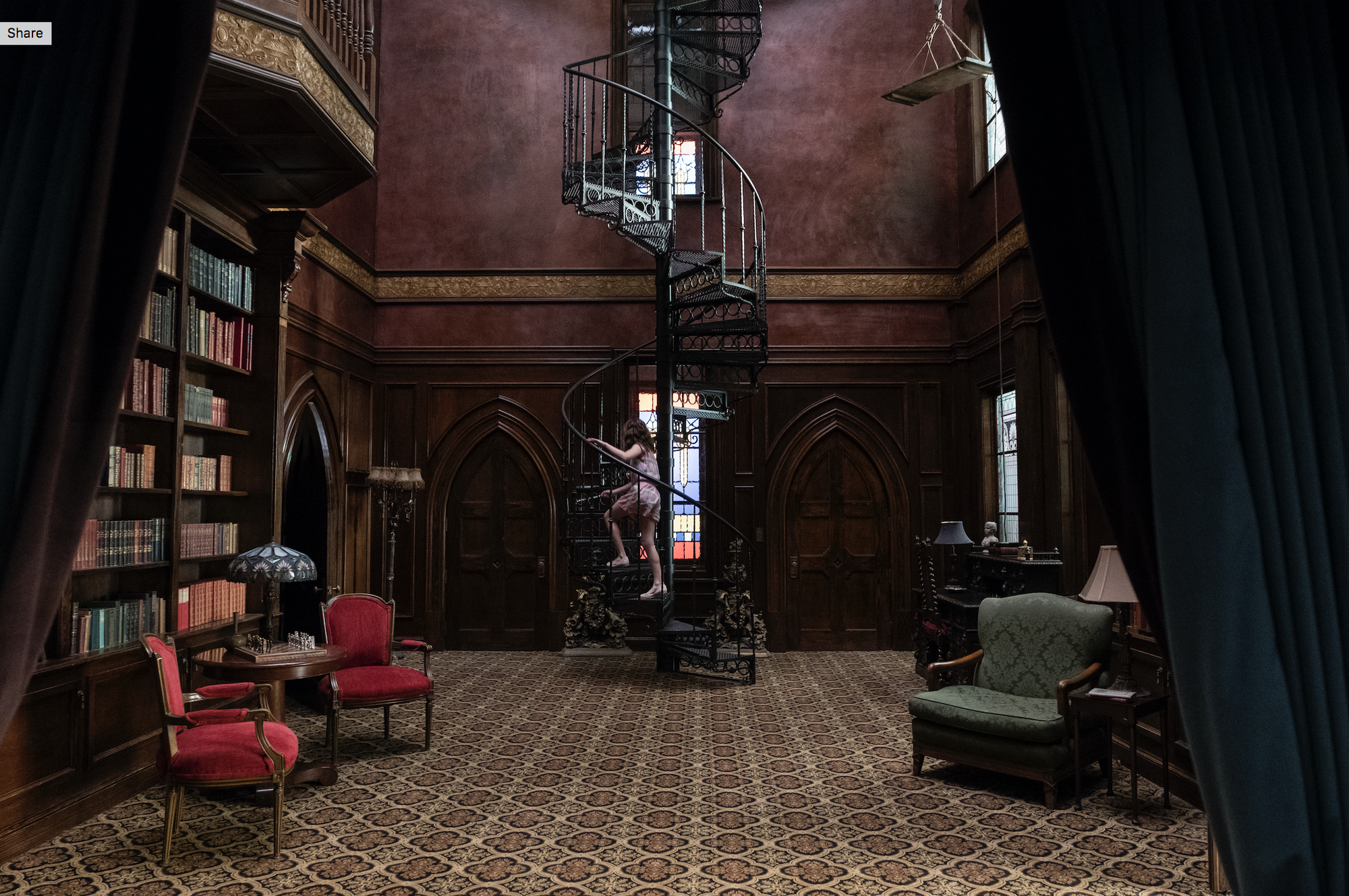
One of the director’s earlier films, Oculus, was constructed on a similar principle, although the series employs far more refined methods of linking past and present, relying on loose associations, visual or auditory clues. It suggests not only that wherever the protagonists are, whatever they see or hear, they immediately return in memory to the traumatic vacation from many years ago, but also that the construction of time and place is disturbed here, dependent on the psychological or emotional state of the characters at a given moment.
Moreover, the finale of the fifth episode, tragic and terrifying in its resolution, leads to the cruel thought that the future has been predetermined by the house, and the reality in which the protagonists currently function is a temporary refuge until they return to Hill House.

At its best moments, The Haunting of Hill House transforms the terror of encountering a ghost into something tragically significant. Mourning, sadness, and regret are inscribed into the dialogue between the living and the dead, even if (and perhaps precisely because) no words pass between them. Flanagan strengthens the emotional tone of the whole through the structure of the series—each of the first five episodes tells the story of a different family member, revealing the multidimensionality of the tragedy that affected them in youth and affects them now.
From fragments of the past and present difficult relationships emerges a portrait of siblings at odds, defending themselves against themselves and against the past. Luke escapes into drugs, Shirley maintains a perfect image of herself and the deceased, Steven chooses rationalism, rejecting even the suggestion of the existence of supernatural phenomena, Theo distances herself from others with long gloves and emotional coldness. Nell, meanwhile, can be helped only by her family, but that family is absent when it is most needed.

The family drama here is more frightening than the host of ghosts who, in striking moments, walk through the corridors of the great house, hang in the air, or slip by in the background, indistinct yet constantly present.
With each work in Flanagan’s filmography before the series (among them the aforementioned Oculus, the modest Hush about a duel between a deaf writer and a psychopath, the stylish Ouija: Origin of Evil made in the manner of 1970s cinema, and Gerald’s Game based on the novel by Stephen King), one sees him as an increasingly significant author of screen horror. The Haunting of Hill House is his best achievement to date, in which the subtlety of the literary original is complemented by more explicit effects, never veering toward shock or disgust, but emphasizing the drama of the main characters and the horror inscribed into their lives.

His craftsmanship serves something more than technical display, the best proof of which is the sixth episode, composed of only a few very long takes whose cuts transport the viewer between two turbulent nights, one in the past and the other in the present. The fluidity and dynamism of the master shots unite the Crain family, gathered in one place, as children coping together with danger, yet in their adult incarnations bouncing off one another at nearly every encounter.
The changes Flanagan made in relation to the book are dictated by purely practical reasons—in Jackson’s novel there are only four main protagonists, the action takes place almost entirely in Hill House, and the plot is subordinated to an experiment intended to prove whether the house is truly haunted. The series abandons the scientific approach, offering viewers a spectacle of strong emotions, a family epic, and a meditation on the relationship between life and death, on how quickly the thought of the latter enters a child’s psyche and its effect when we grow up. The book’s characters also appear here (Theo, Luke, Nell, Hugh Crain), surprisingly faithfully reproduced, despite being made members of one family.
Only Doctor Montague, who in the novel supervises the experiment, is in the series merely an episodic character, though equally thoughtless. He is played by Russ Tamblyn, who also appeared in the first film adaptation of The Haunting, although most viewers will associate him with the role of another psychiatrist, Doctor Jacoby from Twin Peaks.
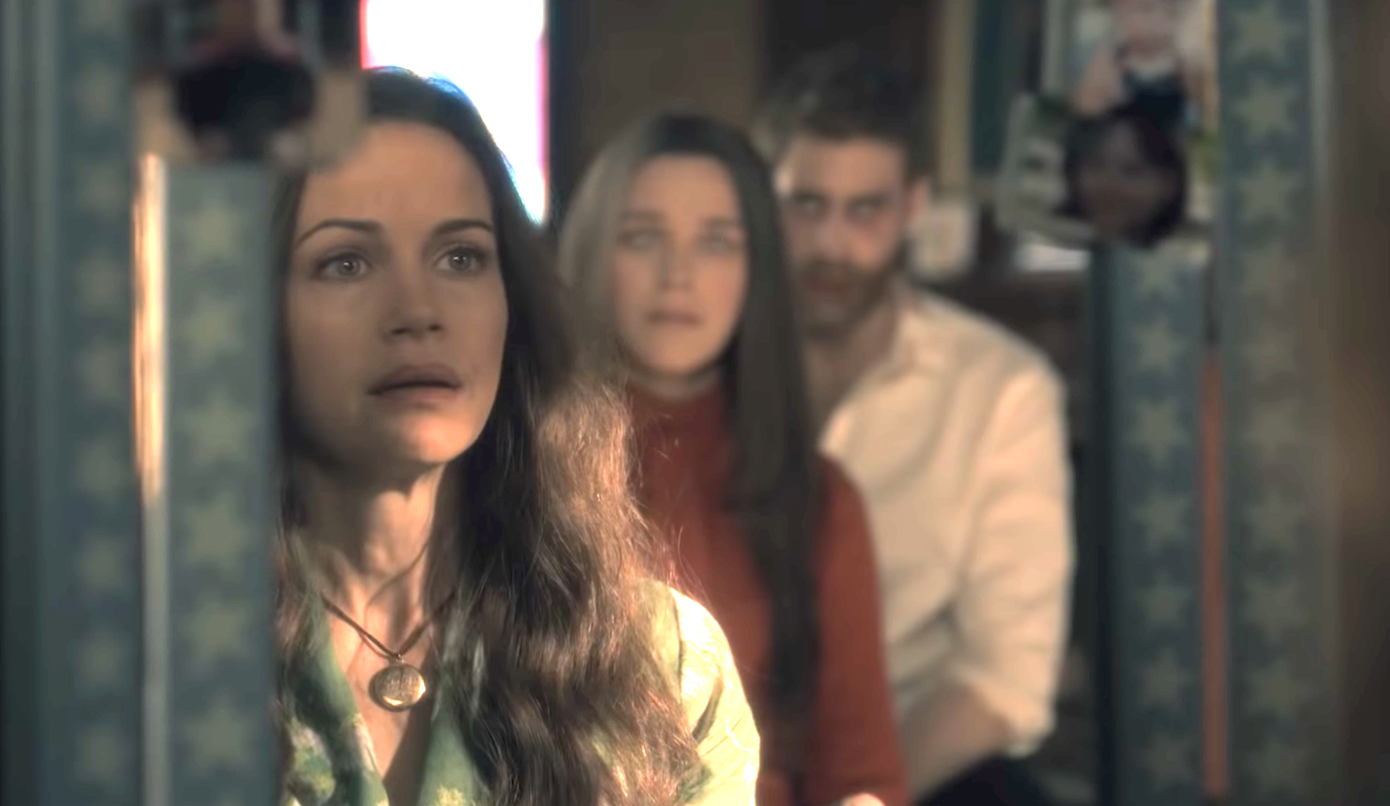
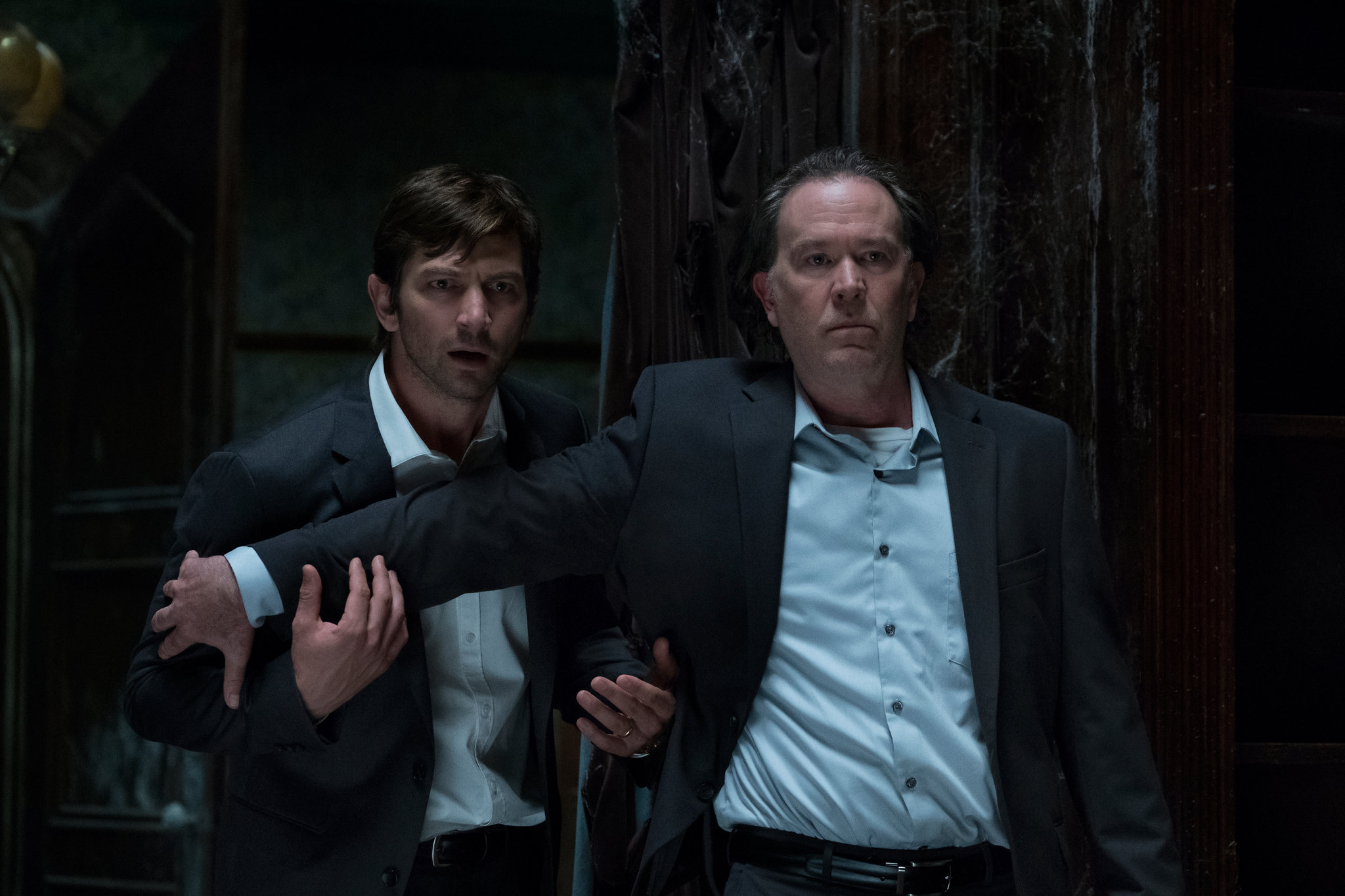
Nearly the entire cast of the series is wonderful, with particular emphasis on Carla Gugino in the role of the mother, and Henry Thomas and Timothy Hutton, who play the siblings’ father in different timelines. Familiar faces from Flanagan’s previous films appear here (Elizabeth Reaser, Kate Siegel, Lulu Wilson, Annabeth Gish), although the greatest impression is made by the completely unknown Victoria Pedretti and Oliver Jackson-Cohen as the adult Nell and Luke, perhaps because their characters are the most tragic figures in the series.

The child cast performs excellently, and thanks to physical (especially Wilson and Reaser look as though they truly were one and the same person) and character similarities, it is not difficult for us to believe, when we see on screen both versions of the same characters.
Special attention should also be paid to Robert Longstreet, who as the caretaker, Mr. Dudley, with just a single scene overwhelms with understanding and the unfathomable kindness of his character. Only Michiel Huisman, playing the older Steven, so very good in the terrifying The Invitation by Karyn Kusama, clearly falls short of the rest of the cast, unable to convey his character’s anger and helplessness in a convincing manner.

The closer to the finale, the more the horror strikes sentimental tones. This is, of course, a consequence of the change consisting in making a family the protagonists, rather than strangers to one another, as was the case in the book. Reason loses not to madness and the schizophrenic nature of the house, but to the heart, turning the ending into an extraordinarily cathartic experience, though no longer frightening.
The haunted mansion as well, although evil in itself, transforming loving people into monsters, becomes a place that must bow before the power of love.

Flanagan was one step away from creating an outstanding ghost story, drawing both from the classics and from a modern reading of the haunted house motif (in the series one can find traces of the surreal horror of the Japanese Ju-on, and the episode in which the younger Hugh Crain tries to repair the damage after a storm brings associations with Session 9), but he clearly slowed down at the final stretch.
The final episodes no longer have the strength of the first ones, especially the middle installments, terrifying in their tragedy, atmosphere of mourning, and irreparable loss. These have been replaced by hope, reducing metaphysical unease to the level of a family melodrama.


