
Review
THE WIFE. More Than a Well-crafted Drama
Nearly a decade on, The Wife endures as more than a well-crafted drama about an overlooked woman.


The hypocrisy of cultural elites and the sins hidden behind the façade of equality or political correctness have, over the past decade, remained among the most persistent themes in public discourse. When The Wife premiered in 2017, it entered that conversation at a particularly charged moment. The Swedish-American co-production offered a study of social conservatism and gender imbalance within the sphere of so-called “high culture,” framing its story around the wife of a newly crowned Nobel laureate. Even at the time, it seemed intriguing rather than sensational — a restrained character drama built around questions of prestige and the invisible scaffolding beneath a celebrated career.
The subject matter was a strong starting point, though not without risk. A film centered on gender disparity and artistic authorship could easily have fallen into schematic moralizing, prioritizing the issue itself over its dramatic embodiment. The challenge facing the filmmakers — and their superb cast — was therefore considerable: to create an intelligent and compelling work about a pressing cultural issue without reducing it to a thesis statement.
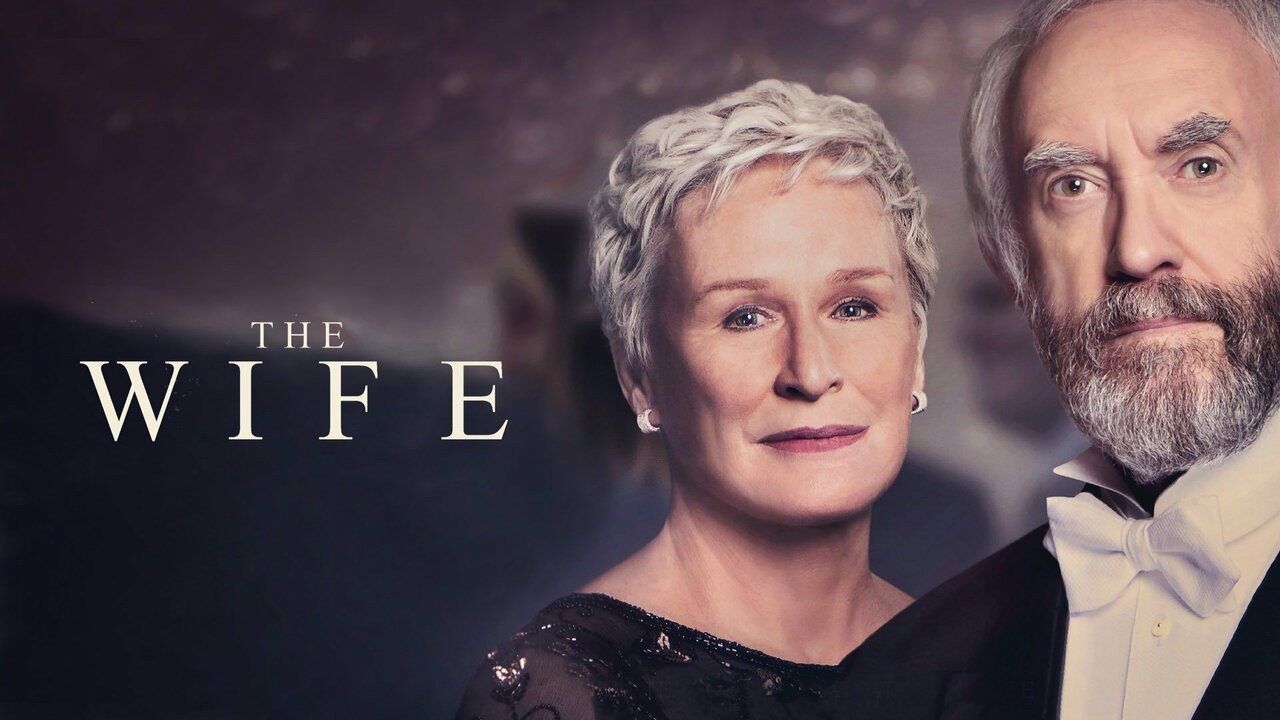
Adapted from Meg Wolitzer’s novel by screenwriter Jane Anderson and directed by Björn Runge, The Wife presents an intimate portrait of Joe and Joan Castleman. We meet them at the moment Joe receives the Nobel Prize in Literature and follow them through the preparations for the ceremony in Stockholm. On the brink of what is meant to be the crowning achievement of his career, the couple’s long history begins to resurface. The shadows of the past gather around Joan — who has spent decades supporting her husband — prompting her to reassess earlier choices and to confront reflections that may irrevocably alter her understanding of her own life.
Stylistically restrained, the film functions primarily as a character study. Joan’s emotions are embedded within the broader arc of her biography, one inextricably intertwined with that of her celebrated husband. Runge constructs the film around her perspective, carefully sketching not only her relationship with Joe but also her dynamic with their children and the literary world she has inhabited for years — not as a recognized artist, but as the companion of an acclaimed genius.
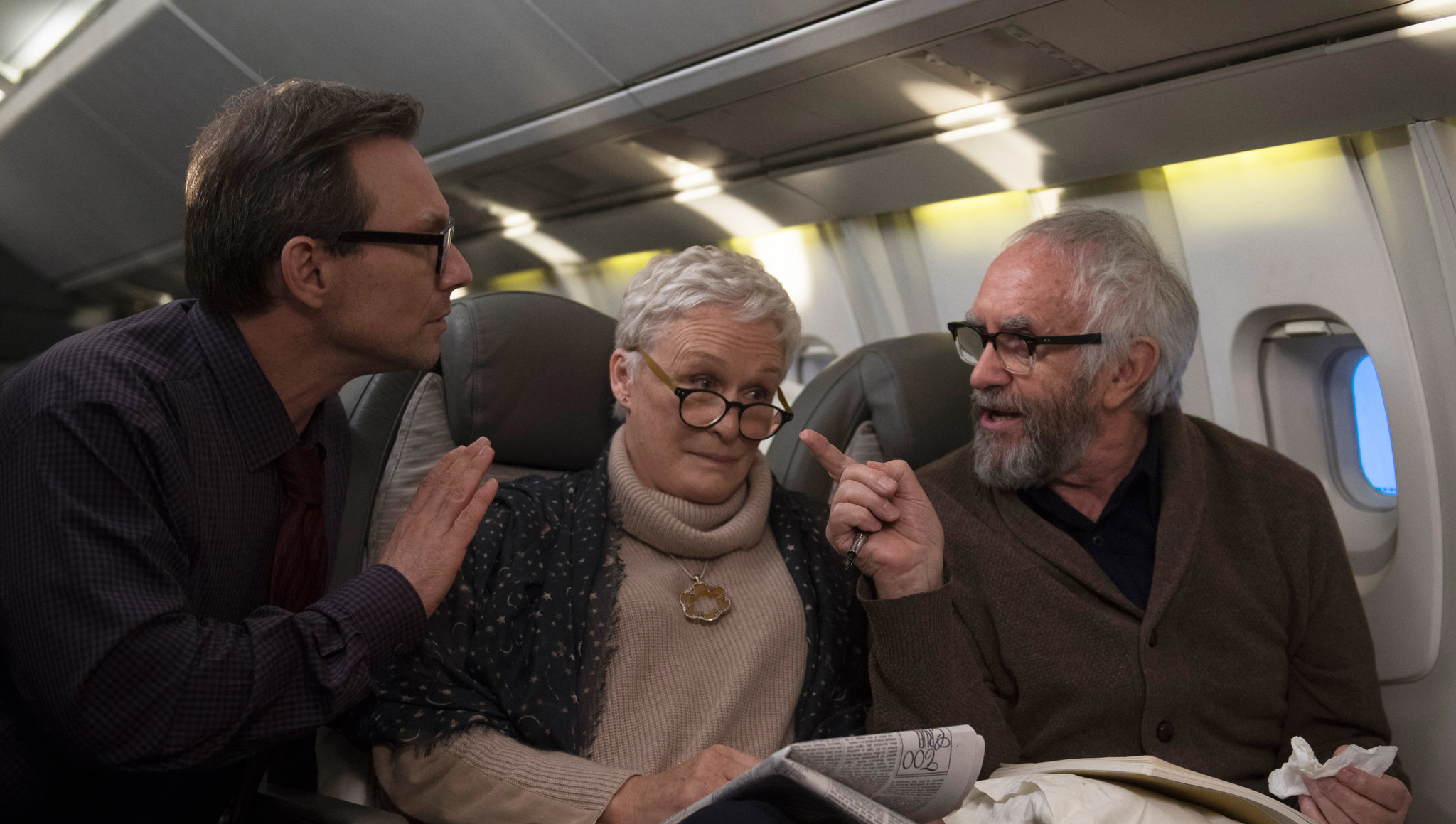
Although the narrative initially appears to rest on the truism that “behind every great man stands a woman,” Jane Anderson’s screenplay reveals greater sensitivity than such a cliché would suggest. The feminist dimension of the film proves far more layered than a simple reiteration of unequal status between men and women. The Wife begins with a series of conventional gestures that emphasize the divide between public and private spheres in the Castleman marriage, only to gradually overturn expectations and disrupt habitual narrative hierarchies about female sacrifice.
The gradual cracking of Joan’s carefully maintained mask of support generates sustained tension. Subtle suggestions, unspoken resentments, and flashes of bitterness pierce the prestigious bubble surrounding Joe Castleman. Crucially, the filmmakers withhold definitive explanations for much of the runtime, compelling viewers to watch attentively, parsing gestures and glances that may carry decisive weight. The carefully modulated suspense never overwhelms the film’s psychological core.

Runge avoids grand plot twists and heavy-handed symbolism. Instead, he weaves the drama from fleeting remarks, restrained exchanges, and seemingly trivial behaviors that, within the larger context, acquire considerable emotional force. Such a narrative strategy would not succeed without exceptional performances. The film rests above all on Glenn Close’s remarkable portrayal of Joan — a performance built on minute, almost imperceptible shifts in expression that reveal a woman internally divided and wounded by the very role she has helped construct.
Jonathan Pryce matches her precision with a deft embodiment of Joe: egocentric, charming, occasionally pathetic, perfectly at ease within the theatricality of Nobel banquets and speeches. The contrast between them sharpens each character’s defining traits, producing a convincing portrait of a marriage that is at once deeply intimate and quietly estranged. Annie Starke, portraying the younger Joan in flashbacks, reinforces the psychological continuity of Close’s performance, while Harry Lloyd’s young Joe complements Pryce’s blend of bluster and insecurity.
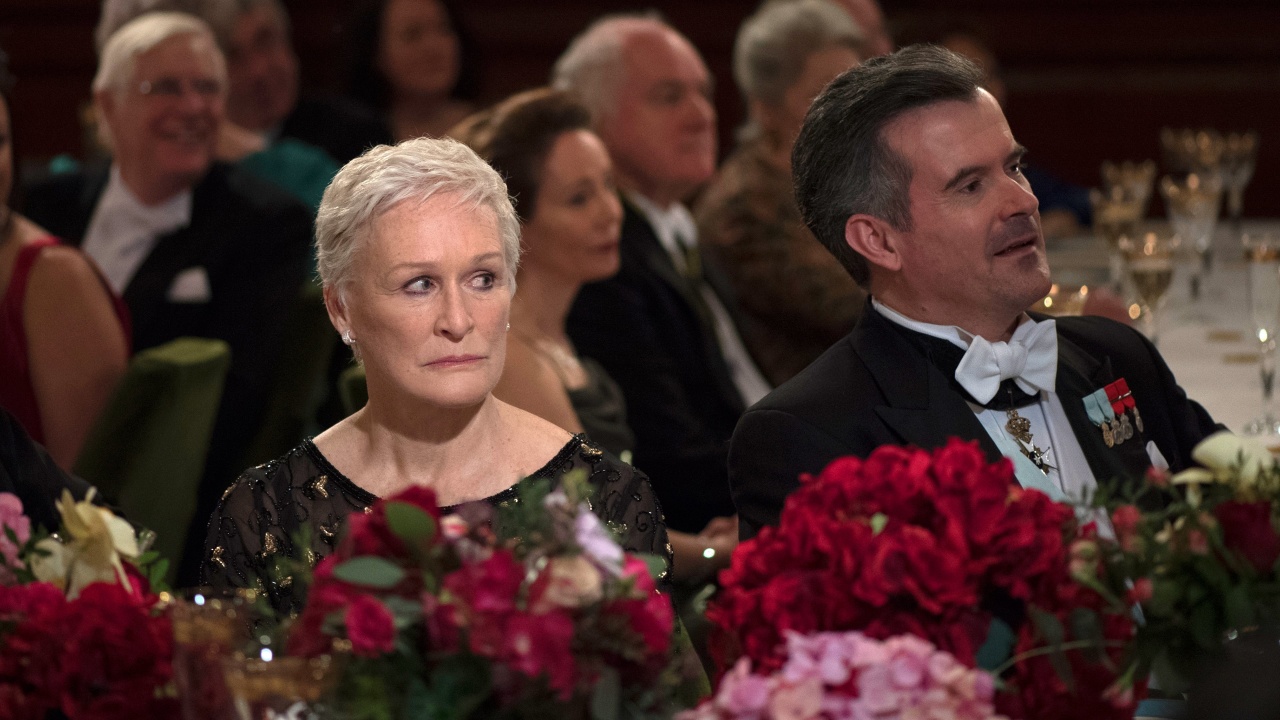
Christian Slater, in the role of an opportunistic biographer, injects a note of disruption into the narrative, catalyzing Joan’s doubts and puncturing the idyllic façade initially presented. The ensemble’s precision grounds the drama in tangible reality, lending credibility to both the emotional stakes and the moral ambiguity at its core.
One of the film’s distinguishing strengths lies in its nuanced calibration of meaning. Runge counterbalances moments of dramatic eruption with scenes of genuine tenderness, avoiding a simplistic portrait of a woman trapped by an ambitious tyrant. By capturing both the light and shadow of the Castleman relationship, the film complicates instinctive judgments. Joan is neither a saintly martyr nor merely a victim, and Joe is not reduced to caricature. Their roles within the marriage prove far less clear-cut than first impressions might suggest, and it is precisely this resistance to schematic framing that grants the film its most compelling dimensions.

The couple’s professional trajectory highlights not only systemic gender disparities in artistic recognition but also the complicated forms of complicity that sustain such systems. Joan’s strategic use of traditionally “feminine” modes of influence ultimately reinforces the very structures that marginalize her, leading to suffering concealed behind the polished smile of a muse and devoted partner. By acknowledging intersecting layers of responsibility and power, The Wife emerges as a distinctive contribution to discussions about gender relations in cultural institutions — one that resists easy categorization.
In retrospect, the film’s resonance was amplified by the context of its release. It arrived amid the temporary suspension of the Nobel Prize in Literature following scandal within the Swedish Academy and during the heightened visibility of #MeToo revelations across cultural industries. Against that backdrop, Runge’s drama acquired additional urgency, its critique of conservative-patriarchal systems gaining sharper relevance.
Nearly a decade on, The Wife endures as more than a well-crafted drama about an overlooked woman. It remains a piercing study of social prestige and authorship, sustained by formal restraint and emotional precision. Its feminist sensibility is not decorative but foundational — embedded in the structure, performances, and moral architecture of the film itself.

