Horror Movies
40 Years of HELLRAISER: Macabre, but with a Soul
Does Hellraiser have a soul? Yes. Despite all the macabre, it is a classic tale of the struggle between good and evil, where the true monsters are human beings.

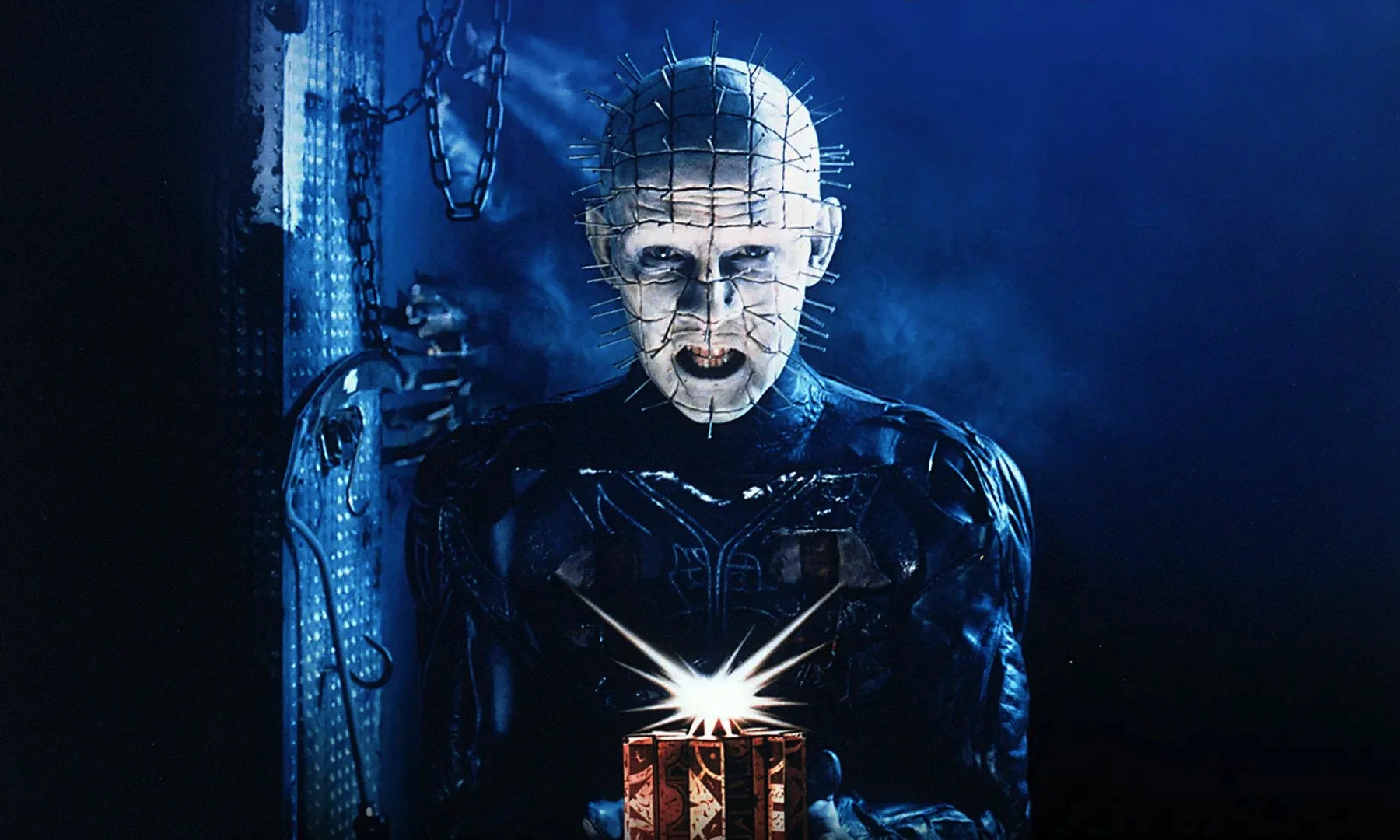
One of the most recognizable monsters of cinematic horror, Pinhead, is in Clive Barker’s Hellraiser from 1987 only an episodic character. The film itself is thoroughly English, made and largely performed by Britons and shot in London, although it ultimately stands in for an American city. Finally, the plot resembles a bloody, perverse romance more than a typical 1980s fantasy slasher or a horror bordering on comedy.
Hellraiser celebrates its fortieth anniversary next year, and for those who have only heard of Barker’s debut or know merely the weaker, often nightmarish sequels, a first viewing of the original can be quite a surprise. The first words we hear in the film are a question. What’s your pleasure, sir? And pleasure is indeed what Hellraiser is about, a very specific kind, as it is bound up with pain, suffering, and the destruction of the body.
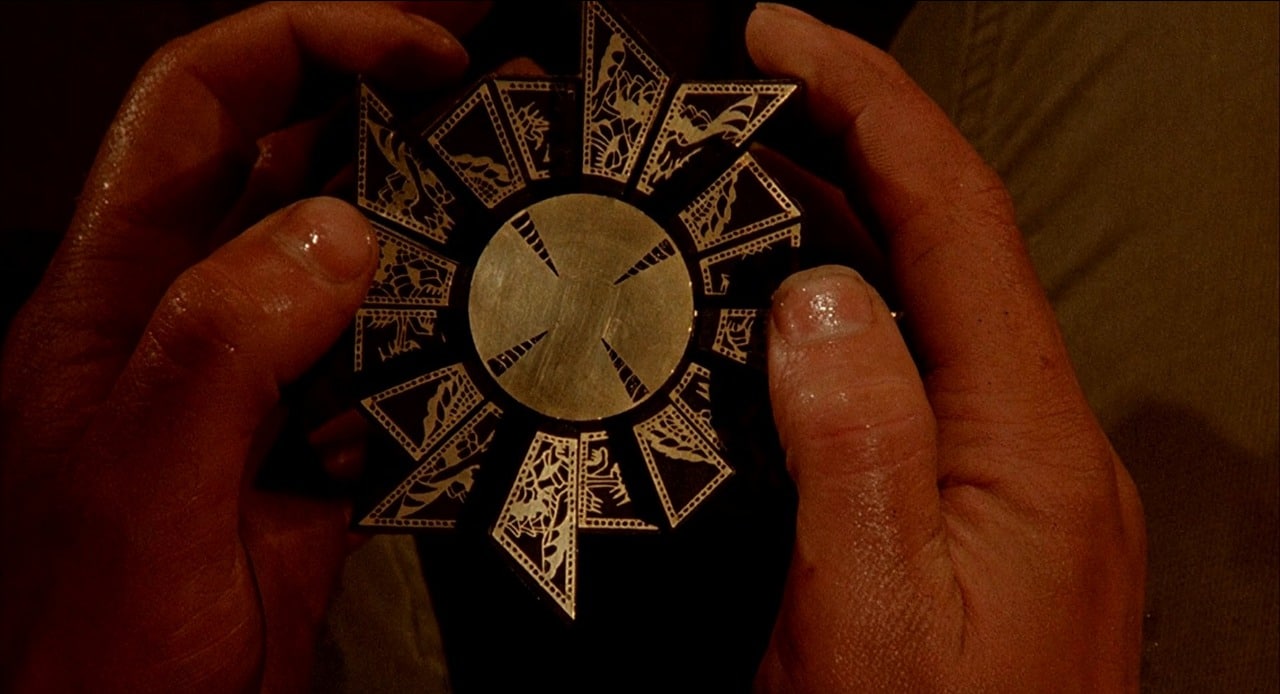
The film opens with a scene of purchasing a cube puzzle covered in golden ornamentation. The exoticism of the place and the seller contrasts with the Caucasian appearance of the buyer – although Frank (Sean Chapman), as the man is called, turns out to be an American – bearing in mind that this is an English production, one can discern in this opening fragment distant echoes of a colonial past. The transaction takes place, but the words of the seller, who tells the white man that the cube has always belonged to him, suggest a truly diabolical matter.
And indeed, when in the next scene the half-naked Frank changes the configuration of the cube, hell comes for him, with a majestic yet melancholic individual with nails in his head and other grotesquely looking figures. After some time, Frank Cotton’s brother Larry (Andrew Robinson) moves into the house where Frank met his end, together with his wife Julia (Clare Higgins). We quickly learn that shortly before their wedding the woman had a passionate affair with her future brother-in-law, and the objects he left behind in the house trigger memories in Julia.

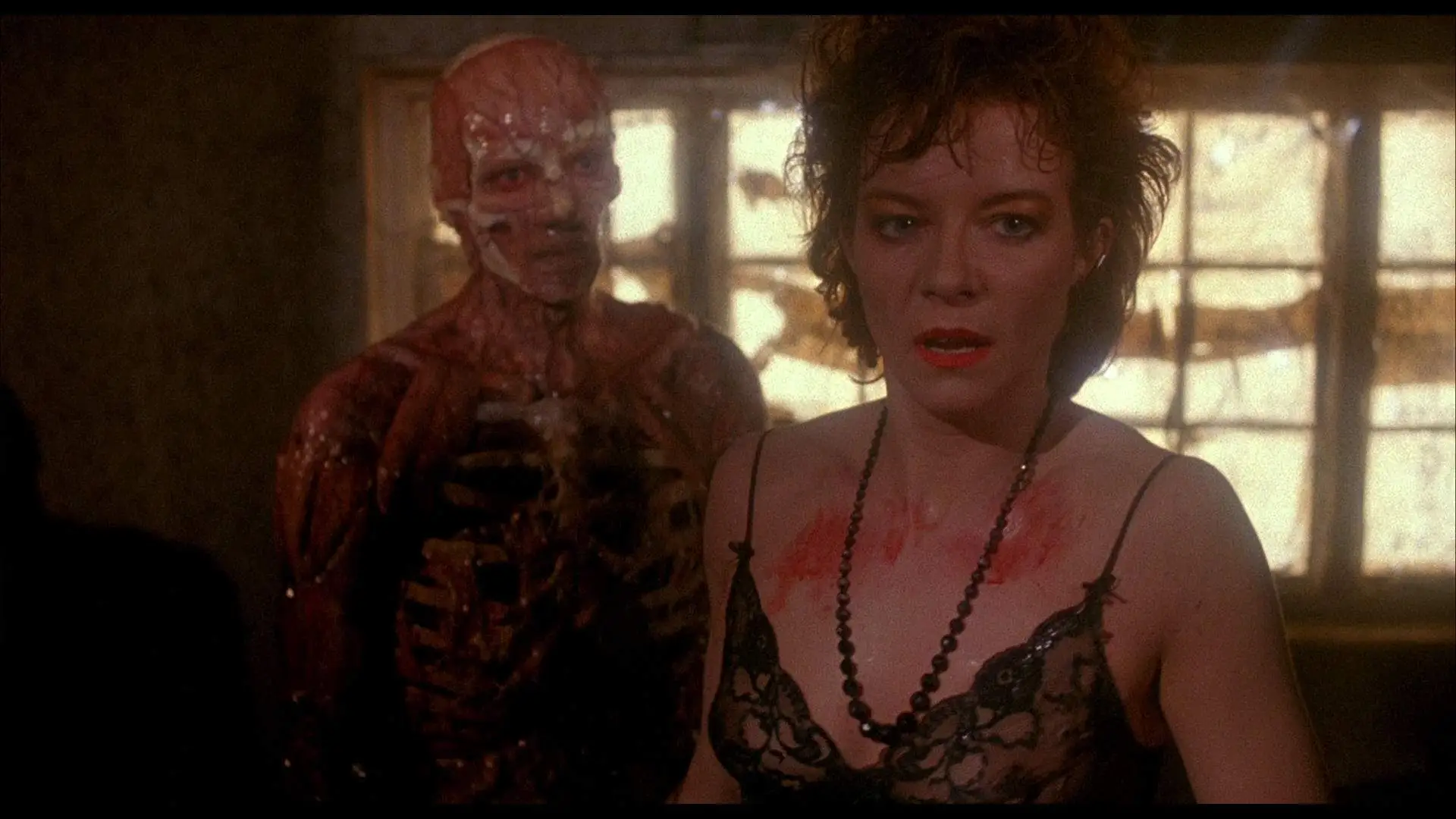
Something else is triggered by Larry’s blood, when during the move he badly injures his hand – thanks to his brother’s blood, Frank manages to escape from hell. Flayed and weak (in this form played by Oliver Smith), he reveals himself to the woman so that she will help him return to his previous form.
Hellraiser is an adaptation of Barker’s novella The Hellbound Heart, written a year earlier. The now cult horror was not, however, the Englishman’s first directorial attempt – in the 1970s he made two short films with a group of friends from university, Salome and The Forbidden. Nevertheless, Hellraiser should be regarded as his proper debut, especially since it is clearly the work of a novice filmmaker. One can find underdeveloped shots here, some scenes seem superfluous, serving practically no function in the plot, and the earlier-mentioned decision to have London impersonate an unnamed city in the United States is completely misguided.
Moreover, there are also special effects of dubious quality, which the director should have abandoned upon seeing the final result. Barker, at that time primarily the author of Books of Blood, a six-volume cycle of horror short stories, is nevertheless able to find cinematic equivalents for his literary style. With remarkable sensitivity he combines the gothic elements of the story with a very down-to-earth, contemporary family drama, in which a bored wife embarks on a path of crime in order to feel anything at all.
At the same time it is extremely bloody and suitably innovative – characters are not merely killed here, but stabbed, torn apart, beaten with a hammer, and eaten. The most disgusting scene, however, is not a moment of murder, but rather one of birth, when a brother’s blood becomes the seed of Frank’s bodily reconstruction. Assigned to the category of body horror, Barker’s film differs quite significantly from the corporeal nightmares of David Cronenberg, perhaps the most famous representative of this variety of horror cinema.
The Canadian, in his works, showed the primacy of the body over the mind and consciousness, the sudden elevation of our sexual drives into that which constitutes and connects us, while at the same time pushing us toward destruction. In Hellraiser there is only the body – the main characters can think solely about bodily pleasures, and they treat others as meat. There is no room here for existential or sociological reflection. There is no room here for belief in anything other than physical ecstasy (not coincidentally, all religious artifacts are thrown out of the house in one of the scenes).
After Frank manages to solve the cube, chains with hooks spring out from everywhere and sink into his flesh, tearing him to shreds. After his escape from the infernal abyss, he desperately needs nourishment. This is guaranteed by Julia, who brings strange men into the house, promising them sex, while in reality murdering them with a hammer and handing their bodies over to her lover. For each of them, another human being is merely (or perhaps as much as) a piece of meat – Julia places herself in this position for her future victims, being nothing but a body, then slaughters them like animals, which Frank consumes moments later. A perfect cycle.
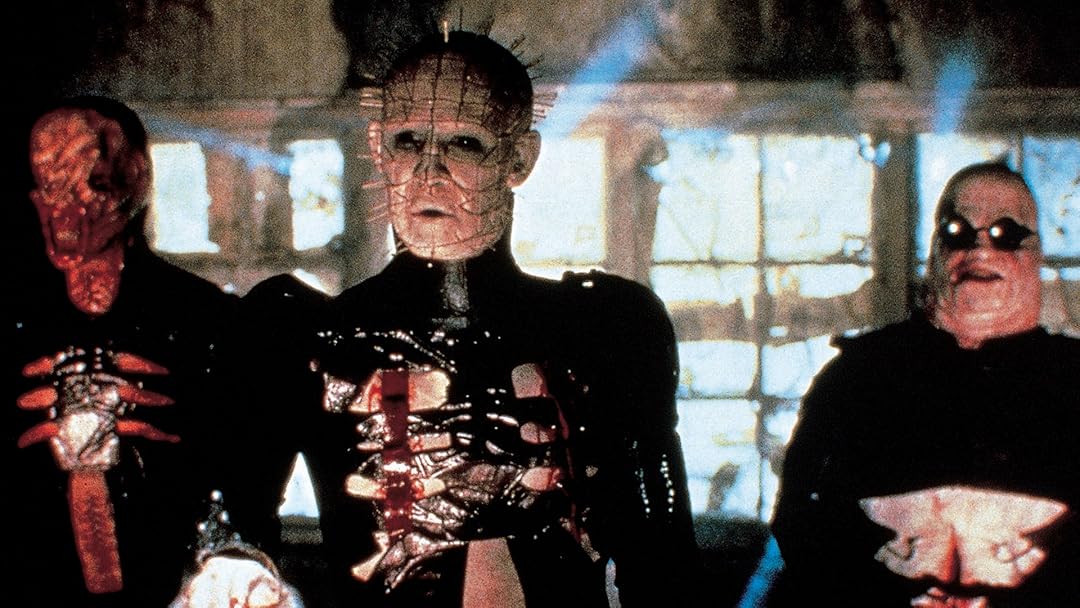
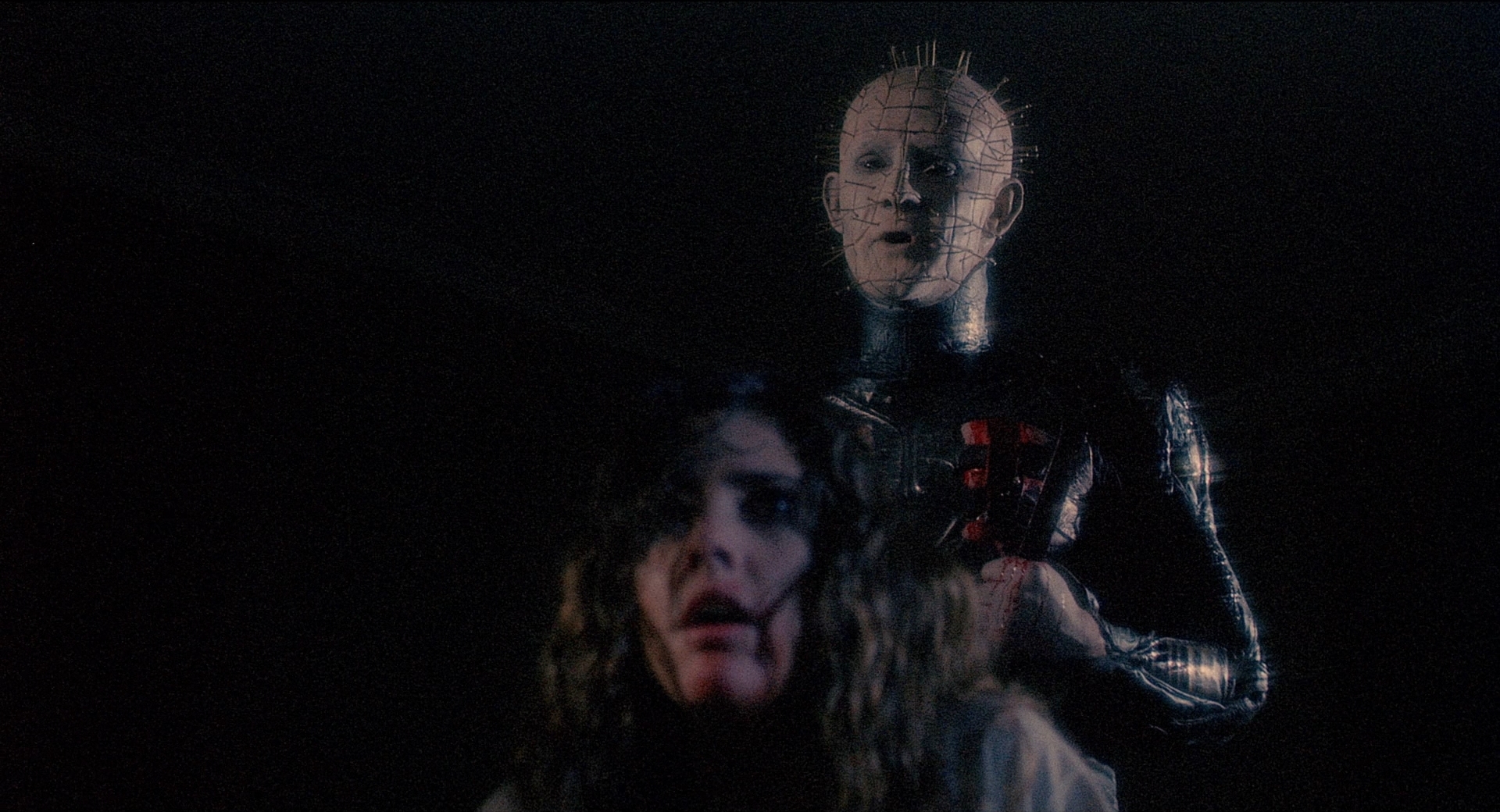
However, it is not Frank and Julia who are remembered when Hellraiser is mentioned. What is iconic here is the distinctive Pinhead (Doug Bradley, who played the character in eight films) and the remaining cenobites. Dressed in leather outfits, pale as death itself, with clearly introduced bodily modifications, they terrify and fascinate at the same time. Many terms are used to describe who these nightmarish-looking figures really are – explorers in the further regions of experience, we hear in one scene. In the first Hellraiser, their presence is limited to maintaining order, a necessary intervention when someone new solves the cube.
They are not negative characters, but the mere fact that they exist forces us to accept the existence of hell as well. They are emissaries who grant daredevils the pleasure of suffering, so fervently desired by Frank, without concern for the victims howling in pain, indeed feeding on their torment.
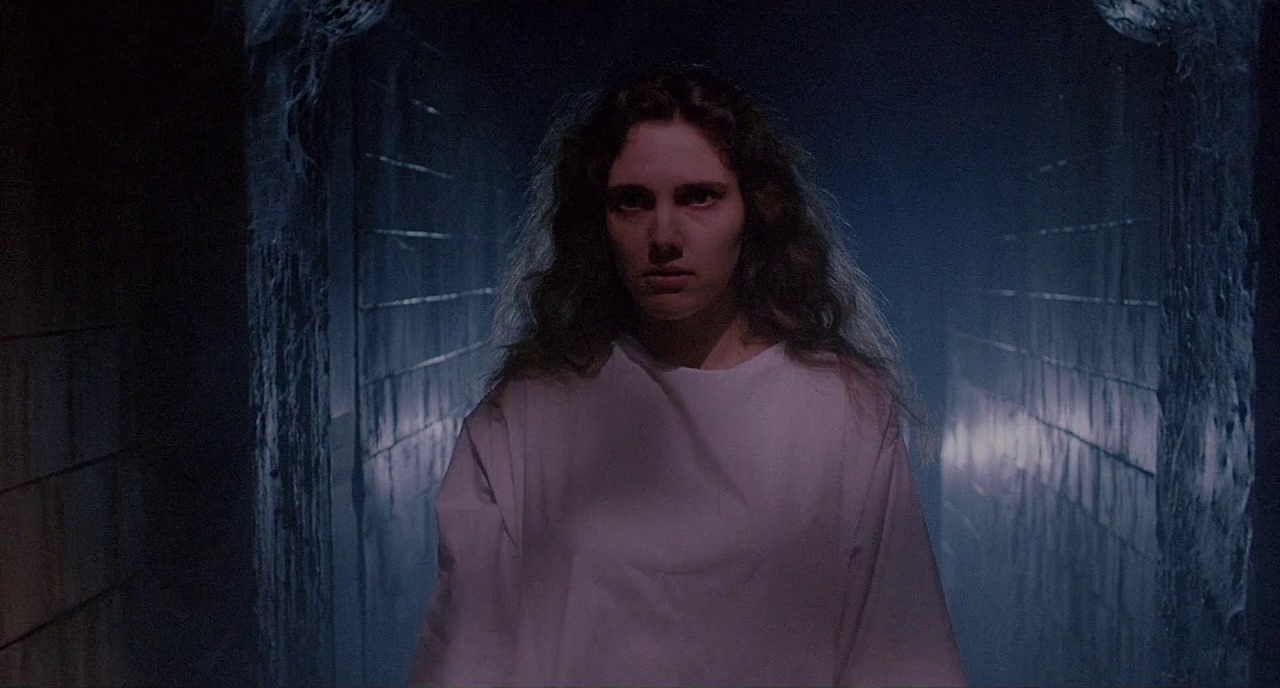
It is no coincidence, however, that they do not attack Kirsty (Ashley Laurence), Larry’s very young daughter, when she summons them using the cube. Perhaps they sense the girl’s innocence and the accidental nature of the encounter. She is a character seemingly written specifically so that the viewer has someone to root for. The young girl fits into slasher fashion, which dictates that in the finale she must fight not only the evil stepmother, the cruel and monstrous uncle (who, like the wolf from the fairy tale of Little Red Riding Hood, has disguised himself as someone else), but also the cenobites, somewhat rashly reduced in the final minutes of the film to the role of a threat.
While the direct sequel still turns them into more complex figures, in no way evil but rather infected by evil, the subsequent films prefer to see Pinhead and his brethren as outright villains who enjoy sadistic games and quips in the style of Freddy Krueger. Only the fifth installment, subtitled Inferno (interestingly, directed by Scott Derrickson, the future creator of The Exorcism of Emily Rose, Sinister, and… Doctor Strange), stands out positively among the other sequels, perhaps because instead of bodily torture it prefers to torment the protagonist within his mind. But on the other hand, does this not stand in opposition to Barker’s original?

The horror of Hellraiser is from beginning to end bound to the human body and sexuality, and even the cenobites, when they come for those who have solved the cube, are not interested in their thoughts or their soul. The soul exists, but they would sooner tear it to shreds, as Pinhead threatens in one scene, than recognize it as something of value.
Does Clive Barker’s debut have a soul? Without a doubt. Despite all the macabre spilling from the screen, it is a classic tale of the struggle between good and evil, where the true monsters are human beings, and the emissaries of hell merely serve as arbiters. Demons to some, angels to others, as our friend with nails in his head explains in one scene.