Review
THE LIMITS OF CONTROL Revisited: Jarmusch’s Hypnotic Mystery
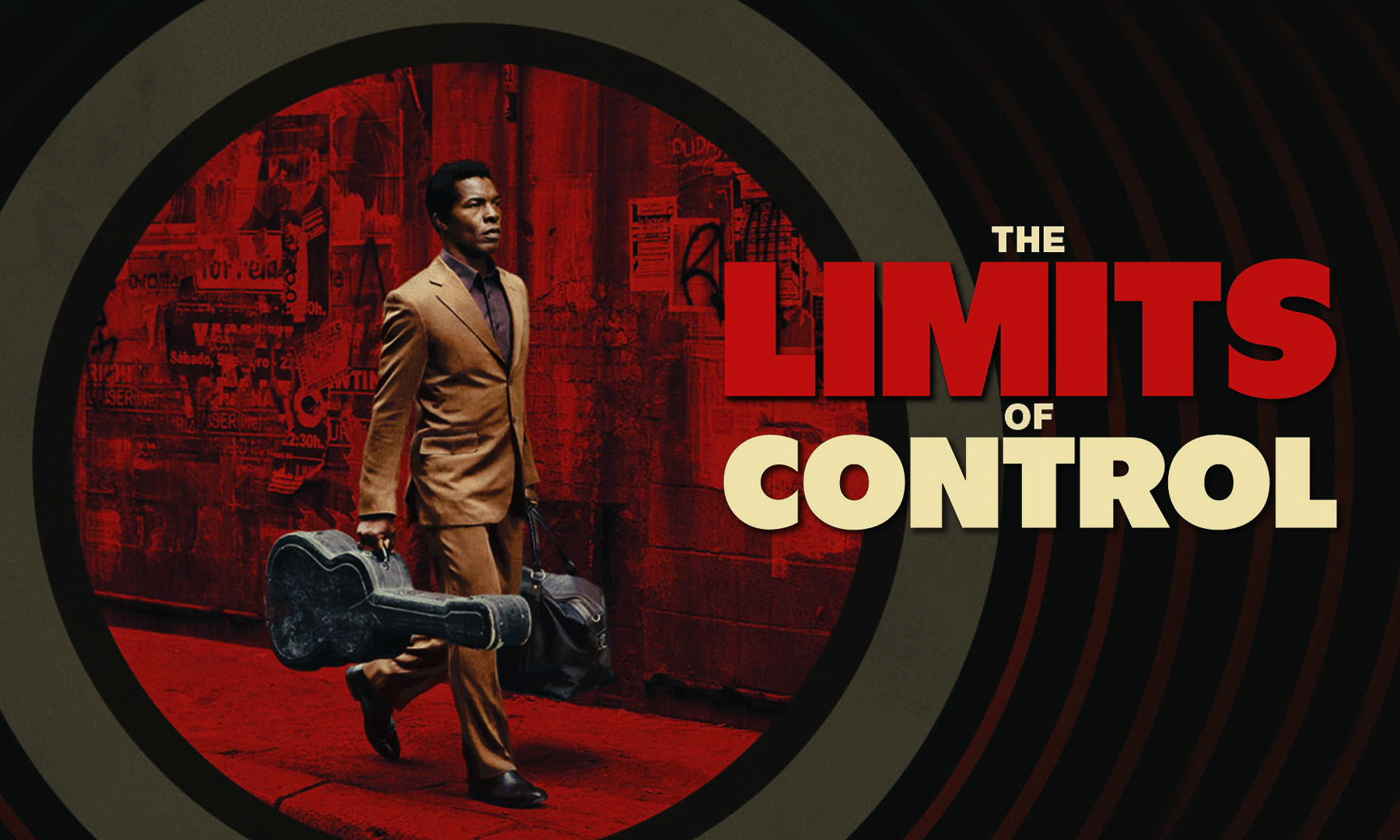
The Limits of Control is a game of catching quotes and references to other films, and a feast for the eyes, because of its visual beauty.

It may seem that The Limits of Control was for Jim Jarmusch what Inland Empire is for David Lynch: a nail in the coffin of artistic impotence, manifested on the brink of death through pseudo-philosophical gibberish, condemned to the desperate over-interpretations of the beloved creator’s staunch fans.
It may also seem that The Limits of Control is for Jim Jarmusch what The Imaginarium of Doctor Parnassus is for Terry Gilliam: a triumphant return of the old Master to his form from years ago, perhaps no longer at its peak, but still evoking the admiration and respect of every seasoned cinephile, not necessarily being a staunch fan of the director’s work. There is also a third possibility, not excluding any of the above assumptions. Namely: everything we say about Jarmusch’s new film is true.
The impressions we take away from a screening of The Limits of Control depend more on ourselves than on the creator of the film and—consequently—on the quality of the film itself. This means that it is not actually important whether the film is good, whether the film is bad, whether the film is average, or whether the film is this, that, or the other. In the case of this particular film—I believe more so than in the case of any other—the significance lies mainly in the manner of its reception by the viewer.
A viewer who considers this film bad—will be right. A viewer who considers this film good—will be right. A viewer who considers this film average—will also be right. Of course, the objective assessment of any film is the sum of many subjective assessments, which is understandable; nevertheless, it is an assessment formed only on the level of the relationship between the film (that is, the final result of someone’s creative work) and the viewer (that is, the recipient of the final result of someone’s creative work), which is one of many components of the aforementioned objective assessment.
Generally, it is the case that if a film is good, it will be good even when someone evaluates it poorly. And vice versa: if a film is bad for one or many reasons (because, for example, it has a terrible script, is hopelessly directed, and additionally terribly acted), a good opinion of it will not make it better, and certainly not good. Unambiguously bad, average, or good films easily submit to evaluation without the participation of the viewer and their subjective opinion of them, which is one of many component elements of an objective opinion.
It is different with Jarmusch’s new work: this film absolutely needs a viewer, and thus their opinion, to exist at all in the consciousness of recipients as a film that, after summing up all subjective evaluations, can be considered good, can be considered bad, or can be considered average. Which does not mean (or maybe it exactly means?) that the film is bland. I am rather inclined to state that the film is not intrusive, and if it is, it is not in an overt way. Thanks to which, while communing with it, we feel comfortable, even if a bit uncertain.
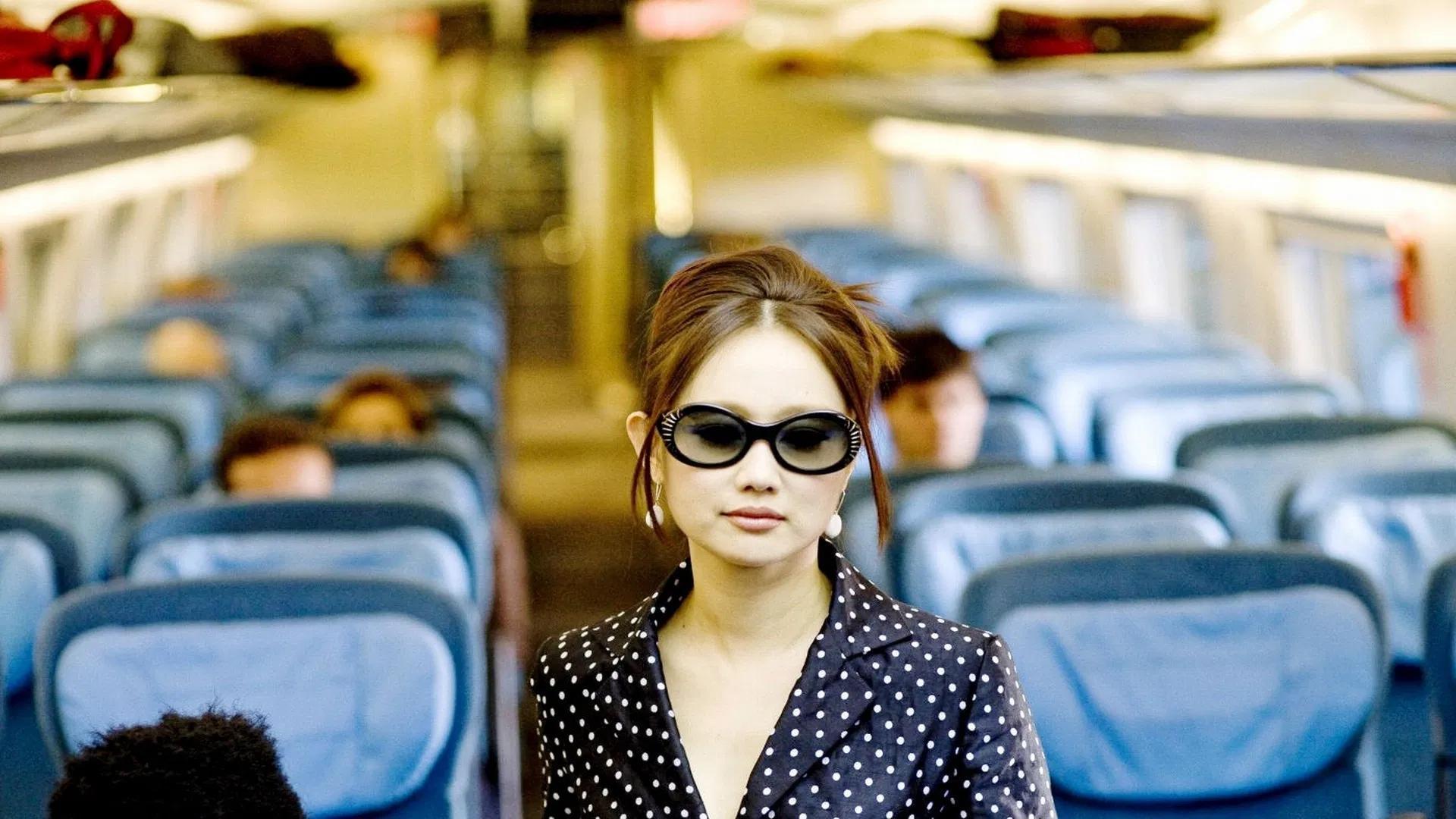
Whether we want it or not, after just a short while, the screening takes on the dimension of a pleasant conversation with a slightly surreal tone for us, which can lead us either somewhere or nowhere. This aspect of the story is also a matter solely and exclusively of an individual nature…
The narrative layer of The Limits of Control seems to be purely pretextual and can be summed up in essentially one sentence: a (probably) hitman accepts a contract to (probably) kill someone, which becomes the reason for his unhurried journey through places and time, toward a goal invisible until the very finale, perhaps imaginary, and perhaps real, though in one way or another—even at the moment of confrontation—unspecified. And that is it. The rest is a matter of the personal interpretations, or over-interpretations, of the work’s recipients.

Is the protagonist’s journey real in nature, and thus the stagings we watch involving characters—who may also be perceived as eccentric—real, though they may be perceived as strange? Perhaps. Is the protagonist’s journey symbolic in nature, and thus all situations—along with the characters correlated with them—in which he participates or which participate in him, symbolic? Perhaps. What is literal for some is metaphorical for others. And since Jim Jarmusch himself does not make the task easier for us, not pointing unequivocally to any of the options—we have complete freedom in this matter.
We can see what we want and how we want, which may not and does not have to please everyone. Supporters of ready-made solutions will certainly not be satisfied by the screening; supporters of complicated intellectual puzzles—(paradoxically) will not be either. The former because what may seem simple and obvious in The Limits of Control is simple and obvious only on the surface, and what is incomprehensible does not necessarily have to be solely the director’s joke, in which one should not look for any deeper content. And the latter? The latter because the very assumption that the second option might be at play complicates the aforementioned complexity even more.

The (justified) suspicion that the film is about nothing gives rise to questions that give rise to further questions, and all are contained in the cliché phrase, which always has multiple meanings: what did the Author have in mind? Precisely: what did Jim Jarmusch have in mind—in practically every aspect of The Limits of Control, in practically every minute, or even second of it? Of course, this question should be directed to the director himself, as it would be the height of arrogance to state that WE KNOW what the director had in mind at this or that moment, in this or that scene, or in this or that dialogue. It is obvious that WE DO NOT KNOW.
This does not change the fact, however, that we can know what we want, thanks to which we give Jarmusch’s film—each individually and all together— the dimension of a work of a decidedly universal character. A film about nothing is only a film about nothing, and a film about everything other than nothing can be either a film about nothing or a film about everything else.

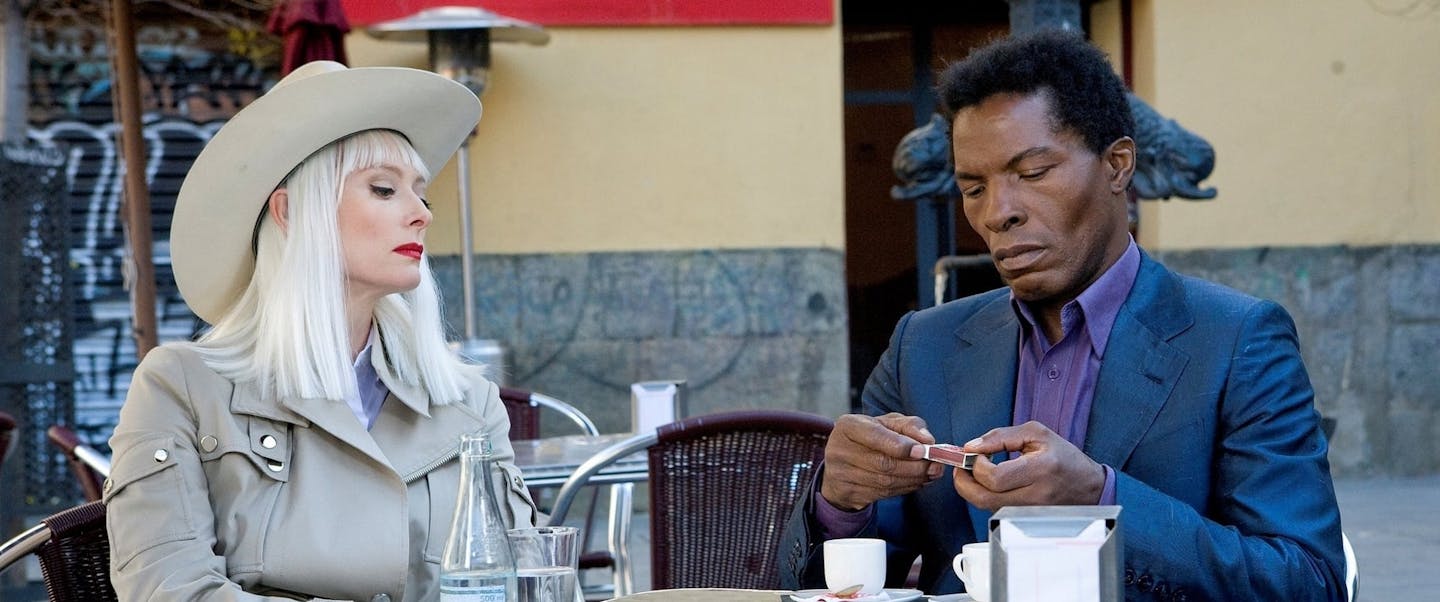
My personal assumption is that Jarmusch’s film is not about nothing. What then is it about? Or: what then is it? A veiled mockery of the viewer, raising the suspicion that every interpretation is, after all, an over-interpretation, artificially giving meaning to things devoid of meaning? Or maybe a perverse study of ourselves, that is, the poor-in-spirit victims of the era of consumerism, emotional cripples, reducing human communication to short text messages, not necessarily written in code on small slips of paper, enclosed in matchboxes?
Or maybe the sad truth that everything is an illusion and we do not exist, even though it seems to us that we do? I will not even pretend that I know the answers to these questions…
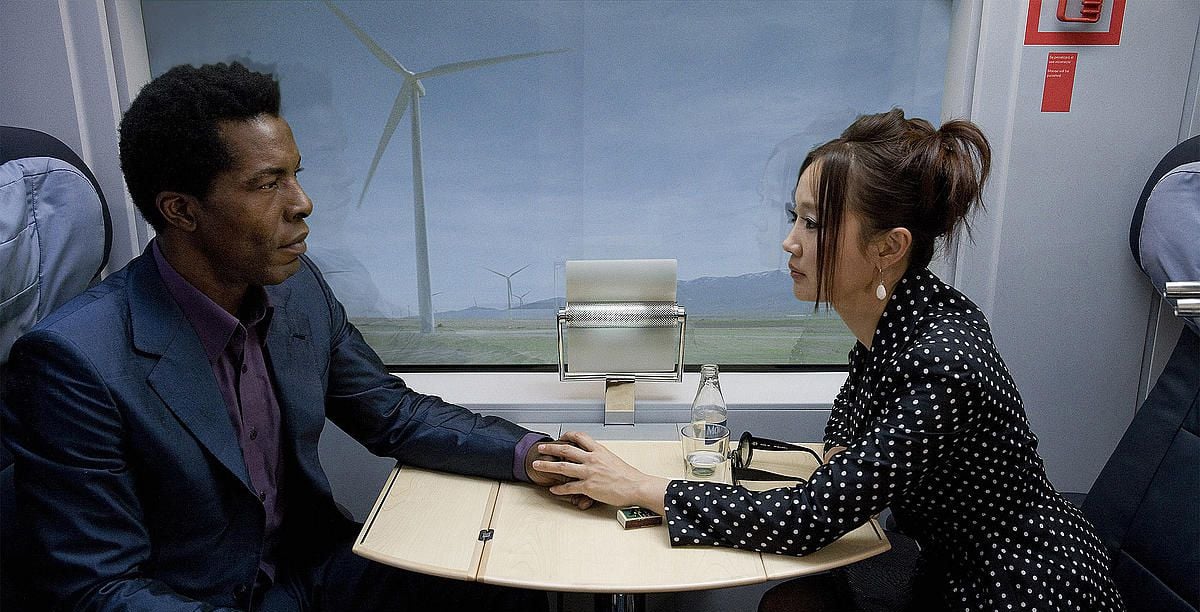
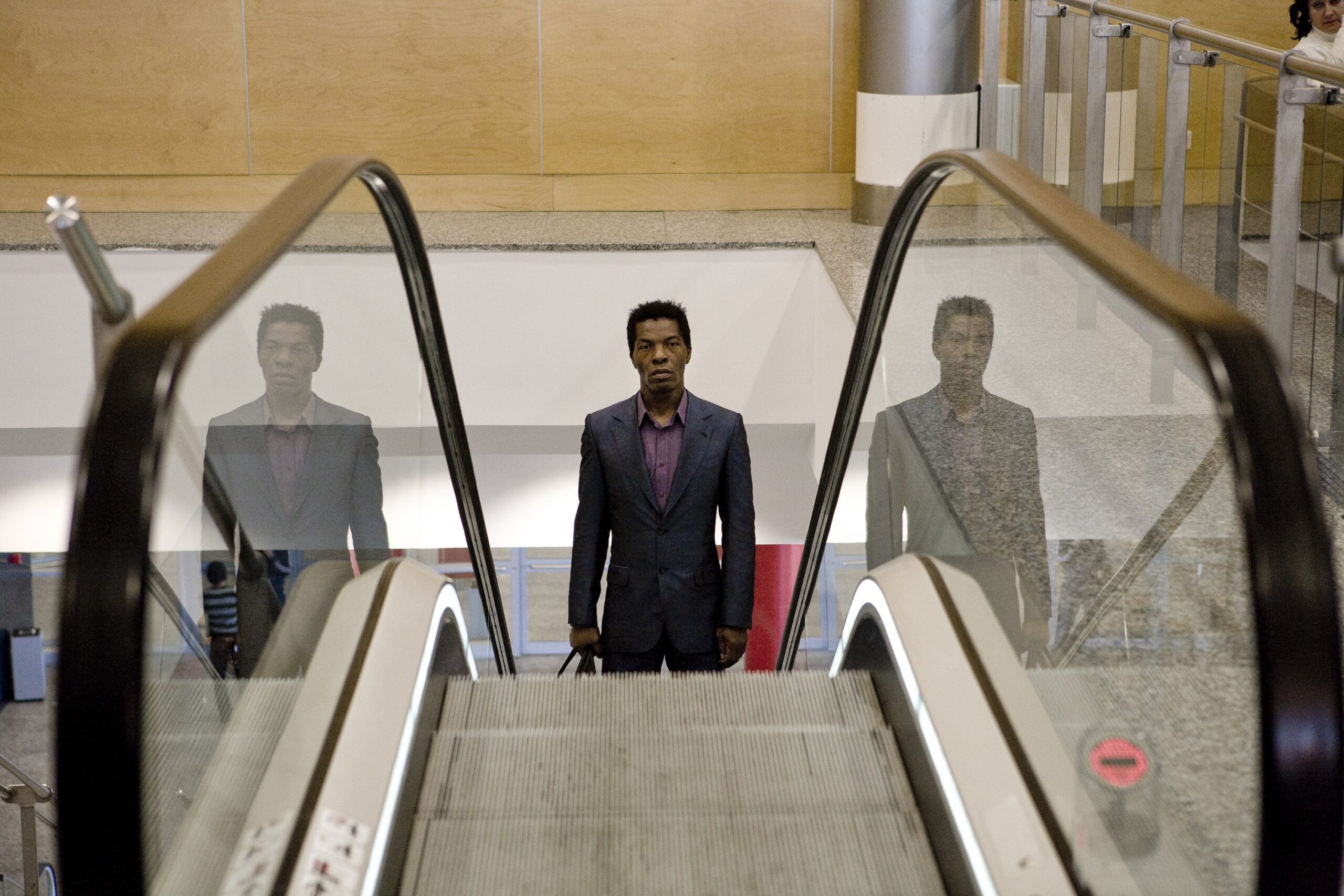
The Limits of Control will be a multi-use film for some, and for others—a one-time repertoire mistake, or at most a moving postcard with a beautifully photographed Spain. For fans of Jarmusch, the film should certainly be a mandatory item, constituting an interesting counterpoint to the simplicity of form in Broken Flowers, or a kind of personal-narrative continuation of the director’s earlier films (for example, Isaach De Bankolé practicing Tai Chi brings to mind the scenes from the film Ghost Dog: The Way of the Samurai, in which Forest Whitaker practices a similar ritual, except with the use of a samurai sword).
For the latter, it will also be a flirtation with the director’s specific sense of humor, who does not shy away from self-irony (I will mention here the great scene in which Tilda Swinton states, thus commenting on the situation we have before our eyes as she speaks the words: I like it best when in a film the characters just sit and say nothing; well, it is a perfect description of cinema made in Jarmusch). For cinephiles, it will also be a game of catching quotes and references to other films, while for everyone, it will certainly be a feast for the eyes, because one thing you cannot deny the film is its visual beauty.