
Review
WILDLIFE. Paul Dano’s Strong Directorial Debut


Actors turning to film directing have long been a familiar phenomenon in the history of cinema. Only a few, however, have managed to make that transition successfully, launching careers marked by widespread acclaim and prestigious awards. Others—Robert Mitchum or Marlon Brando among them—were discouraged by the mixed reception of their early efforts and never returned to the director’s chair. Paul Dano, whose feature debut Wildlife marked a surprising and confident step behind the camera, clearly belongs to the former group.
Known primarily for his performances in There Will Be Blood and Prisoners, Dano chose to base his first film on literature. He adapted Richard Ford’s novel Wildlife—written by the Pulitzer Prize–winning American author—together with his partner, fellow actor Zoe Kazan. The film’s protagonist is Joe, a teenage boy played by Ed Oxenbould, whose physical resemblance to Dano is striking.

Joe lives with his parents in a small town in Montana. At first, his life seems almost idyllic. His parents appear to have a solid relationship; his father (Jake Gyllenhaal) works steadily at a golf club, while his mother (Carey Mulligan) stays at home, focused on raising their only child. This fragile stability collapses when the father loses his job for an absurd reason. From Joe’s point of view, the film gradually reveals the slow and painful breakdown of his parents’ marriage.
Both parents are desperately searching for a sense of fulfillment. The father initially seeks escape from his professional failure in alcohol, then leaves town to help fight wildfires in a remote part of the state. The mother, deeply disappointed by his decision to abandon the family for an unspecified period, also begins to reshape her life. She takes a job as a swimming instructor and soon enters into an affair with a much older man. At the same time, she starts dressing and behaving like a defiant teenager, which leaves her adolescent son deeply unsettled. Joe is left unsure of whom to blame—and whom to emulate.
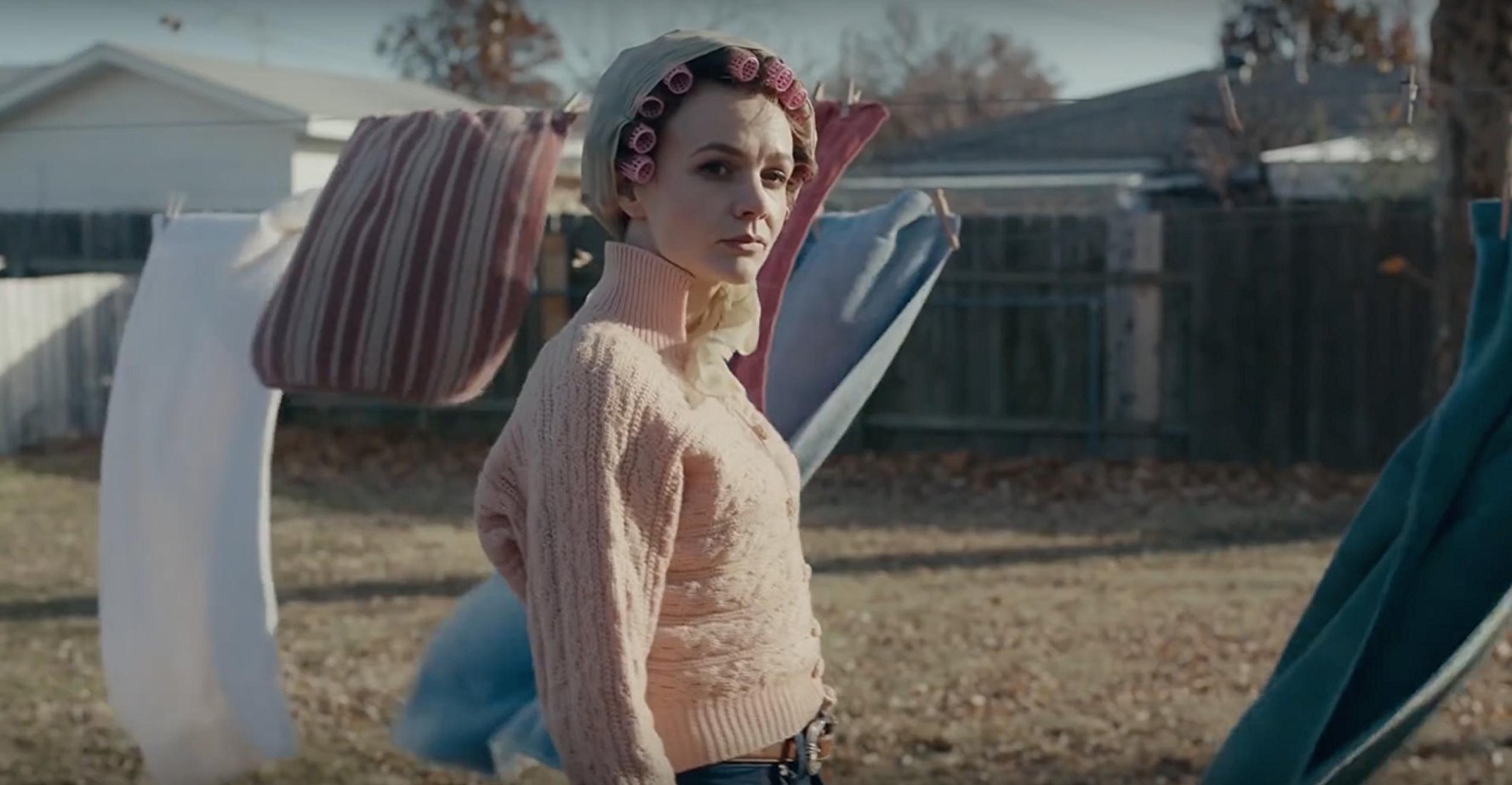
To Dano’s credit, Wildlife avoids easy moral judgments. Responsibility for the family’s collapse is shared. The father should have coped more constructively with losing his job, searched for new work, and set aside his pride when offered a chance to return to the golf club. Most importantly, he should have remained present when his family needed him most. The mother, in turn, should have handled her husband’s absence with greater emotional restraint, avoiding choices that only intensified the chaos in her son’s life.
She should have accepted that she would never be eighteen again. Instead of acting out of narcissism and egoism, she ought to have paid closer attention to her son’s struggles—after all, his father’s departure was no less painful for him.

What is the greatest strength of Dano’s debut? The answer is obvious: two extraordinary performances. Jake Gyllenhaal and Carey Mulligan deliver career-high work in Wildlife. Dano is keenly aware of the talent at his disposal and gives both actors space for long monologues and sharp confrontations. Just as importantly, he allows for silence—moments of stillness, longing glances, and internal reflection. As Marlon Brando once observed, it is easy to act loudly, to shout or rage; it is far more difficult to do nothing at all. Simply sitting and thinking—that is true artistry.
An artistry that both Gyllenhaal and Mulligan master here with remarkable precision. While major awards largely eluded the film—due in part to its modest budget and intimate scale—their performances remain among the most impressive of their respective careers.

Equally striking is the film’s setting: 1960s Montana. Dano meticulously recreates the atmosphere of the era, from cars and architecture to costumes and interiors. In this regard, Wildlife recalls films like Bad Times at the El Royale, which similarly used the American 1960s as a carefully reconstructed backdrop rather than mere decoration.
Dano frequently employs wide and full shots, lending the film a clean, composed visual style that subtly reinforces the growing emotional distance between family members. The framing is not only aesthetically pleasing but thematically precise.

Without hesitation, Wildlife can be described as one of the strongest directorial debuts of recent years—if not of the twenty-first century as a whole. Paul Dano emerged from the film as a remarkably self-assured filmmaker, fully in control of his material and exceptionally skilled in directing actors. One can only hope that his subsequent projects will continue down this path, favoring ambition and emotional depth over the hollow spectacle of profit-driven blockbusters.

