
Movies Explained
Exploring NIGHT ON EARTH: On the Border of Mysticism
The atmosphere of Night on Earth, a unique mood built by unconventional music and atypical characters, is situated on the border of mysticism.

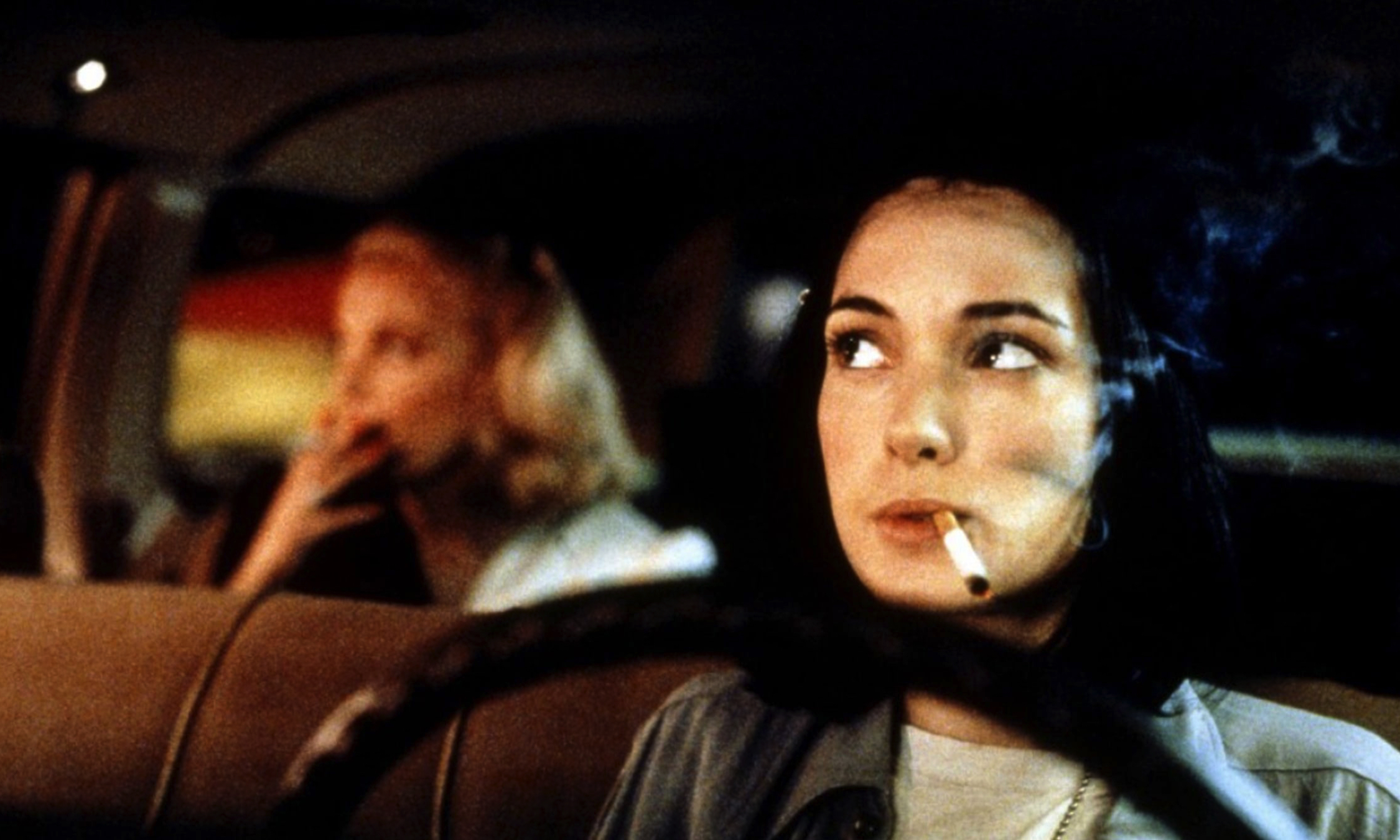
The cinema of Jim Jarmusch. Fresh and unconventional, and at the same time very valuable, above all from an existential point of view. The atmosphere, the unique mood, built by unconventional music and atypical characters, here on the border of mysticism and the translocation of an archaic soul. Night on Earth.
Everything I experienced in the excellent Ghost Dog I also find during Night on Earth. This time the director serves us an extremely interesting form, sketching five stories that are independent of one another in terms of plot, yet analogous in many essential points and overarching message. Each of the stories presented is a static conversation taking place between a taxi driver and his passengers. A brief bond, an inconsequential conversation, begins as quickly as it ends, once again leaving the characters indifferent to one another.
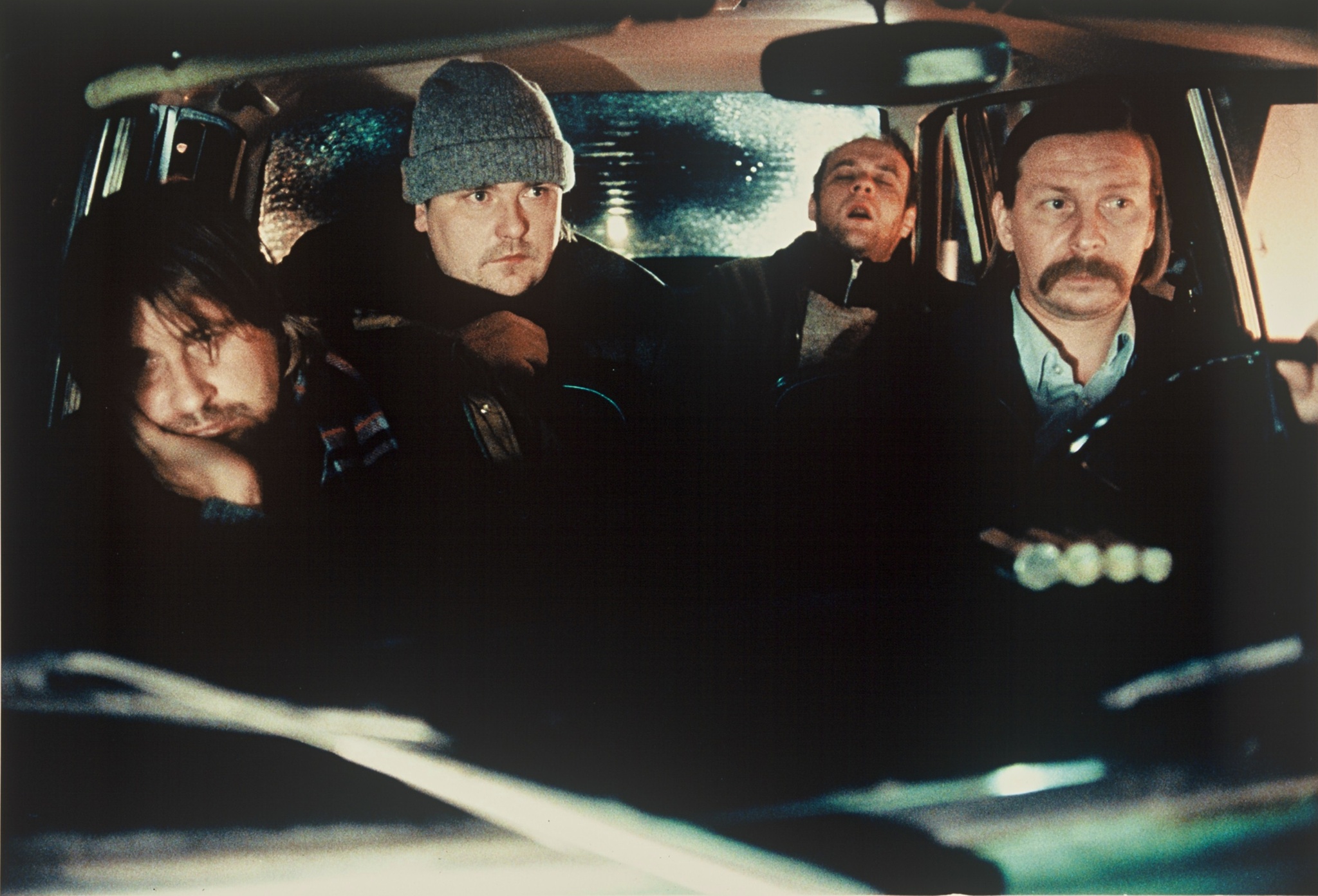
Yet during those several minutes, the life attitude of one of them will undergo, or has a chance to undergo, a dramatic change when confronted with a new outlook and a new assessment of people. The characters sink into the relativism of perceiving the world; uncertainty arises in them about their own way of life, along with astonishment or compassion. This brief acquaintance in any case changes them; the person encountered acts like a catalyst, triggering new layers of searching.
As in the aforementioned Ghost Dog, where the undeniably great Forest Whitaker shone, here too we find solid international acting. While Winona Ryder’s character is somewhat irritating with her slightly artificial laid-back attitude, the Franco-Italian offensive of Bankolé–Benigni (Jarmusch’s tried-and-true acting guard, as it were) is outstanding. Nevertheless, all these roles are received rather as episodic ones than as full-blooded, psychologically developed protagonists. In Night on Earth we won’t find RZA’s atmospheric rap that so perfectly built the mood in Ghost Dog; instead we get the dirty and spontaneous street variations performed by another one of his own, Tom Waits.

Just as Jarmusch captures the face of the urban night with images, so Waits does it with his mysterious and amazing music. He creates melancholy, sadness, loneliness, magic, and the essence of night. In such prepared conditions, the infiltration of one night on Earth seems to be pure pleasure, both in the realm of reflection and in mood.
The director chose the taxi because it easily allows a one-off acquaintance, the initiation of brief contact between two people who are indifferent to each other. A bond is born in the intimate night, which stimulates reflection, lulls indifference, distrust, and haste. We observe this one night on Earth in five different locations, situated on different continents, in different countries and environments that differ in culture, language, and lifestyle. Moving from one location to the next, the cycle of night closes, beginning in the evening in Los Angeles and ending with a frosty morning in Helsinki.

The presented metropolises, so busy, cramped, and anonymous during the day, at night transform into almost deserted places illuminated by the murky glow of street lamps, places where lonely, late, and lost souls wander. Although the distinctness of the locations is strongly marked—for example through the characters’ use of their native languages or slang (a truly fantastic device)—the problems and attitudes presented through them are very universal and human. No matter which direction of the world we look toward, everywhere we find people like us, feeling similarly, perceiving the world similarly, having similar problems, even though they differ from us culturally and in terms of life circumstances in extreme ways.
In choosing particular places on Earth, the director also counterattacks global stereotypes (the chase for career, matters of faith, tolerance), opposing them with peculiar individuals; he shows how relative and fragile human notions, aspirations, and assessments of the world really are. None of the stories nor the characters dabble in didacticism, they do not instruct about commendable or reprehensible attitudes; the director does not take sides between opposing views, leaving us room for our own synthesis and evaluation.

With the ending of the last story, morning arrives; we shake off the strange and intimate underground world of night and return to reality. After the screening, things feel peculiarly strange; the pale dawn makes the world once again coldly anonymous. The magical bonds burst, the ones that had opened our eyes to new horizons of understanding and inquiry. Looking for reflection in a night spent in five different cities, in the back seats of taxis, with characters revealing their stories and varied attitudes to us, we once again recall the slightly fairy-like, unique Ghost Dog.
One can ponder the validity of samurai ideology, straight out of exotic and long-past cultures. One can argue about the correctness of such an attitude, one can also accuse it of recklessness and a break with flexible moral norms. The archaic hero over whom the mystical spirit of chivalry hovers professes an indelible bushido code; he is characterized by unyielding honor, boundless devotion, and loyalty to his master.

The ethos becomes a contemporary body, and what in the Middle Ages was a determinant of the highest moral position—courage, honor, and other noblest virtues—has manifested in our reality. But does it really have a right to exist? Noble archaeology does not translate into modern times in the same form. The knight kills at the orders of the Italian mafia; honor annihilates basic moral stances, which in the samurai code do not exist anyway. Boundless devotion leads to a bitter seppuku—perhaps the seppuku of that whole beautiful mythological ideology.
Weaving our pros and cons, everyone can find many valuable traits and ideas in this hero’s conduct, but the hero himself, in the long run, cannot function within contemporary behavioral and social frameworks. It is similar with the characters of Night on Earth. Jarmusch creates typical attitudes, states, and life outlooks. Then, by confronting them with characters who look at life in radically different ways, he demonstrates the shortsightedness and falsification of these common and tendentious perspectives on the world.

A great relativity of human aspirations, goals, behaviors, and feelings emerges; people pigeonholed into their subjective, hermetic, and environmental microworlds cannot perceive the world from another, perhaps more interesting and valuable perspective. The characters encountered, the brief accidental acquaintances, make this possible for them.Here too, as in the case of Ghost Dog, there is no negation, only contrast—contrast that fascinates the characters discovering it. Perhaps after such a confrontation they will change their lives.
They are certainly given a new perspective on the world, one that until now had no right to exist in their backyard; their extreme life stance is laid out before them like a platter, a field for a new maneuver. Ghost Dog himself does not function; he is not a standard or literal life attitude. The main force at work is his traits: archetypal, exaggerated, creating an indelible ideology. Altogether, however, they are commendable in their symbolism and intention.

Here too we have a strong contrast, this time of the hero with the whole world. Here too, through a peculiar fascination with a fantastic ideology, we discover something new—perspectives and views that until now we could not imagine in the contemporary world. We ourselves. An archaeological excavation, one could say—a new experience building our ideologies.
With the characters of Night on Earth we discover those sometimes revolutionary, sometimes corrective, and sometimes simply alternative elements of the world’s true face. It is not worth locking oneself in a narrow cage padded with a comfortable subjective idea; one should take into account the monumental whole, the other person, the hidden and undiscovered values, or so the director seems to say. It is possible that we will find them in the contemporary madness of a samurai ideology cultivating an ancient ethos; it is possible that we will find them in a short conversation with a simple taxi driver, with a good-natured immigrant, or with a blind woman.

