
Movies Explained
TIDELAND: You’ll Love This Poetic Horror from Terry Gilliam
In Tideland, reality is not so much distorted as ruled by its own laws. There is no logic or rationalism here, only a child’s unrestrained imagination.


Imagine that you are nine years old again. Your mother is a neglected hysteric and your father an aging hippie. On top of that, both are drug addicts for whom the daily shot in the vein and the loss of contact with reality are more important than you. You live in a cluttered hole that only you clean, if you’re not busy preparing and administering another dose to one of your parents. Tideland, ladies and gentlemen.
Since you can’t even talk to them normally, your friends become ruined doll heads to which you give names and personalities. When your mother dies of an overdose, you don’t even have time to cry because you have to stop your wasted father from setting her body on fire. And right after that you’re on a bus heading to the countryside, where apparently your grandmother has a farm. When you arrive, it turns out to be an abandoned ruin in the middle of nowhere. And just when you think that somehow it’ll be better, your father follows your mother, and you become an orphan with no means to survive.

Terrifying, isn’t it?
That’s what the beginning of Tideland looks like. Although the described events suggest a heavy psychological drama with pathology in the background, the film watches like a modern fairy tale with fantastic figures. The main character is a nine-year-old girl named Jeliza-Rose (Jodelle Ferland). The reality surrounding her is terrifying, but Jeliza-Rose doesn’t seem to see all those horrors. Or rather: she sees everything, but differently. In her childlike mind, her father (Jeff Bridges) is not a heroin addict in a stupor, but someone who often goes on “little vacations” under the influence of a heroin injection—one that she herself prepares for him
And she sees nothing wrong with it, because why would she? Nobody taught her about psychoactive substances. And the ruined house in the middle of nowhere is not a cause for worry about bad living conditions. It’s simply a large playground with nooks full of curiosities, where you can play hide-and-seek or search for treasure.

All thanks to Terry Gilliam’s unrestrained imagination, which can show even the most depressing story from a surprising angle. For over thirty years he has focused on telling stories about extraordinary people who don’t fit into the world around them. Such was Baron Munchausen (The Adventures of Baron Munchausen), Doctor Parnassus (The Imaginarium of Doctor Parnassus) and Qohen Leth (The Zero Theorem).
Such is Gilliam himself, with his eccentric ideas, which often cause him trouble in securing funding for his next incredible films. And when they finally get made, they usually receive mixed responses. His unusual visions of the world are always full of detail and elaborate set design—a signature of the director. He always had a knack for playing with form, which made him known as the author of the surreal animations in Monty Python’s Flying Circus. The experience he gained with the British troupe proves useful in each new film.
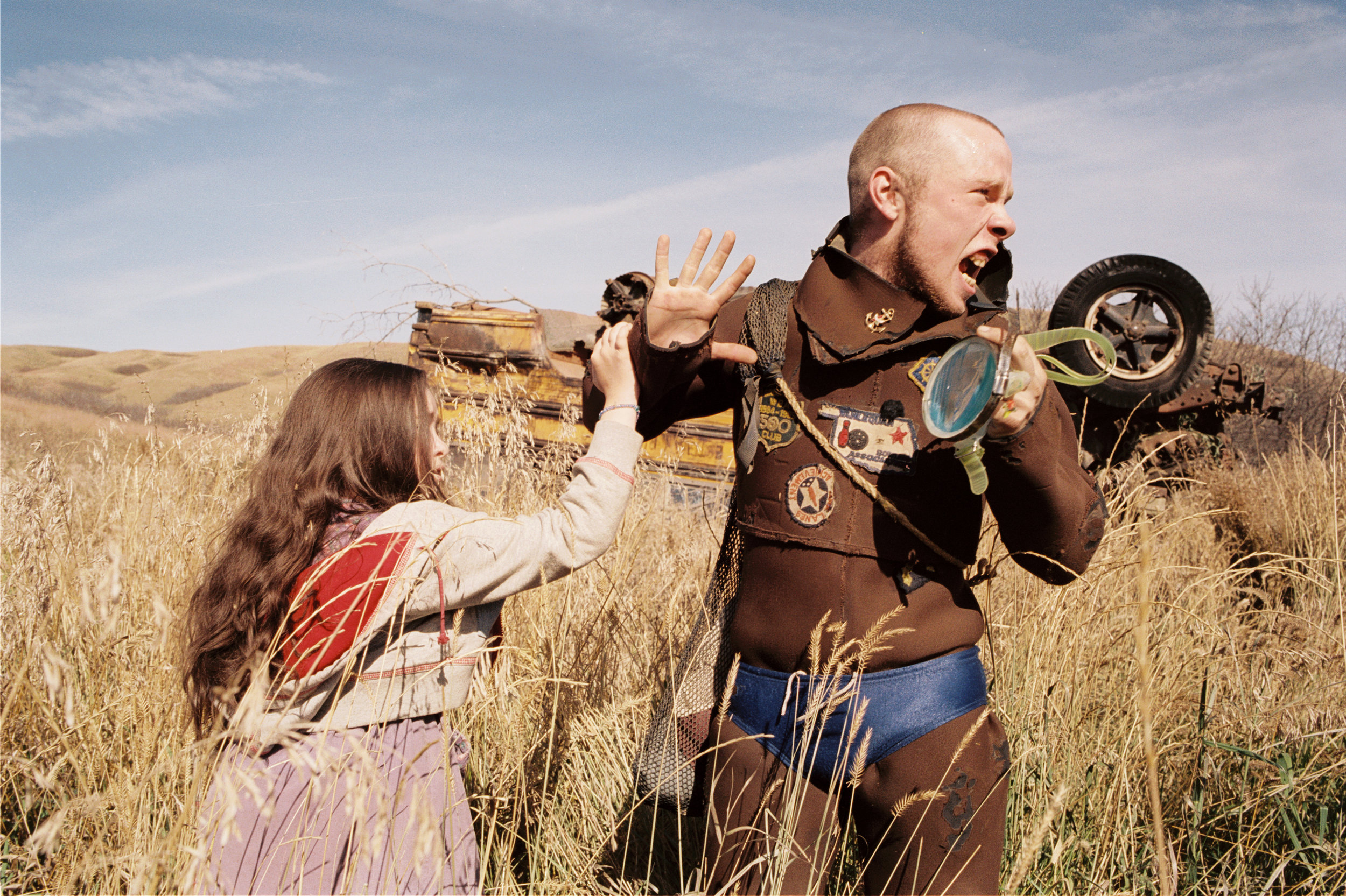
In the novel Tideland written by Mitch Cullin, the most intriguing aspect for Gilliam (and worthy of bringing to the screen) was the touching perspective of a child who is free from prejudice and convention. She doesn’t know them, so she defines everything that happens around her in her own way. The director aptly described the story as a combination of Alice in Wonderland and Psycho. That says a lot about the film’s mood and its plot. From the moment her father begins another “little vacation,” he is unconscious.
Soon he dies and begins to decompose in the armchair, in a wig and makeup, because Jeliza-Rose decides he’ll look better that way. Meanwhile, she spends her days playing in the nooks of the house and in the tall grass outside. Her friends are doll heads that she sticks onto her fingers. She talks to them, providing their lines, and acts out scenes with them. She gives them names: Sateen Lips, Glitter Gal, Mustique, Baby Blonde. Each has a different personality, reflecting different aspects of the girl’s character. Though lonely, she is never alone – she has several versions of herself for company and feels wonderful with them.

Soon, however, Jeliza-Rose meets other inhabitants of the wasteland. While playing in a bus wreck, she notices a tall woman in black clothing and a hat with a veil. At first she takes the stranger for a ghost, improvising several theories about who she might be. At the next meeting the characters get to know each other better – it turns out that the mysterious figure is named Dell (Janet McTeer). She lost sight in one eye due to a bee sting and therefore covers her face and head.
She practices taxidermy – stuffing previously hunted animals that, once prepared, decorate the walls of her house. She lives nearby with her brother Dickens (Brendan Fletcher). Though an adult man, he has the mind of a child and is intellectually disabled. He claims he hunts a monster-shark (which turns out to be a train) and has his own submarine (actually a cluttered shack). He also has his secrets that have shaped who he is now. At last Jeliza-Rose can befriend someone real.
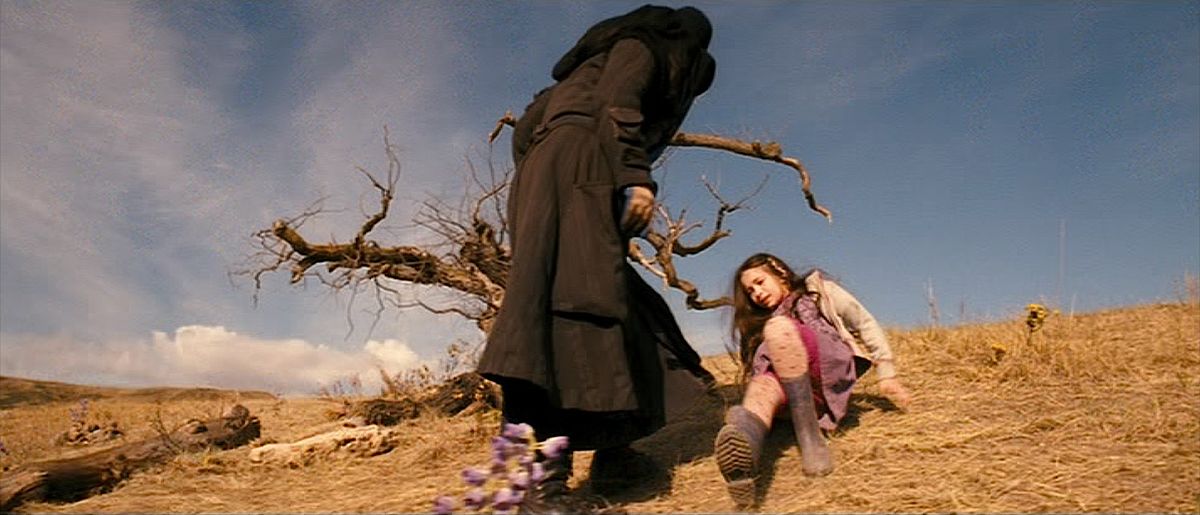
But what is real? The doll heads now talk on their own, without the girl’s help. Her father is real too. He stinks and has turned an unhealthy color, but still sits in the armchair. The presence of the eccentric Dell and the disturbed Dickens deepens the state of the heroine, who is increasingly absorbed by her imagined world. Inspired by stories about the submarine, she sees her house at the bottom of the sea; she swims within it together with her dead father, the furniture and fish.
Another time she faints and imagines that she falls into a rabbit hole full of syringes and junk. Above her float the worried doll heads. Depending on the situation, Dell is at times a specter, a pirate, or a vampire – or at least that’s how Jeliza-Rose sees her. Meanwhile, between her and Dickens a tension begins to form, which neither of them can define. When they start kissing for fun, the girl thinks she’s pregnant, because babies must surely come from kisses. There is nothing inappropriate in any of these scenes, because the child’s perspective is untainted by adult categories of thought.

Gilliam himself said in the introduction to the DVD edition:
I suggest that you forget everything you’ve learned as adults, things that limit your perception of the world: your fears, prejudices and judgments. Try to remember what it’s like to be a child, to feel wonder, to be innocent. And don’t forget to laugh.
In Tideland, reality is not so much distorted as ruled by its own laws. There is no logic or rationalism here, only a child’s unrestrained imagination, and not just any child from any ordinary family. Jeliza-Rose grew up in a pathological household, where she would either massage her unhinged mother’s legs or prepare heroin for her addicted father. They knew the difference between good and evil, and instead of making an effort to raise their daughter, they chose to detach themselves from reality. The girl had no choice, because what would be extreme for others was everyday life for her.
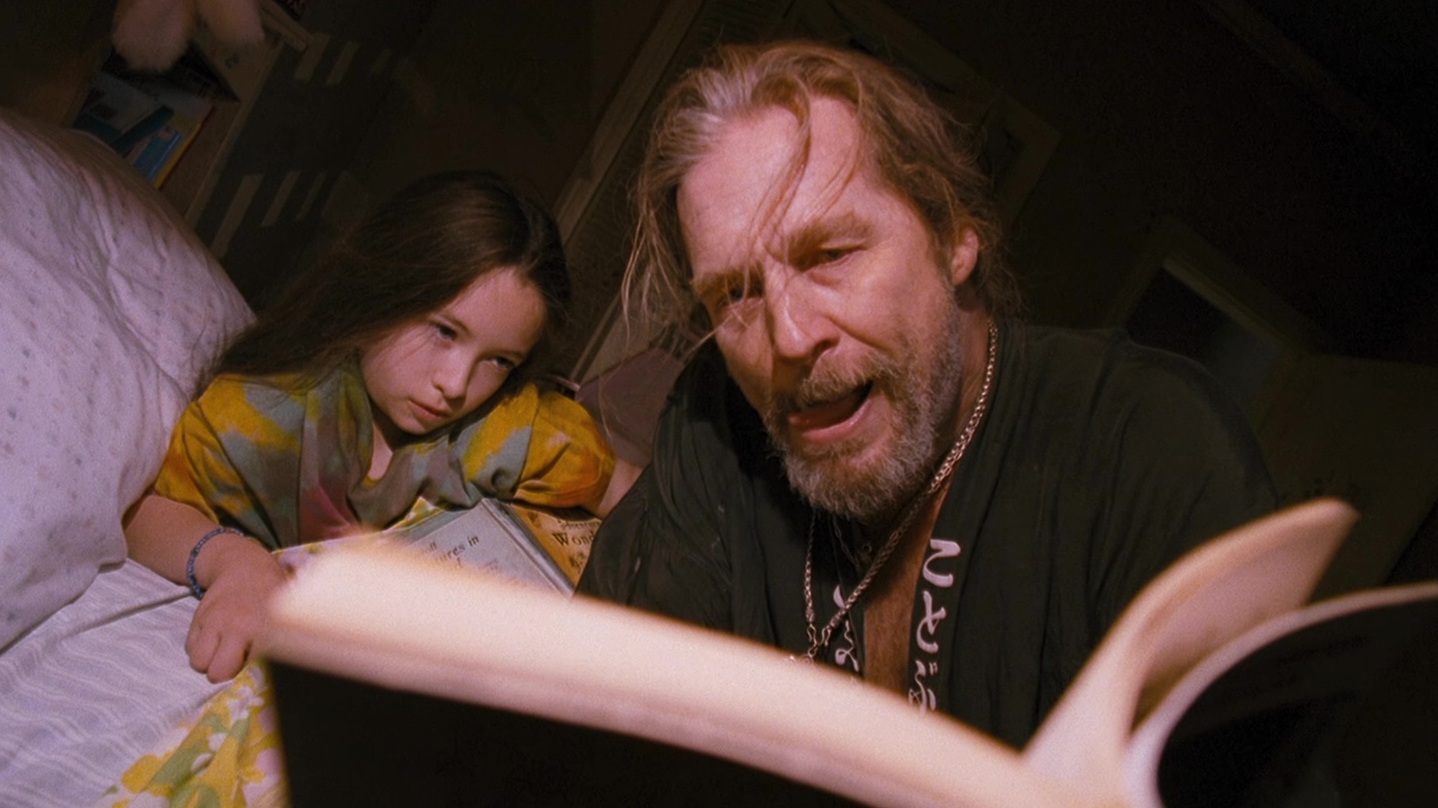
With every new event she slipped further into the world of imagination, where everything had an explanation, the doll heads were her companions, and her father was on “little vacations.” It’s a perspective devoid of negative emotions surrounding death, addiction, madness and illness – those things are entirely outside Jeliza-Rose. Her story could have been a depressing psychological drama, but thanks to Cullin’s inventive prose and Gilliam’s imagination, it is a surreal fairy tale for adults, which David Cronenberg himself called a poetic horror.

