
Review
GODLESS: An Excellent Western… up to a point
Godless makes its strongest impression at the very beginning. It’s mysterious, bloody, grim, and truly dark, with several sequences that are hard to forget.


For some time now, the Netflix corporation has been slowly threatening HBO’s dominant position. And while the latter successfully cashes in on already established brands, Netflix explores new territories for fresh series—sometimes with mixed but generally successful results. In the miniseries Godless, Netflix reaches into the old, beloved Wild West. Unfortunately, it does so with a distinctly 21st-century approach.
It’s the year 1884. The echoes of the Civil War have long since faded, and the still-forming United States is plagued by other problems, most notably lawlessness.
In Colorado (portrayed this time by New Mexico, where most of the action unfolds), this lawlessness takes the form of Frank Griffin’s brutal gang of over thirty men (the excellent Jeff Daniels, riding the same horse as his namesake in True Grit). Federal Marshal John Cook (the reliable Sam Waterston) follows their bloody trail. Meanwhile, on the outskirts of the forgotten mining town of La Belle, a wounded stranger (solid, “unyielding” Jack O’Connell) appears. As you can guess, darker and darker clouds begin to gather over the town, and the connections between these characters turn out to be far from incidental.
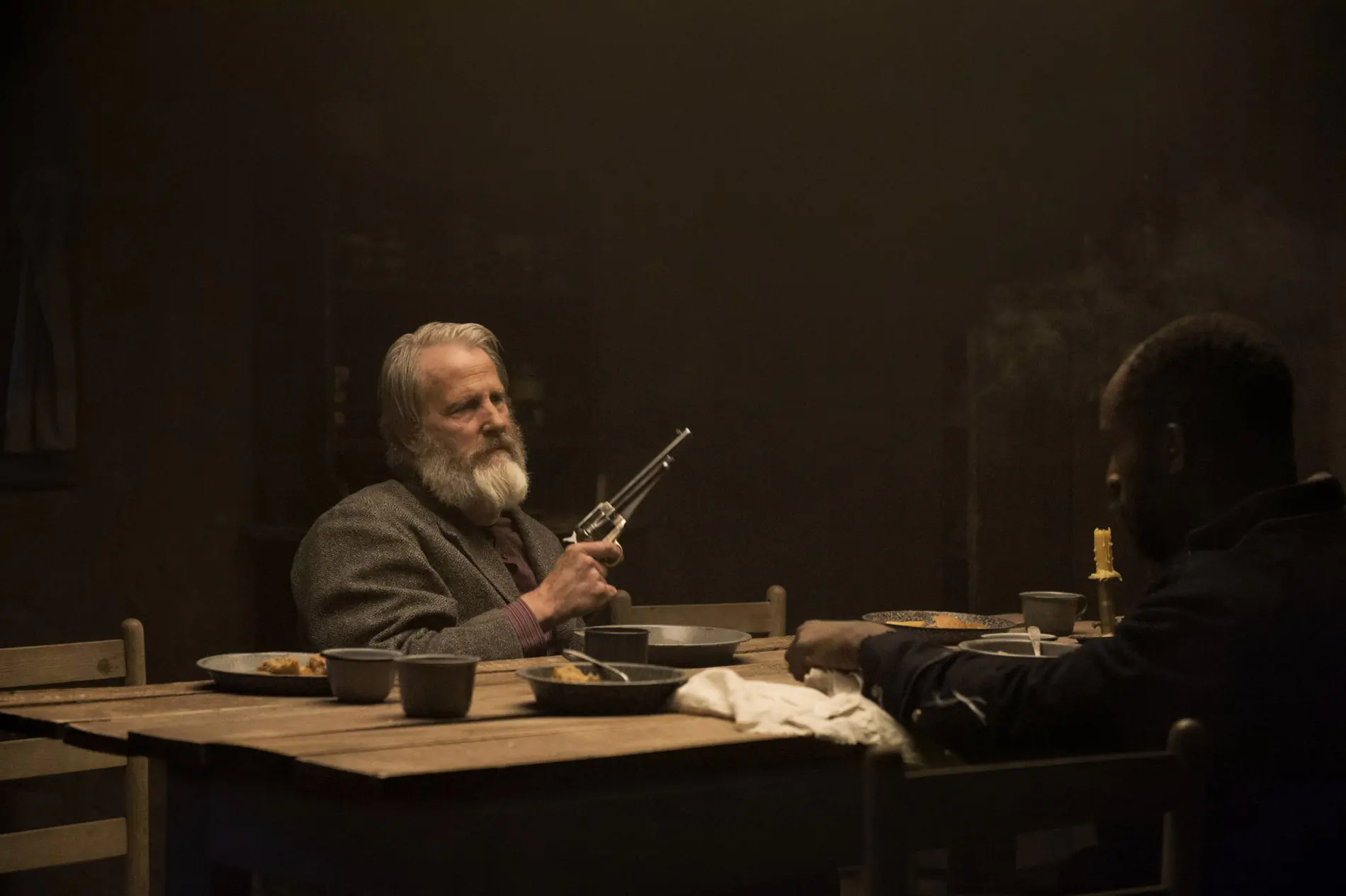
The description is somewhat enigmatic, but the series is short, just seven episodes, so the less you know going in, the better. Paradoxically, Godless makes its strongest impression at the very beginning. It’s mysterious, bloody, grim, and truly dark, with several sequences—including the powerful prologue—that leave a strong impression and are hard to forget. At this stage, the promise of the tagline Welcome to no man’s land is more than fulfilled. All the more a shame that the further into the show we go, the more the creators—Scott Frank and producer Steven Soderbergh—seem to forget how brilliantly they started their journey. And in such good company, too.
The first thing that stands out is the excellent, though rather unconventional, casting. It’s this ensemble that Godless rests on and is defended by at nearly every level. In addition to the previously mentioned perfectly cast trio, we get to admire the talents of several generations—Michelle Dockery (Downton Abbey), Scoot McNairy (Argo), Merritt Wever (Nurse Jackie), Jessica Sula (like O’Connell, debuting in Skins), Tantoo Cardinal (Dances with Wolves), Kim Coates (Sons of Anarchy and Kevin Costner’s Open Range), Erik LaRay Harvey (Luke Cage), Rob Morgan (Mudbound), and Thomas Brodie-Sangster (previously best known for Love Actually), whose cheeky, fast-talking deputy is the true cherry on top and perhaps the most likeable character in the series.
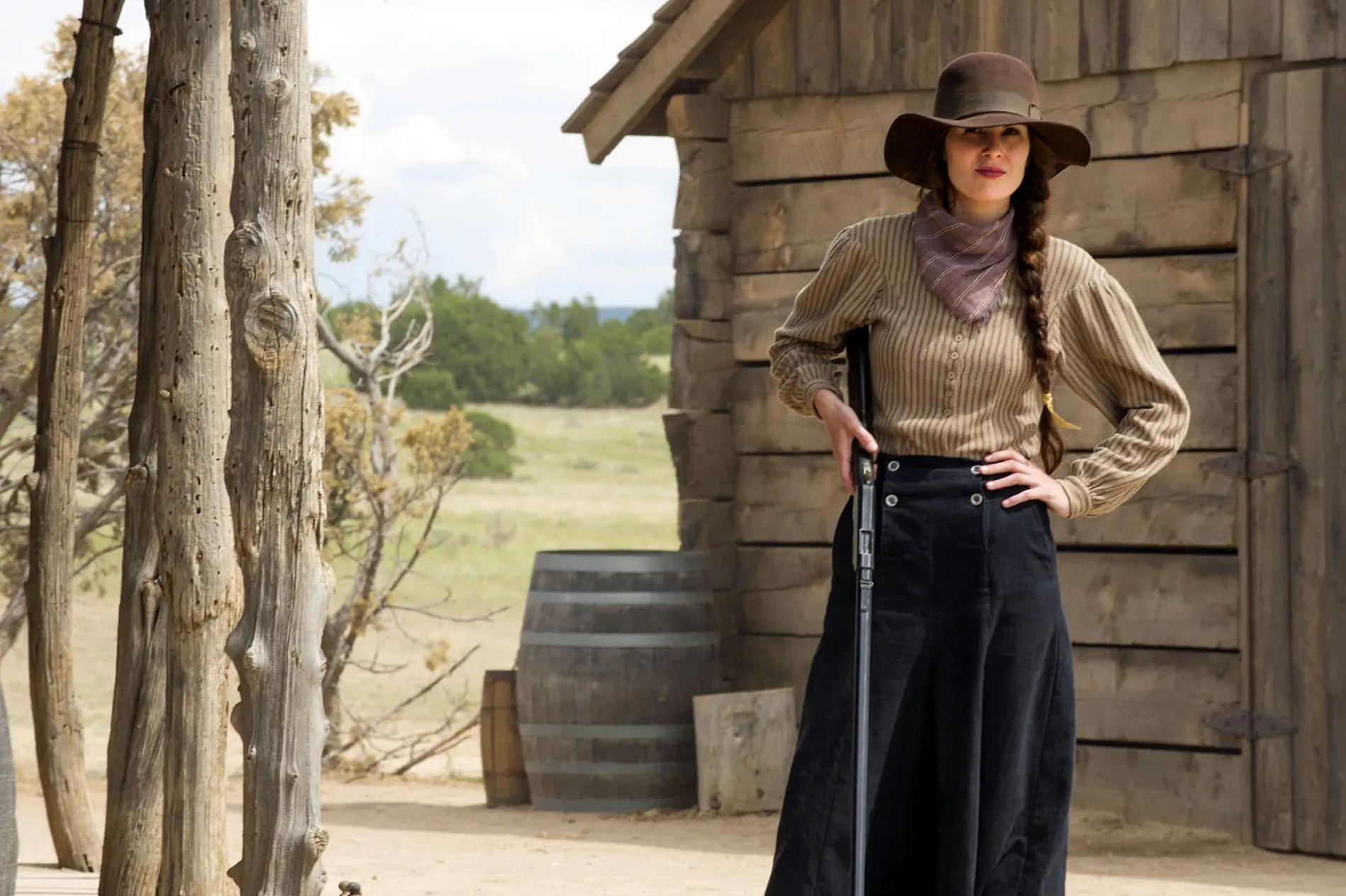
Even in this respect, it’s hard to complain, as Netflix’s prairie is populated, even in the background, with a full range of interesting, nuanced, and diverse characters—the standard genre gallery of individuals, but brought to life with sharp writing and strong performances. This “pastoral” image is completed by top-notch technical work: production design (Carlos Barbosa, David J. Bomba, Carla Curry), costumes (Betsy Heimann), cinematography (Steven Meizler), and music (Carlos Rafael Rivera, with the soundtrack produced by none other than T Bone Burnett).
Add to that a stylish, atmospheric opening sequence and several moments of true cinematic glory that wouldn’t shame John Ford or Sam Peckinpah.
Unfortunately, somewhere around the halfway mark, Godless begins to stumble more and more, losing pace and ultimately sharing the fate of the Taboo—becoming an over-stylized trifle. Seven and a half hours of screen time isn’t much by TV standards, but the main plot here doesn’t even stretch to half of that. With each episode, Godless becomes more bloated, tiresome, and full of disjointed threads that dilute the core story.
The uneven episode lengths, ranging from 40 to 80 minutes, make no sense, and at least two of them serve only as filler, pushing nothing forward. It’s enough to say that among the seven episodes, there are five romantic subplots (!)—and only one of them has any real narrative weight.
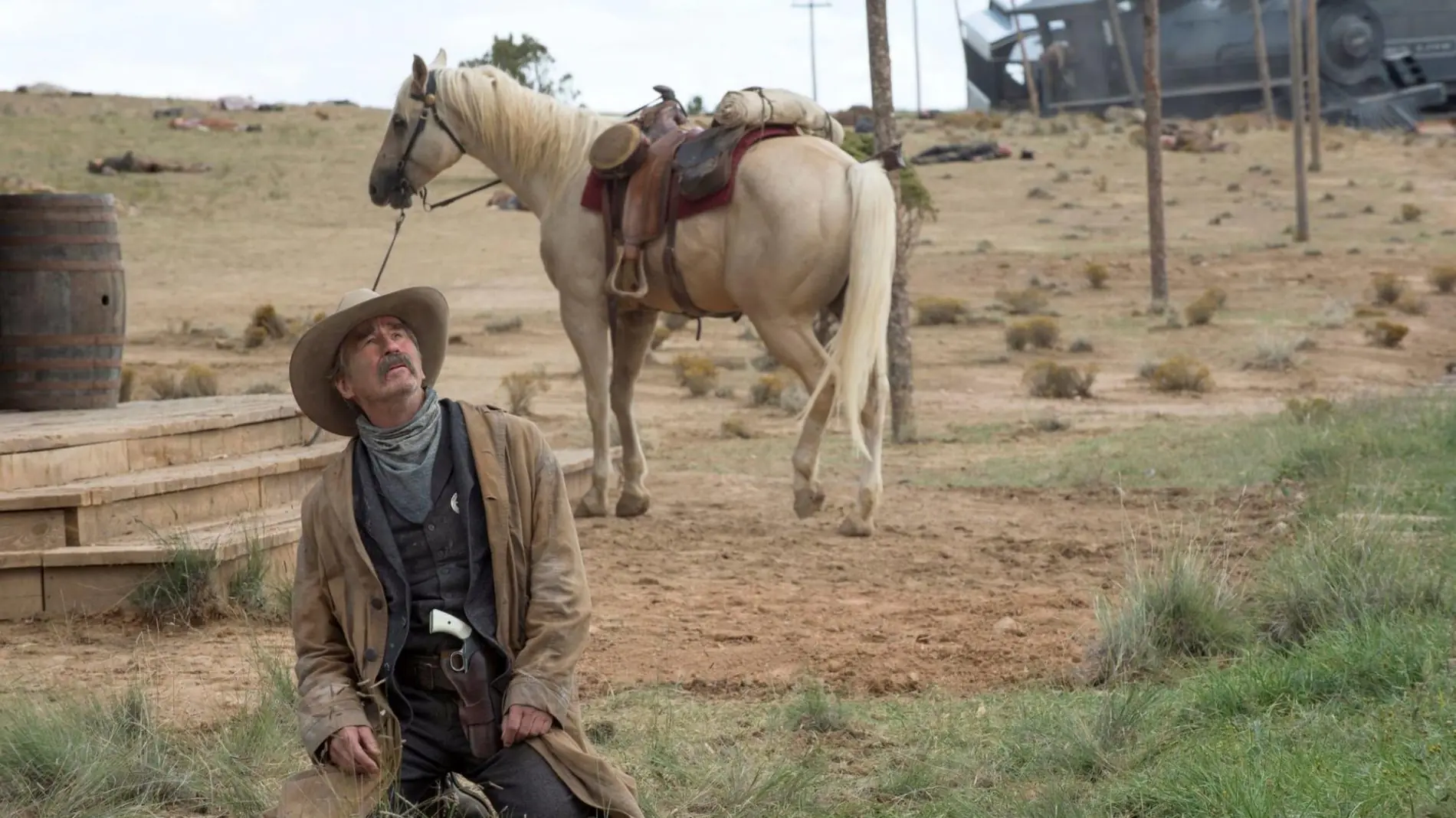
Worse still, for some reason the creators decided to smuggle modern anxieties into the 19th-century setting. As a result, Godless occasionally touches on IMPORTANT feminist, racial, and sexual issues. There would be nothing wrong with that if these elements weren’t mostly irrelevant to the central story—literally.
Combined with overly safe conventions and an almost complete lack of grit, they fall flat. It’s worth noting that Netflix’s Wild West is wild in name only. Here, every roughneck starts his sentence with “yes, ma’am” and ends it with “thank you, ma’am”; nearly every good male character is either incompetent or acts like a fool; the villains are bad just because; and openly conducted relationships between same-sex or interracial couples face no consequences. So why even bring them up?
In Godless, action frequently fails to generate any real response and often tries to juggle too many things at once, suggesting the project wasn’t fully thought through. The result is that between emotionally intense or blood-curdling scenes, we suddenly get slapstick comedy, and the “adult” tale of revenge, money, and destiny is interrupted by a cheerful story about… coming of age and first love. The show lacks consistency in tone and character development. What should establish relationships or harden characters instead undermines their potential (and the cast’s), and kills credibility. The best example might be Coates, who once again plays a hardened bastard willing to kill his mother for a few dollars.
But here, this reputation doesn’t translate into action. He played a similar role in Costner’s production (even dressed the same!), but there it had narrative purpose. Here, it’s just another empty hat in the cast—and hardly the only one wandering the screen without direction.
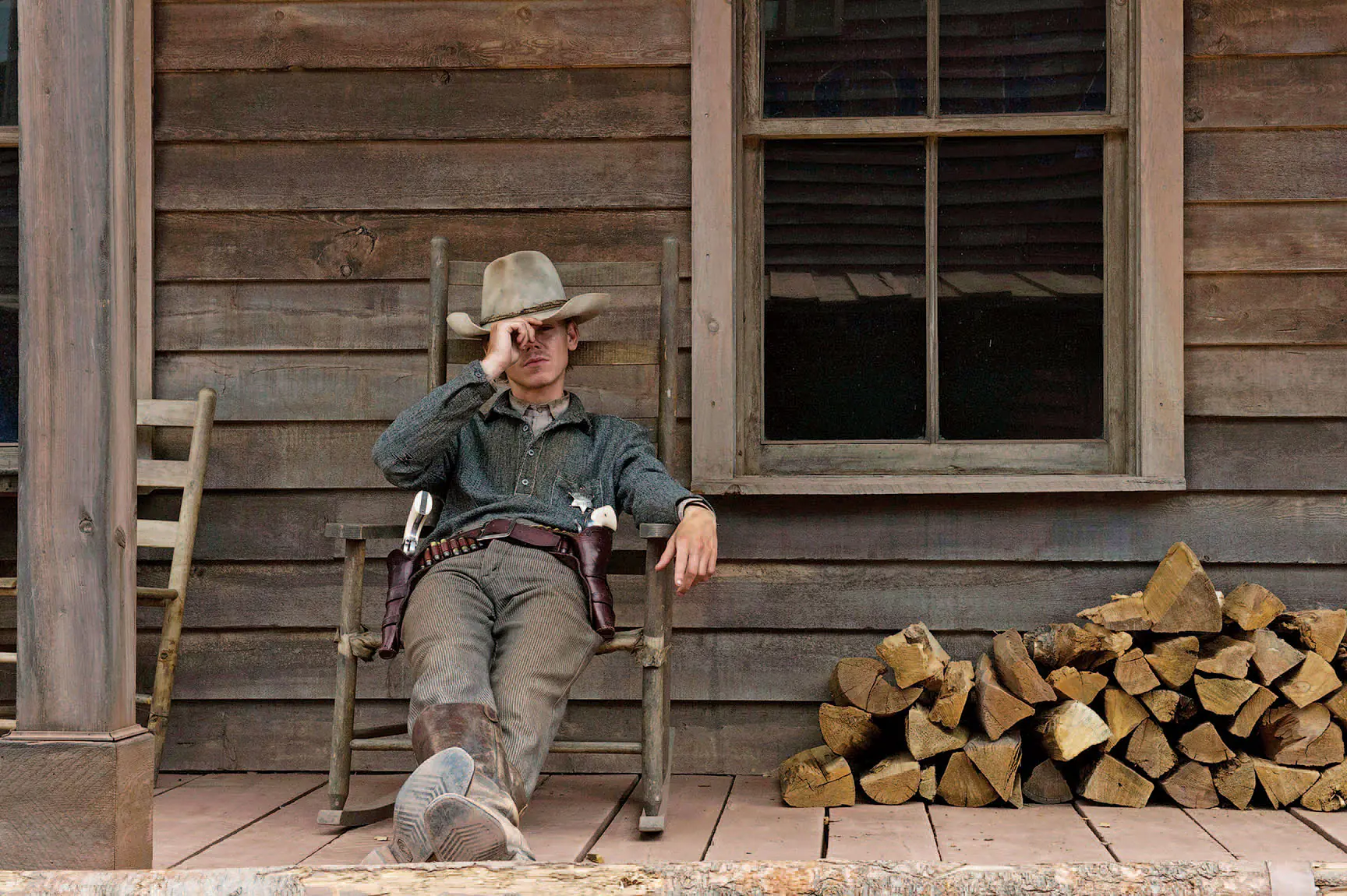
Thanks to the constant reliance on flashbacks, the creators also squander their greatest asset—an incredible atmosphere. What was initially left unsaid, building tension and intrigue around the main characters and firing the imagination, is ultimately spoon-fed in painful detail (seriously, in some scenes only arrows were missing to make sure we didn’t miss anything). There’s no attempt to preserve mystery—instead, we get clichés, convenient plot turns, coincidences, and ever-growing predictability. The main storyline ends up feeling hollow, trivial, and barren—just like the land beneath the feet of La Belle’s residents. Not only does the series convey nothing meaningful or genre-defining, but it lacks even a shred of sense.
The proverbial nail in the coffin is the final showdown, anticipated from the very beginning—something that could have salvaged the show and cleared any doubts, but instead comes crashing down in idiocy. The finale throws logic and character psychology out the window in favor of flashy stunt work, shockingly stupid decisions, over-the-top CGI blood, and totally unnecessary slow motion. Along with the moody but saccharine and formulaic epilogue, it completes the picture of yet another missed opportunity for a truly unique experience. It’s sad to say, but Godless is a crushing disappointment and instead of leaving lasting emotions, it quickly fades into the symbolic “fog” that has accompanied it since the opening frames (at the end even pretending to be an ocean—seriously!).

The greatest value of the series, then, is that it makes you appreciate even more the classics—productions that, though technically modern, feel as if they were made in a different era. In those stories, merit meant nothing, and truly tough people (including women) roamed a godforsaken prairie with nothing to prove, who didn’t spin their guns for show—they just shot them. Often without warning. And with precision. In Godless, gunfire can echo far and wide—but so what, when most bullets miss the mark? After the entire shootout, it’s only your head that hurts, not your heart.

