
Review
GOODNIGHT MOMMY. A shocking, blood-curdling horror
“Goodnight Mommy” is an example of genre cinema that offers more beneath the surface than it does on a purely narrative level.

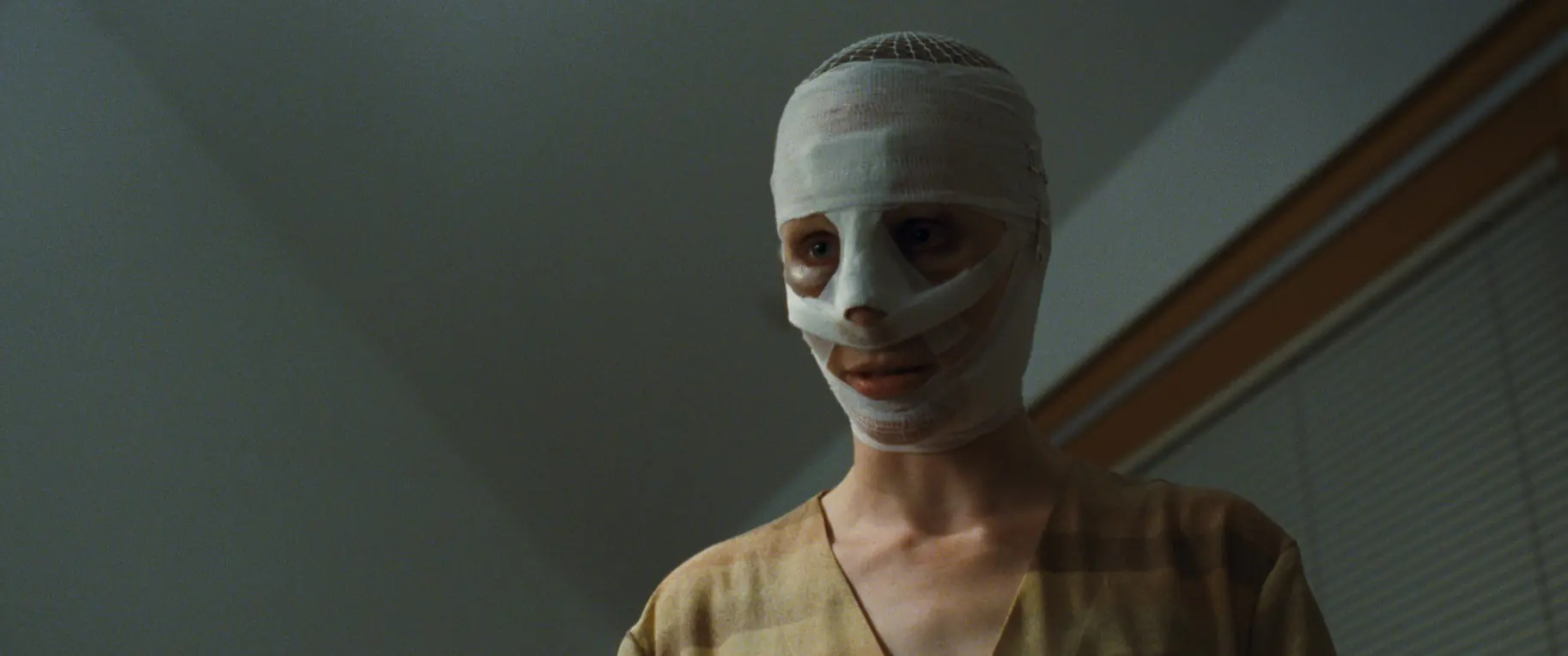
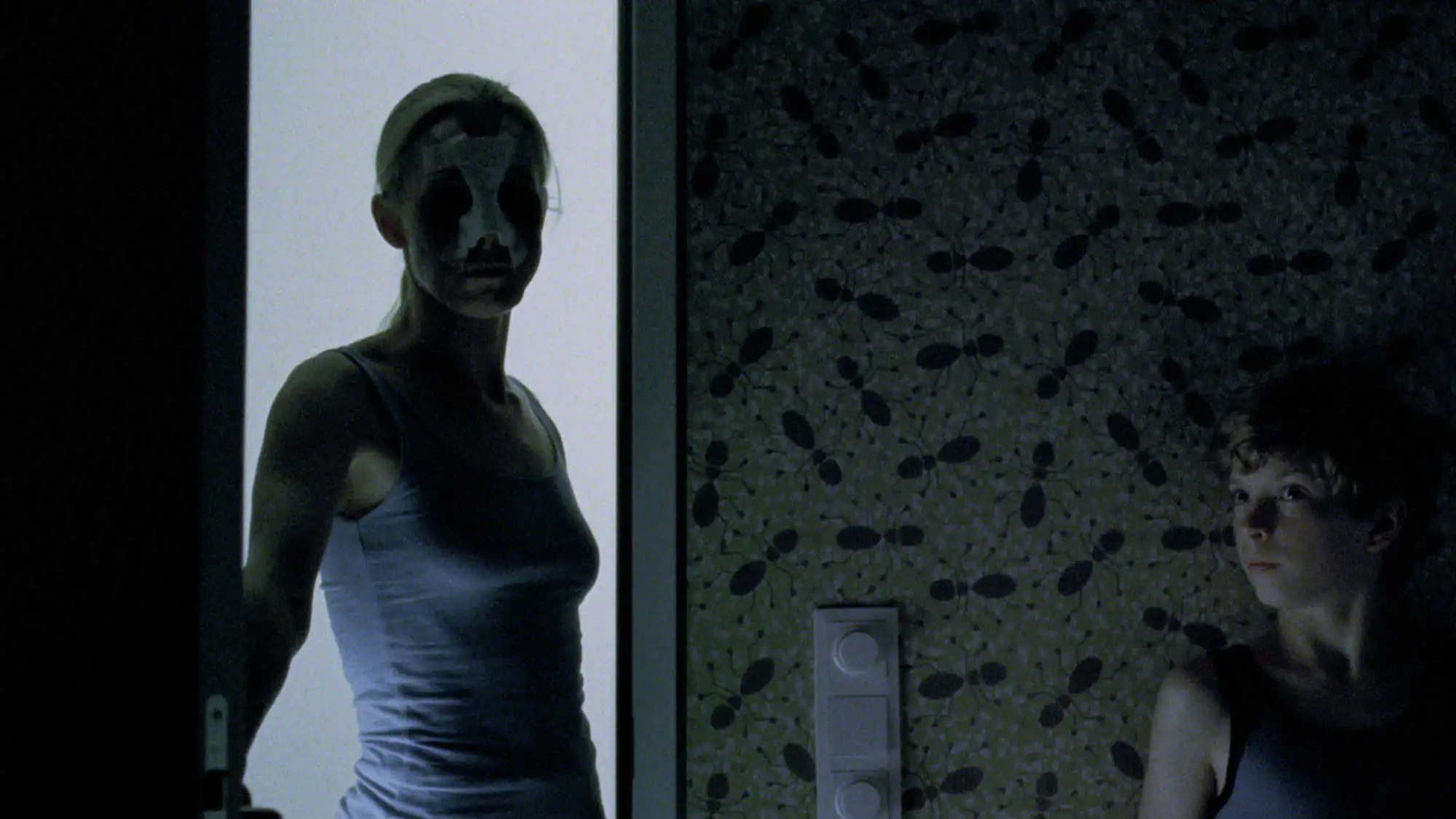
A pair of young twins, Elias and Lukas (played by debuting actors Elias and Lukas Schwarz), are spending time alone at their countryside home, waiting for their mother’s return. It’s summertime; the boys run through cornfields and forests, and enjoy the nearby lake. Soon, their mother (Susanne Wuest) comes back—but she seems different. Her head is wrapped in bandages, beneath which visible swelling can be seen. The boys are instructed not to disturb her during her recovery—there must be silence and calm in the house, blinds should remain closed, and visitors are to be turned away. The boys are not happy with these new rules, which leads to frequent punishments and increasingly aggressive behavior from their mother.
Convinced that she is an impostor—someone merely pretending to be their parent—they begin to treat her as an enemy. “Goodnight Mommy” (original title Ich seh, Ich seh), an Austrian psychological horror film, is an example of genre cinema that offers more beneath the surface than it does on a purely narrative level.
While the story is expertly told, it rather obviously moves toward a conclusion that is fairly clear from the beginning. However, the writer-director duo, Severin Fiala and Veronika Franz, don’t seem bothered by this, delaying the resolution until the very end, and choosing not to treat the reveal as a grand twist. As a result, the ending doesn’t feel like a cheat—though for viewers who enjoy narrative surprises, the film may prove disappointing, potentially overshadowing the undeniable craftsmanship behind this Austrian production.
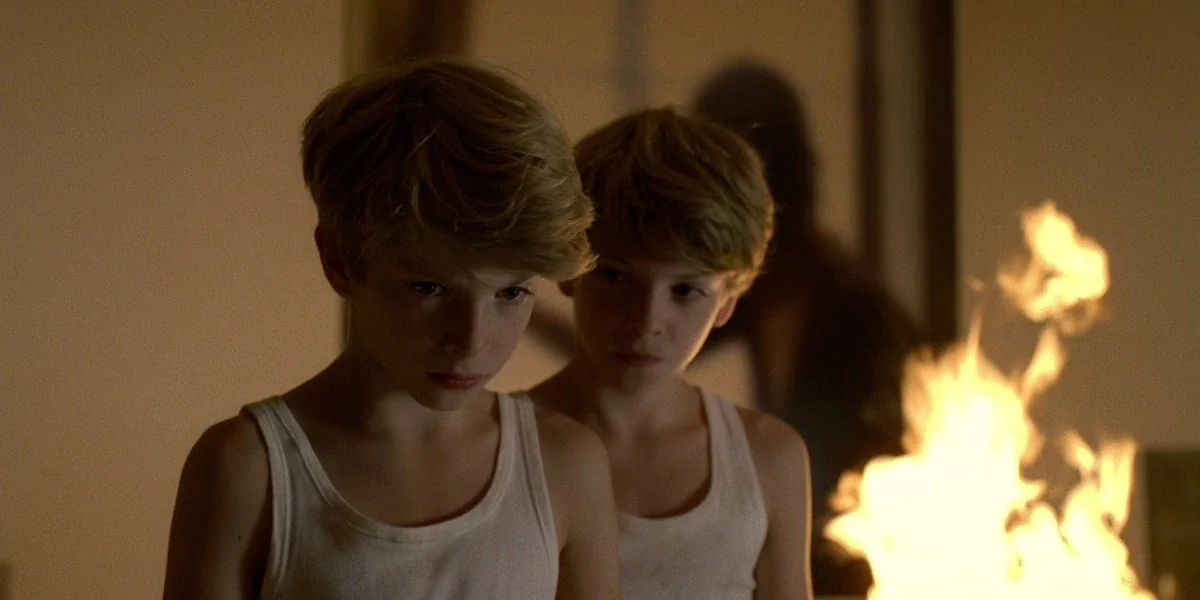
The house where the protagonists live is large, beautiful, and clean—but also cold and unwelcoming. It contrasts effectively with the sun-drenched surroundings where the brothers prefer to spend their time. The fact that their mother practically never leaves the house—even after the bandages come off—prevents the boys from trusting her. She herself begins to resemble the blurred, faceless figures from the paintings on the walls. Her coldness toward one of the sons and sadism toward the other (what kind of mother films herself tormenting her own child with a cell phone?) further builds an emotional wall that seems insurmountable from the outset. The psychological tension among the trio, and the clinical lens through which the story unfolds, is reminiscent of films by another Austrian filmmaker, Michael Haneke. Yet the debuting duo also manage to inject a bit of dark humor and aren’t afraid to use more direct, visceral means of scaring the audience.
Eventually, the filmmakers give free rein to their horror imagination. Some scenes are terrifying purely on a visual level. In one dream the boys share, their mother walks through a forest and begins to undress. What happens to her head, combined with the harsh, increasingly aggressive sound design, can send a real chill down the spine. Another scene—in which the boys place a cockroach in her mouth while she sleeps—not only provokes disgust, but also makes us question whether what we’re seeing is real or a dream.
The nearby town the brothers visit feels oddly deserted, almost post-apocalyptic; the only person on the streets is a drunken man playing the accordion. In the end credits, he is listed as the “accordion god.” A joke? Possibly. Fiala and Franz’s film may move at a slow narrative pace and aim beyond the boundaries of typical genre fare, but that doesn’t mean it lacks true horror, brutality, or mystery.
While watching Goodnight Mommy, I couldn’t shake the feeling that I was seeing a visual representation of one of the questions posed by Tom Stoppard in Rosencrantz and Guildenstern Are Dead:
When did we first encounter the concept of death?
Most likely in childhood, yet it’s impossible to pinpoint the exact moment—even though it surely left a mark on every human being.
How does this play out in the case of Elias and Lukas? Are they aware of what death is? Discovering the body of a cat doesn’t trigger any cognitive or emotional shock. They simply decide to preserve the dead animal in an aquarium. Similarly, visiting a site filled with skulls and bones (perhaps the remains of a crematorium?) doesn’t prompt them to ask what the place is or why it exists. The brothers are old enough to understand mortality, yet both the aforementioned scenes and the film’s ending seem to cast doubt on that.
Thanks to this underlying uncertainty, the Austrian horror film becomes even more chilling—not only through the sudden escalation of violence in the second half, but also by suggesting that the boys are unaware of where the boundary between life and death truly lies. Perhaps they’ve repressed it, perhaps no one has ever spoken to them about it. The Austrians, more than most nations, know a thing or two about that.

