
Review
THE NEST. Scenes from a Marital Crisis [REVIEW]
At its core, Sean Durkin’s The Nest tells the same story he did nearly ten years earlier in Martha Marcy May Marlene—a story about a lack of communication.

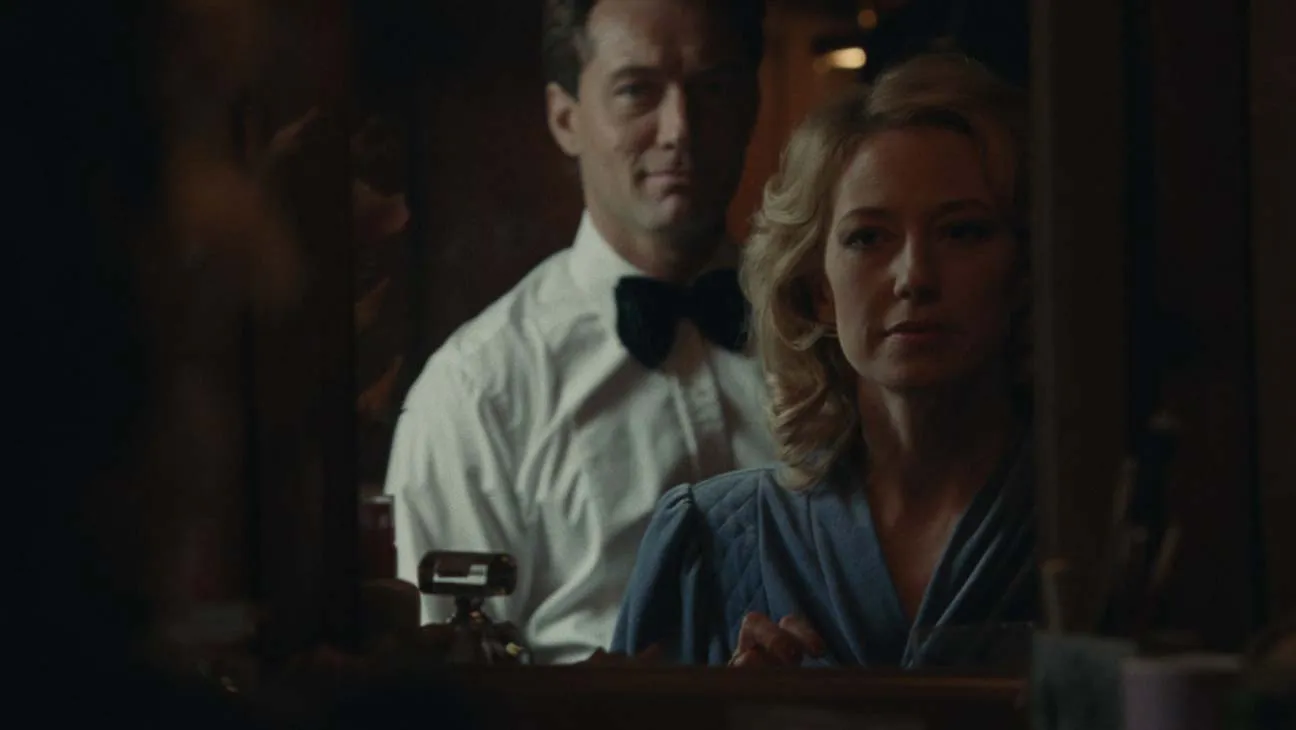
Sean Durkin’s The Nest begins very inconspicuously. Rory O’Hara (Jude Law) brings a cup of hot coffee to his beloved wife Allison (Carrie Coon), kissing her just after she wakes up. Later, he drives their children, Benjamin (Charlie Shotwell) and Samantha (Oona Roche), to school. During that time, his wife works as a horseback riding instructor, combining passion with income. A paradise on earth? The American dream come true? Only for a while. Out of the blue, Rory announces that he’s been offered a better-paying job back in his native UK and persuades the family to move overseas. That’s when the introduction ends (not just of this review), and the atmosphere begins to grow increasingly dark.
Rory is convinced he’s fulfilling the family’s dreams—showering his wife and son (his daughter, from a previous marriage, remains somewhat on the sidelines) with unexpected gifts and renting a massive Gothic estate where, according to the realtor, members of Led Zeppelin once worked on an album. However, the characters can’t adapt to their new surroundings. Over time, they feel increasingly alienated, which inevitably affects Rory and Allison’s relationship. At its core, Sean Durkin’s The Nest tells the same story he did nearly ten years earlier in Martha Marcy May Marlene—a story about a lack of communication. In his debut film, the Canadian director portrayed a young woman who, after fleeing a toxic cult, moves in with her sister and brother-in-law.
She’s unable to fully open up to her loved ones for fear of rejection. The sister and her husband don’t press her but slowly begin to believe the girl is mentally unstable, possibly even dangerous. A similar situation occurs in The Nest—there’s no real communication between Rory and Allison. Information flows in only one direction.  That direction is completely dominated by Rory. In Durkin’s film, he is portrayed as selfish, dishonest, impatient, narcissistic, and materialistic, entirely focused on his career (his last name, O’Hara, fits him perfectly).
A soulless machine—a product of his time, primed for maximum profit and quick turnover, straight from the era of aggressive capitalism during Ronald Reagan’s first term. In contrast, naturally, stands Allison, characterized primarily by her connection to nature. She spends her free time with her horse Richmond, and later shoveling manure on a neighboring farm.
Durkin lays his cards on the table very early—right from the moment the family moves, the viewer knows exactly who to root for.
I believe this is The Nest’s main weakness. The best films about the decay and rot of family relationships are always populated with nuanced characters—flawed but multidimensional.
Think of Revolutionary Road and Marriage Story by Baumbach, Wildlife by Dano, or going further back, Scenes from a Marriage by Bergman. At one point, Durkin tries to soften Rory’s image with a scene where he makes an unannounced visit to his mother, whom he hasn’t seen in over a decade. We learn he had a difficult childhood marked by a strained relationship with a strict father. Rory tries to pull his mother back into his life—telling her about the grand estate outside London, his beautiful wife, and adorable son.
But she remains unmoved, emotionally distant to the very end. Unfortunately, after that brief scene, Rory’s mother disappears from the film entirely. It’s a pity—through her, the character played by Jude Law might have been rendered more human.
Without a doubt, it is Carrie Coon’s performance as Allison that is the greatest asset of Durkin’s new film.
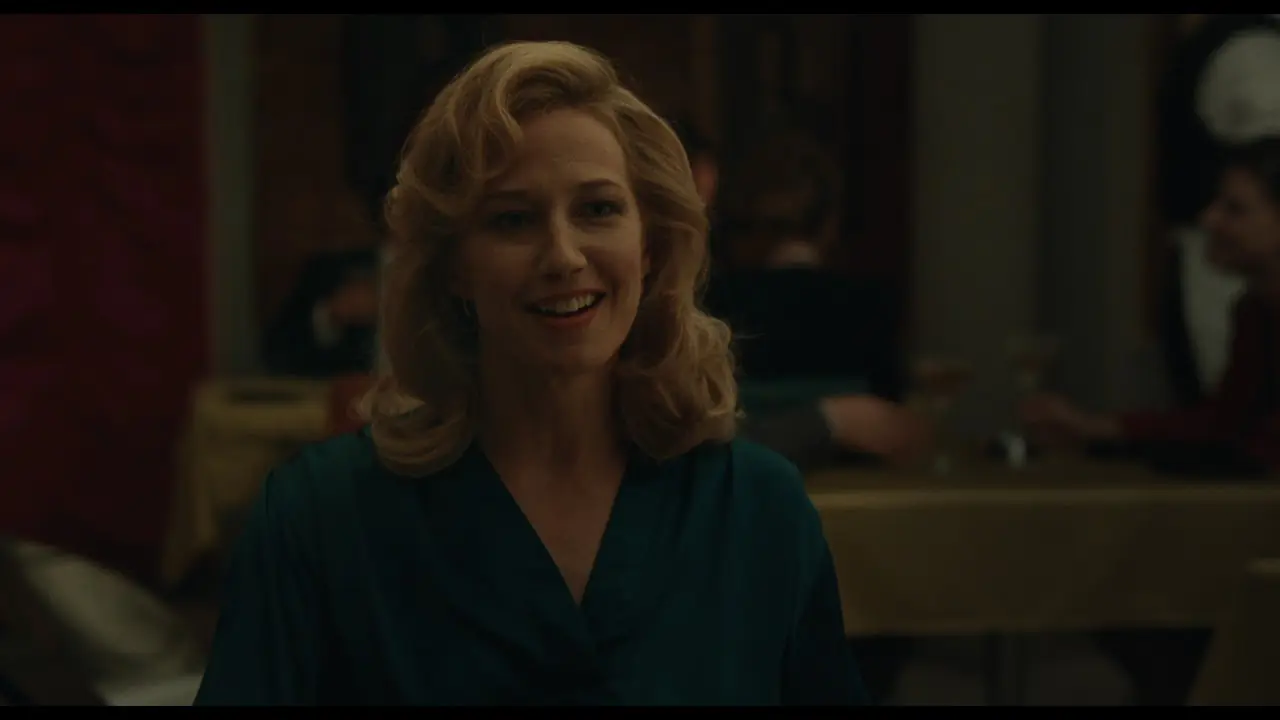
Allison turns out to be the more compelling character.
Over the course of the story, she undergoes significant transformation—from a quiet housewife living in the shadow of her pompous husband to an emancipated, confident head of the family. The culmination of this metamorphosis—and the film’s climax—is a dinner party where Allison exposes Rory in front of his close associate and potential clients. She responds to her husband’s elaborate but completely fabricated tales of theater visits, brilliant Anthony Hopkins performances, and vacations on the Portuguese Riviera with hysterical laughter, then walks out on the deceitful company, embarking on a night journey through London.
It’s a brilliantly written and acted character—Carrie Coon is without question the biggest winner of Durkin’s new film. Visually, The Nest is a strikingly cold film. Durkin and his incredibly talented cinematographer Mátyás Erdély (Son of Saul, Sunset) ensure that the audience can feel the chill in Rory and Allison’s relationship. The frames are nearly always shrouded in darkness (thanks in large part to beautiful, natural lighting), the colors are faded, drained of life like the characters themselves, and much of the action takes place in the evening, at night, or at dawn.
Through these choices, the filmmakers give The Nest—at least stylistically—the tone of a horror film. Add to that the huge, unfurnished mansion, creaky, mysteriously opening doors, long, awkward close-ups on Allison’s face, and a black horse behaving strangely (the film’s central, though at times overly heavy-handed, symbol), and the result is an exceptionally unsettling portrait. Is there still hope for Rory and Allison? That’s the question Durkin leaves the audience with, concluding his film with a remarkably ambiguous scene of a family breakfast.
As we leave the theater, we’re left with the feeling that everything depends on whether the utterly discredited man is capable of genuine inner change.

