
Horror Movies
Revisiting THE BROOD: It Hits Both The Brain and the Stomach
This is cinema that stimulates the brain, hits the stomach, and leaves behind unease.

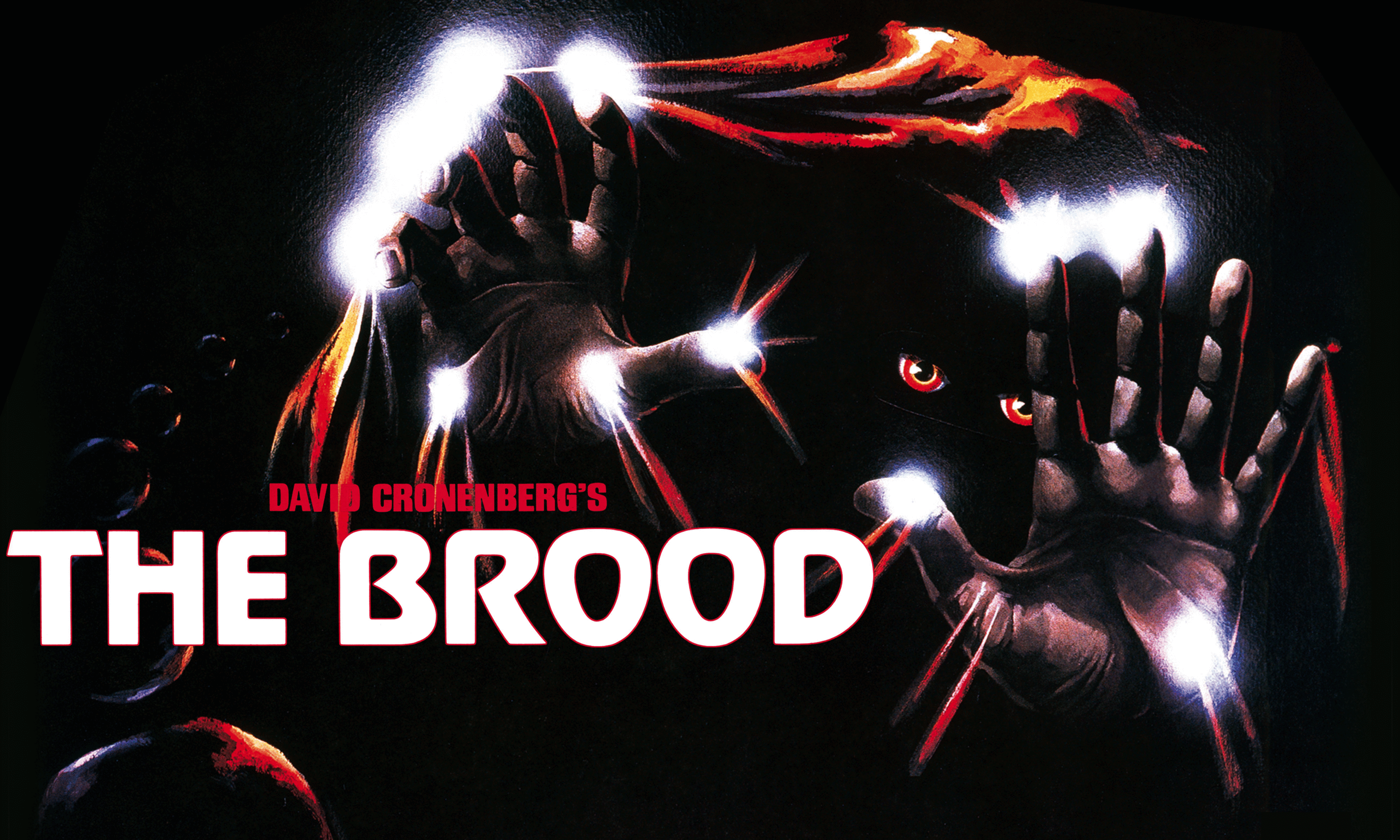
David Cronenberg’s surname is already a proven brand in cinema. A directorial legend, followed by a whole host of great titles, a distinctive style, recognizable subject matter, and a multitude of awards as well as critical and audience acclaim. At one point, Cronenberg stirred up the world of film and became synonymous with cinema of extreme experiences. But before that happened, he climbed laboriously upward, encountering incomprehension and hostility, and very often simply little interest from viewers. The Brood.
Here is David Cronenberg’s third theatrical feature, made after Shivers and Rabid, and just before Scanners. The first two were teeming with sex, violence, and aberrations. Both were rough, heavy, and low-budget. They earned their creator a reputation as a lover of repulsiveness and alienated audiences and critics alike. Years later, it is clear that these are not bad titles, but they are somewhat clumsy.
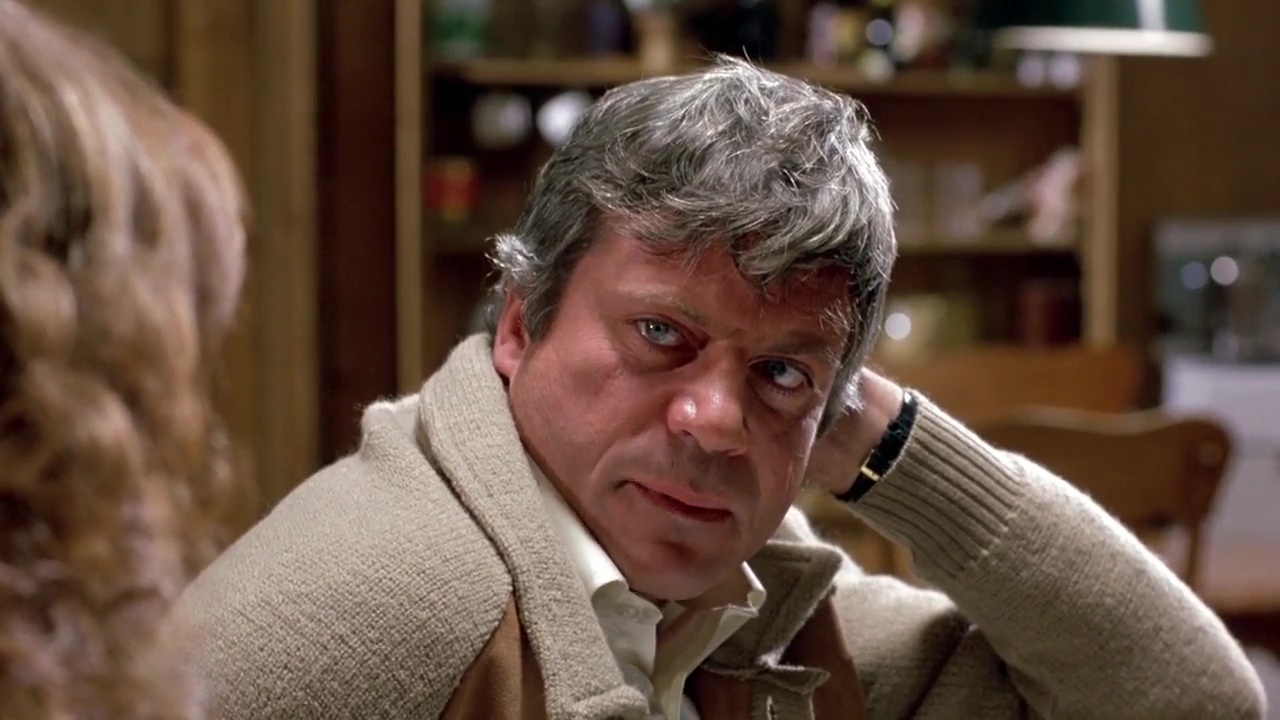
The Brood marked a step toward a more professional execution. The film received a larger budget than the director’s earlier works and assembled a strong cast, headed by the acclaimed Oliver Reed. Despite excellent craftsmanship and an interesting story, the title did not make a sensation and today remains somewhat in the shadow of the director’s other achievements. This is all the more strange given that we are dealing with a truly good, uncommon horror film.
Nola and Frank, a married couple living apart, are fighting over custody of their child. The woman is under psychiatric care and undergoes an unusual psychoplasmic therapy at an isolated facility. Her contact with the outside world is limited to weekly visits from her daughter. When, after one such meeting, Frank finds bruises on the child’s body, he decides to clarify the matter with Nola and her caregiver, Dr. Raglan. The man feels a clear aversion both toward his wife and toward her psychiatrist, who is closer to a guru than a doctor.

While making The Brood, the director himself was in the midst of a divorce. The film’s plot and form seem to confirm this. Cronenberg’s horror is a portrait of the disintegration of a family against the backdrop of a bleak Canadian winter. The basic social unit becomes a breeding ground for pain, sadness, and disappointment. There is no hope or warmth in The Brood. Nor does anyone wink at the viewer. The protagonist sinks into dark family matters whose roots reach back toward Nola’s parents.
Frank is practically a single father—the brief visits the child pays to her mother are not enough to speak of shared parenting. In addition, he must solve on his own the mystery of the marks on his daughter’s body. Soon a series of mysterious murders will begin around him, and the girl will be abducted. Frank cannot count on help from any side. He is, however, certain that Nola and Raglan are somehow connected to the sudden wave of violence.
Cronenberg offers an infernal vision of fatherhood. Frank goes through hell trying to save his child. On the surface, everything seems clear; on the surface, he appears to be the good one. An unbalanced mother, a lonely father, an innocent child. The cards seem to be dealt from the very beginning. Except that… Frank radiates exhaustion; he is drained of emotion, apathetic. The welfare of the child lies close to his heart, so he takes appropriate steps to understand what is happening around him, but at times he gives the impression that he would like to fall into hibernation.
The question remains whether this is a reaction to divorce, stress, and raising a child alone, or whether it is an innate trait of the man (it is easy to imagine him with his nose buried in a newspaper, harder to see him as a partner for an energetic woman). And if so, did his personality not contribute to the state in which his wife finds herself? On the other hand, Nola – a living knot of disordered emotions – could (though did not have to) have affected him like a leech.

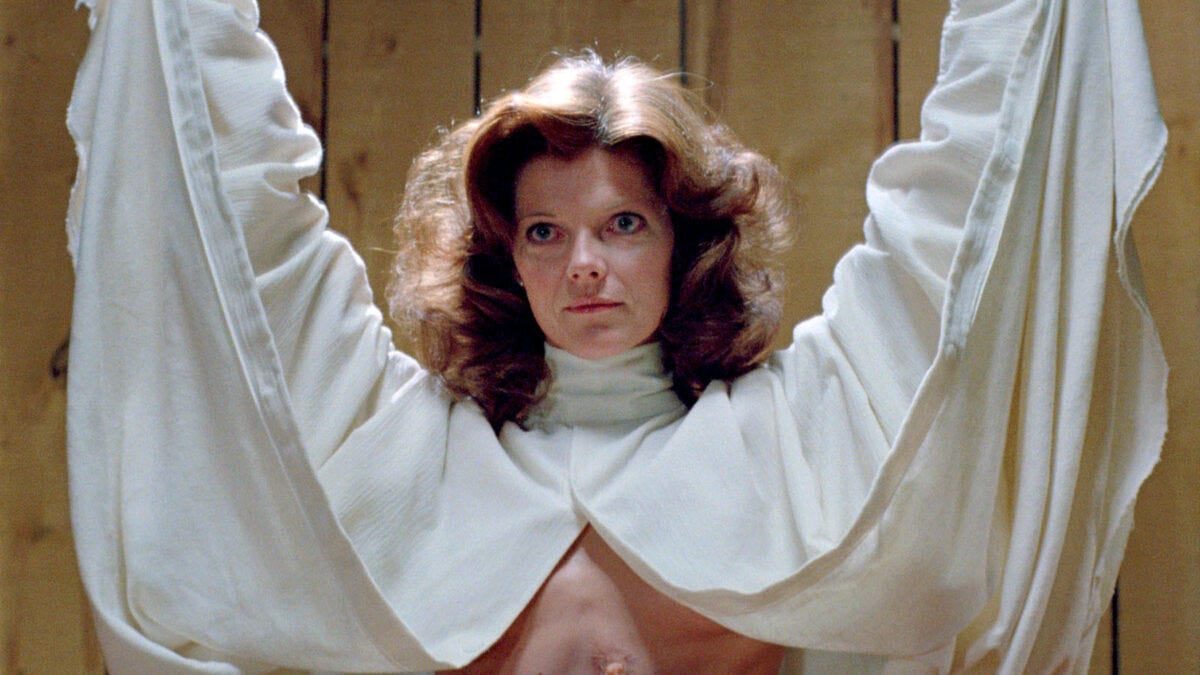
The woman is vivid, expressive, and striking. Did she consume all of Frank’s energy? Or was it only Raglan’s therapy that endowed her with this expressive power? Cronenberg does not give us answers to all questions. He constructs a vision of a world in which the family is no longer any kind of support. It resembles ruins. This applies not only to Frank’s family but also to Nola’s parents. Old problems do not disappear. They infect subsequent generations. Frank—wandering across the screen in a winter jacket and confronting a world he does not understand—may be a symbol of male disorientation.
He is therefore closer to an ordinary guy from the street than to the fathers played by Brad Pitt or Will Smith. Frank is neither heroic nor perfect in any way. He does not embody a collective fantasy of the ideal father—with a wonderful hair part, the right shape of beard, and an answer to every question.
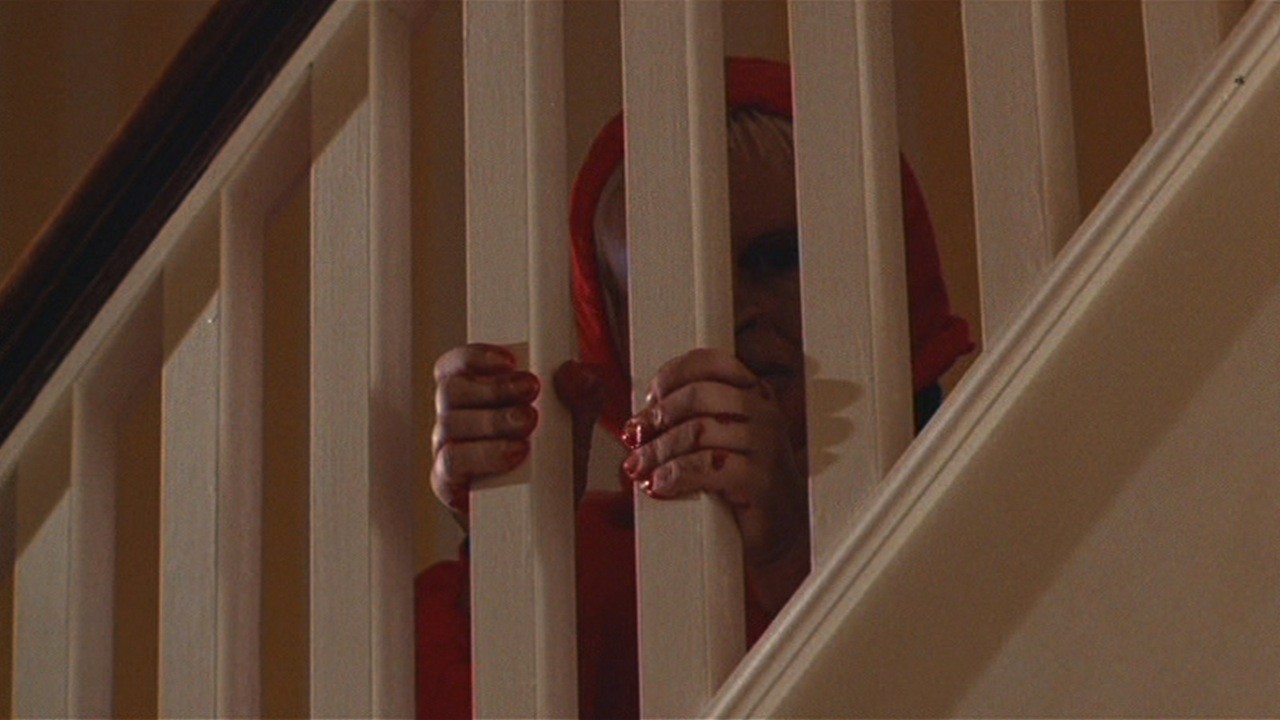
In The Brood, drama flows smoothly into horror. The director—known as a connoisseur of weirdness and deviations of every kind—once again invites viewers to his little freak show. I have no intention of spoiling anything, so I will only say that every fan of this creator will get a delicacy, finger-licking good. This is a pure-blooded horror film, one of his most genre-pure works. Cronenberg usually maintains distance from his characters. He watches them like rats in a laboratory. At times he smiles ironically, observing their flailing. This time, the distance narrows somewhat and the irony disappears.
Hence there is an appropriate dose of dread and tension in The Brood. Still, for the typical viewer it may remain a hard nut to crack. The ambiguity of the film causes disorientation. There is no one to identify with. Nola is insane, Frank strangely slack, and Raglan is an enigma—a charlatan, an egomaniac, or a concerned doctor unafraid of risky therapy? The solution to the mystery heads into regions where we have one foot in Hieronymus Bosch and the other in books on psychosomatic illnesses. I think many viewers may physically feel the cold blowing from the screen, their mouths involuntarily twisting into a WTF shape.

There is also a lot of dialogue in the film, the action builds slowly, and most scenes take place in enclosed spaces. This lack of spectacle may irritate fans of contemporary horror, where something is supposed to roar or bang every few moments. Yes, it is certainly an unusual work. And that is its strength. Cronenberg consistently constructs a vision of a world in which nothing is okay; nothing resembles toothpaste commercials or television series about love. The Brood is another dark brick in the gloomy wall that the Canadian creator has been erecting in front of the viewer for years.
Cronenberg loves disintegration—physical (The Fly), psychological (Spider), social (Cosmopolis), or spiritual (practically every one of his films). With relish, he drives a scalpel into white, clean tissue to reveal the pathogens growing inside it. Here he deals with the basic social unit and leaves us not even a shadow of hope that it is a structure capable of functioning normally. As I have already said, The Brood remains somewhat in the shadow of his other titles. This may be surprising, considering how strong, original, and full of assets this film is.

Nola, played by Samantha Eggar, is intriguing. She is a beautiful woman with lively eyes, certainly lost and possibly dangerous. The director does not hide the fact that this character is partly modeled on his wife. Oliver Reed was a true acting animal. The late artist burned up the screen with his mere presence. As Raglan, he radiates power and unerringly monopolizes our attention. The cinematography is cold, devoid of flashy effects. The editing and the music are matched to the unhurried rhythm of the story. The horror—when it finally appears—strikes fiercely and in such a way that our teeth grind.
The Canadian landscapes serve as a successful backdrop for this gloomy escapade, intensifying the depressive mood of the whole. If this range of virtues has not convinced you, know that the film is highly regarded by Stephen King, who considers it one of the more effective scare machines he has encountered. This is cinema that stimulates the brain, hits the stomach, and leaves behind unease.


