Review
Looking Back at SPIDER: More Terrifying Than Horror
Spider is more terrifying than horror. A dry, unemotional, and painfully truthful record of madness and suffering. You can’t take your eyes off the screen.


Schizophrenia is a film subject that is appealing, picturesque, and offers actors ample room to shine. Schizophrenia and David Cronenberg, however, is already a potentially risky combination, though certainly an interesting one. I do not like this director’s work; I dislike it because his films are heavy, hard to digest nightmares, steeped in disgust and the feverish hallucinations of a madman. I simply have an allergy to this kind of cinema. And yet I went to see Spider.
And for the first time Cronenberg surprised me, quite positively—both emotionally and intellectually. The film is a peculiar, clinical record of the state of mind of Dennis Cleg, a schizophrenic in an advanced stage of his illness. And that is essentially all that can be said about the plot of this film, because the plot is not the most important thing in Spider.

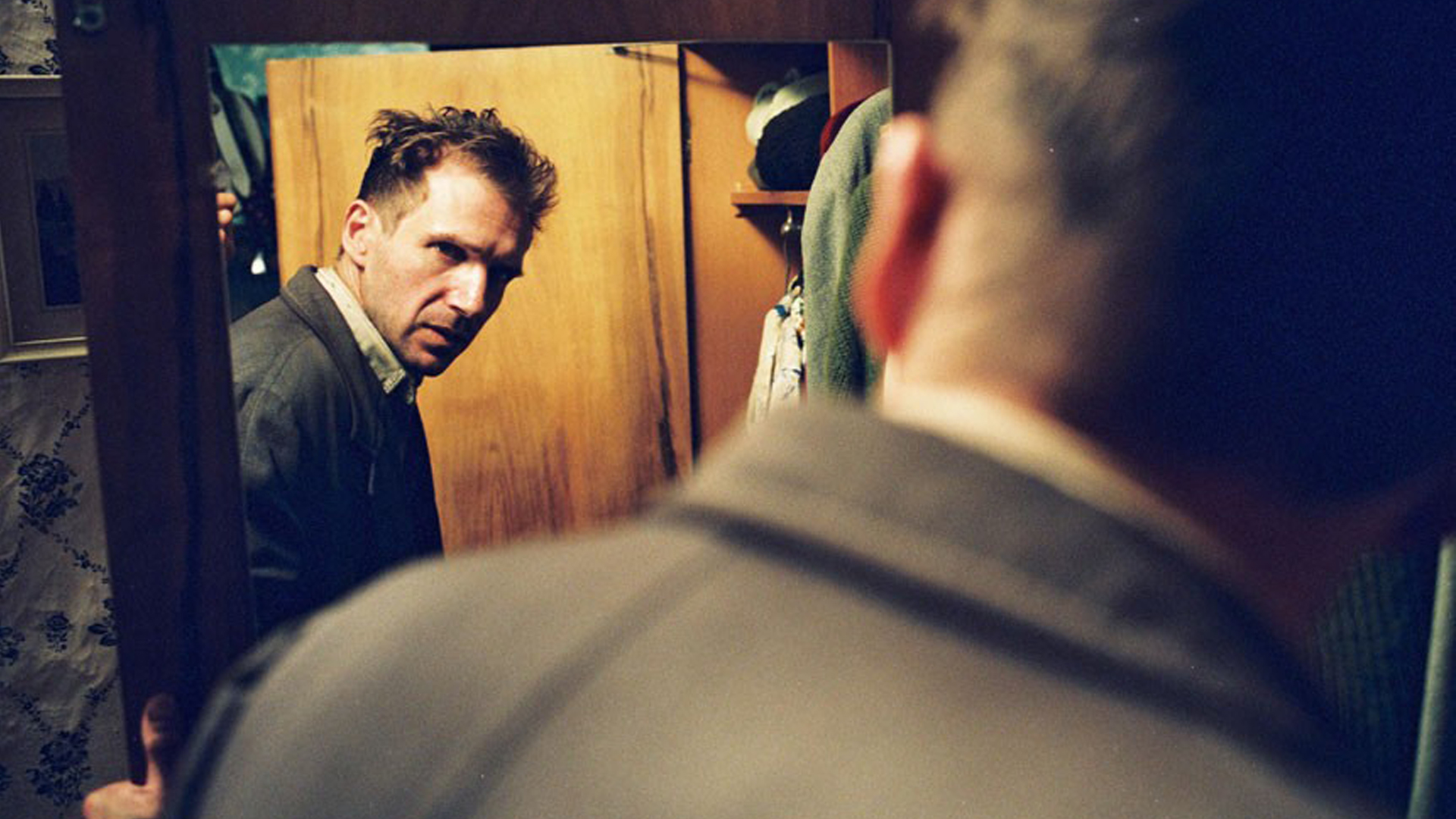
The most important thing is Ralph Fiennes, who may have delivered the role of his life. It is he who turned this film into a work that is at once fascinating and repellent; it is he who merged with the role organically into a single being—if you have seen Russell Crowe’s performance in A Beautiful Mind and thought it was a masterpiece of acting, then I can confidently tell you that Fiennes went further and achieved far more on this journey.
His Dennis Cleg, called Spider by his mother in childhood, is a human scrap, hunched toward the ground by despair, loneliness, and madness. It is impossible to describe in words what Fiennes does with this role, because no words can convey the suggestiveness and intensity of this performance. His Cleg is a human knot, closed in on himself, babbling and murmuring to himself, completely detached from the external world (but consciously so, though I know this sounds paradoxical), focused on his own interior, obsessively clinging to the remnants of his memories.

David Cronenberg likes to show all kinds of aberrations in his films, outright organic repulsiveness (to this day I cannot erase some scenes from eXistenZ from my memory), interwoven with something that could probably be described as the dreamlike nightmares of sick minds. This time the director shows us the repulsiveness of the mind—the illness of the protagonist—but it is as terrifying as it is fascinating.
The decisive influence on such a reception of the film lies in its construction and narrative method, unfolding, in a way, on three different yet constantly interpenetrating levels. For everything we see in the film is perceived through the eyes of the protagonist. We therefore have a record of reality whose perception is distorted by the protagonist’s viewpoint, clouded by the strong influence of mental illness. It is ostensibly a normal world, but only on the surface.
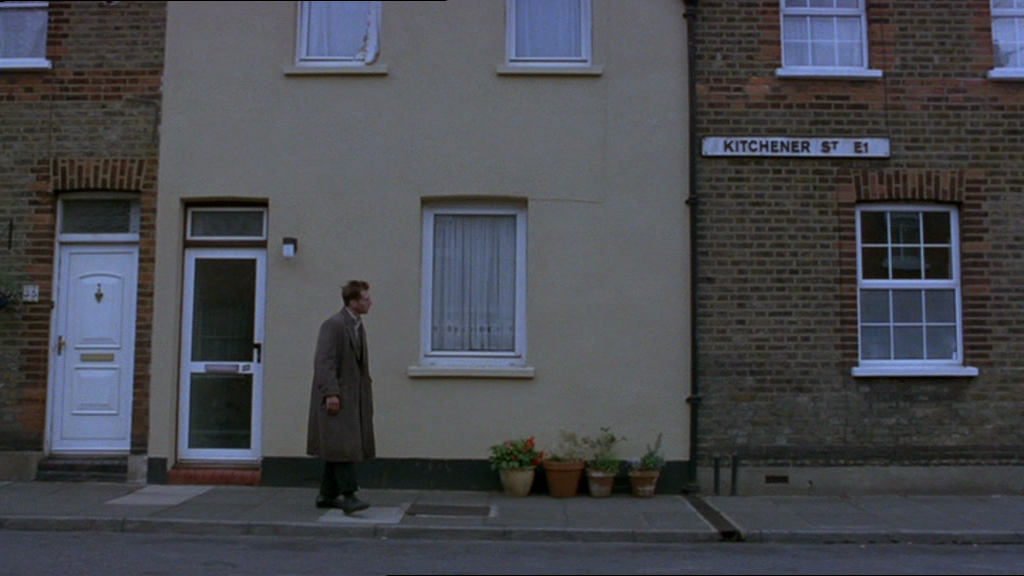
The city streets Spider walks through are empty, deserted, like in a dream. The rooms he inhabits are devoid of people, or, if there are any, they are eccentrics similar to our protagonist. The second plane on which the film’s action unfolds consists of Spider’s childhood memories, and it is almost organically connected to the third plane—the images created in his mind concerning specific events related to his mother’s fate, which he could not have witnessed.
A brilliantly simple device is the introduction of Dennis into scenes from his childhood, in which he participates as a silent observer, reliving again and again the nightmares of his past—never fully certain how much of it is true and how much is created by a sick mind. It is fascinating to look at the world through the protagonist’s eyes—at first, what we see seems to be nothing more than ordinary flashbacks, but over time the thread of Dennis’s madness infiltrates these memories, and the viewer becomes an unwitting witness to the deformation of reality as perceived by the little Spider.

At first one can be misled by the director and accept the perception of events presented by Dennis Cleg, but later the viewer gains distance and notices the false paths along which the protagonist’s psyche begins to travel. It is fascinating how Cronenberg managed to show, to some extent, the mind of a schizophrenic in a way that is at once very simple and yet painful, shocking, and exciting at the same time.
I caught myself finding it far more engaging to observe how Spider’s mind slips onto false tracks of reason, how the products of his diseased imagination blur his perception of reality, ultimately completely transforming his view of the world, than to look at that ostensibly normal world as he sees it. I admit, it is a morbid fascination, but to this day I have not encountered in any film such a perfect—and what is even more interesting, so naturally accessible to an ordinary viewer-perspective of a person sinking into paranoia. Repulsion and fascination-two words without which it is impossible to assess this film.

Spider is also, in its own way, a mosaic film, like schizophrenic puzzles that the protagonist assembles in his memory. In fact, we meet Cleg at the moment when, after leaving a psychiatric hospital, his main and practically only driving force is a manic desire to reconstruct the years of his childhood from the darkness of the past.
Spider begins to recreate what happened in his family years ago from fragments of notes scribbled in symbols only he can decipher in a crumpled notebook, from his own memories that assail him when he visits long-abandoned places of his childhood, and finally—from hints provided by madness, dripping the venom of insanity into a mind that is still, in places, lucid.

The discovery he makes at the end is not a liberation but a doorway leading to a new, even worse nightmare, from which there is no escape, which he is unable to resist, and in which there is no place for solace. Spider weaves his web of memories, hallucinations, and paranoia throughout his entire life. He does so now, as we witness his actions, and he did so in childhood.
It is a terrifying web, because it leads to total destruction and death: the physical death of someone close to him and the emotional death of himself. The protagonist endlessly dreams his nightmare, becoming its involuntary yet eager observer while awake, unaware of his role in this sad spectacle.

Madness and loneliness—this is what can be found in Cronenberg’s film. It is hard to say what is more terrifying in Spider, which in a strange way reminds me partly of The Piano Teacher; however, whereas in that film loneliness was the foundation of pathological suffering and humiliation, here loneliness is the result of illness. A peculiar asymmetry, yet these two films are connected in a disturbing, unspoken way.
A dry, unemotional, simple, and painfully truthful record of madness and suffering. An intense film that does not allow one to take their eyes off the screen. Cronenberg’s Spider—more terrifying than horror, because it is intuitively received as a record of real, tangible suffering.