
Review
STARFISH. A unique science fiction that’s hard to forget
A mysterious radio conversation and an equally cryptic image straight out of a post-apocalyptic alien invasion movie — this is how Starfish begins.


A mysterious radio conversation and an equally cryptic image straight out of a post-apocalyptic alien invasion movie — this is how Starfish begins, immediately suggesting the unpredictability of the story’s direction. After this enigmatic introduction, we meet Aubrey — a young woman desperately trying to keep herself together at the funeral of her best friend, Grace. The sparse dialogue avoids heavy-handed exposition, and the lack of broader context creates a sense of uncertainty. What happened in the time leading up to Grace’s death? Who is the man whose presence at the wake unsettled Aubrey? What did the woman mean when she spoke to Aubrey about clues hidden in music? With every moment, far more questions arise than answers — and this is only the beginning. Seeking an escape from the outside world, Aubrey breaks into her deceased friend’s apartment. She interacts with her belongings and mimics her habits, trying to get closer to the person who is no longer there. This grieving process is interrupted, however, when the next day it becomes clear that some kind of apocalyptic event has occurred in the area — and perhaps beyond. The whole town is buried in snow, with extensive destruction and traces of blood suggesting the presence of something ominous and dangerous.
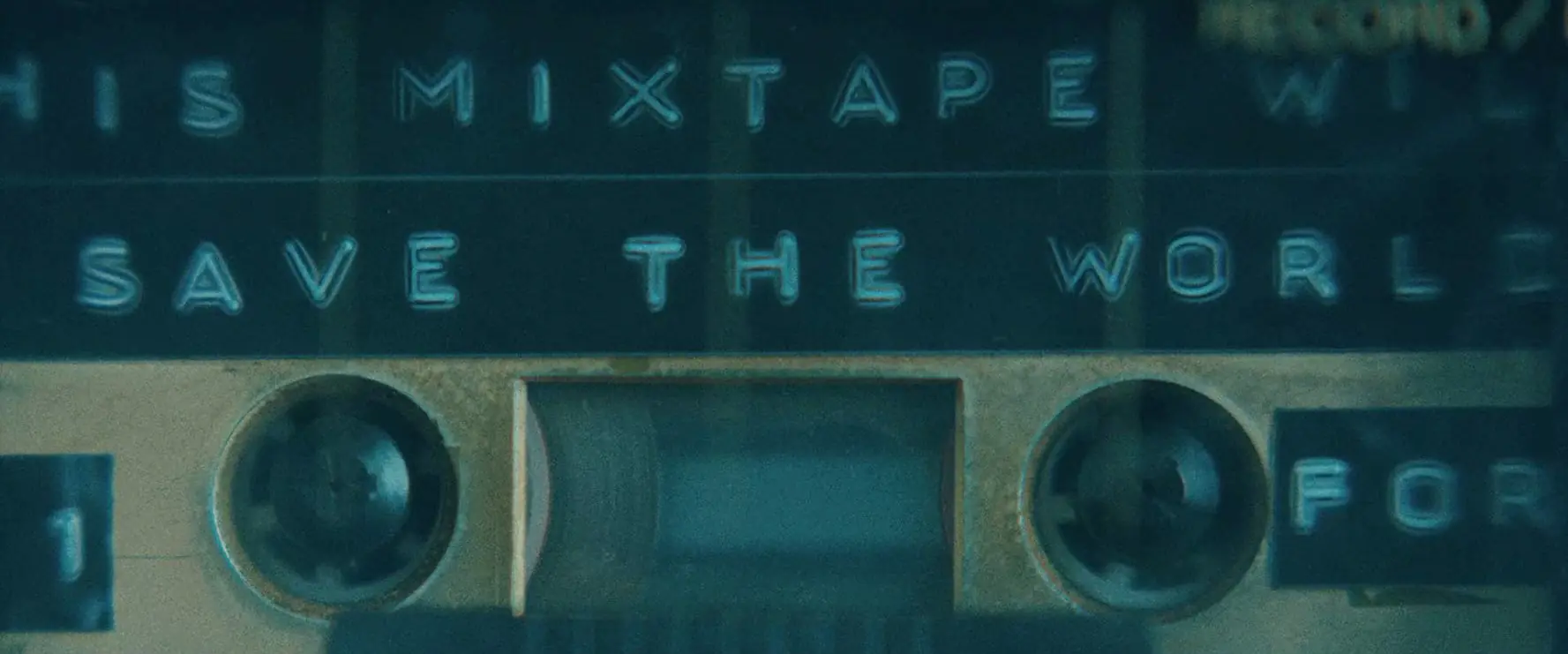
This phenomenon appears to be somehow connected to the late Grace, who left behind tapes containing cryptic recordings that vaguely explain the situation. Aubrey is sent on a mission to find the remaining tapes, which might reveal the great mystery and perhaps put an end to what’s happening.  This narrative twist turns everything we thought we knew about the film’s reality on its head. We try to fill in the gaps ourselves and make sense of the events, but just when we think we’re getting close, the film introduces new puzzles. Like Aubrey, we attempt to piece together the fragments into a coherent whole, but new complications constantly get in the way. Is the entire post-apocalyptic thread unfolding only in the protagonist’s mind? What do the fragmented scenes and visions — which gradually lose their cause-and-effect structure — symbolize? Or could it all be one big metaphor? At a certain point, trying to find a single definitive solution stops making sense, and it becomes more important to simply accompany Aubrey on her emotional journey. Some things defy rational understanding, and emotions become the only way to perceive them.
In this way, the film portrays devastating grief and overwhelming guilt. In the mind of someone who’s suffering, reality itself has collapsed, and rebuilding it is an immensely difficult task. There are many possible interpretations: perhaps the post-apocalyptic scenario is real, and Aubrey’s internal journey parallels these external events. But it’s also possible that the whole story is a metaphor for a personal end of the world — a way of working through trauma to repair the damage and regain emotional stability.
I’m convinced Starfish will fascinate some viewers and frustrate even more. There is certainly no single “correct” interpretation that magically explains everything we’ve experienced.  It’s a bold cinematic concept, and it wouldn’t stand a chance of working without the fantastic performance of Virginia Gardner as Aubrey. The entire film rests on her shoulders, and she handles the challenge flawlessly.
Her character is a sensitive young woman haunted by tragedy and personal demons. There’s an innocence about her, but also a resilience that gives her depth. Gardner’s performance sustains the viewer’s uncertainty about what we’re actually watching — mundane events or symbolic imagery. She strikes a perfect balance between natural human reactions and drifting through a dreamlike reality.
Her efforts are powerfully supported by an intriguing visual style — the camerawork in tense scenes evokes something straight out of a nightmare, while elements like Aubrey’s wolf costume and an animated sequence heighten the film’s surreal quality. There’s meaningful symbolism in the music as well, which plays a major role in the film and, through a music-video-like style, gives rhythm to individual sequences. One could certainly argue that there are simply too many ambiguities and potential clues for the story’s own good.
 Reconstructing oneself piece by piece and confronting a painful past, in hindsight, feels more like a dream than reality — and that’s exactly the sensation this film evokes. Starfish, like the most bizarre dream, is a unique experience that invites either detailed analysis or pure intuition, allowing the viewer to draw emotions and associations from it. One thing is certain: it’s a film that will be hard to forget.

