
Horror Movies
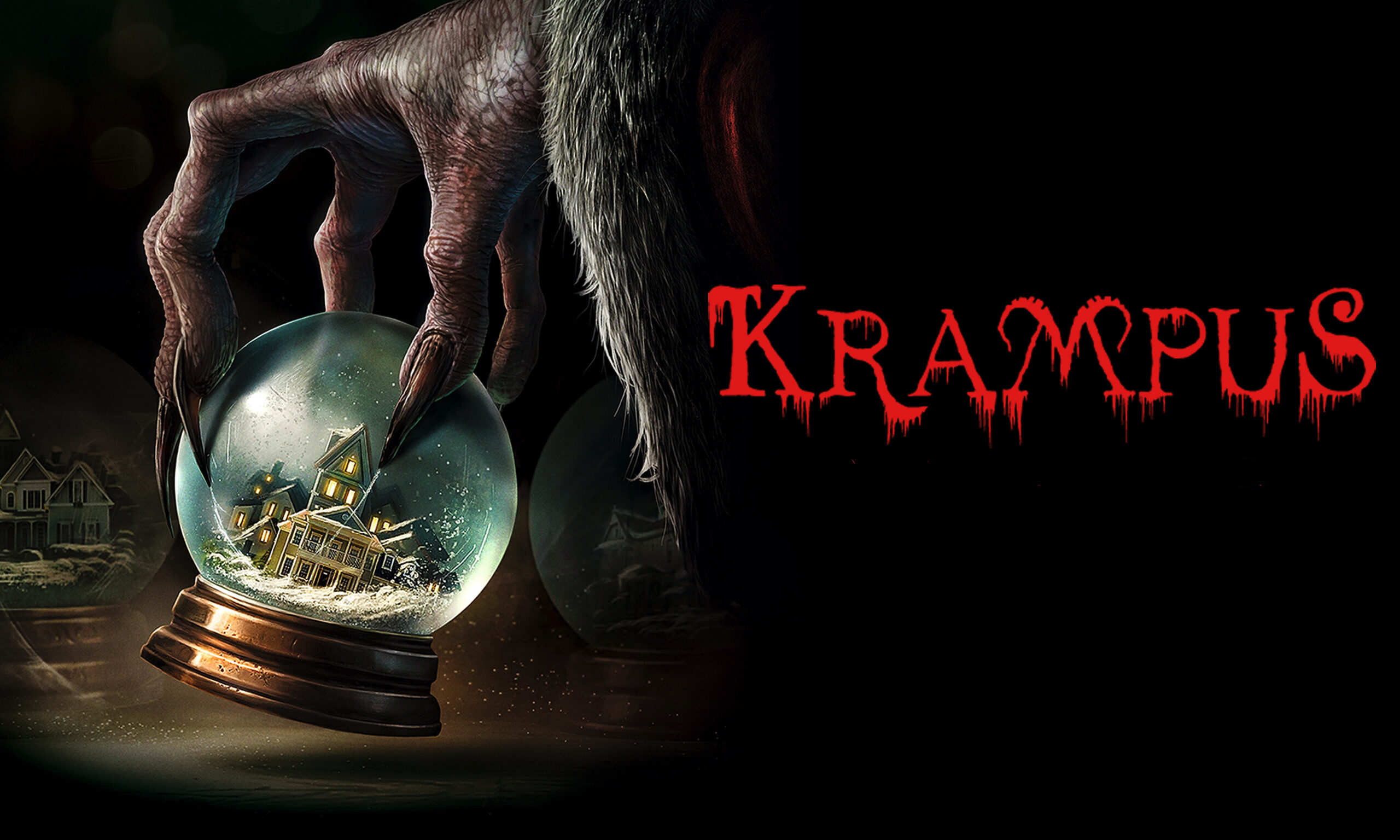
Revisiting KRAMPUS: The Malicious Spirit of Christmas
Krampus is, above all, entertainment cinema. It is meant to scare and amuse, which it does excellently, while also giving us a valuable lesson for the approaching holidays.

The very first scene of Krampus, mocking yet shockingly truthful, in a way justifies the later actions of the title character, an evil and merciless spirit who is the opposite of Santa Claus. In the film’s opening sequence, shot in slow motion, we watch people storming a store and then furiously fighting one another over presents. They snatch them from each other’s hands, often destroying them, they beat and bite one another, serious bodily harm is also inflicted on employees, and their small children are reduced to tears.
At the checkouts, meanwhile, both customers and cashiers are so exhausted that they resemble the living dead – brainless, sluggish, devoid of any signs of life, crammed together in a heap. Consumerism has turned us into monsters, so it is hardly surprising that another monster will come for us.
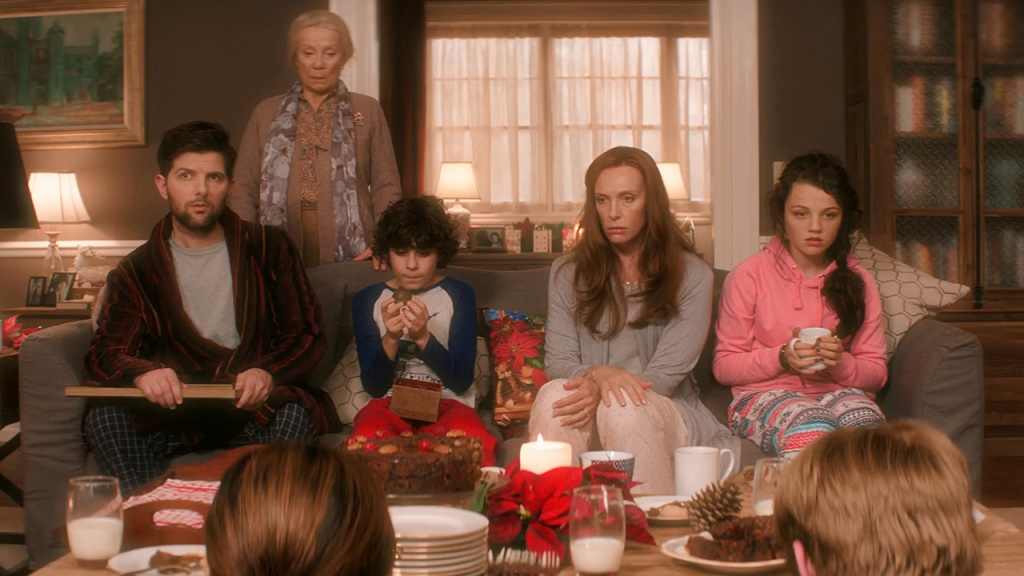
The appearance of Krampus is also directly connected to little Max (a very good Emjay Anthony) tearing up his letter to Santa Claus. He is the only one in the family who still believes in the jolly fat man who grants the wishes of well-behaved children; he awaits Christmas as a magical time when his closest family (Adam Scott and Toni Collette as the parents) will sit down at one table to experience together the most wonderful time of the year.
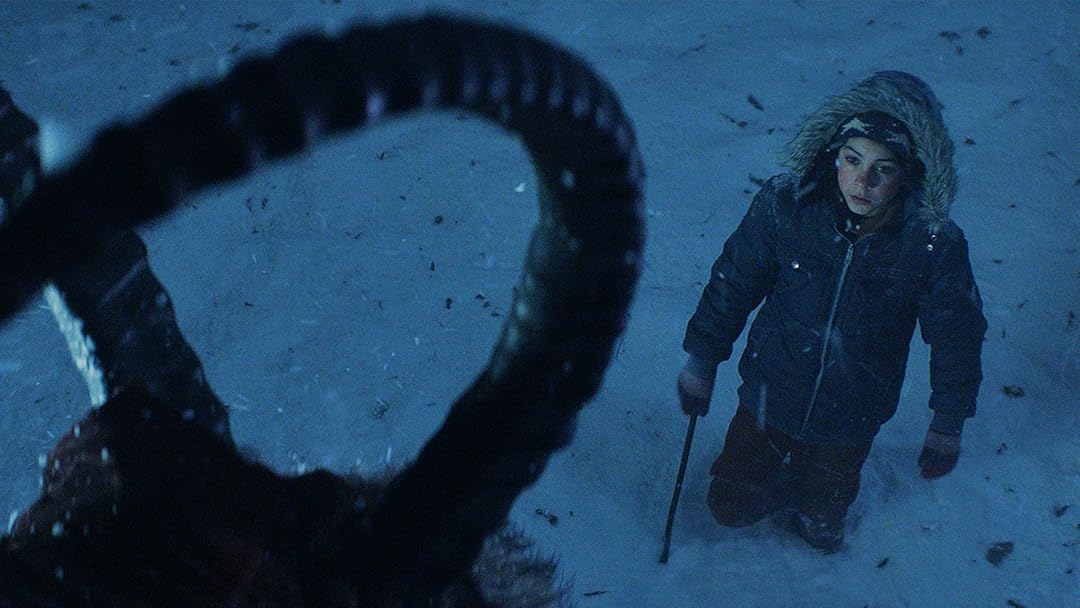
Michael Dougherty’s film is a comedy horror, somewhat in the spirit of Joe Dante’s Gremlins. There, the Christmas atmosphere interestingly interacted with the not entirely serious depiction of the destructive activity of fantastical forces. Here it is similar, although with the appearance of Krampus and his helpers realism gives way to a fairy-tale atmosphere that we may associate with the work of the Brothers Grimm or Hans Christian Andersen.
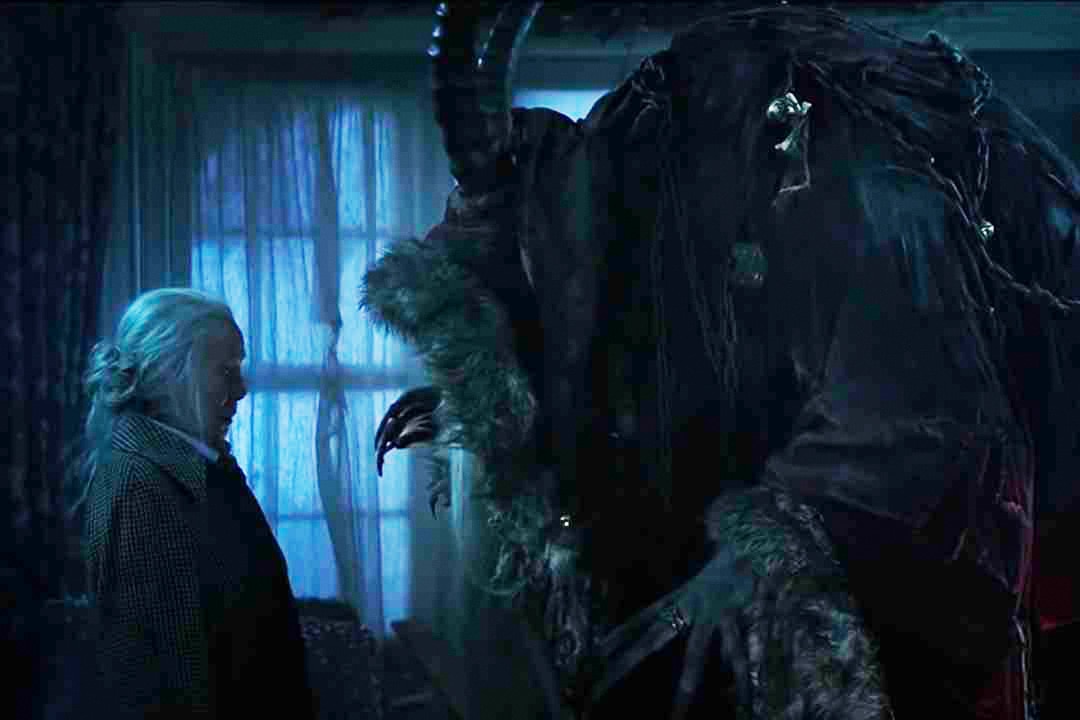
At times it is gloomy, grotesque, and frightening, just like in the tales of those writers. It is no coincidence that the person who finds an explanation for the presence of the evil spirit is Max’s grandmother, who speaks German. But even she is unable to stop the enormous figure with horns and hooves, which, like Santa, gains entry to homes through the chimney.
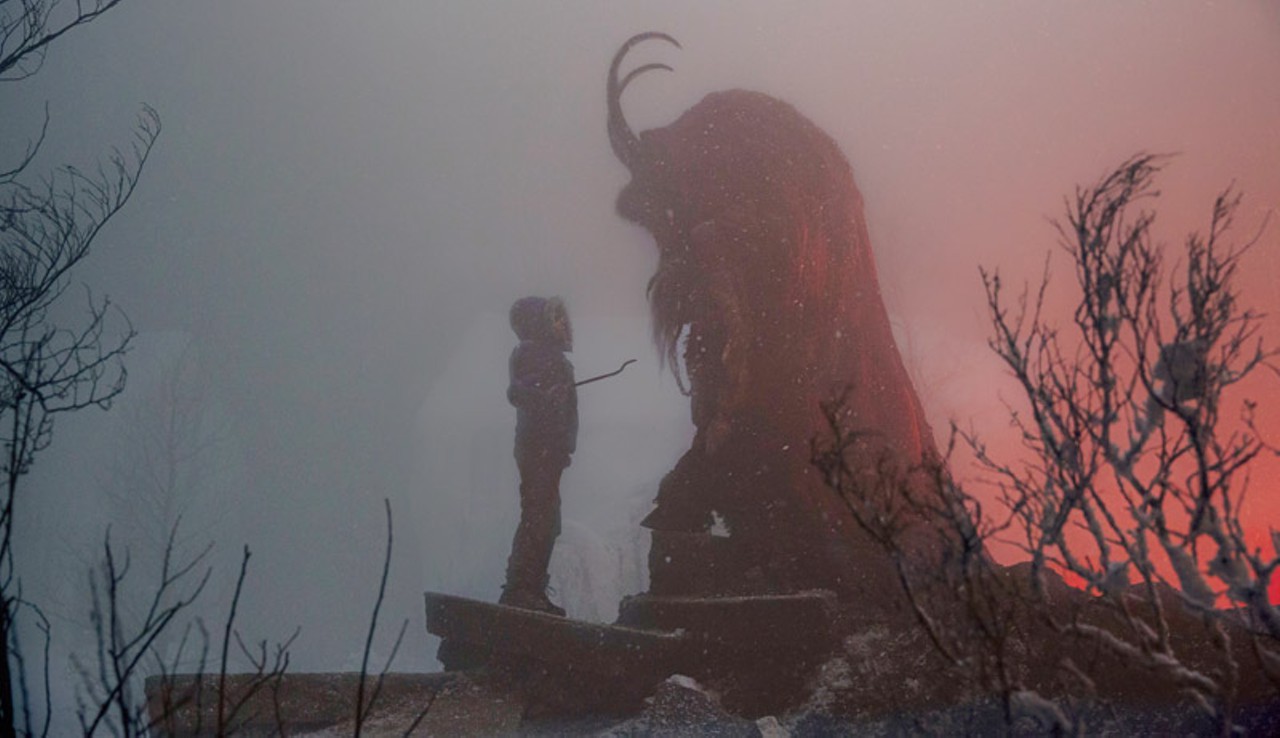
The first scene in which the title character appears is, incidentally, terrific. When Max’s older sister leaves the house to meet her boyfriend, the look of the entire snow-covered area instantly changes – it gets darker, the neighbors’ houses become icy, and the streets disappear. Without electric light, the suburb seems abandoned and rather unwelcoming. And then Beth sees on the roof of one of the houses a huge figure that begins to chase the girl, leaping from one building to another. It makes a stunning impression and, above all, a frightening one, because at that point it is still not known who or what it is.
Dougherty had previously made the very successful Trick ’r Treat – an anthology horror in which he also played with holiday mythology to deliver a solid dose of chills and entertainment. It is clear that he likes the genre more than his characters, although thanks to the actors we care about their fates, even if they do not deserve it.
Max’s cousins in particular deserve recognition as the worst relatives since Home Alone – a fat mute boy and two girls who look like boys, who talk about how Santa had to eat all his reindeer, including Rudolph, are not the best companions at the Christmas Eve table. And the director is clearly having fun getting rid of subsequent characters.
The title character does not punish one family, but an entire neighborhood, and perhaps even the whole world. He kills people because they killed Christmas. Under the guise of continuing tradition, it has become a test of nerves for parents and an unwanted duty for children – even during a school nativity play a fight must break out. It is therefore no surprise that Krampus carries out a purge among people.
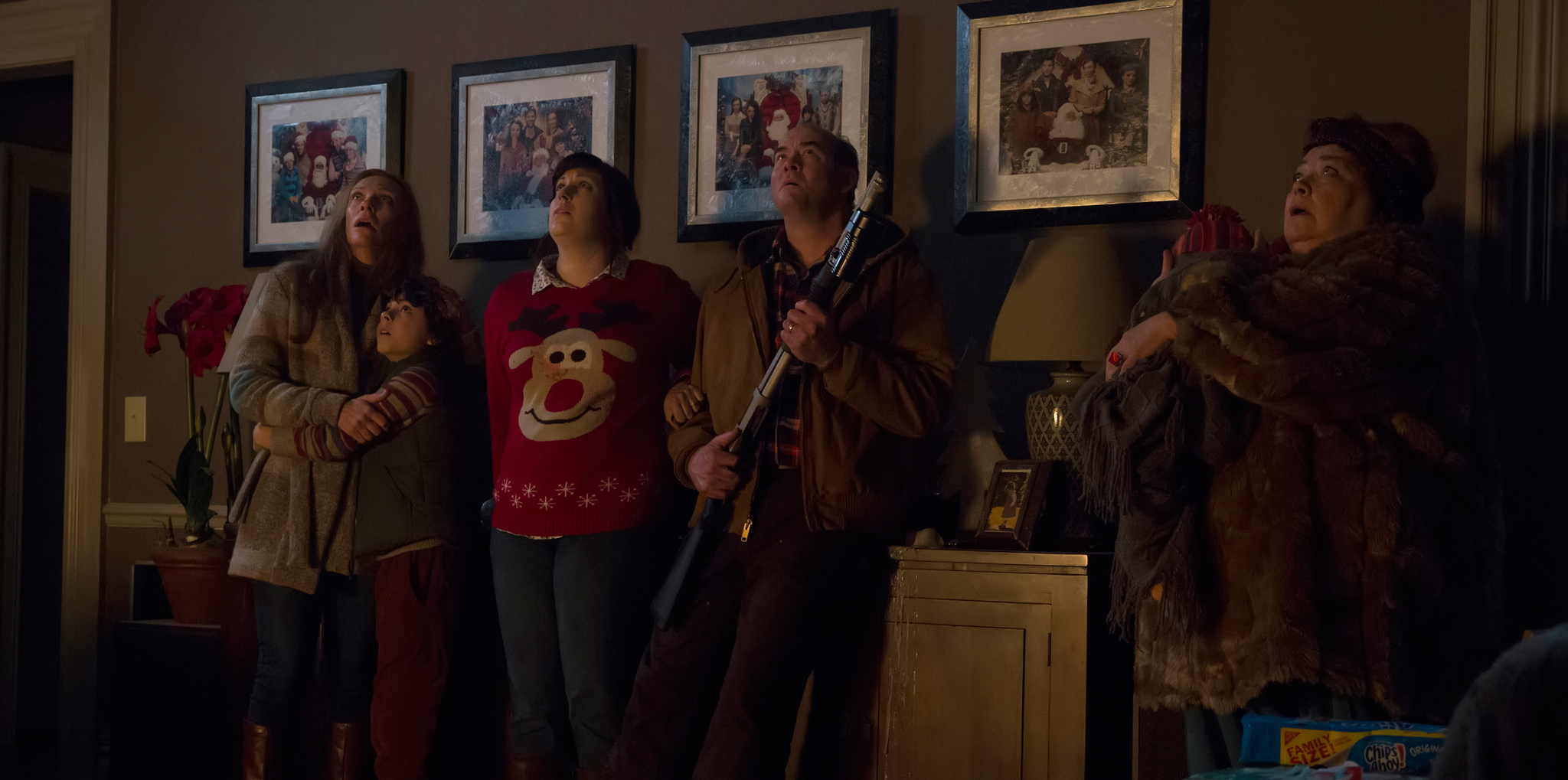
He is just as ruthless and unforgiving, and at the same time malicious and possessed of a black sense of humor. For how else can one explain the appearance of his emissaries? The characters are attacked by cookies, presents, and decorations, which further confirms that they have brought this fate upon themselves.
Krampus is, above all, entertainment cinema. It is meant to scare and amuse, which it does excellently, while also giving us a valuable lesson for the approaching holidays. Let us try to believe in the magic of Christmas for as long as possible, let us not grow out of the idea of the most beautiful time of the year, and if not us, then at least let children take joy in the thought that Santa will read their letters.
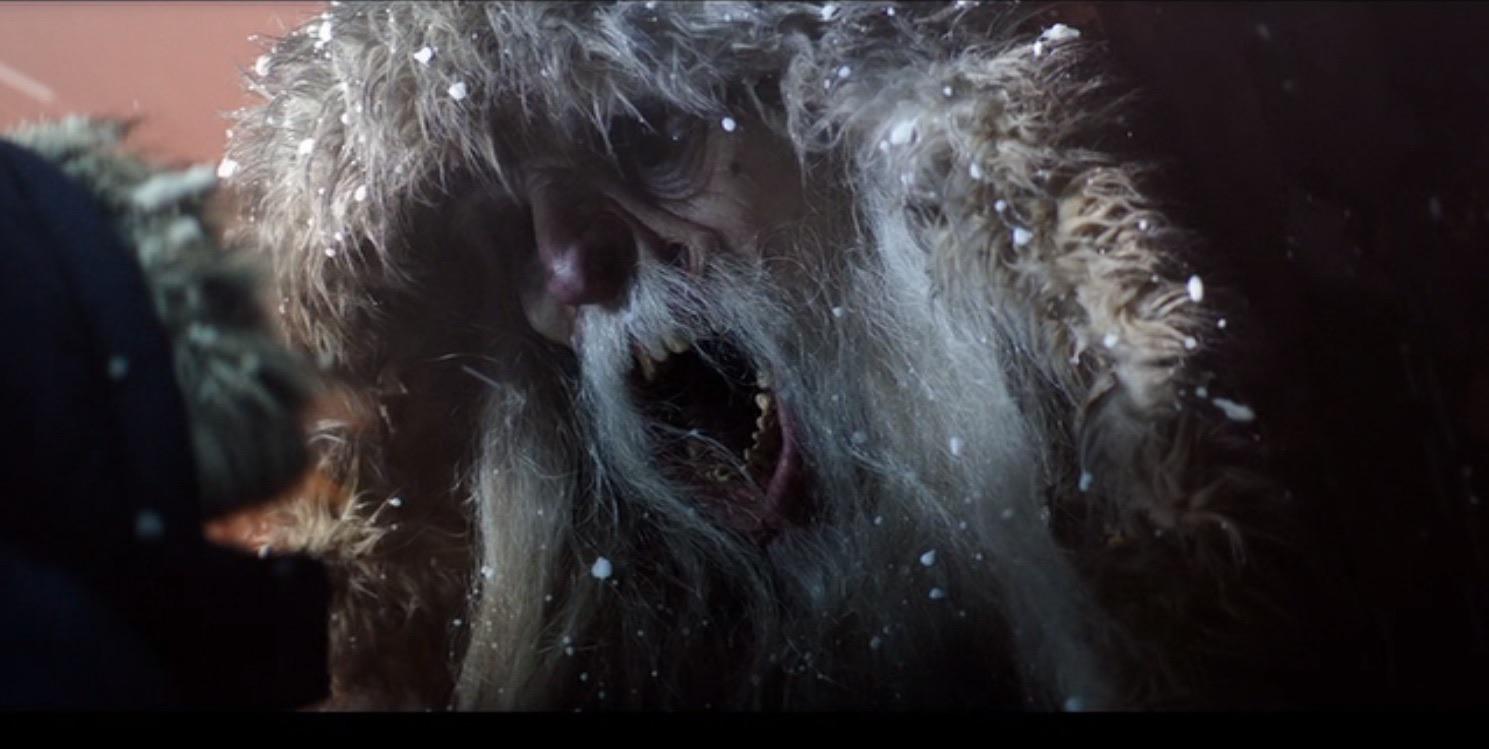
Dougherty sees the chance of surviving an encounter with Krampus precisely in the youngest ones, although his conviction is a perverse one. Without revealing the punchline, I will only write that the director, having a choice between a fairy-tale and a horror ending, chooses the latter.

