
Features
Classic CHRISTMAS MOVIES That Will Make You Feel the Magic
I was surprised to discover that all the greatest American Christmas movie classics were made in the 1940s.

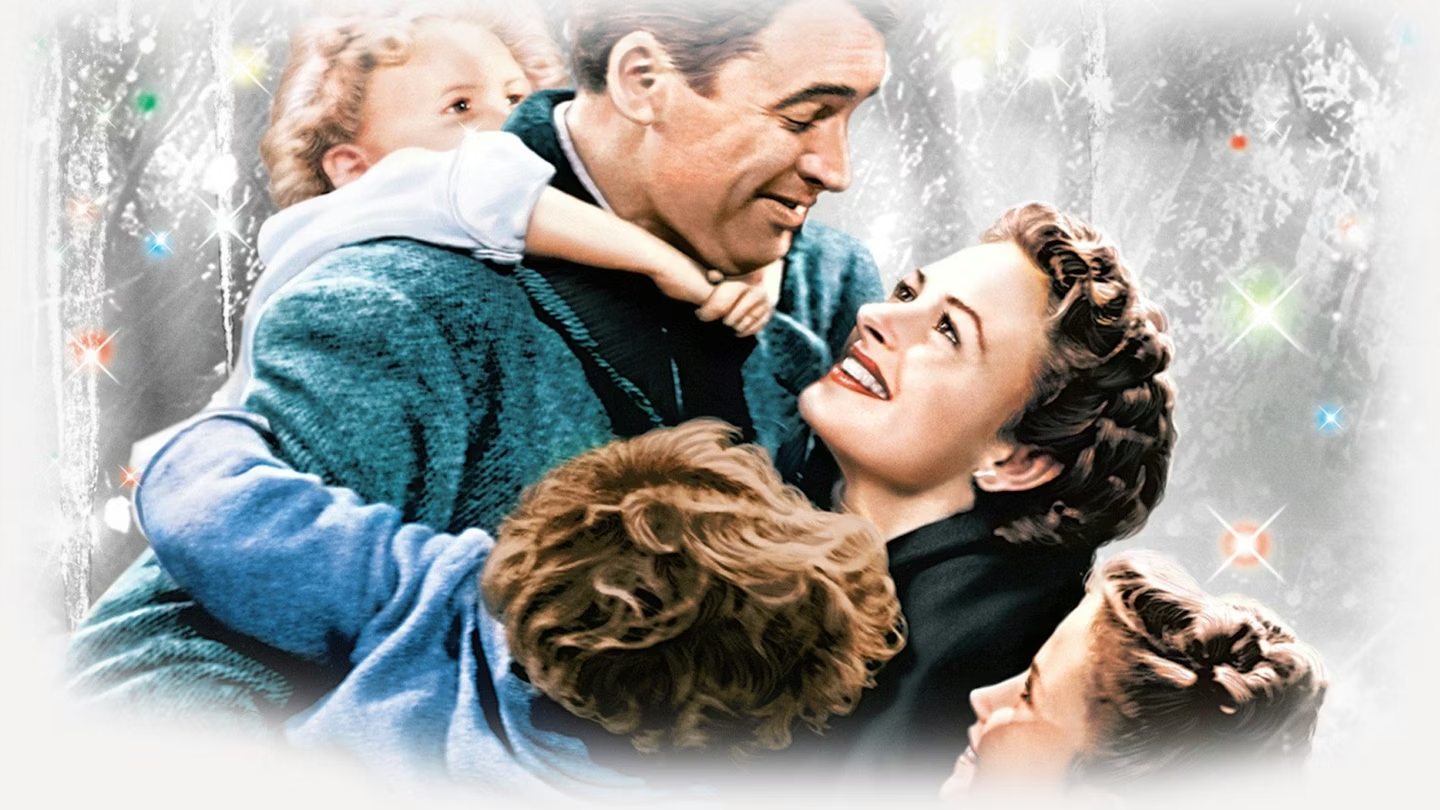
When I began preparing to write this piece, I was surprised to discover that all the greatest American Christmas movie classics were made in the 1940s. On the other hand, perhaps it shouldn’t surprise me at all. That decade produced an extraordinary number of outstanding films—not only in American cinema, but globally. It was the era of The Great Dictator (1940), The Maltese Falcon (1941) and other wonderful noir films, Casablanca (1942), as well as excellent postwar European cinema – Poland’s Forbidden Songs (1947) and Italy’s Bicycle Thieves (1948). In American cinema of the 1940s, Christmas films practically function as their own genre, united by a simple, recurring message: we should learn to appreciate what we have, and that material things matter far less than the relationships we build with the people around us.
This universal truth, straight out of Dickens’ A Christmas Carol, continues to be retold in every Christmas film—and it never loses its relevance. Here is a list of six of the best holiday movies!
It’s a Wonderful Life (1946), dir. Frank Capra
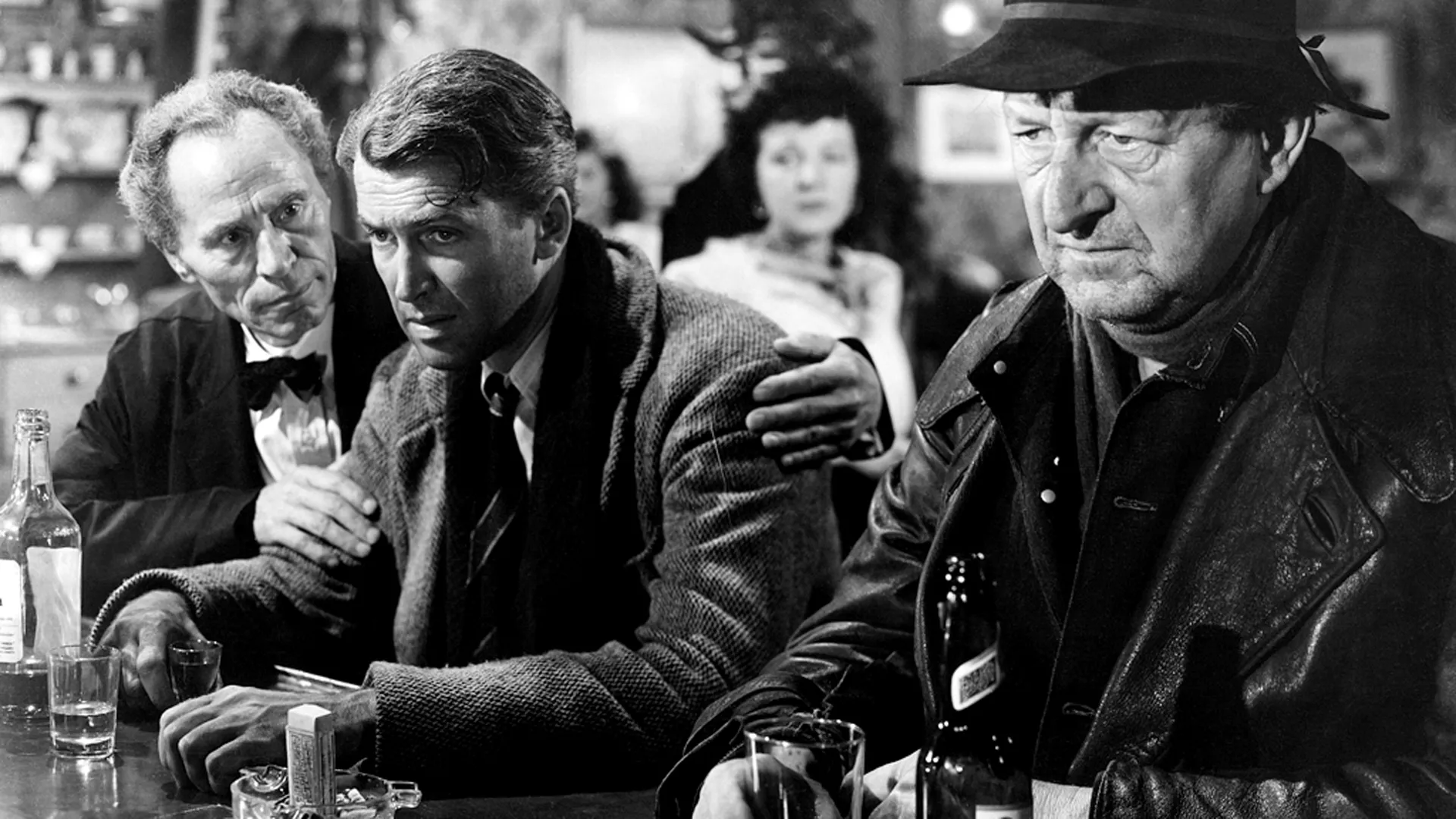
It’s a pity that It’s a Wonderful Life isn’t what TV airs every Christmas Eve, because—no offense to Love Actually or Home Alone – this is without a doubt the greatest Christmas film ever made. It’s a heartwarming, moving story, brilliantly directed by Capra, who won a Golden Globe for the film, masterfully blending comedy with drama.
Thirty-year-old George Bailey (a remarkable James Stewart) is at the end of his rope. Convinced that his life no longer has meaning, he plans to take his own life on Christmas Eve. At that very moment, his guardian angel appears. In an effort to stop George, he shows him the story of his life—his childhood, youth, and adulthood—and how the world and the lives of the people he loves would have unfolded without him. If by some miracle you still haven’t seen this film, it’s high time you did.
Miracle on 34th Street (1947), dir. George Seaton
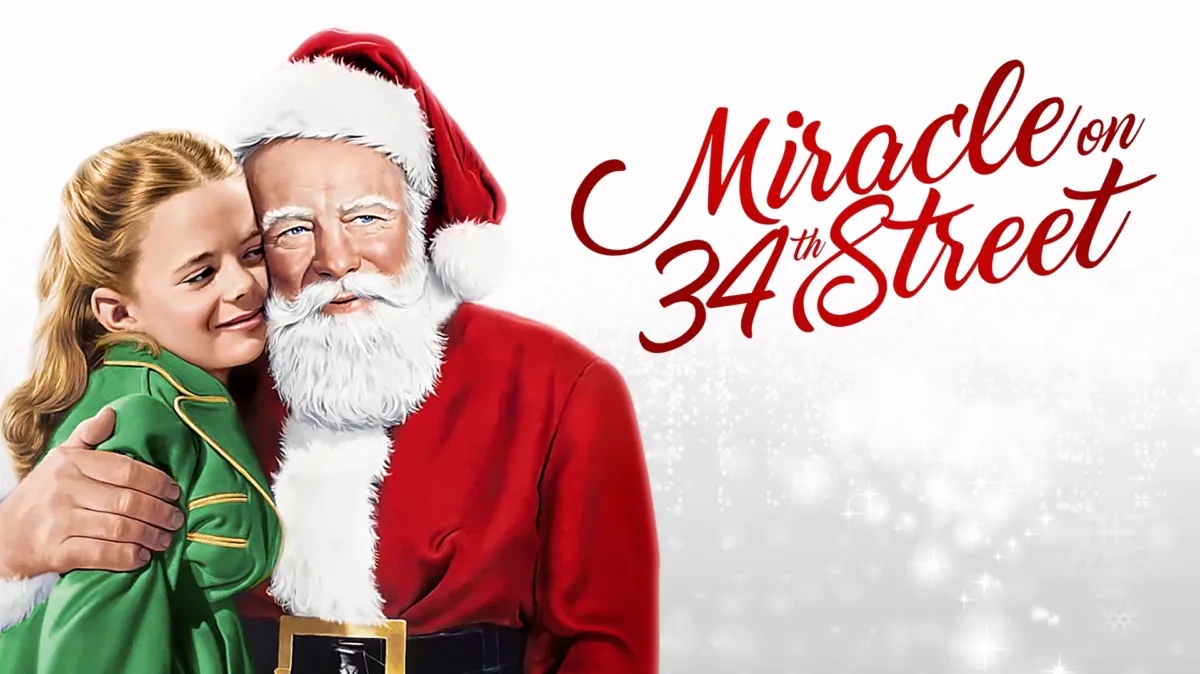
This is the film that launched the acting career of Natalie Wood, known for her roles as Judy alongside James Dean in Rebel Without a Cause (1955) or in the musical West Side Story (1961). In Miracle on 34th Street, she plays young Susan, the daughter of Doris Walker (Maureen O’Hara), the head of marketing and promotions at Macy’s, who raises her to believe that fairy tales aren’t real and that Santa Claus doesn’t exist. Meanwhile, Doris faces trouble at work when the man hired to play Santa in the Thanksgiving parade is fired. His place is taken by a white-bearded old man named Kris Kringle (the American name for Santa Claus), who claims to be the real Santa. He befriends Susan, trying to restore her belief in the magic of Christmas.
The Shop Around the Corner (1940), dir. Ernst Lubitsch

Do you like You’ve Got Mail with Meg Ryan and Tom Hanks? If so, you’ll enjoy The Shop Around the Corner as well.
Both films were inspired by the Hungarian play Parfumerie by Miklós László. The creators of You’ve Got Mail paid several tributes to Lubitsch’s film, naming the heroine’s shop “The Shop Around the Corner” and even incorporating some of the original dialogue. Lubitsch’s film tells the story of Alfred Kralik (again played by James Stewart), the best salesman in Mr. Hugo Matuschek’s leather goods store.
His peace is shattered when Klara Novak (Margaret Sullavan) is hired. The two don’t get along, constantly bickering, while—much like Kathleen and Joe in You’ve Got Mail—they unknowingly exchange anonymous letters with one another.
The Bishop’s Wife (1948), dir. Henry Koster

Overworked and neglecting his family, Bishop Henry Brougham worries about securing funds for a new cathedral. He prays to God for help. His prayers are answered when a man named Dudley (Cary Grant) appears in his office, revealing that he is an angel.
The bishop’s new, handsome assistant quickly wins the affection of neighbors and friends—especially the bishop’s young daughter and his wife, Julia (Loretta Young). His presence causes quite a stir in the Broughams’ lives.
Initially, the film performed poorly at the box office—moviegoers avoided it because the title suggested a religious picture. The producers decided to change the title to “Cary and the Bishop’s Wife,” adding the tagline “Have you heard about Cary and the bishop’s wife?” to the posters.
Christmas in Connecticut (1945), dir. Peter Godfrey
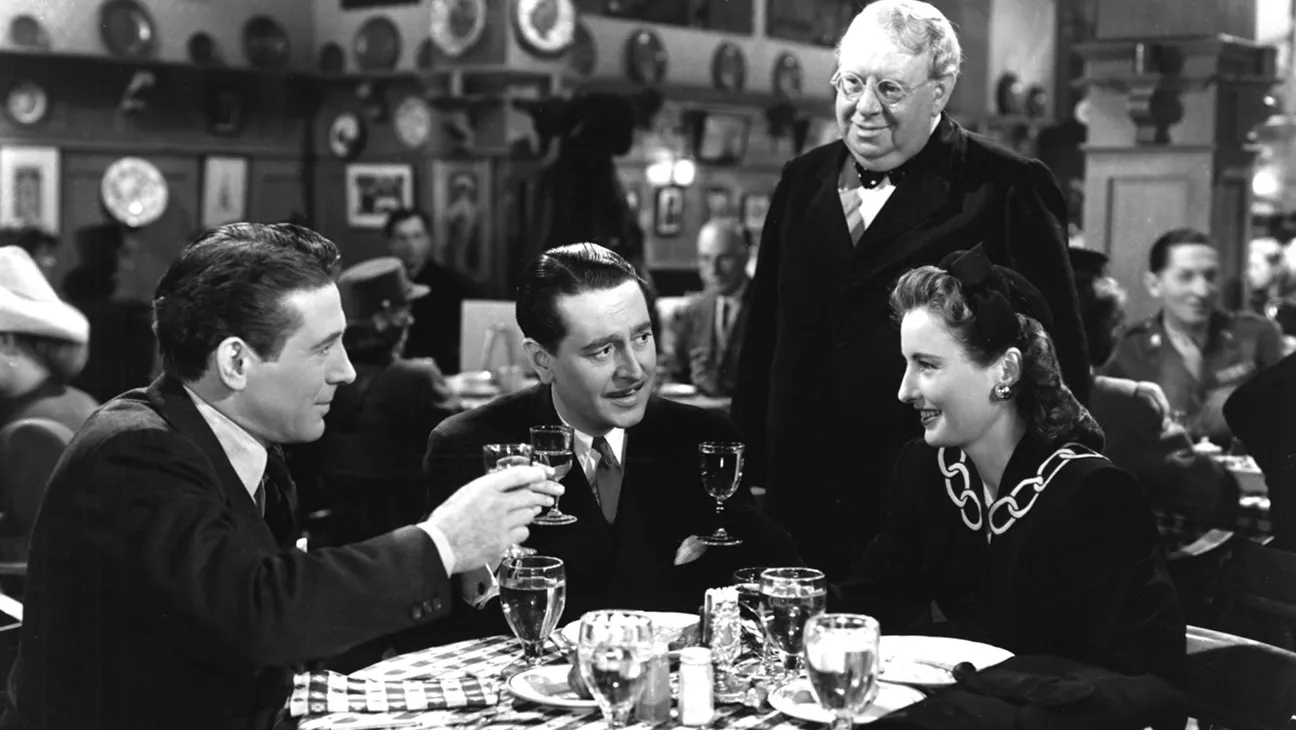
Journalist Elizabeth Lane (Barbara Stanwyck) writes a popular culinary column. In it, she describes countryside recipes, her life on a Connecticut farm, her husband, and her child—earning her the admiration of housewives across America. But all of it is carefully crafted fiction. In reality, Elizabeth is a single woman living in New York City. Unaware of this, her editor asks her to host a Christmas dinner for war veteran Jefferson Jones (Dennis Morgan), a devoted fan of her column, which he regularly read in the hospital.
Christmas in Connecticut is a charming holiday romantic comedy—certainly less moralizing than The Bishop’s Wife or It’s a Wonderful Life, but told with lightness and plenty of humorous gags.
Holiday Inn (1942), dir. Mark Sandrich

Holiday Inn is the queen of Christmas musicals—this is the film in which audiences first heard the now-iconic holiday classic White Christmas, sung by Bing Crosby.
Crosby plays Jim Hardy, a well-known musician who abandons his career after being betrayed by the woman he loves. He leaves New York for the countryside, where he comes up with a brilliant idea: he opens the titular Holiday Inn, a venue that operates only on holidays.

