
Horror Movies
HALLOWEEN KILLS: An Annual Horror Show Continued
Halloween Kills delivers what it promises — solid slasher entertainment, with respect for the classic and an appropriate content of blood spilled across the screen.

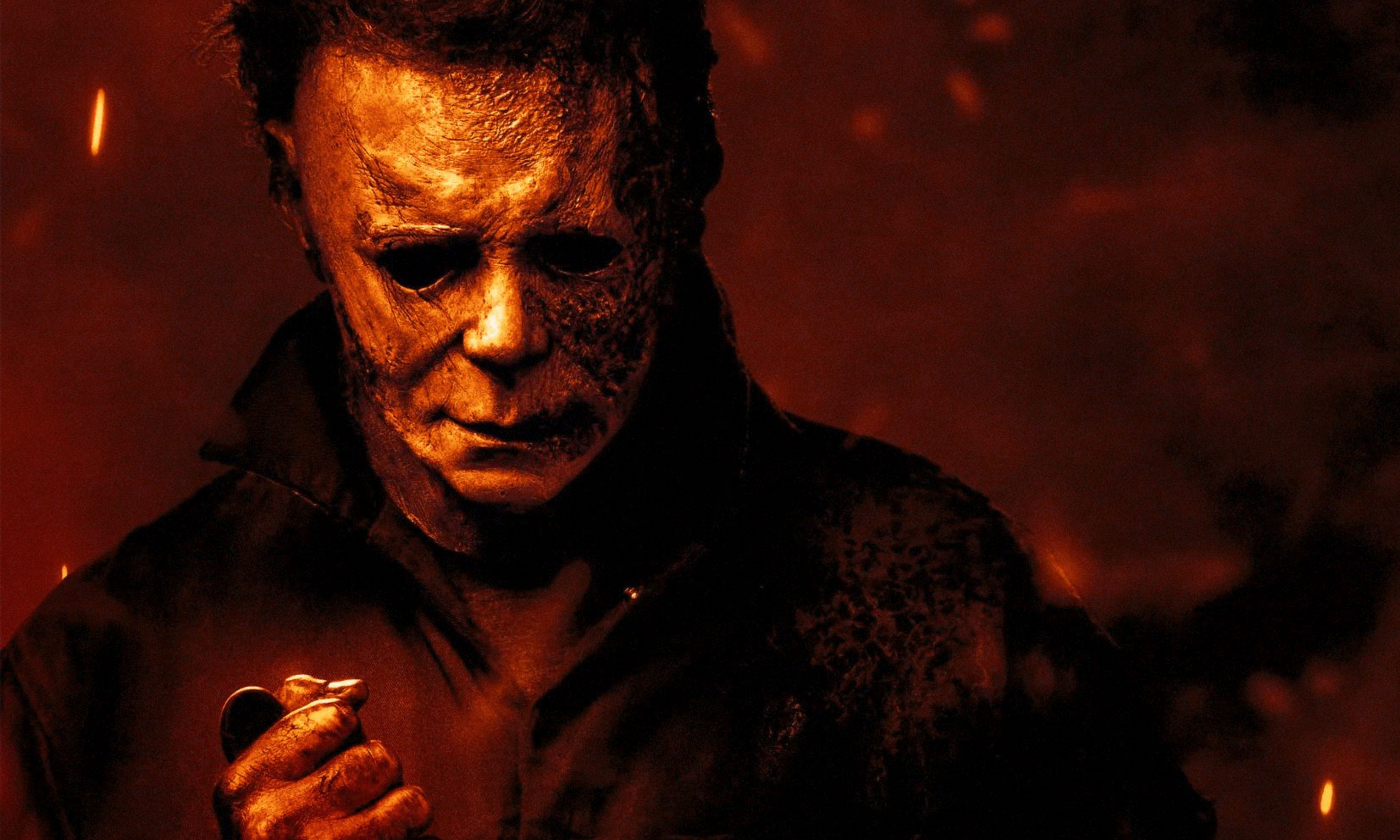
The brand that the title Halloween possesses is difficult to overestimate. The cult film by John Carpenter from 1978 became a pop cultural icon – probably hardly anyone does not associate the eerie mask and Michael Myers’ mechanic jumpsuit, which became a kind of universal attributes of slasher evil, bringing in their wake an entire series of sequels. Halloween Kills.
The 2018 sequel-reboot directed by David Gordon Green, invalidating all developments of the original (including Halloween 2 directed by Carpenter himself) and adding to the clash between Myers and Laurie Strode a second chapter after 40 years. Although not devoid of flaws, this tribute to Carpenter’s classic was successful and well received enough to earn a sequel, which we receiveD from Green as a Halloween gift AD 2021.
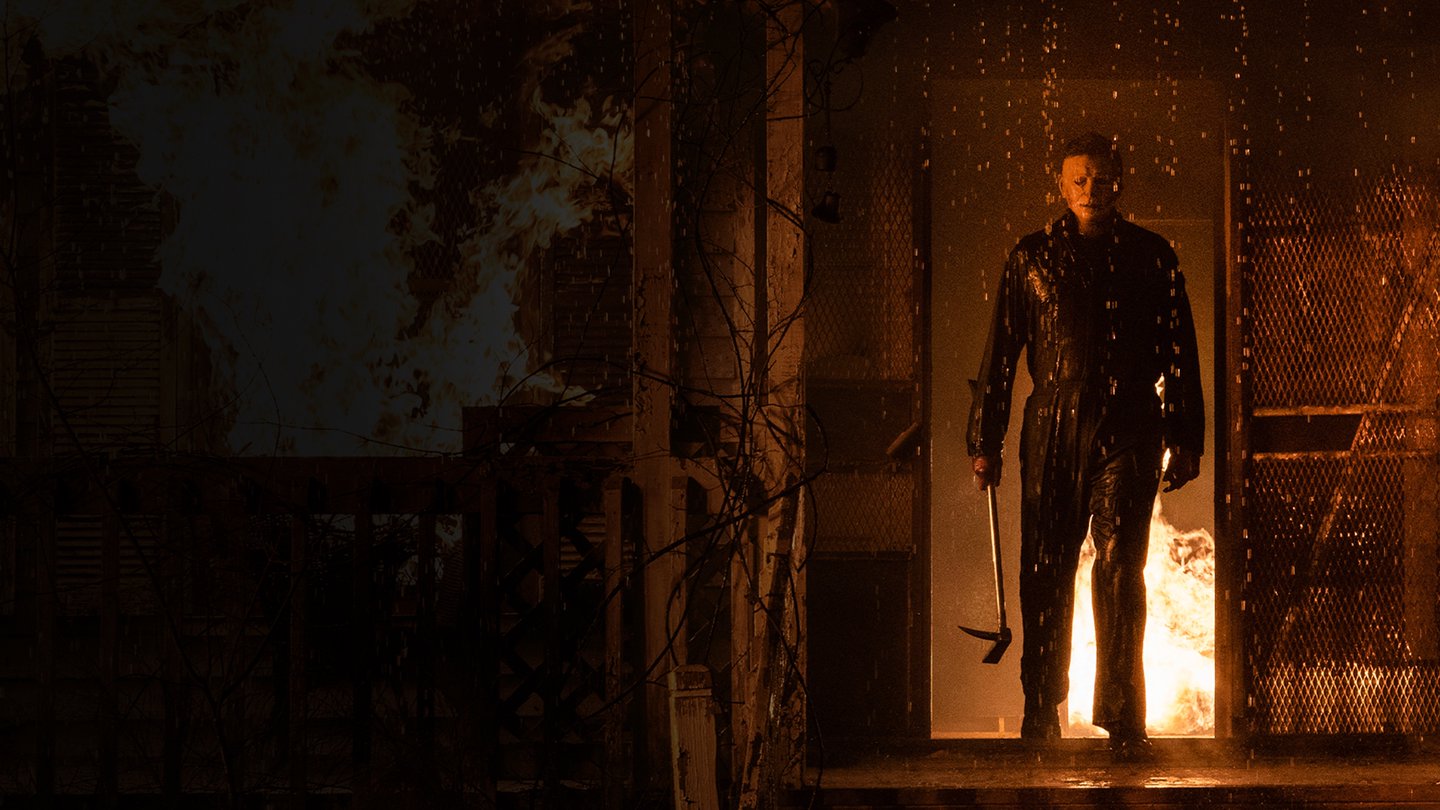
Although three years have passed since the premiere of the first/second Halloween in our world, it is still 2018 in Haddonfield. Halloween Kills is a direct continuation of its predecessor and picks up the action exactly where we previously left Laurie, Karen, and Allyson. In fact, the action of Green’s second film is contained within just a few hours of an October-November night that began in 2018. This means that the heroines are not allowed either to enjoy the victory over the demonic Myers or to mourn the dead.
Before the wounded Laurie reaches the hospital, the infamous killer, alive and well, returns to sow terror among the charming houses with gardens. The idea for such a development of the story, on the one hand, admittedly takes away weight from the final massacre in Halloween, but on the other hand makes sense in that the creators spare us the tedious restarting of the action and go straight to the point. They add to the pool several new characters – the surviving children from the classic original – and set to work on another spectacle of bloody butchery committed by Myers (mainly) with the help of a knife.

Skipping the laborious tying of the action makes sense to the extent that Green, together with screenwriters Danny McBride and Scott Teems, has absolutely no idea for creating any sort of story around yet another return of Myers. In 2018 they managed to quite deftly show Haddonfield four decades later, with the legend of Myers hanging spectrally over the idyllic landscape, a psychologically scarred Laurie, and the media excitement around the macabre story which, as in a grotesque dream, happens again and literally returns Michael his mask.
This type of meta games would not work a second time. And in terms of the plot, Green and company lack the inventiveness for anything other than reprocessing tropes from Carpenter’s original, which painfully becomes clear through the generic extraction for the new script of Tommy, Marion, and Loonie — the surviving kids from the first film.

With no backing whatsoever, they simply appear and declare: we are those children, and from that point on they drag the plot forward as commanders of yet another defense against Myers. In addition, we get a forced backstory of Sheriff Hawkins, providing a pretext for reconstructing the ending of the film from 1978, and a framing in which the new slaughter is set. This is the biggest weakness of Halloween Kills – complete transparency of both the characters and the entire action.
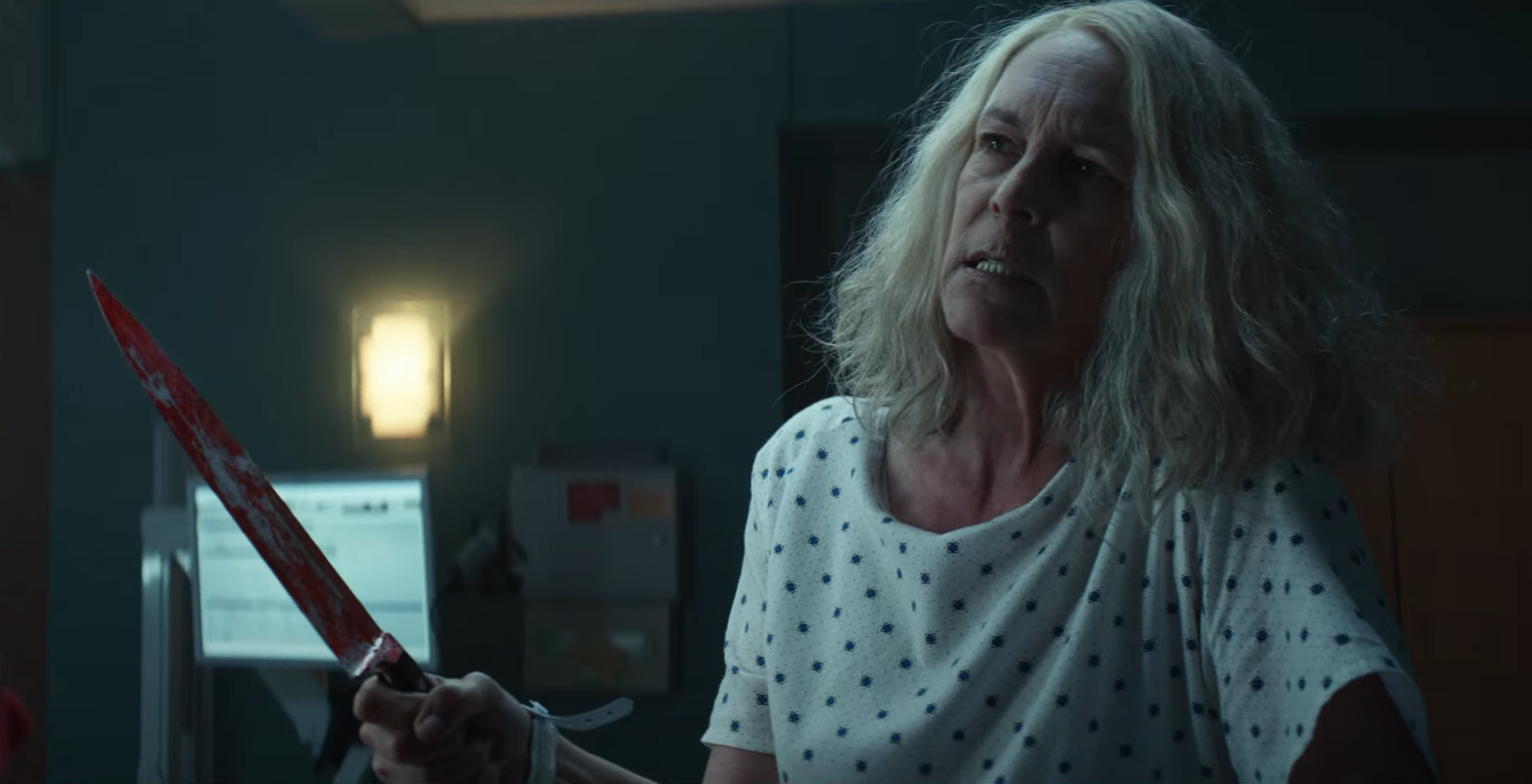
Even Jamie Lee Curtis as Laurie Strode, who more or less carried Halloween as the tough grandma preparing her whole life for the return of the Boogeyman, this time is almost completely marginalized, lying in the hospital and from time to time firing off some bon mot. Her daughter and granddaughter, in turn, play an unexciting part in the puzzle, just like the rest of the town’s population, reduced to the role of an almost nameless mass waiting for Myers’ knife.
Whereas in 2018 Green at least pretended that he was telling some story and sketching some concrete characters, this time he gives up entirely, allowing Halloween Kills to simply be a series of episodes roughly stitched together with some narrative thread, in which Michael Myers does his thing.
The classic slashers from the 70s and early 80s were brutal reflections of social phobias and fears, and the figure of a masked murderer jumping from the shadows behind the closet catalyzed the frustrations churning beneath the façade of idyllic American suburbs. It is enough to recall the old Halloween to see how Myers’ story brims with sexual contexts and how the appearance of the murderer in a white mask on Halloween night exposes the falsehood inscribed in the town’s identity.
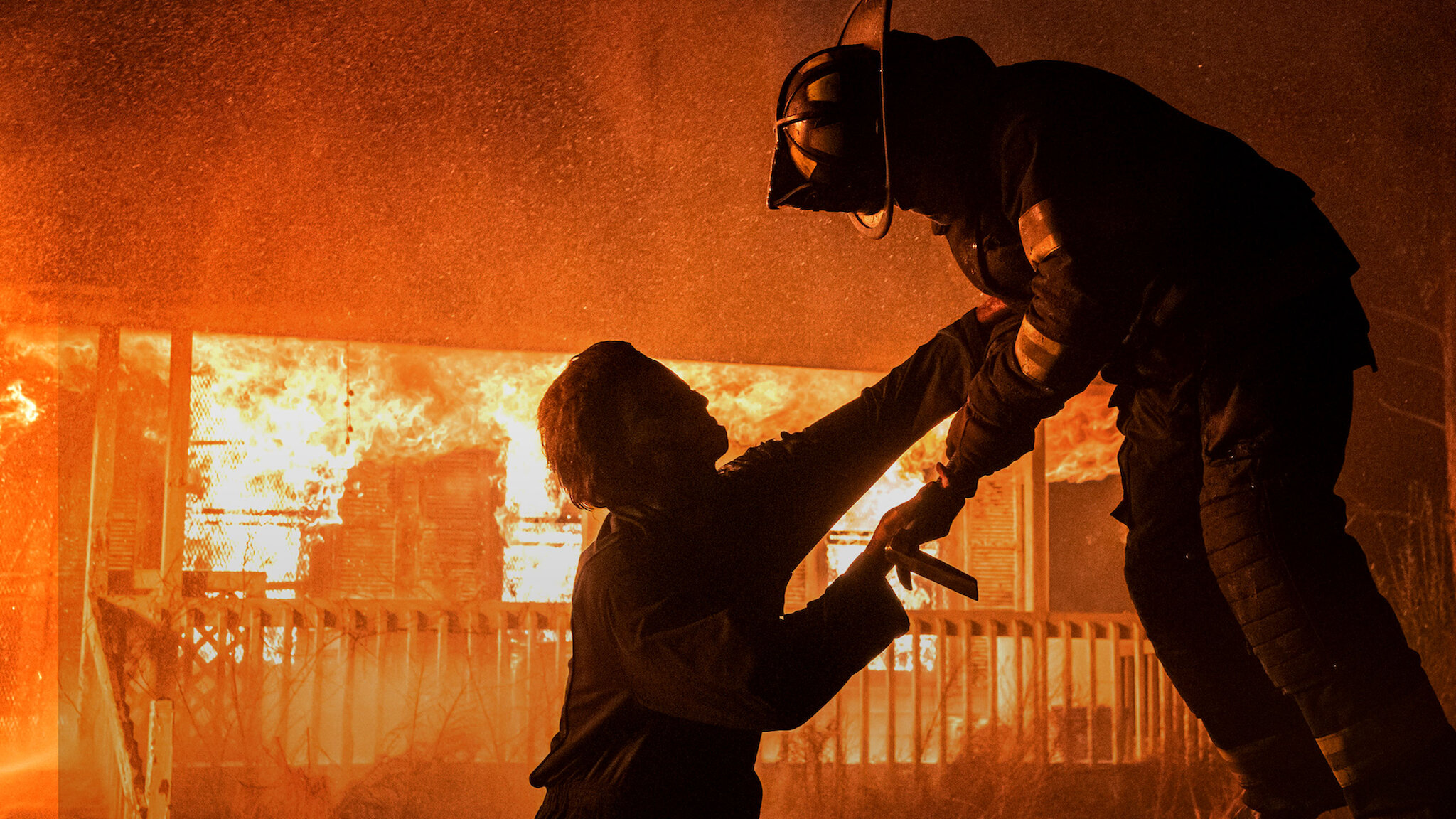
If in Green’s sequel-reboot there are such subtexts, then only as another element from the list of classic tricks, and the main fuel is a loving homage to the cult genre and nerdy fun with its motifs (a film like Halloween or Halloween Kills could have been made by the teenagers from Craven’s Scream). Or at least that is how it initially appears, because somewhere in the middle of the film the screenwriters apparently remember the legacy of social metaphors underlying chopped horror and launch a rather infantile commentary on the mechanisms of vigilante justice and on Myers’ symbolism as the evil slumbering in people.
The problem is that Carpenter or Craven knew how to show such things and did not have to talk about them. With Green, we get explanations of the not very sophisticated symbolism in dialogues (or rather in pompous American monologues). One cannot help but wish the director had stayed in the postmodern sandbox and not tried to pretend that his film is anything other than an occasional showpiece. In Halloween Kills Green kills (pun intended) the loose, cinephilic drive that constituted the charm of the previous film and tries, not very successfully, to treat the entire story seriously.

But really, who should care about limping narration or clumsy attempts to add depth when the bloodshed sequences are executed as they are in Halloween Kills? The arrangement of explosions of violence was the strongest element of Green’s Halloween, and remains so in the continuation. Engaging, balanced on the border of ironic goofing and the thoughtful use of brutality, the scenes of direct clashes with Myers are the true ornament and the main justification for the film’s existence.
Green cranks up the absurdity of the story to the maximum, but in doing so creates space for an almost unconstrained bloody spectacle. Watching the atavistically strong Myers push forward in his lust for murder, toying with the residents of Haddonfield, brings genuine joy that allows one to forget, at least for a moment, how poor the narrative foundation of this entire show is.

In the bizarre, again unnecessarily philosophizing ending, Green reiterates that Michael Myers is basically simply the Boogeyman, the personification of our bad thoughts, leaving himself a wide open gate for another installment. Halloween Kills delivers what it promises — solid slasher entertainment, with respect for the classic and an appropriate content of blood spilled across the screen. The new Halloween sequels are a bit like an annual horror show — one knows what to expect, one knows it is unsophisticated, but it still delights.

