
Horror Movies
Looking Back at HALLOWEEN: Carpenter’s Immortal Classic
Halloween seduces with its atmosphere, and the closer it gets to the finale, the more it holds one in suspense.

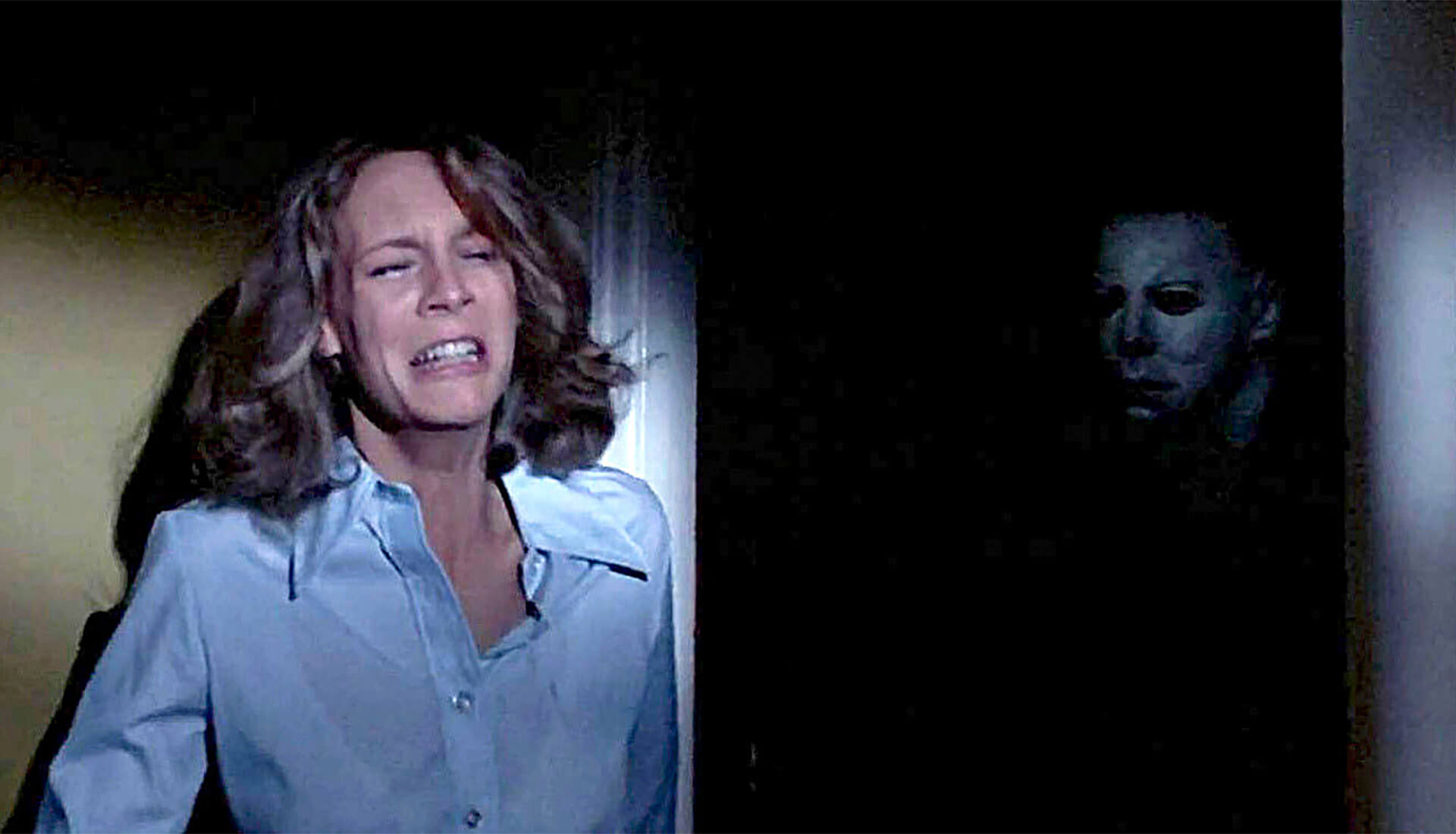
When I discovered that our portal lacked a text about John Carpenter’s original Halloween, I must admit I was somewhat surprised. How many times have I or other authors referred to this immortal classic in our texts? How quickly it comes to mind when one speaks of the most famous horror films or mentions the director’s name. One cannot not know this title, Michael Myers’s mask, the famous musical theme.
Countless sequels and the not-so-recent remakes by Rob Zombie only strengthen Halloween’s place in the consciousness of the contemporary viewer. Perhaps this is also why writing about the original today, nearly fifty years after its premiere, may seem unnecessary. Story-wise, it is a simple film – a murderer escapes from a psychiatric institution in order to begin killing teenagers the day before our All Souls’ Day.

In terms of execution, it is a work of extraordinary discipline, confirming its creator’s talent for building an atmosphere of danger. A huge box-office success and, surprisingly, an artistic one as well, about which thousands of pages of analyses and studies have already been written. More pages about this horror film will probably not add anything new, but can one refrain from writing about Halloween around Halloween? There will be no better occasion throughout the entire year. And due to its status not only as a cult work but a classic one, it is difficult for me to write about the film without spoilers.
From the moment the synthesizer-played main theme reaches our ears, and next to the opening credits we see a proudly displayed pumpkin with cut-out openings for eyes, nose, and mouth, a symbol of Halloween fun, one thing will henceforth be irrevocably linked with another, and the holiday of ghosts, so widely popularized by Americans, will gain a new face. More precisely, a white mask devoid of any trace of emotion, which not only renders Michael Myers anonymous but also highlights his soullessness and eerie nature. It gives him the qualities of a specter, a ghost, someone more than human. Or rather less.
The main character of Halloween defies simple classification, which is known to Doctor Loomis (the much-missed, brilliant Donald Pleasence), who leads his case, aware that he is not dealing with a human being but with evil in its purest form, something so inhuman that any attempt to help or cure him is pointless. Yet he himself does not know where this evil came from.
Unlike Jason’s hockey mask from the Friday the 13th series, Freddy Krueger’s burned face from Elm Street, and other characteristic visages from slasher classics, Myers’s visage expresses the complete emptiness of his personality. We see the character’s true face in the film only twice, each time when someone pulls the mask from his face – first, when he is a small child, after murdering his teenage sister, and again in the finale, literally for a brief moment.

The first time is surprising, because until then we did not know that the crime had been committed by a child; and when we see Michael as an adult, it is difficult to perceive him as a madman. Rather as someone who does not quite know what he is doing. What matters most here, however, is something else – instead of continuing to strangle his victim, Myers first puts his mask back on, because without it he seems not to be himself. It is hard to imagine a more eloquent image of rejecting humanity and one’s own identity.
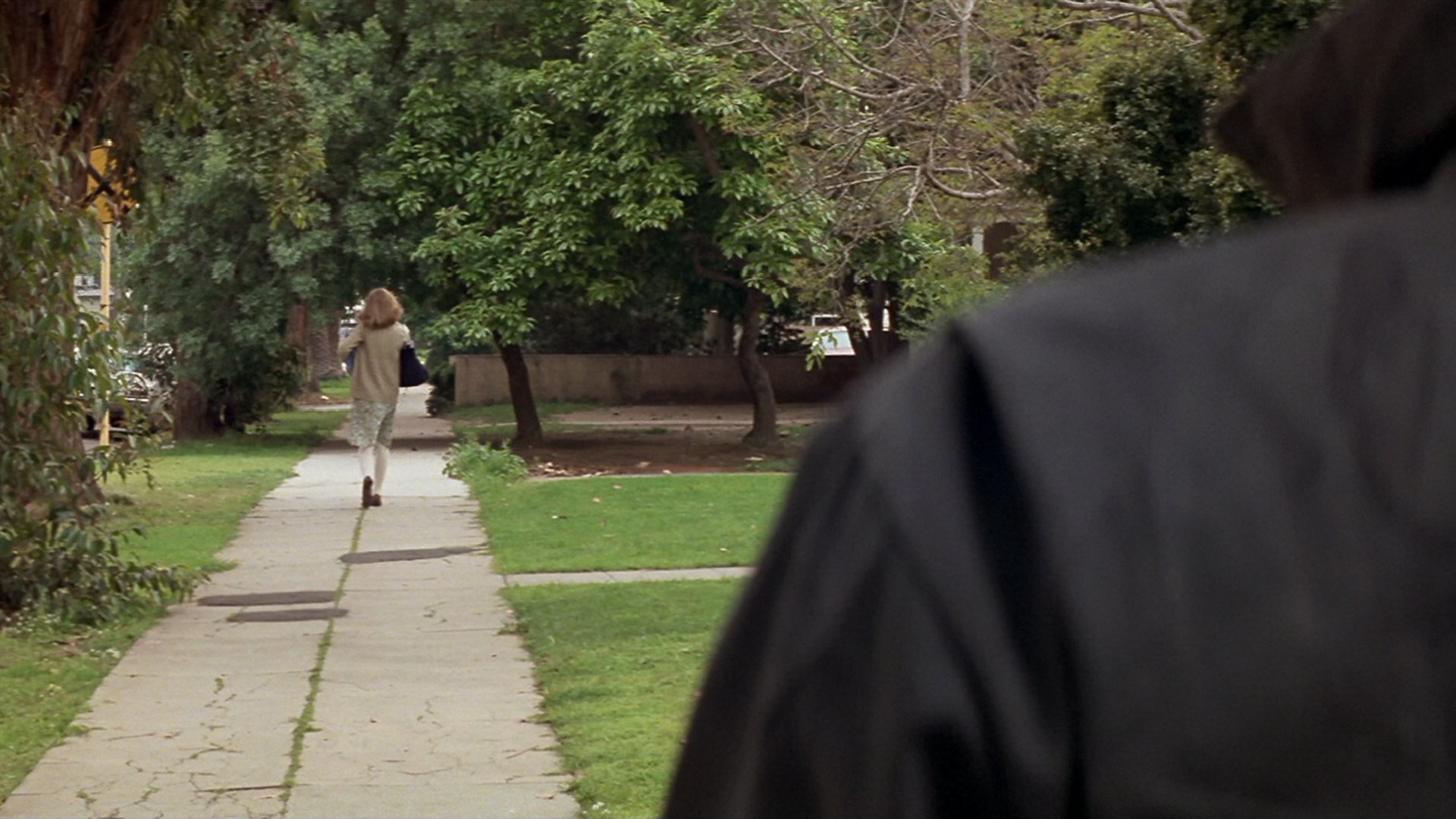
In favor of what, one would like to ask. Carpenter does not answer (at least not in the first film), although the later naming of Myers as the boogeyman, meaning a spook, is very fitting, as if his only purpose was precisely to evoke fear and terror during Halloween. Are we therefore watching the perspective of a specter who, for one day a year, gains the power to exist? Very often he is filmed as a fixed element of the landscape, a point in the distance that is not easy to notice at first glance; in other scenes, he appears in the frame standing literally right in front of Dean Cundey’s camera, observing the unsuspecting characters.

After escaping from the psychiatric hospital at the beginning of the film, he is found in the very next scene in his family home in Haddonfield. Carpenter lets go of the questions of when the specter will appear or where he is – he is already here, in nearly every scene, sometimes in the foreground, sometimes somewhere far in the background or hidden in the shadows. So what is he waiting for? What is the meaning of his return home?
His main target in the film becomes Laurie Strode (the debuting Jamie Lee Curtis), a modest teenager of unremarkable appearance, achieving excellent results in school and, unlike her friends, still a virgin. Does this matter at all to Myers? Of course, the widely known rule that in horror films sex is punished with death finds its reflection here – all the murders committed by Myers in Halloween are carried out on teenagers who have just had sex or intended to. Laurie manages to survive, but the way in which the confrontation between these characters occurs raises questions.
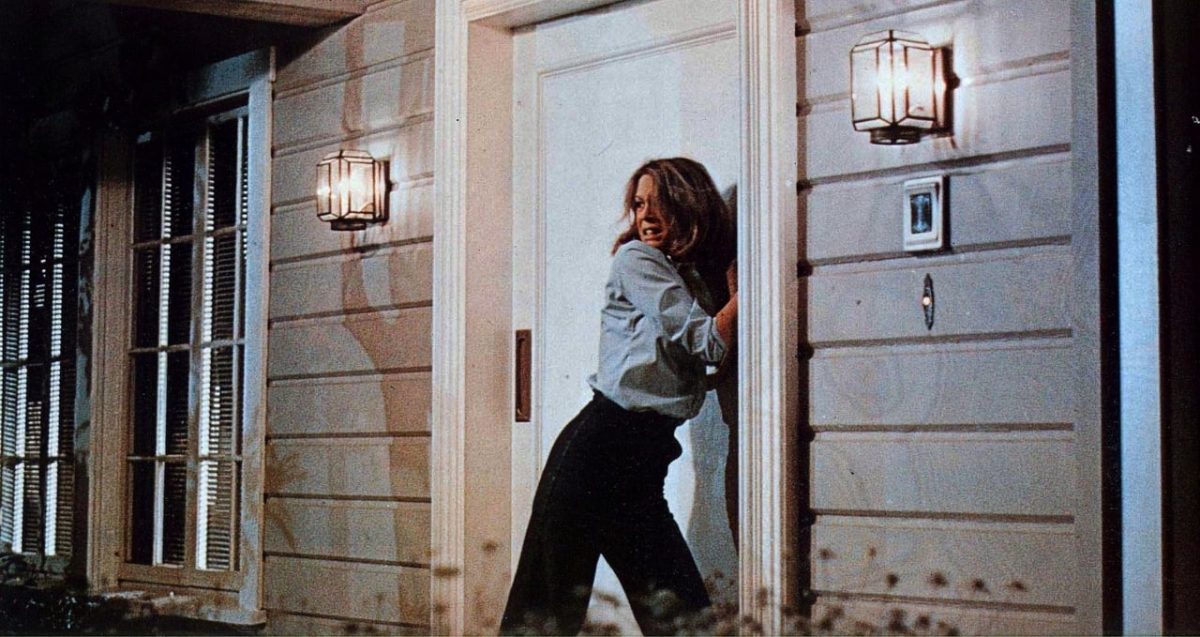
When the girl discovers the bodies of her friends, she also finds the gravestone of Michael’s sister, with the body of one of the victims stretched out before it. I do not know how (or whether) this connects with sexual motivation; it rather gives the impression of the work of a sick yet creative mind, which in this display reveals intentionality. Carpenter himself decided that certain things required explanation and, in the sequel, made Myers and Strode siblings. Unnecessarily.
It destroys the mystery of the original, which is difficult to watch after this revelation while trying to expel the family connections from one’s mind. If we manage to forget them, the question reappears: what is the sense of choosing innocent Laurie as the main target? Perhaps this knowledge is of no use to us, simultaneously unknowable, serving only to give the girl the greatest fright of her life. Let us not forget what Halloween is – a time of masquerade, when people dress up as ghosts and monsters in order to simply scare others, but perhaps also to tame fear.

If we treat Myers as such an occasional nightmare, nothing interests him more than haunting Laurie, not even her death. Yes, the people around her die, but they are not the center of Michael’s attention. Perhaps the nature of this specter is closer to the holiday during which he manifests than one might initially think. Just like Carpenter, who uses death and violence (though not necessarily blood, the film is practically devoid of it) to say something about fear and to instill it in viewers, Myers also shows what the titular day should be. In order to then vanish, seemingly defeated, yet in reality fulfilled in his Halloween mission.
I, too, commit the same error, reducing Michael Myers to nothing more than the function of a perfect bogeyman. Although perhaps not so perfect – despite the respect I hold for Carpenter’s film, I am not afraid while watching it. It seduces with its atmosphere, and the closer it gets to the finale, the more it holds one in suspense, but it does not scare as well as I would like. I identify the character too strongly with the holiday that is itself synonymous with fun. He has become too commonplace over all these years. And I remember the sequels too well.

