
Review
THE BAD BATCH. A Cannibalistic Post-Apocalyptic Romance
The Bad Batch is, above all, a stylized genre mash-up. The setting is the land outside Texas, which is a kind of a wilderness where the law of the jungle reigns


Ana Lily Amirpour made a splashy debut with A Girl Walks Home Alone at Night – a visually beautiful black-and-white film where, however, the brilliant style outweighed the gutted content. It’s pleasant to watch, but far less pleasant to feel. Still, a film about an Iranian vampire-hipster roaming the deserted, violence-soaked streets of a city at night (sometimes on a skateboard) was a fairly compelling, dreamlike romance in the spirit of Jarmusch, and brought something fresh to the vampire genre. In her second film, Amirpour again dives headfirst into postmodern games in terms of concept.
It’s hard to deny that her most formative cinematic years coincided with the rise of Quentin Tarantino and Robert Rodriguez – extreme cinephiles who chewed through reels of film while grinding down VHS tapes – as they explosively entered the film scene. The Bad Batch is, above all, a stylized genre mash-up.
The setting is the land outside Texas, which is a kind of no-man’s-land – and as the first sign passed by the protagonist warns – it’s a wilderness where the law of the jungle reigns, upheld by hordes of cannibals living in the surrounding run-down holes. The world is very Mad Max-like, and the director revels in visual quotations, seasoning familiar landscapes with pop-cultural flourishes like glowing neon lights at night and throwback hits played by the characters – including Karma Chameleon during a scene of preparing a meal made of humans. In this context, the lost Arlen (Suki Waterhouse) meets a cannibal (Jason Momoa), whose people had earlier eaten her arm and leg. A chain of events leads the pair to set out in search of the man’s daughter.
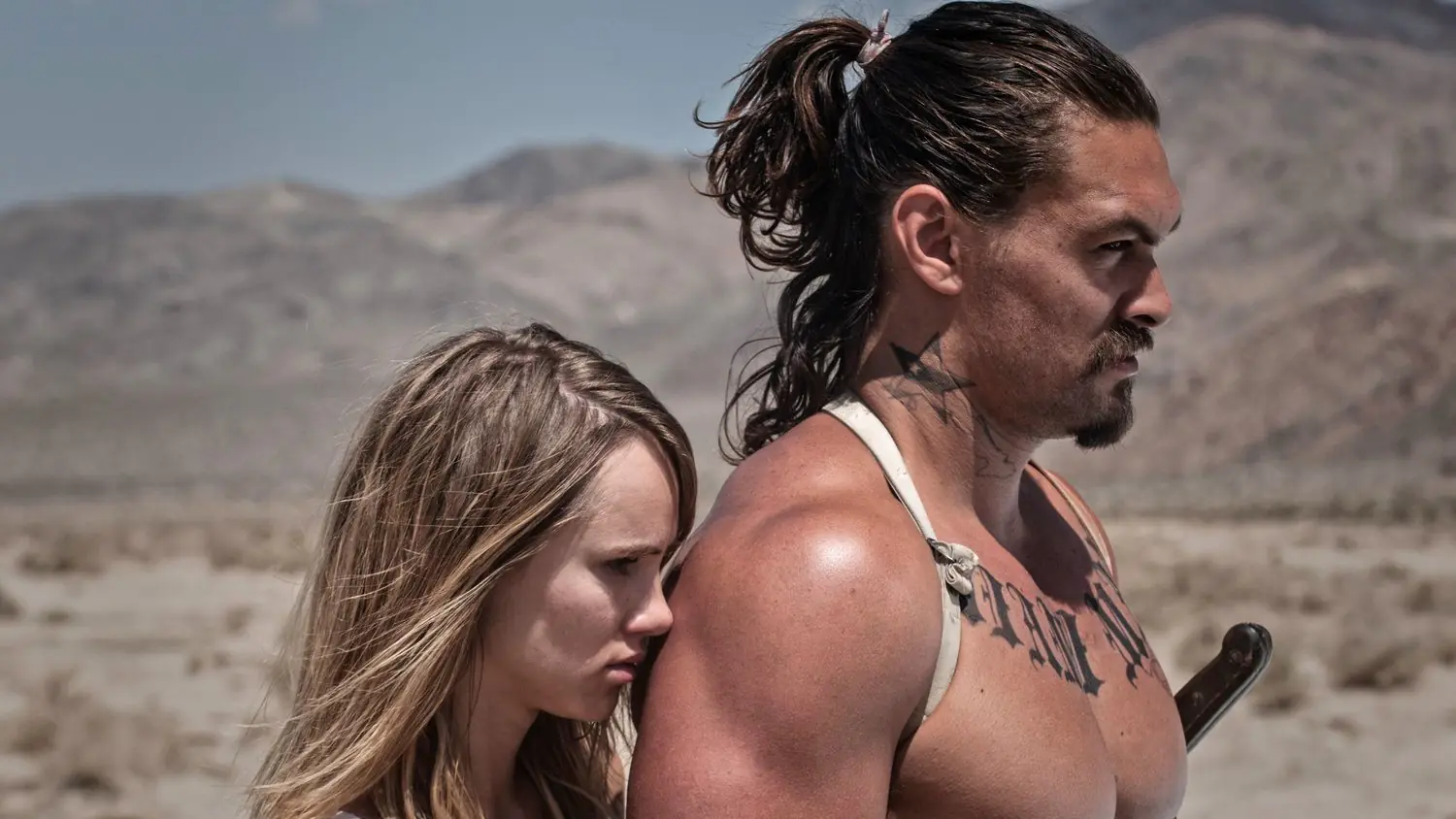
Amirpour’s film is without a doubt very aesthetic, even when it flaunts ugliness. Unfortunately, in her game of composing trash-made oases or stacking colorful containers, the director seems to forget that a film also needs a story. The first thirty minutes do a great job of building atmosphere, presenting the world, and riding on a strong initial idea. But then comes the moment when the story should start heading somewhere, characters should interact, and something should happen. And then – nothing. Amirpour can only muster enough energy for a short sequence of loosely connected, fairly random scenes, pushed forward with gallons of sticky glue in the form of painfully prolonged sequences in which nothing actually happens.
The characters wander aimlessly, the wind blows. The American director may be in love with spaghetti westerns, but she can’t maintain tension during a standoff – a prolonged wait for an explosion that never comes. Someone shoots someone, someone else sketches a portrait, and the viewer moves from one beautiful scene to another, without emotional investment.
And it was supposed to be a romance, which only really works in the final scene – but again, primarily thanks to an interesting shot, not through well-developed characters.
It’s a narrative shell stuffed with pretentious dialogue, compensating for weak content with interesting form. It’s a real shame Amirpour didn’t maintain the tone of the first act, where the solid gore (both explicit and hidden in the background, which made it more intense) was intriguingly combined with a druggy world, hinting at a completely different film. It’s as if the director watched too much Rodriguez and then suddenly decided to drench it all in French New Wave, and finally sprinkle in some spaghetti – because why not.
And when she tries to dabble in symbolism, the results are disasters like a ham-fisted close-up of a broken American flag puzzle or a massive piece of graffiti shouting “THIS IS NOT REAL” and taking up half the frame.
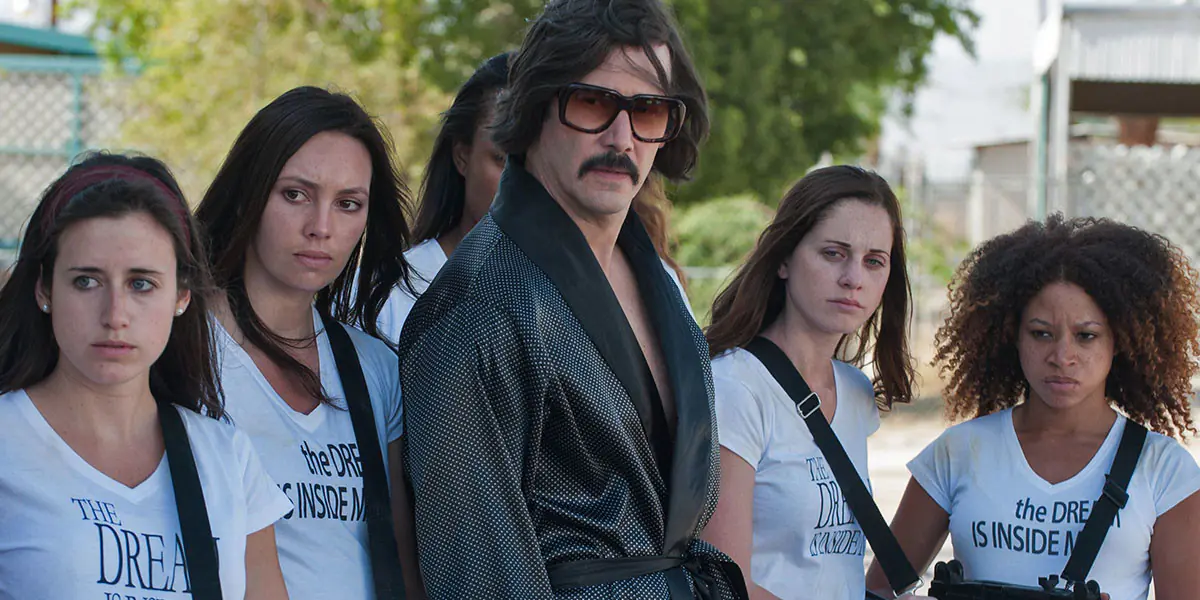
On the upside, the music is quite good – it helps maintain interest during the fragmented narrative – and the actors clearly treated Amirpour’s experiment as a chance to unwind, because they’re obviously having fun. Jason Momoa is slowly turning into The Rock, taking on solid roles in mostly mediocre films – he has such raw charisma that even a thinly written character comes alive; he electrifies the screen just by being on it. Waterhouse holds her own well, even after brutal mutilation, she’s indestructible. The most fun, however, is had by a nearly unrecognizable Jim Carrey in a highly uncharacteristic role, and Keanu Reeves, who appears randomly in the plot, acting with the grace of a wooden plank – which, ironically, underlines the strangeness of the world around him.
Sadly, the director once again fails to follow through on an intriguing concept that on paper looks like a sure thing – if only the notes had been arranged right. Instead, this version feels more like a student film project from someone desperate to show they love cinema, are an auteur, and make everything “cool.” In this genre mish-mash, she completely loses the meaning of the project, and the viewer is left only with a few nice frames stuck in their head. Ultimately, it’s an overlong festival of missed opportunities, marked by a rather toxic love the director has for her own style. Still, there are moments when she manages to enchant.

