
Review
THE WITCHER (S:2): In Whose Mind Were Such Sick Ideas Born?
It is generic fantasy that cynically piggybacks on a popular brand, because if it weren’t for its connection to The Witcher franchise — no one would care.


Freshly after watching season 2 of The Witcher, I feel, first of all, an immense fatigue, and second: an overflow of nagging questions and thoughts. Why was this made? Who approved it? In whose mind were such sick ideas born? But let us start from the beginning.
In the beginning, there was the novel Blood of Elves by Andrzej Sapkowski, which I reread right before the premiere of the second season, since it was supposed to be based on the events of that part of the saga. I am not one of those who condemn film adaptations merely for deviating from books. My aversion to the series version of The Witcher does not stem from that. However, before moving on to the proper criticism of the production, we must establish one thing: this series cannot really be called an adaptation of the book, it is closer to fan fiction.
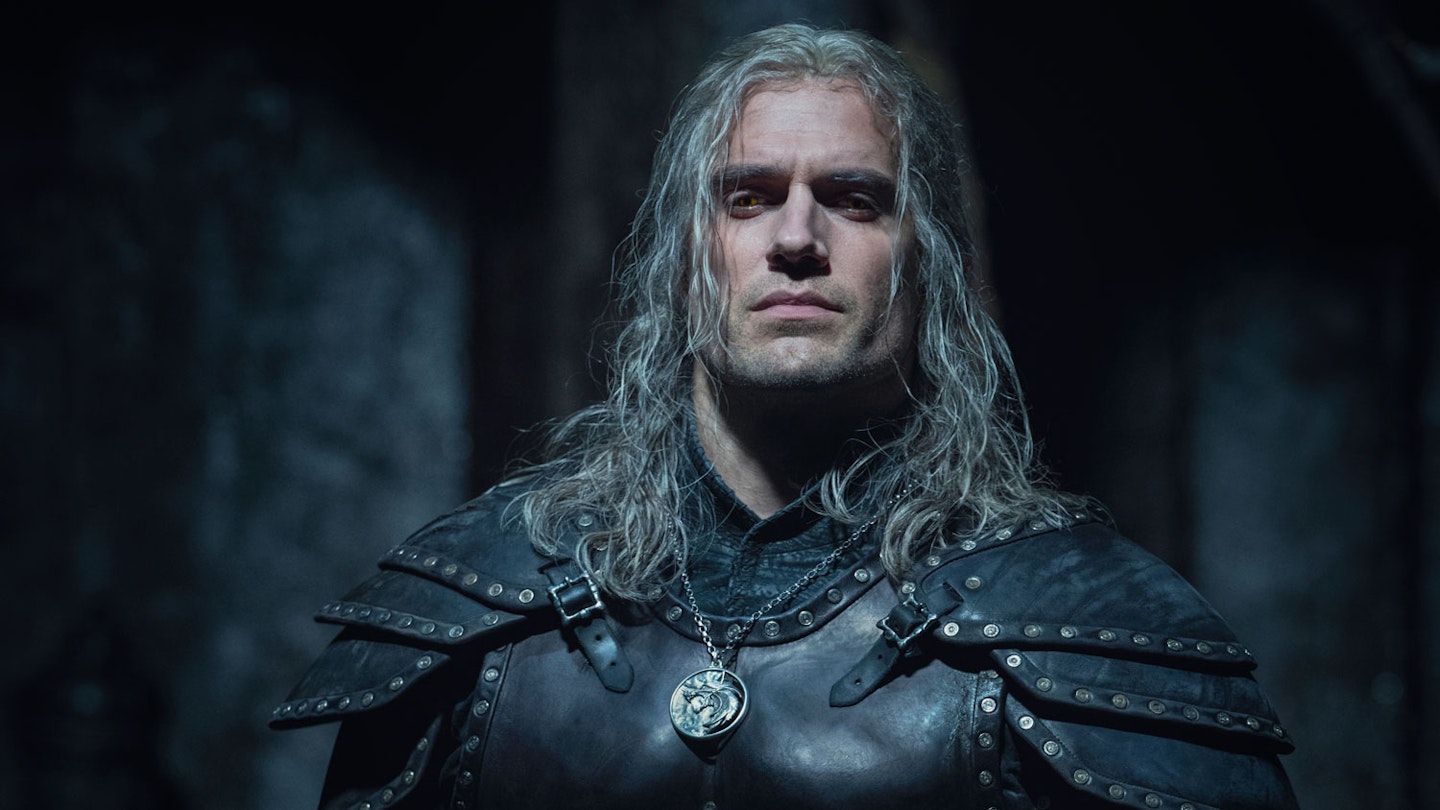
The changes from the novel appear in every storyline, which may be surprising, because Sapkowski’s saga is an exceptionally grateful material for screen adaptation. The author writes in an extraordinarily cinematic way: dialogues dominate over descriptions, each chapter is divided into smaller scenes in which locations and perspectives change dynamically, the writer skillfully uses suspense, escalation of tension, and ellipsis, he leads the action briskly, the fight scenes are an integral part of the plot and push it forward, and the rules of the world are revealed along with the development of the story (they are not thrown at us from above).
Sapkowski’s book is basically a ready-made script that did not require excessive improvement or embellishment. The only challenge could be considered the fact that Blood of Elves is the least eventful part of the saga; therefore, the creators had the choice of adding filler threads (according to their own invention or drawing inspiration from short stories and games) or extending the season with the beginning of the action from the second volume. The screenwriters, however, chose option number three: to write an almost entirely original story.

I would therefore assume that since the creators decided to introduce such radical changes, they had good reasons for it – more interesting ideas, innovative narrative solutions, a certain artistry… Loose adaptations of literature that are successful point to the creators’ vision and courage. However, if someone reworks the events according to their own whim and in a way much worse than the original, it unfortunately testifies to the filmmakers’ glaring arrogance, to their failure to realize the mediocrity of their own talent; traits that cause them, instead of focusing on telling the BEST possible version of a given story, to be primarily concerned with telling THEIR version of the story – narcissistically using someone else’s tale to promote themselves.
The second season of The Witcher is an example of exactly this kind of self-admiration, where the creators forcefully alter the source material and serve us a vision different for the sake of difference itself. And nothing justifies this arrogance, because showrunner Lauren Hissrich’s version cannot withstand comparison with Sapkowski’s prose at any point. The Witcher from Netflix therefore fails as an adaptation of Blood of Elves, but it fares even worse as an independent story. And here we already have a serious problem, or rather a number of problems, which I decided to break down into individual elements. Of course, there will be spoilers.
List of problems
Problem no. 1 – the lack of any style whatsoever. The Netflix franchise under the banner of The Witcher has nothing that would make it stand out from the competition. It owes its success primarily to the popularity of the games and books. The Witcher is bland in form. Jaskier’s song again has the makings of a hit, but beyond that, the musical score is entirely devoid of character (I only remembered the main theme, mainly because it plays most frequently). The cinematography strikes with artificiality; the saturation and digital coloring are overdone – a misguided choice for the visual setting of a story meant to be dark, brutal, and full of mystery.
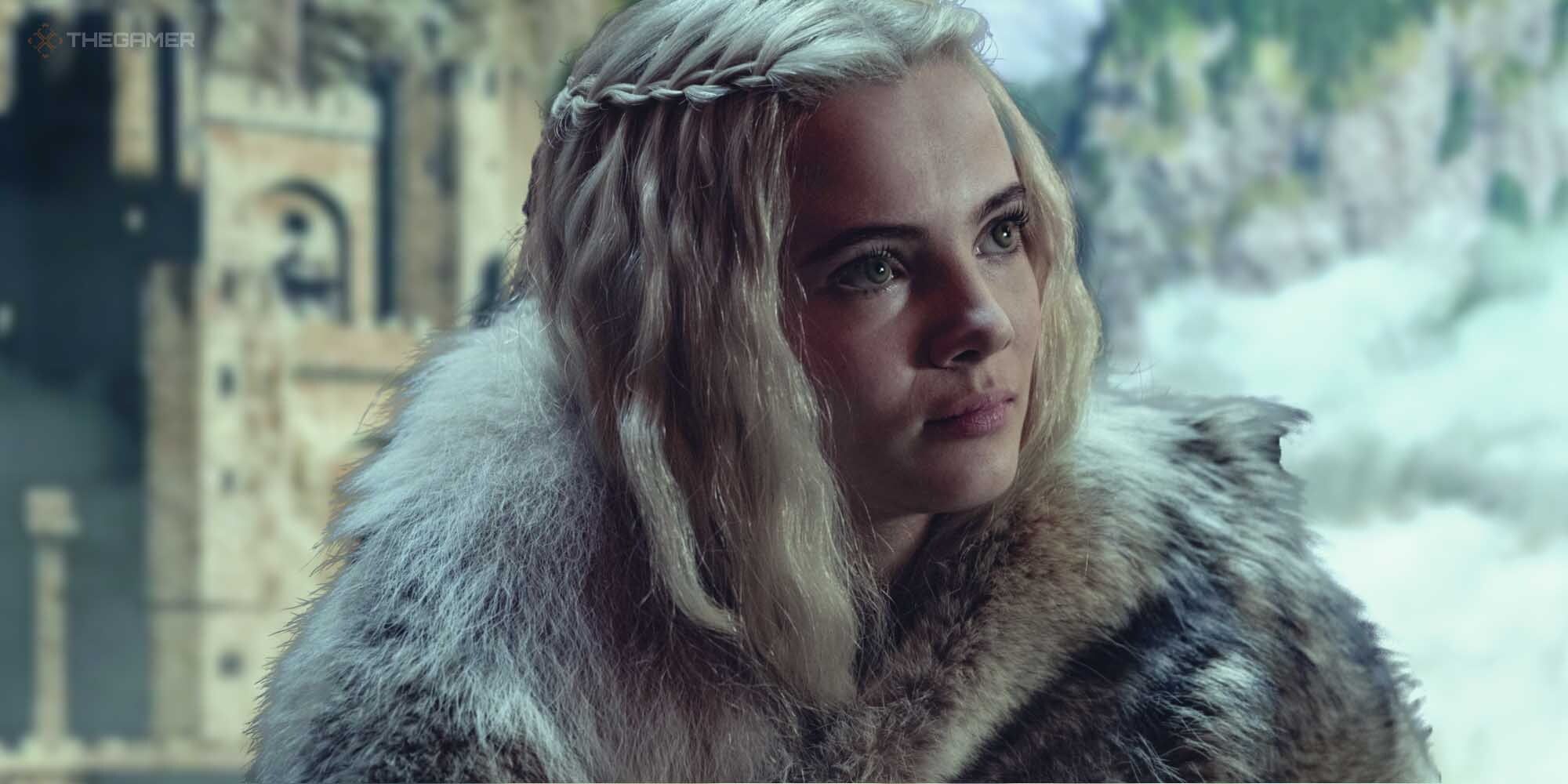
Aesthetically, the whole resembles cheap, kitschy fantasy productions from the 1990s. To that come disappointing, illogical costume and makeup choices: Yennefer, while in hiding, wears a bright purple cloak, Cahir wanders among Nilfgaardian troops in something resembling modern pajamas and a dressing gown, Ciri, after a long and arduous journey, appears in Kaer Morhen in a snow-white, clean gown, beautifully arranged blonde waves, and false eyelashes – in short, the characters’ appearance does not credibly reflect their circumstances; the costumes are often too theatrical, impractical, and ill-suited to context.

All this disrupts the immersion, so crucial in fantasy – the sensation of being inside a fictional world. For the world presented in this series is cardboard-like, unconvincing, it does not enchant us. This can no longer be explained by lack of budget, because Netflix spared no expense on The Witcher – no, it is the result of lack of passion, lack of attention to detail, and lack of a coherent overall concept. The mere shots from The Northman have more atmosphere than all eight episodes of The Witcher combined.
Problem no. 2 – Geralt ex Machina. Poor Henry Cavill. The creators have no idea what to do with his character, so in a series about a witcher there is little of… the witcher. In the second season he is practically a supporting character, stripped of agency, giving way to chaotic threads invented by the creators. Geralt has been reduced to a gruff heap of muscles whom the screenwriters remember only when it is time to stylishly slaughter a monster. Additionally, the creators overuse the deus ex machina device: at least once per episode we have a scene in which the witcher appears out of nowhere, saving someone literally at the last moment.
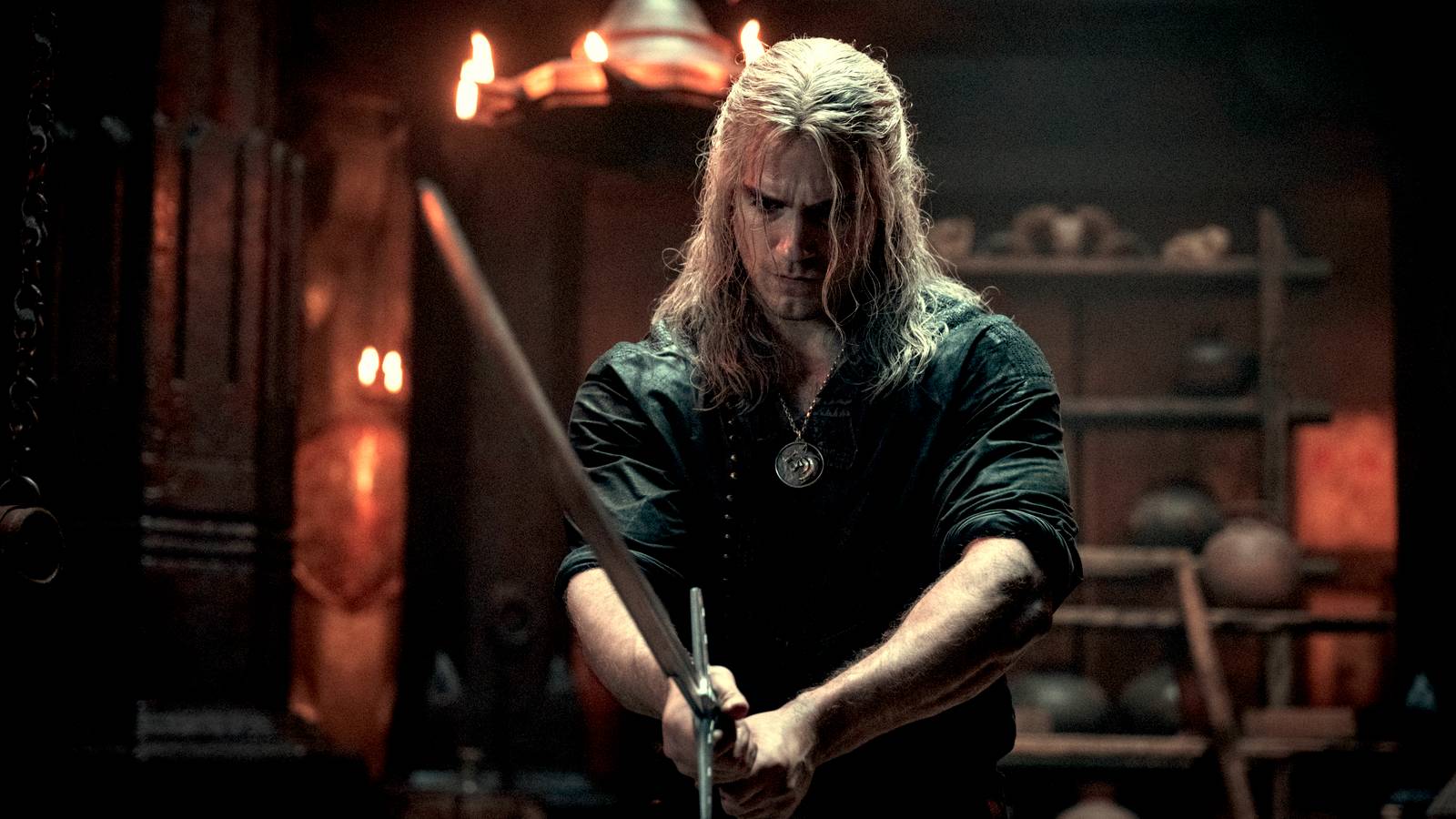
Apart from his teleportation skills, however, there is nothing remarkable about this man. Sapkowski created a multilayered character of a man weary of life, lonely and disillusioned, with deep thoughts and moral dilemmas; but Hissrich either cannot or does not want to portray him that way, reducing him to the role of a macho warrior, one of many in other fantasy productions. Sure, similarly withdrawn, introverted characters can be difficult to portray on screen, but cinema has long since developed hundreds of ways to make them charismatic and even fascinating (vide all the westerns of Sergio Leone). The Netflix Geralt is simply boring compared to Geralt of Rivia. If it is true that Cavill had to practically beg for more dialogue lines, it is frightening to imagine what they would have done to the witcher without his interference.
Problem no. 3 – Yennefer swapped minds with the tree under which she woke up after the battle. That is my little theory explaining why the sorceress behaves so irrationally throughout the entire second season. Yennefer was literally murdered by the screenwriters. I can no longer like this character. I also cannot imagine her further relationship with Geralt, and to be honest, I do not understand why he did not kill her on the spot after it turned out she had betrayed him and Ciri. The deepening of Yennefer’s character in the first season – though not without its flaws – was one of the more interesting elements of the series.

One could expect that in the second season, the sorceress would continue to develop, that she would mature, that what we had seen before was merely the genesis of this character, Yennefer’s origin story. Wishful thinking! Yennefer in the second season is still impulsive, sulky, offended at everyone and everything, cheeky, and entitled like a teenage girl in a woman’s body. On top of all that, she is simply stupid, as if along with her magical power, her ability to think had abandoned her after Sodden. How are we supposed to believe in this character’s intelligence after she lets herself be deceived by a NOT AT ALL SUSPICIOUS Baba Yaga?
Supposedly, sorceresses in this world are wise and educated women, so where do Yennefer’s brilliant ideas come from, such as, for example, escaping with Cahir? How does her strong desire to have a child fit with her attempt to sacrifice the foster daughter of the man she loves? The love story of Yennefer and Geralt was also not handled in a satisfying way: it is a marginal element of the series, and what is worse, there is absolutely no chemistry between Anya Chalotra and Henry Cavill. Their few shared scenes lack any tension whatsoever. We do not believe in this love; the creators make us take on faith their supposedly great, destiny-bound romance.

I have grown so disgusted with Yennefer’s character that when, in the last episode, she slit her wrists to summon Baba Yaga, for a moment I was glad that the screenwriters had decided to kill her off and that we would not have to watch her anymore. But we will continue to watch her, and I bet that in the third season, one sentimental conversation with Geralt will be enough for him to start trusting her unconditionally again. I do not want to compare the book sorceress with the one from the series, because it would be an act of cruelty towards Netflix’s production – but I will point out that the platform, which so eagerly proclaims inclusivity and the support of all minorities, itself, through casting Chalotra as Yennefer, discriminated against one group that remains chronically underrepresented in leading roles in major productions: mature women. It is an ugly example of ageism.
The truth is that if one were to stay true to the original construction of this character, Yennefer would be portrayed by a middle-aged woman (in an ideal world: Eva Green). But according to the American and mainstream standard, only young women can be objects of desire, which is why the role that would best suit an actress around forty (that is, Cavill’s peer – double standards, Ms. Hissrich…) was given to Anya Chalotra, born in 1996. It is hard for someone that young to emanate the aura of a woman who is experienced, self-assured, and hardened by life, as the book Yennefer was. Therefore, the construction of the series’ sorceress differed from the original from the very outset and required being rewritten from scratch in many respects; and since the creators’ only idea for creating a strong woman is to portray her as angry, chaotic, egocentric, and utterly unpleasant… well, we got what we got.
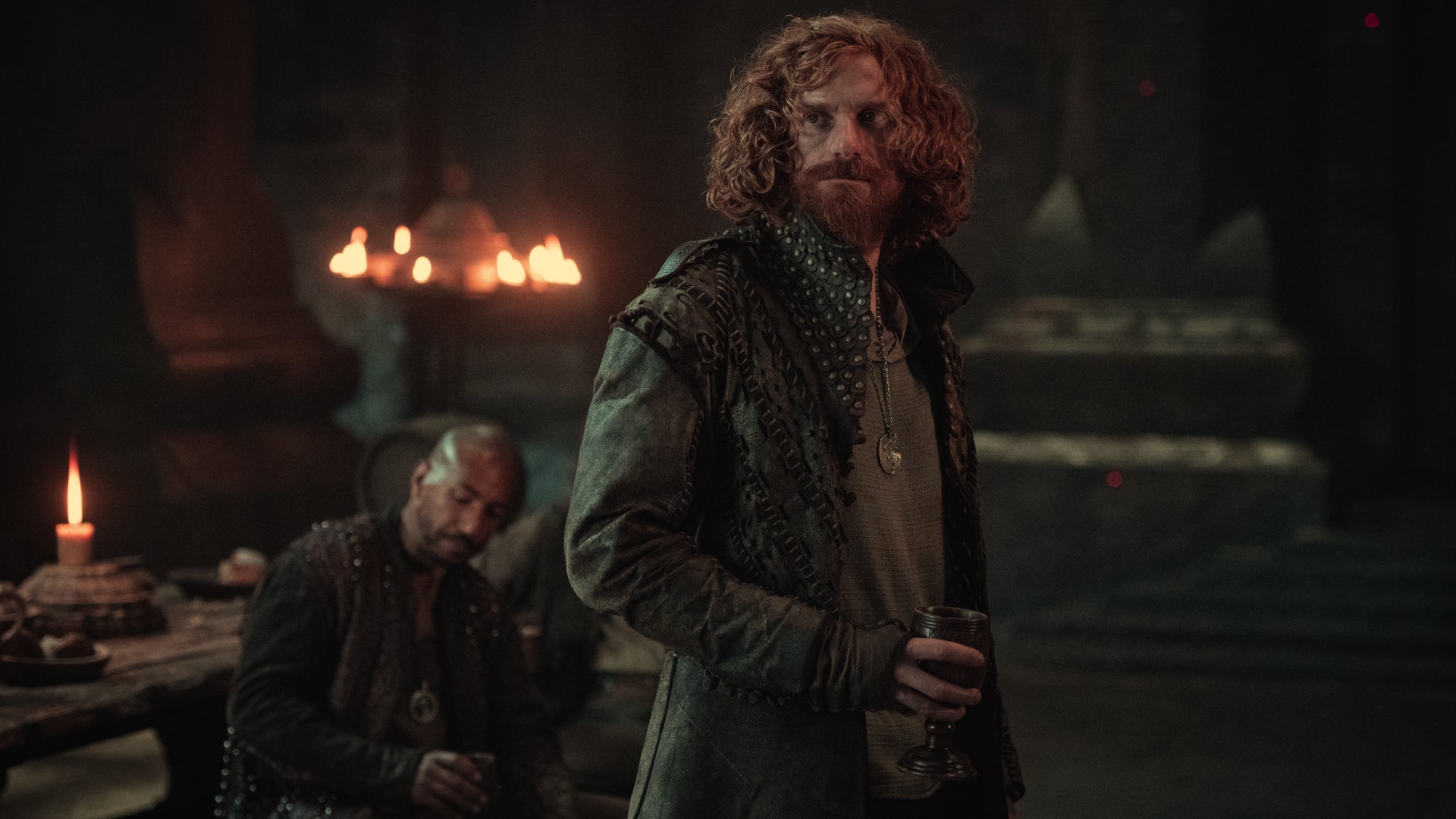
Problem no. 4 – the entire Cahir plotline. Another completely wasted character is Cahir. One might expect that being a prisoner of war, subjected to unimaginably painful magical torture, and escaping death by sheer luck would lead to some internal transformation in this character. However, after his obstacle-ridden return to Nilfgaard’s army, Cahir immediately becomes the same one-dimensional villain he was in the first season. No trauma, no change in behavior, no reflection: everything returns to square one, and all of Cahir’s second-season adventures turn out to be meaningless, as they lead nowhere. At first, it smelled like a Jaime Lannister-style story – a villain who falls hard and undergoes deep change as a result – but it turned out to be a dead end. What was the point of the entire captivity plot if it did not alter the narrative function of the character in any way?
Problem no. 5 – characters without understandable motivations and well-defined personalities. The broader cases of Cahir and Yennefer point to a general problem that affects practically all of the show’s characters: a complete lack of development. The creators cannot handle psychology, cause and effect, or convincing motivations. Most of the characters are bland. The only fully successful character, in my opinion, is Jaskier, who provides a good comic element, although even his subplot is not free of weaker moments.

For example – when the bard, traveling without the required papers, cannot tolerate having his art insulted and starts a shouting match with the inspector, the scene, initially amusing, quickly becomes distasteful because one of the elves must sacrifice his life due to Jaskier’s stupidity to distract the guards and allow the rest to escape. Will the elf’s death caused by Jaskier be addressed in any way or affect the bard? Of course not. As for the other characters: Ciri turns out to be perhaps the most interesting of the main trio, although her transformation from a delicate young lady into a hardened warrior is a bit too sudden and cliché.
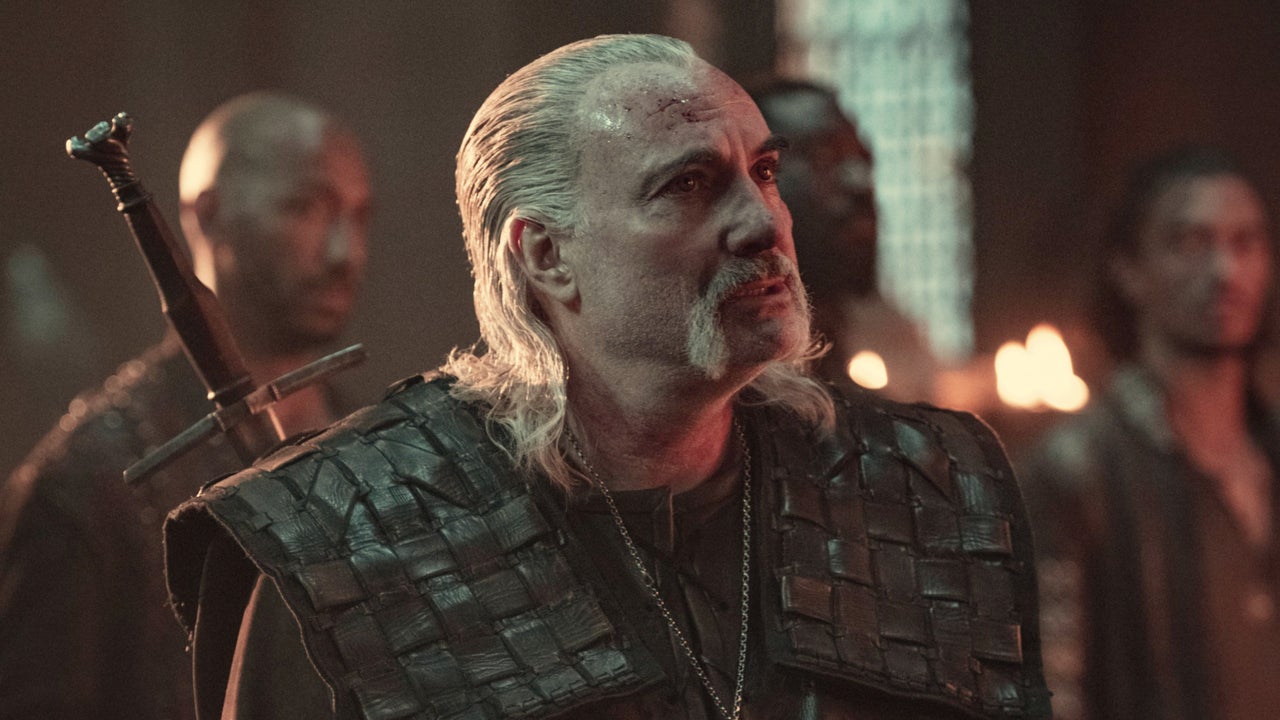
Freya Allan also does not look convincing in the training and fight scenes; the young actress’s lack of technical preparation is evident: the petite girl swinging a wooden sword does it with the energy and strength of shooing away a fly with a kitchen towel… Moving on: Kim Bodnia as Vesemir tries to create the image of a wise mentor and seasoned veteran, but despite the actor’s good performance, it is hard to believe any of it because of the screenwriters, who have him, among other things, agree to subject Ciri to dangerous mutations despite his foster son’s (Geralt’s) plea to look after her and keep her safe. The rest of the secondary and tertiary characters are equally inconsistent and devoid of personality, because they serve only as tools of the script, acting according to whatever the creators happen to need to move the plot forward.
Problem no. 6 – screenwriters competing with each other to write the most boring scene. Poorly written characters and a lack of logic in the events would not be such a big problem if the series provided good entertainment, but it does not. The Witcher has a dull, slow pace and consists almost entirely of stiff, pompous dialogues. What’s worse, most of the lines serve virtually no narrative or world-building purpose: most often they just tell us the obvious. After finishing the season, not a single witty line stuck in my head. The creators repeatedly use dialogue to clumsily explain what they are unable to convey through visuals — for example, Ciri says several times that she feels lost and lonely, because the creators have no other idea how to show her emotions to the viewer.
Most scenes are typical fillers, talking heads. We also get a lot of panoramic shots of locations and slow close-ups of pensive faces that express absolutely nothing. It doesn’t help that the acting overall is poor. I can imagine it’s a great challenge to work with such a script, but most actors perform in an extremely mechanical way, without a trace of expression or charisma (for example, the actress playing Francesca), while others slip into exaggeration and grotesqueness (comic-bookishly evil and deceitful Dijkstra). As a result, the whole thing is simply not engaging — flat and emotionless. The creators try to punctuate this omnipresent boredom by creating (artificial) conflicts and serving the viewer more fight scenes.

The problem is that most of these conflicts are almost soap-operatic, shallow, and have little consequence for our heroes (Geralt quickly forgives Vesemir and Yennefer for what they tried to do to Ciri, although in both cases these were serious enough offenses for the witcher to end both relationships completely). There is therefore no talk of building any tension or drawing the viewer into the story, since it just keeps going in circles instead of moving forward. The fight scenes with monsters and humans are enjoyable to watch, but most of them have no narrative meaning, which makes them unengaging.
How are we supposed to care about the fight with Eskel, transformed into a leshy, when that character had only a few scenes earlier, was presented as a complete jerk, didn’t seem particularly close to Geralt, and we generally didn’t care about him? And yet, in episode three, the creators assume it’ll be interesting to show us, in several overly long scenes, Geralt’s mourning for Eskel and their shared memories. The best of all was the fight with the bruxa (in general, the entire first episode is the best in the season). The potentially most exciting fight, with the Michelets, we do not see in full. Most of the battles are flashy, tailored to the taste of a teenage boy, and as I said — of no narrative significance. The absolute highlight for me is the fight between Geralt and the first beast from the monolith, in which our witcher uses Ciri as bait… or at least that’s how I took it.

Problem no. 7 – absurdities. There are many elements here devoid of logic and sense. My favorite takes place outside the walls of Cintra, where Ciri and Yennefer arrive on horseback. The moment is almost slapstick. Yennefer consistently, ever since the temple of Melitele, has been leading Ciri to the Baba Yaga to sacrifice the girl in exchange for power. When they finally arrive, she changes her mind, which looks more or less like this: she says to her, hey, you know what, don’t go there, I wanted to sacrifice you, but I really can’t do something like that, let’s go back to Geralt. Ciri understandably gets angry and causes such a strong earthquake that the wall of Cintra cracks (though she and Yen don’t even fall over).
What is the reaction of the soldiers on the wall? No, they don’t sound the alarm that there’s an earthquake; they’re not shocked or confused at all. They send several riders toward Yennefer and Ciri because they somehow magically guess that these two solitary, distant, barely visible women are the cause of the fissure (which is true — but how do the soldiers know that?). And here comes the best part. The riders reach Ciri and Yennefer at the very moment when they’re standing by the crack, still visibly stunned by the whole event. Excuse me, did those soldiers teleport? How on earth did they manage to reach Ciri practically a second after she created the fissure — which was the reason they were sent to investigate?

We can clearly see there are several kilometers between the walls of Cintra and our heroines. We also see the action takes place on flat terrain. And who comes to the rescue of the two women when the soldiers, without asking any questions, immediately start fighting them? Of course Geralt — that’s his function in this series, saving everyone at the last minute and appearing out of nowhere in the most (un)expected moments. How come no one noticed earlier, on flat, open ground, that Geralt was approaching? I don’t know, maybe the explanation here is also the Baba Yaga, whose actions serve the screenwriters as justification for every inexplicable event…
Oh yes, the Baba Yaga. The main antagonist of this season and perhaps the most absurd, idiotic, disappointing storyline. It’s weak for the same reason as the separately discussed Cahir subplot: a lot happens, the show tries hard to convince the viewer how important it is, and it ultimately turns out to be an empty shell, a dead end. The Baba Yaga was systematically hyped up since the second episode, given relatively much screen time in each one, her history was outlined, and she was presented as an immensely powerful, ancient being… only for her to be defeated in the finale because Ciri simply came to her senses. Literally.

The possessed Ciri wakes up from the vision, the Baba Yaga leaves her, tempted by Yennefer’s sacrifice… but instead of entering Yennefer’s body, she just flies off somewhere toward the Wild Hunt. Any questions? Why bother. The character of the Baba Yaga was most likely introduced for two reasons: first, they needed some kind of final boss for the last episode; second, the writers couldn’t find any sensible motivation for Fringilla, Francesca, and Yennefer to do what they did — and those were actions that are indeed hard to justify by anything other than possession by a witch. The only question is, how did three powerful sorceresses get so easily deceived by a suspicious entity (hint: see problem no. 5)… I’d also bet we won’t return to the Baba Yaga in future seasons. Or it’ll turn out that she and Eredin are one and the same, because that’s apparently what we were supposed to take from her merging with the Wild Hunt?
Problem no. 8 – politics as naïve as in Disney fairy tales. Hissrich would like to create a Game of Thrones-style story, full of intrigues and cunning political players, but how does that work in practice? The best example of this is the subplot of the elves’ alliance with Nilfgaard. Formed by accident (Fringilla, being a prisoner, is promoted to the role of almost personal adviser to Francesca, the leader of the elves, because why not) and broken by accident (because the elves decided that they would not fight with Nilfgaard against the North after all, but would rather fight against both Nilfgaard and the North together, as they don’t need allies).

Francesca, whom we are supposed to see as a strong and competent leader, makes key decisions not after weighing all the pros and cons, but under the influence of strong emotions; not in consultation with her advisers, but after consulting the Baba Yaga (yes, I know, I’m fixated on that Baba Yaga). Another example of doing politics in Lauren Hissrich’s world? When Yennefer is accused by some mages of treason in favor of Nilfgaard, her innocence is to be determined by whether she will be able to kill a Nilfgaardian prisoner. How exactly is that supposed to prove that Yennefer is not playing both sides?
What would killing Cahir prove, other than the sorceress’s ruthlessness? And this kind of trial was invented by mages — a group with extensive abilities in the field of torture, mind reading, and examining the past… The finale of this subplot is equally spectacular — during a public execution, in front of a crowd of witnesses, Yennefer frees Cahir, and then they manage to escape together, BECAUSE SOMEONE JUST HAPPENED TO LEAVE A HORSE NEARBY, and none of the numerous soldiers and mages gathered around feel like chasing the most important Nilfgaardian general and a sorceress accused of treason.

Problem no. 9 – worldbuilding gibberish. The world presented in Netflix’s The Witcher simply doesn’t hold together. The creators constantly break the rules they themselves established. The fortress of Kaer Morhen is presented as a secret place, whose location is known only to witchers — and in the second episode, we see Eskel bringing a crowd of prostitutes there, throwing a wild party, and destroying half the laboratory with its unique substances during rough sex (because, you know, heh heh, witchers are fun-loving guys).
The journey of Ciri and Geralt to Kaer Morhen takes a long time, but when Geralt has to rescue Ciri from Yennefer’s hands, the trip from Kaer Morhen to the walls of Cintra happens almost instantly. That’s terrible storytelling — beginner-level worldbuilding mistakes. Good fantasy differs from bad in its internal consistency. I’m repeating myself with Game of Thrones, but never mind: Netflix wanted to have its own Game of Thrones, they just forgot to tell Ms. Hissrich that she should take inspiration from its early seasons, not the terrible ending. Because the chaos in The Witcher resembles the equally incoherent world of the final Game of Thrones seasons…

Problem no. 10 – intellectual shallowness. I don’t know what story the creators wanted to tell. Their Witcher has nothing of the melancholy of the original and portrays none of the dark sides of human nature as convincingly. Sapkowski created a story largely about xenophobia, and how does Netflix approach the issue of racism? It wants me to believe in a world where intolerant and narrow-minded people hate elves but have no problem accepting people of a different skin color. It’s simply childish: instead of a complex and conflicted world where every kind of difference is persecuted, we get a simple division into good and evil.
The problem of racism is presented here superficially, as if the creators wanted to latch onto a trendy topic but couldn’t deepen it in any meaningful way. The same shallowness applies to the other themes inscribed in The Witcher. The anti-war message? It exists only in Triss’s verbal declarations about how much the war changed her, but we don’t actually see the effects of that war on screen, since Cahir, after torture and captivity, returns to commanding the army without a trace of reflection, and Tissaia immediately regains her joy of life the moment she learns that her favorite Yennefer is still alive (by the way, and on a side note: am I the only one bothered by the fact that Tissaia is shown as a positive character after what she did to the girls in the first season?

Am I the only one who thinks her treatment of Aretuza’s students was psychopathic, and her fondness for Yennefer lacks any particular justification?). The motif of family, surrogate fatherhood, and orphanhood is only barely touched upon. The Witcher doesn’t tell any important story, and when it tries to, it does so in a completely inept way.
I could go on criticizing the many flaws of this series. The frustration I feel comes mainly from the awareness of the enormous potential of this story that was squandered. It’s painful to see the gap between what Netflix’s The Witcher could have been and what it actually is. Lauren Hissrich has not repaid the credit of trust I gave her after the first season — at this point, I have a well-formed opinion of her talent, and I see no prospect of improvement in the third part. This production is generic fantasy that cynically piggybacks on a popular brand, because if it weren’t for its connection to The Witcher franchise — no one would care about this series.

