
Review
KIRIKOU AND THE SORCERESS. The highest artistic quality.


In Kirikou and the Sorceress, the witch Karaba has completely subjugated young Kirikou’s tribe. According to legend, she kidnaps and devours every man who dares attack her castle. She spares no one, not even the youngest, for whom she sets special traps. The women, as part of their forced labor, must give her their jewelry and precious possessions. Karaba has also cut off the nearest water source, an invaluable resource for the village. She rules the tribe with ruthless, despotic power. The director, Michel Ocelot, casts an aura of otherworldly power around the witch, building her authority. She is an enemy whose defeat seems far beyond the capabilities of the defenseless tribe.
And then Kirikou appears. We meet him while he is still in his mother’s womb, demanding to be let out. His mother grants the newborn’s wish. Kirikou immediately emerges, cuts his own umbilical cord, and begins to ask questions: “Where is my father?”, “Where are my brothers?”, “Where are my uncles?” He learns that the evil witch has taken them all. Without a moment’s hesitation, Kirikou decides to defeat Karaba and free his people from the tyranny of their eternal enemy. This becomes his life’s purpose — one to which he dedicates every moment. His mother gives him his father’s knife; he steps out of the clay hut and begins his mission.
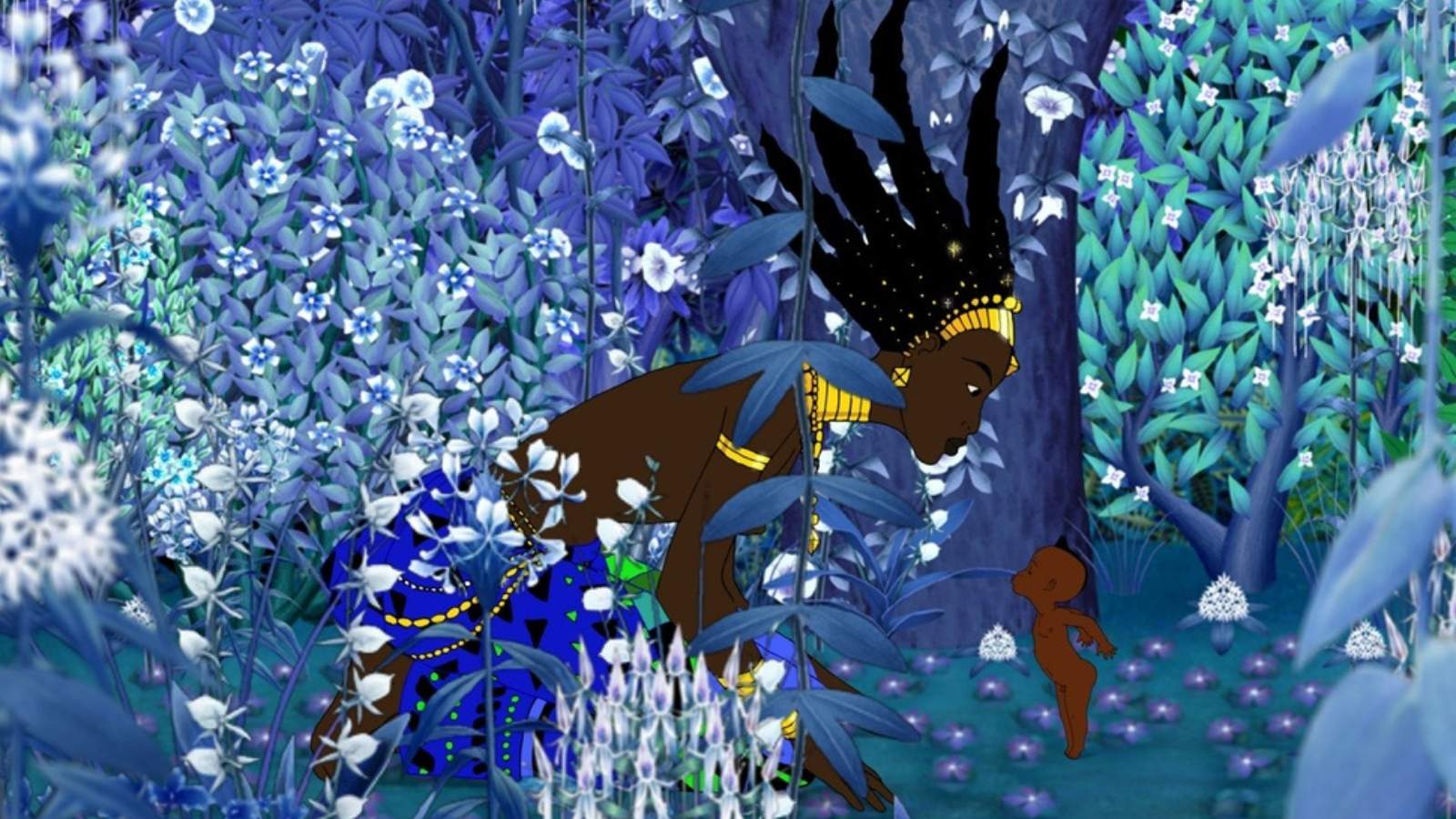
From the very beginning, Kirikou stands out as far more resourceful and determined than those around him. He is free of fear and naivety. Instead, he possesses boldness and an uncompromising nature — qualities that are foreign to the other villagers. Despite his young age and tiny stature, Kirikou can stand up to those who appear far stronger than he is.
Drawing inspiration from African myths, Ocelot presents us with the story of a hero’s birth. This exceptional individual brings about the rise of a new paradigm, overthrowing an established order. Kirikou follows the classic hero’s journey. Before confronting Karaba, he must complete a series of trials that will test his skills. He will have to save the youngest villagers, restore access to the water source, and speak with the local sage, who will prepare him for the final confrontation. Like Hercules, Kirikou accomplishes these “labors,” growing mentally into his role as a hero.
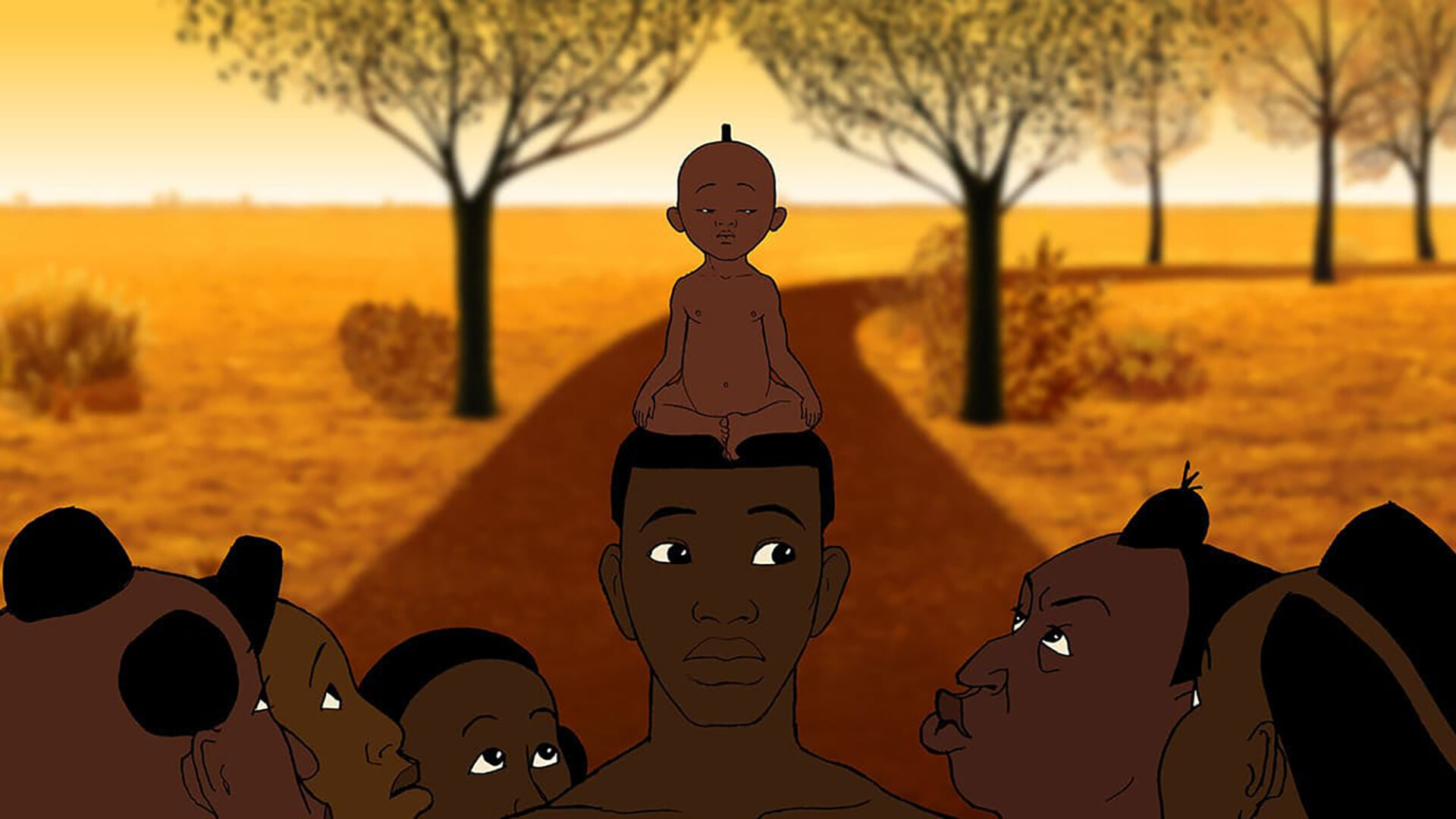
What is most intriguing about Ocelot’s animation is the way he uses narrative shortcuts and simplifications. These appear in the structure of the action, the plot, the relationships between characters, and the rules that shape the story’s world. At first, this type of narration may feel alienating or surprising. But over time, it becomes fascinating and takes on a metaphorical dimension. Ocelot deliberately omits the theme of Kirikou’s physical growth. His victories are not measured by physical strength — something he lacks.
We continually witness the adventures of a baby small enough to fit in the palm of an adult’s hand. Each challenge is filtered through a child’s sensitivity, at times giving them the tone of innocent adventures or a swashbuckling cartoon. Yet beneath it lies the tragic story of a dying tribe. The filmmakers encode this tale in a refined way, leaving it open to multiple interpretations. Both children and adults can find meaning in it.

Kirikou and the Sorceress (a French-Belgian-Luxembourg co-production) originates from African folklore but freely interprets it. As a result, it fits into universal heroic narratives, closely related to Western myths and fairy tales. On one hand, Kirikou and the Sorceress can be read through the lens of Greek mythology. The boy becomes a demigod with supernatural abilities and knowledge, saving his people from ruin. On the other hand, the film also resembles the fairy tale of the Frog Prince. In Kirikou and the Sorceress, various narrative archetypes from global culture intersect, converse with one another, and complement each other. All of this is immersed in beliefs and rituals specific to the region.
Every Western viewer, accustomed to productions from Pixar, The Walt Disney Company, or DreamWorks Animation, will surely notice how the villagers are depicted. The women are bare-breasted, and the men’s intimate parts are visible. The title character remains naked throughout the entire film. This gives the story authenticity without making young viewers uncomfortable during the screening. In the filmmakers’ view, this is entirely natural and convincing. They avoid any ambiguity: it is simply the human body, never eroticized. Ocelot seeks to remain faithful to tradition, without forcefully Europeanizing Kirikou’s story or pandering to Western audiences.
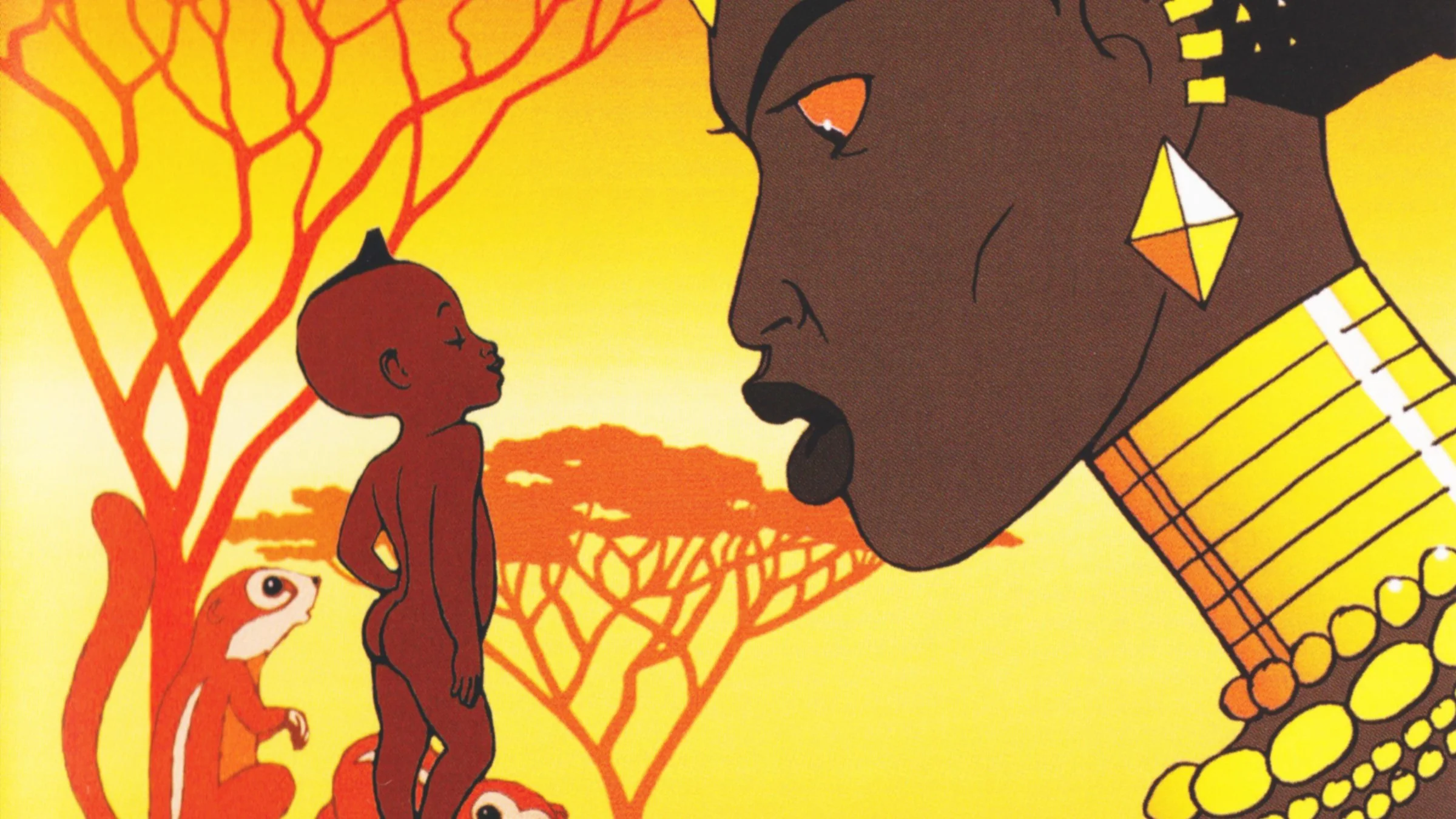
It is also hard not to appreciate the elegant ending, which ties all the threads together in an inspiring way. Ocelot offers an interpretation of the preceding events, turning metaphors into concrete meanings. The children’s fairy tale matures and takes on adult significance. And the stunning, vibrant visual style frames this story with the highest artistic quality. It’s the kind of ending that makes you want to applaud.

