
Horror Movies
Revisiting CRIMES OF THE FUTURE: Suffering as an Art Form
On one hand, Crimes of the Future is horror and nightmare; on the other, an essay and an intellectual exercise. It handles both exhaustively and boldly.


A coast somewhere at the end of the world. Apartments – hovels, a depopulated port town, a world as if just before a technological catastrophe or a moment after a zombie apocalypse. Something exceptionally unfortunate must have happened quite recently. Of course, as with every civilizational collapse (economic, health, war), someone had to benefit from it and effectively capitalize. Crimes of the Future.
One lost everything, another made a fortune. In the distance, one can see a laboratory of the future, a spaceship, or an interstellar yacht. David Cronenberg spreads before us only a cursory imagination, a micro-scale vision – using crumbs of information, scraps of the surroundings – we must fill in the rest ourselves (at our own responsibility).
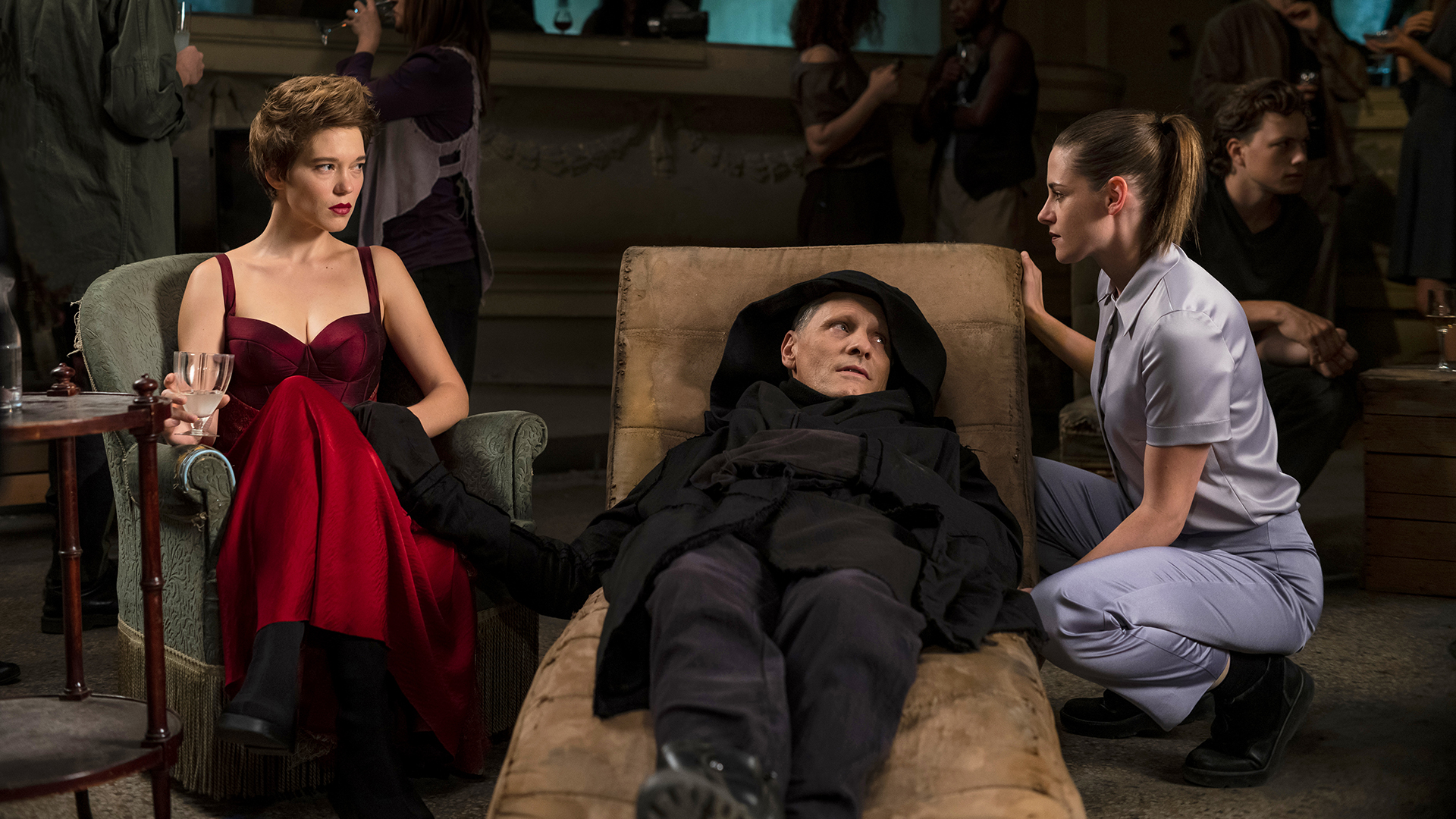
The most acute fear is caused by ignorance, and existential anxiety is the child of unclear concepts and the disturbance of values. Crimes of the Future explores this territory and enters into a dialogue with viewers. Is it allowed? Is it appropriate? Did they overdo it? How improbable is it and how improper is it?
In one of the tenements, the self-proclaimed Bureau of New Organs. Nearby, a grim lighthouse, in whose basement Saul Tenser (Viggo Mortensen) and Caprice (Léa Seydoux) stage their performances. These are not, however, painting exhibitions, art installations, or narcotic video sessions. Tenser and Caprice experiment with the body, reach for new technologies, poke around in human entrails. They believe it is the next Muse. Artistic surgery, suffering as a new form of art, the organism like plasticine. For Tenser, it is also something more than an aesthetic impression. It is also a form of rescue and seeking a cure.
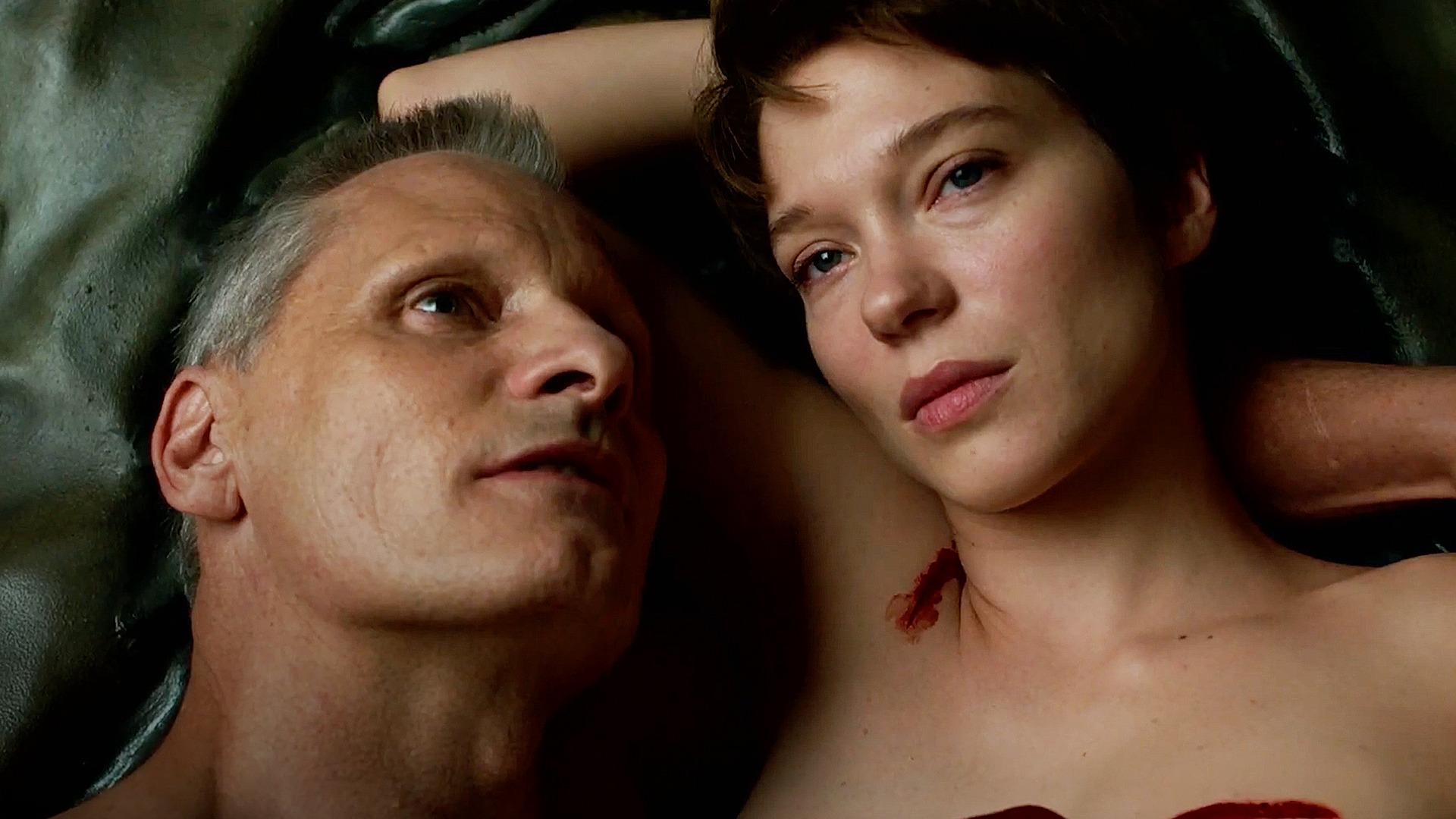
The man suffers quite severely (problems with swallowing, putting together even one sentence is a path through torment, a contorted posture). Daily sessions on a bony orthopedic chair, an IV drip on a bed straight from an Alien nest. He grows a new organ within himself, which is meant to soothe the piercing pain.
Not everything goes according to plan. Let’s invite guests, let’s sell tickets, we will cut it out in front of the audience, we will decorate it with a tattoo. A live cut, guts on the outside. Times have changed, so there is less shock in all of this, more cognitive curiosity. There was always something romantic in suffering. New body, new art?

In Crimes of the Future, David Cronenberg is less interested in weaving a classically understood intrigue and tying conflicts, and more in considerations and contemplation over the existing situation. This is cinema of dialogues and meditations. Philosophical reverie over humanity and what one does to be recognized as a human.
A detective (sooty shirt, torn pants, no badge) visiting Tenser and Caprice does not question even for a moment the legality of their activity, but comes to consider whether they are practicing art or not. What we are really dealing with. This is not Picasso nor Kandinsky, no other abstraction.
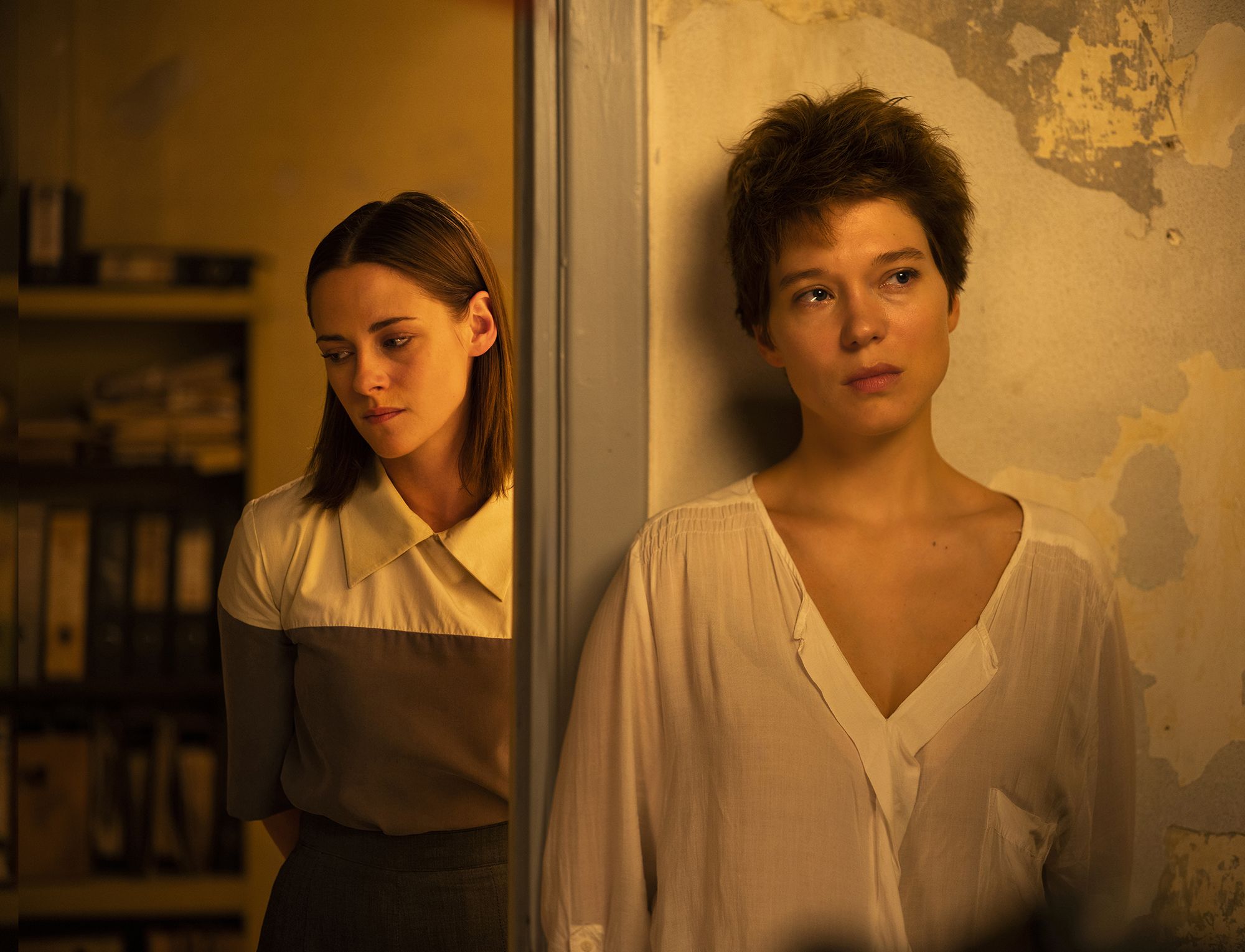
It is a live amputation. Cronenberg wonders what aesthetics is and what beauty is and reaches an extreme in his considerations. He does not fall into didacticism, he does not propose answers, he only spins a story, reaches for subsequent anecdotes and points of view. On one hand, horror and nightmare, on the other, an essay and an intellectual exercise. In both cases, exhaustively and boldly.
Another time, a dancer decorated with several dozen additional ears. Stop seeing, stop feeling, stop speaking. A pro forma move, a search for new methods of experiencing reality or ordinary manipulation. Perhaps it is ordinary torture and manis a canvas accepting everything upon himself. We will also meet a mother-murderer, but her act is not a zero-one matter. Judge for yourselves. Crimes of the future is cinema from the gray zone.

All of this is dreamed, impossible, hypothetical, and distant. The ethical dilemma is, however, factual, the questions are valid, and the boundary of decency is clearly crossed. Return is already impossible, the calibration of errors is not taken into account for even a moment; before Tenser and Caprice are only subsequent steps forward: to reach revelation, to experience borderline despair.
Every performance, every experiment, every new procedure is also an erotic experience from another dimension. Licking of lips, excitement, drive. That was not the goal, but that is the effect.

Full speed ahead. In one of the conversations, the statement is made that surgery is the new sex. Cronenberg thus comes full circle. Despite the toys of the future, wonders of technology, despite unexplored possibilities, man will constantly return to primary instincts and will satisfy them. It will always be about survival and passing life on.
They cannot be cut out, replaced, improved, or changed. This need sits too deep within us, no tool, no software will reach there. It does not matter how much man is in the machine. How much machine is in the man.


