
Review
TRIUMPH. In Search of Cosmic Artifacts [REVIEW]
In Triumph, Bakalova is given plenty of room to shine. She excels in the film’s comedic passages, reminding us of her natural magnetism and impeccable timing.

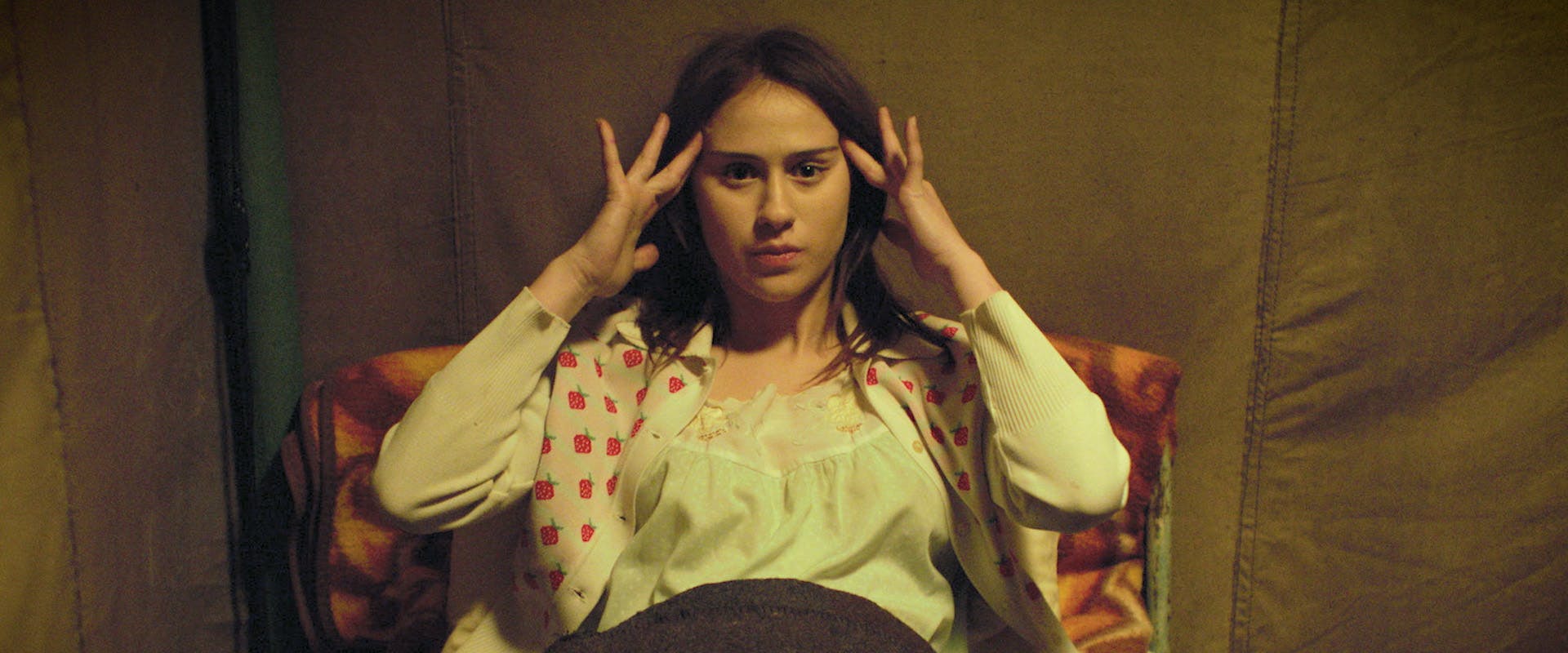
A hill in the middle of nowhere. On a grassy meadow, cows graze; off to the side, a few forlorn conifers sway. Suddenly, a military convoy emerges from behind the hill. Soldiers climb down from the trucks, accompanied by an extravagantly dressed woman. The men grab shovels and begin digging where she points. What are we dealing with here? Some strange exhumation? Postwar demining? This is how Triumph begins.
The Bulgarian directing-and-marital duo Kristina Grozeva and Petar Valchanov keep us in suspense for a while. They reveal their hand only when the colonel’s daughter enters the picture—Slava, played by Maria Bakalova. The girl spins carefree around her own axis, then ostentatiously collapses onto the ground, arranging herself into the shape of a cross. The soldiers immediately receive a new order: dig where Slava has indicated. Moments later, a sizable stone comes into view—the first of the artifacts left behind in Bulgaria by aliens.
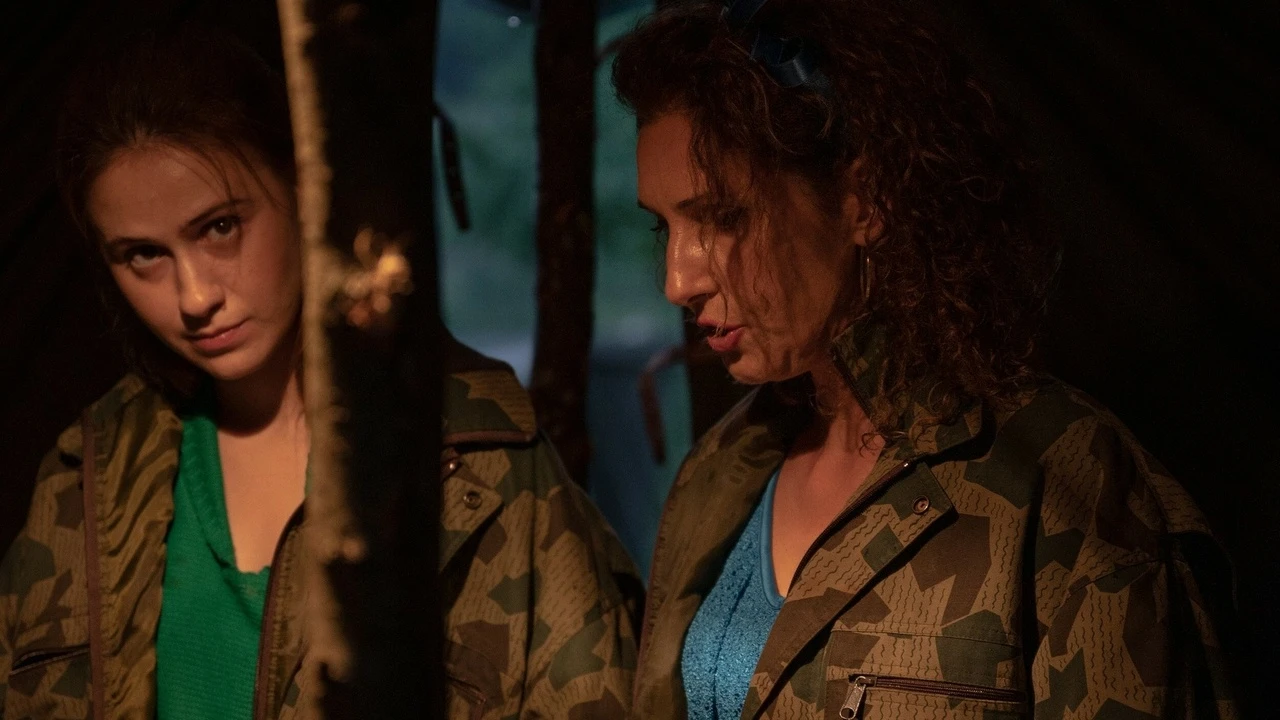
Hard as it may be to believe, Triumph is based on a true story. In the early 1990s, the Bulgarian Ministry of Defense organized excavations in the town of Tsarichina. These, however, were highly unusual digs—led not by archaeologists, but by a group of clairvoyants who managed to wrap several influential military officers around their fingers. The operation, codenamed “Ray of Light,” lasted nearly two years. During that time, the clairvoyants repeatedly changed their theory about what lay hidden in the hills of Tsarichina.
First it was supposed to be an otherworldly creature—a primordial, yellow-haired ape; then a mysterious figure from the Bible; later a galactic hermaphrodite who would overturn Darwin’s theory; and finally, the legendary treasure of Tsar Samuel. After a 160-meter tunnel more than 70 meters deep had been drilled, the work was halted due to financial complications. The hole was filled with cement, and the whole affair was quietly forgotten.
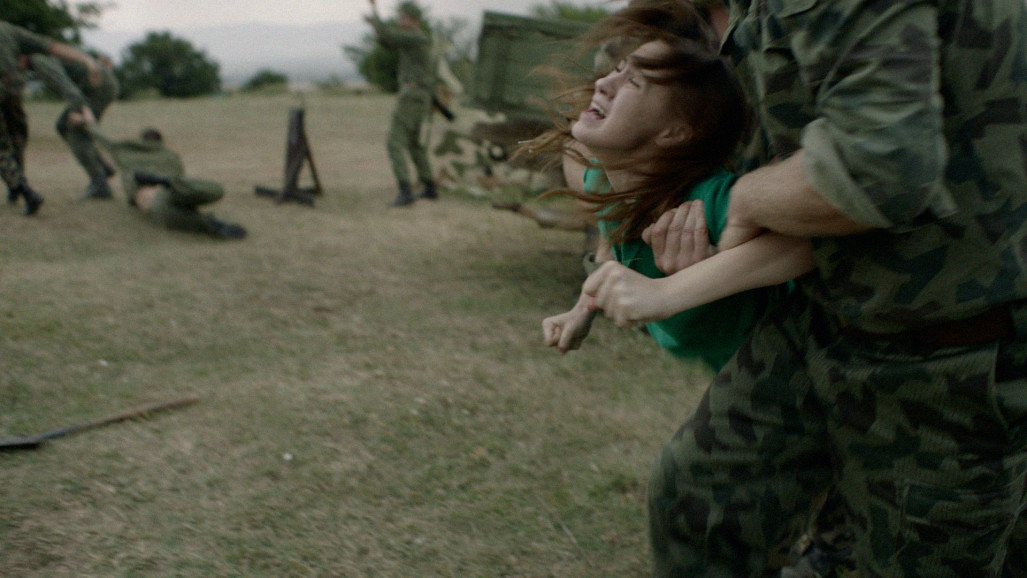
Grozeva and Valchanov distill the essence of this bizarre story, weaving a tale about power and the manipulation that helps power endure. The timing is no coincidence. In 1990, the People’s Republic of Bulgaria officially transforms into the Republic of Bulgaria. Communist officials tremble for their positions, unaware that they are about to win the first democratic elections. A drowning man, as we all know, will clutch at a razor—something not only Bulgarian conspiracy theorists have proven. When rational and conventional solutions fail, eyes naturally turn toward options from an entirely different order.
Cosmic forces enter the game, along with esotericism, tarot, voodoo, God, and sometimes the Devil—as in the case of Nazi Satanists who believed almost until the very end that the course of the war could be reversed through occult rituals. At the center of this whole whirlwind, Grozeva and Valchanov place the quintessence of innocence: a shy girl stepping into adulthood. They complicate matters in an intriguing way, however, by playing with science fiction conventions and granting the heroine a hint of parapsychic powers. Or is that merely how it seems?
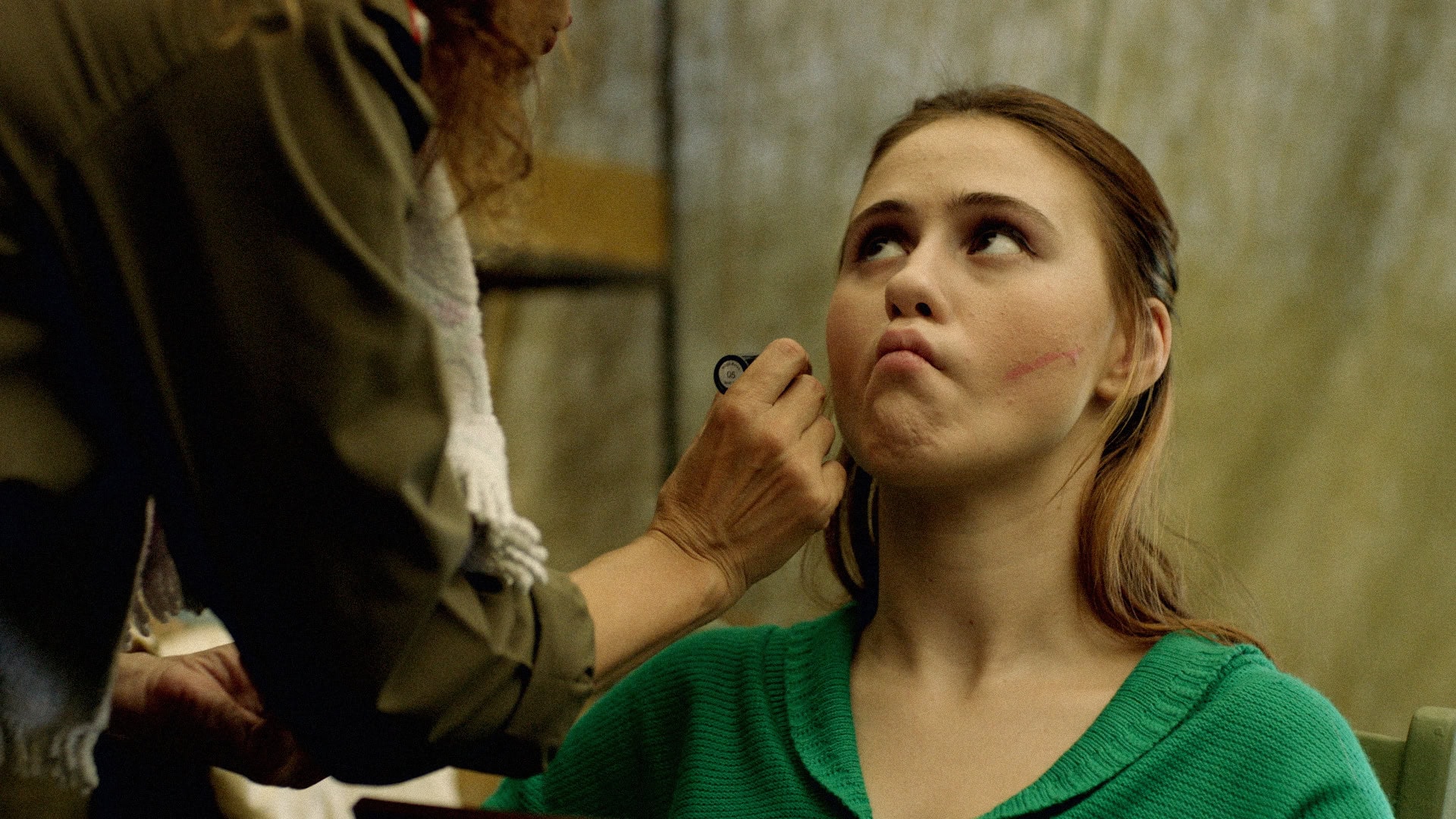
The true spiritus movens of the project is, of course, Maria Bakalova. For the Bulgarian actress, this is her first film shot in her homeland in nearly four years. After the Hollywood springboard that was Borat Subsequent Moviefilm, Bakalova settled into the U.S., appearing in several less (The Bubble) or more (Bodies Bodies Bodies, The Apprentice) successful productions. Her return to the Balkans is motivated by the quality of roles: in her home country, the 29-year-old can count on something more interesting than “prostitutes linked to the Russian mafia”—roles to which the careers of actresses from Central and Eastern Europe are so often reduced.
Bulgarian cinema allows her to spread her wings, and she repays it handsomely—not only with the quality of her performance, but also with the built-in prestige of being a production starring a Hollywood name, which she automatically confers on any film she appears in. In Triumph, Bakalova is given plenty of room to shine. She excels particularly in the film’s comedic passages, reminding us of her natural magnetism and impeccable timing—two qualities that earned her America’s affection and an Oscar nomination six years ago.

Watching Bakalova’s terrific performance, it’s hard not to wonder whether Triumph might have worked better had the balance between comedy and drama tilted more decisively toward the former. A story about digging a hole in search of cosmic artifacts practically begs to be turned into a grotesque comedy of the absurd—a merciless satire of a collapsing system willing to do anything just to avoid being consigned to the dustbin of history.
Instead, Grozeva and Valchanov hit the brakes and keep their feet on the ground, as if the inspiration drawn from a true story compelled a certain degree of seriousness. A pity—because in this case, a bit of lift-off might have been in order, for the glory of Bulgarian cinema.

