Horror Movies
Dead Ringers Revisited: A Chilling Study of Human Obsessions
With Dead Ringers, David Cronenberg added yet another intriguing and meticulously crafted study of human obsessions and pathologies to his filmography.

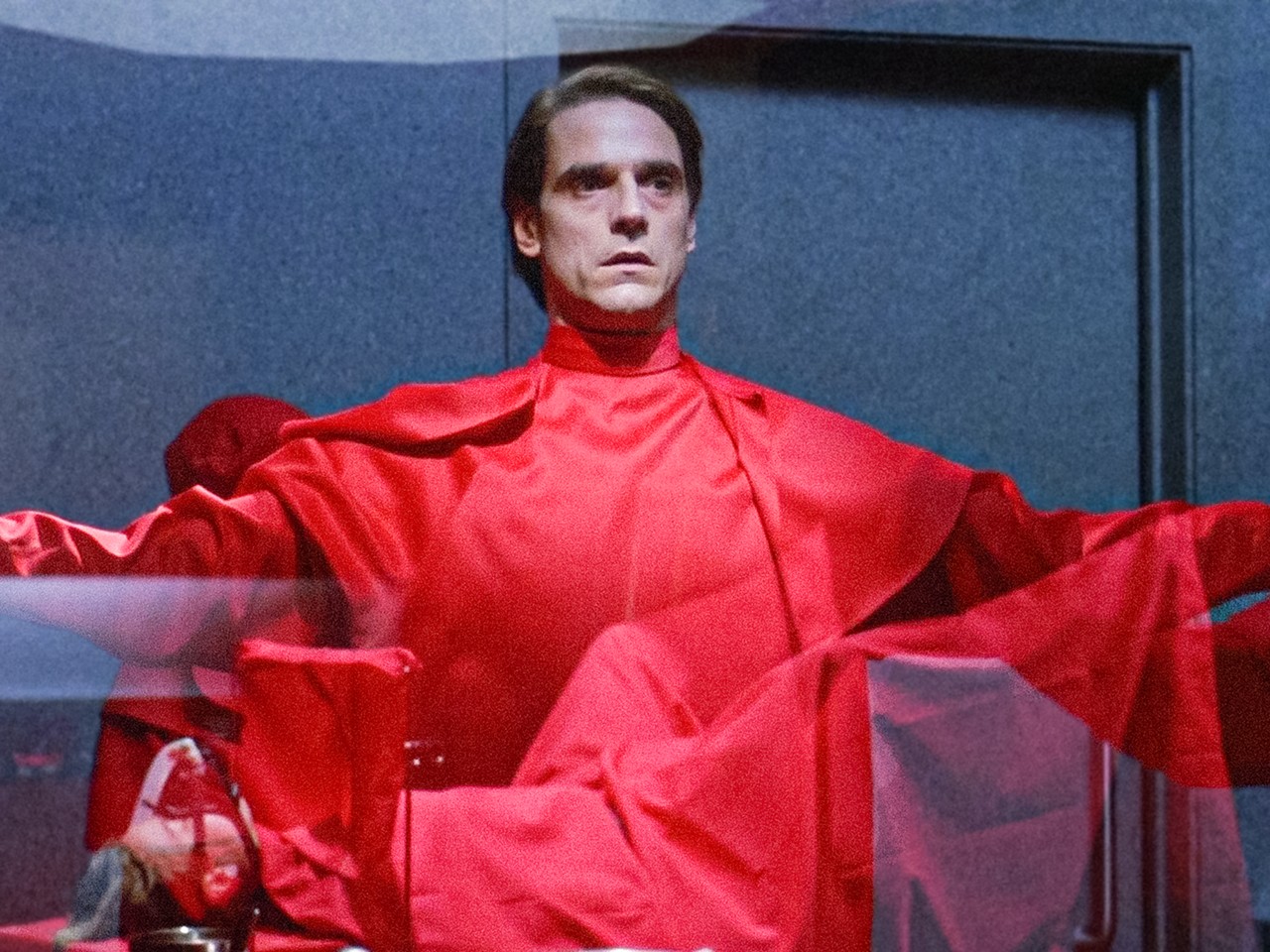
In 1991, Jeremy Irons, who played the lead role in Dead Ringers, received his first (and so far only) Academy Award for Best Actor for his performance in the drama Reversal of Fortune. During his speech, he expressed gratitude to the people involved in the production of the film as well as to those close to him. Toward the end he said: I would also like to thank – some of you understand why – David Cronenberg.
These words were followed by applause, after which the actor finished his speech. Although the Canadian director he mentioned had no hand in the making of Reversal of Fortune and was not responsible for any element of that film, the audience gathered at the ceremony understood perfectly well what Irons meant. Years later, recalling that ceremonial evening, he commented on his own words in an interview with Jian Ghomeshi on CBC Radio: I felt that the role he created with me in Dead Ringers was largely a contribution to my Oscar win.
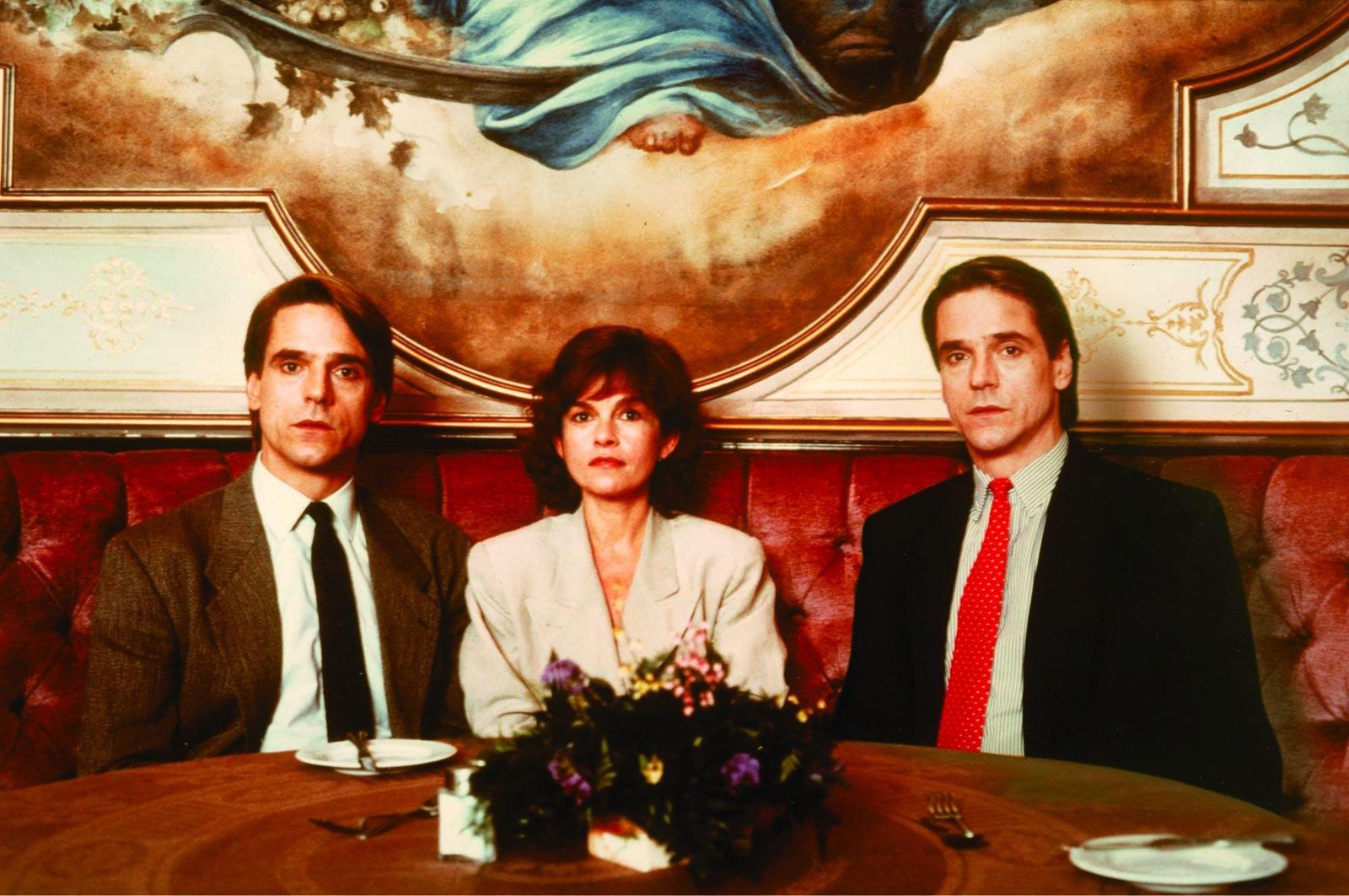
While preparing to make Dead Ringers, David Cronenberg watched a great many films about twins made up to 1987 in order to see how other filmmakers had approached the subject. It turned out that the vast majority of these productions could be divided into two categories: either the siblings’ identical nature served as a pretext for jokes in broadly defined comedy cinema, or the brothers were as different from each other as possible. Most often, one twin was a psychopathic murderer with an eyepatch (or another sinister attribute), while the other embodied goodness, gentleness, and nobility.
In every case, in the opinion of the director of Dead Ringers, these were incomplete characters who could be treated at most as symbols, because they lacked credibility. Cronenberg set himself against these patterns. Beverly and Elliot Mantle were meant to be fully realized characters with complex personalities, full of subtlety and shades of gray. For the actor, this meant having to present the twins as beings differentiated within their similarity.

This was not the only challenge facing the potential performer of the leading roles. Although the director’s name was well known and his most recent film – The Fly with Jeff Goldblum – had been awarded an Oscar the year before, not everyone was ready to act for the king of venereal horror. Among those who refused were William Hurt and Al Pacino, and some journalists even mention several dozen actors who, for various reasons, did not want to play the controversial gynecologist twins. David Cronenberg saw this type of role as a potential threat to the physically oriented screen persona of some movie stars.
Moreover, embodying the role of a female doctor – indeed, even two of them – could clash with the canon of masculinity accepted in the 1980s. Jeremy Irons, ultimately chosen by the director, also approached reading the script with reserve. Reportedly, every woman he told about the proposed role advised him against accepting it. He decided only after screen tests and after familiarizing himself with the technical details of shooting scenes involving him.
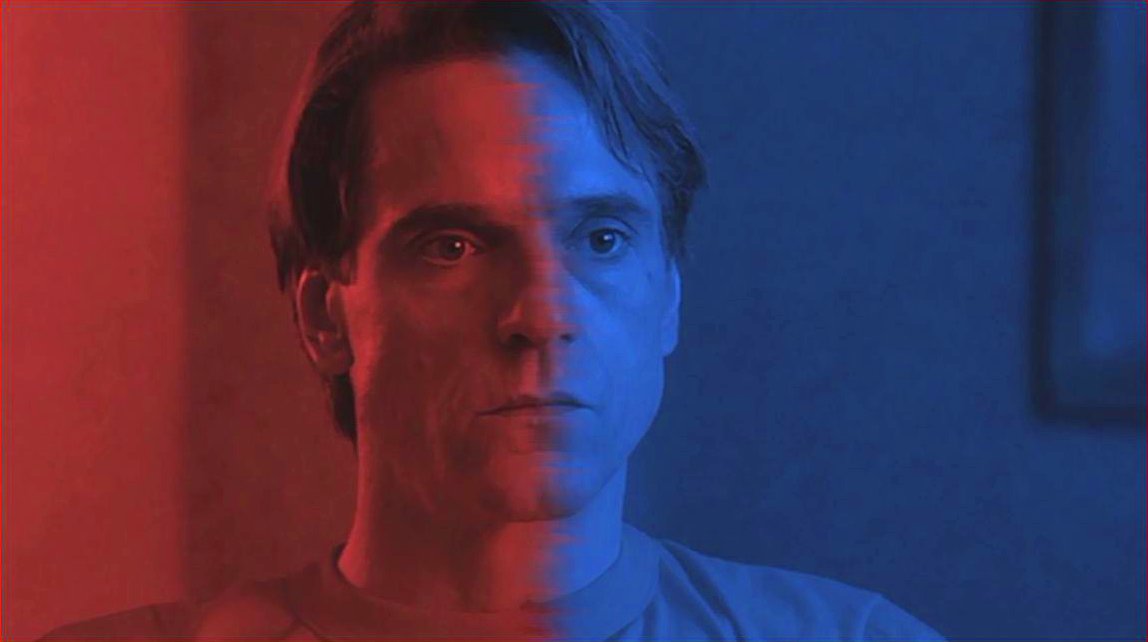
The actor treated the roles as if he were playing two sides of the same character. As he himself says, with extensive experience gained from working in the theater, he could smoothly switch between the devious Elliot and the gentle Beverly, while maintaining the precise timing necessary when recording dialogue with himself. Although it is clear from the outset which brother is the bold, self-confident manipulator and which is the introverted bookworm, Irons presents neither as better or worse. He moves through all the shades of gray, showing that both have their weaknesses and moments of oblivion.
Particular emphasis is placed in the film on the fact that there was something abnormal about the twins’ closeness. Living and working together, in which they sometimes did each other favors by swapping patients (without informing them), is unusual, but in the brothers’ view entirely acceptable. Similarly, passing lovers between themselves, treating them as a source of sensations shared by the Mantles, is taken for granted.
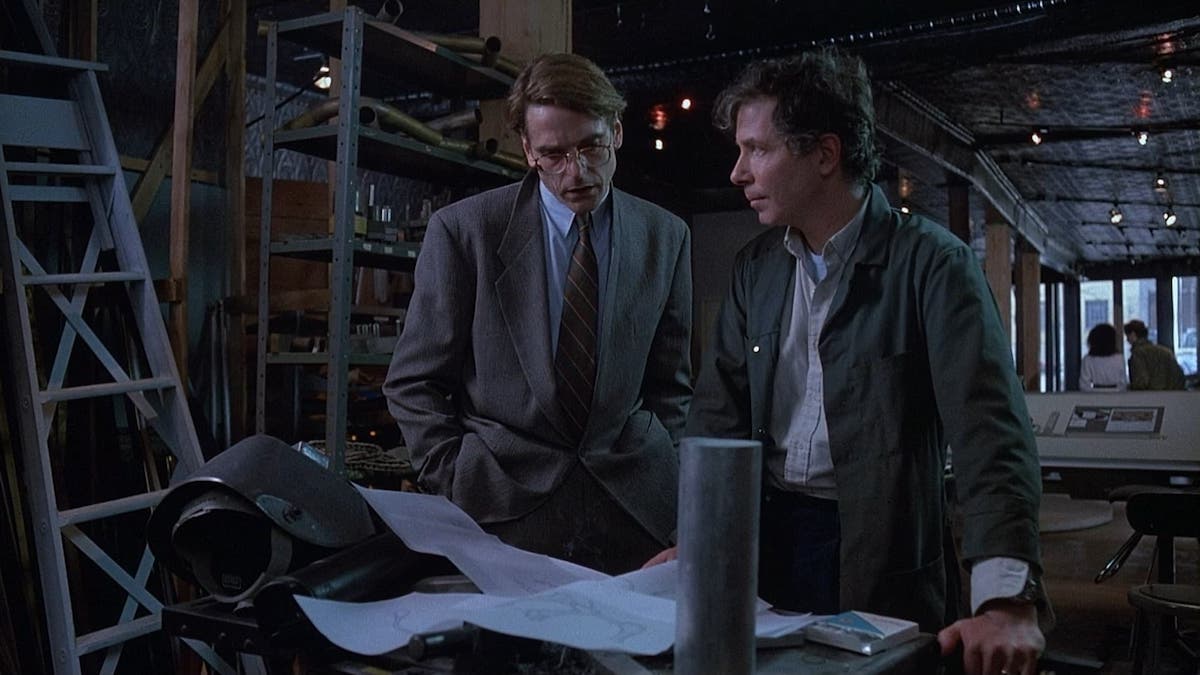
For this reason, the character of Claire Niveau (Geneviève Bujold) becomes a bone of contention for the brothers. A woman by profession an actress, she is initially one of Elliot’s patients. When it turns out that her reproductive organs have an unusual structure, both brothers begin to take an interest in her. Beverly is fascinated by her and feels that a bond has formed between him and Claire. Her fondness for barbiturates also spreads to the twins, as a result of which they slowly begin to lose touch with reality and become incapable of working – at least in the conventional sense.
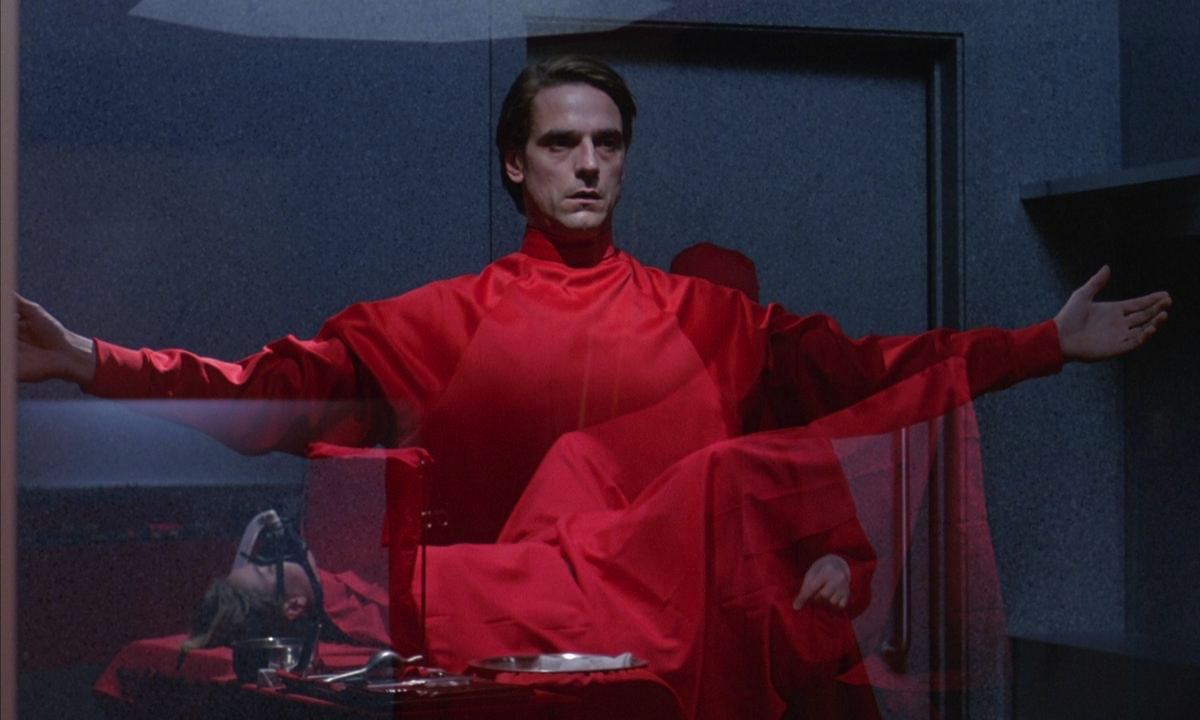
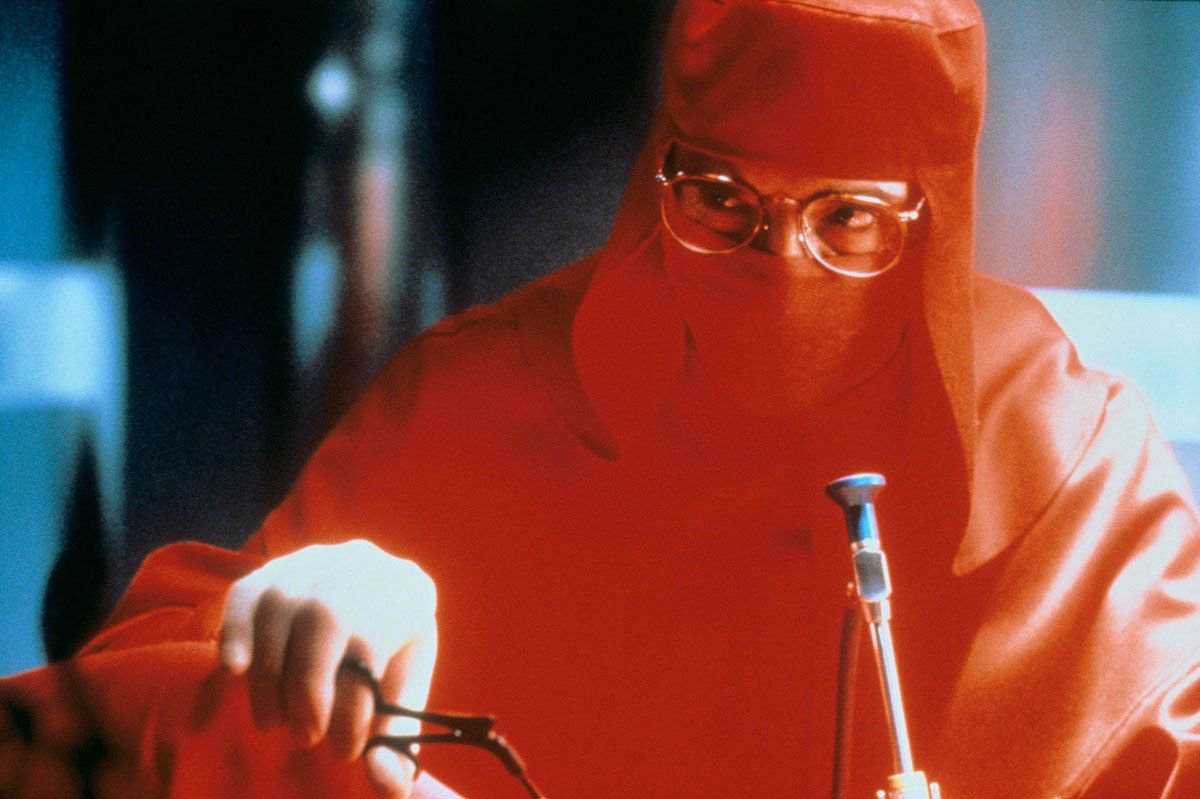
Through regular contact with a drug-addicted woman with an atypical uterus, the Mantles experience a crisis of identity. The inseparability of the protagonists is called into question. In one of their dreams, Claire bites through the fleshy, symbolic umbilical cord connecting Elliot and Beverly. The presence of a woman in the brothers’ lives also translates into their work – from a niche artist, one of the brothers commissions a set of instruments resembling torture tools for procedures on mutated women.
Most terrifying of all, however, is the fact that a large part of this story actually happened. The prototype for the film twins were the brothers Stewart and Cyril Marcus. Both studied medicine, which they completed with distinction in the 1950s and received academic titles. Soon afterward, they began gynecological practice and also edited a medical textbook. They were affiliated with one of New York’s hospitals and additionally ran private practices. When Cyril separated from his wife, they moved into an apartment in the same building as Stewart. When his girlfriend then left him, the twins moved in together.
Reconciling work in two hospitals with private practice became increasingly difficult for them over time. Accounts from other doctors and patients indicate that at least one of the Marcus brothers had a problem with drug abuse, which affected his judgment and quality of work. One of the twins’ former colleagues recalls that they appeared completely drained of emotion, as if their minds were somewhere very far away. Over time, Cyril and Stewart began missing shifts and failing to show up for scheduled appointments, until hospital authorities suspended them from their duties.

On July 17, 1975, a building superintendent, to whom residents had complained about the stench coming from the Marcus apartment, opened the door and found their bodies in an early stage of decomposition, lying among piles of trash, spoiled food, and excrement. An autopsy showed that Stewart had died from a barbiturate overdose; the cause of Cyril’s death was not unequivocal.
Dead Ringers stands in opposition to the popular portrayal of twins divided in black-and-white terms into evil and good. The director aims for half-tones, attempting to present the brothers as two interpenetrating personalities full of differences and similarities. In this respect, the film truly constitutes an exception to the rule and perhaps that is why it is not very popular.

Thanks to imperceptible (though from 1988!) special effects, the illusion of watching twins is complete, and Jeremy Irons in the dual role performs perfectly, with sensitivity and naturalness. The challenge posed to him by David Cronenberg quickly bore fruit. The very next film earned the actor an Academy Award for Best Actor for Reversal of Fortune.
The director, in turn, added another intriguing and meticulously crafted study of human obsessions and pathologies to his filmography. Compared with Videodrome or The Fly, Dead Ringers is rather restrained formally, closer to psychological drama than to body horror.

Nevertheless, there is here Cronenberg’s cold and penetrating observation of the worst human traits, all emotionally sterile, leaving the viewer a gateway to their own assessment of the characters’ actions. Elliot and Beverly Mantle are in no way less interesting than Max Renn or Seth Brundle, and Jeremy Irons’s tour-de-force interpretation of the twins constitutes a little-known example of his versatility and craftsmanship.
The double role in Cronenberg’s film was undoubtedly a formative experience for him, thanks to which cinema gained perhaps the most ambiguous and nuanced brothers in history.