
Review
ITALIAN STUDIES. An Ambient Vanessa Kirby
Italian Studies by Adam Leon, a film that could most succinctly be described as “a movie in which Vanessa Kirby wanders around New York in a state of amnesia.”

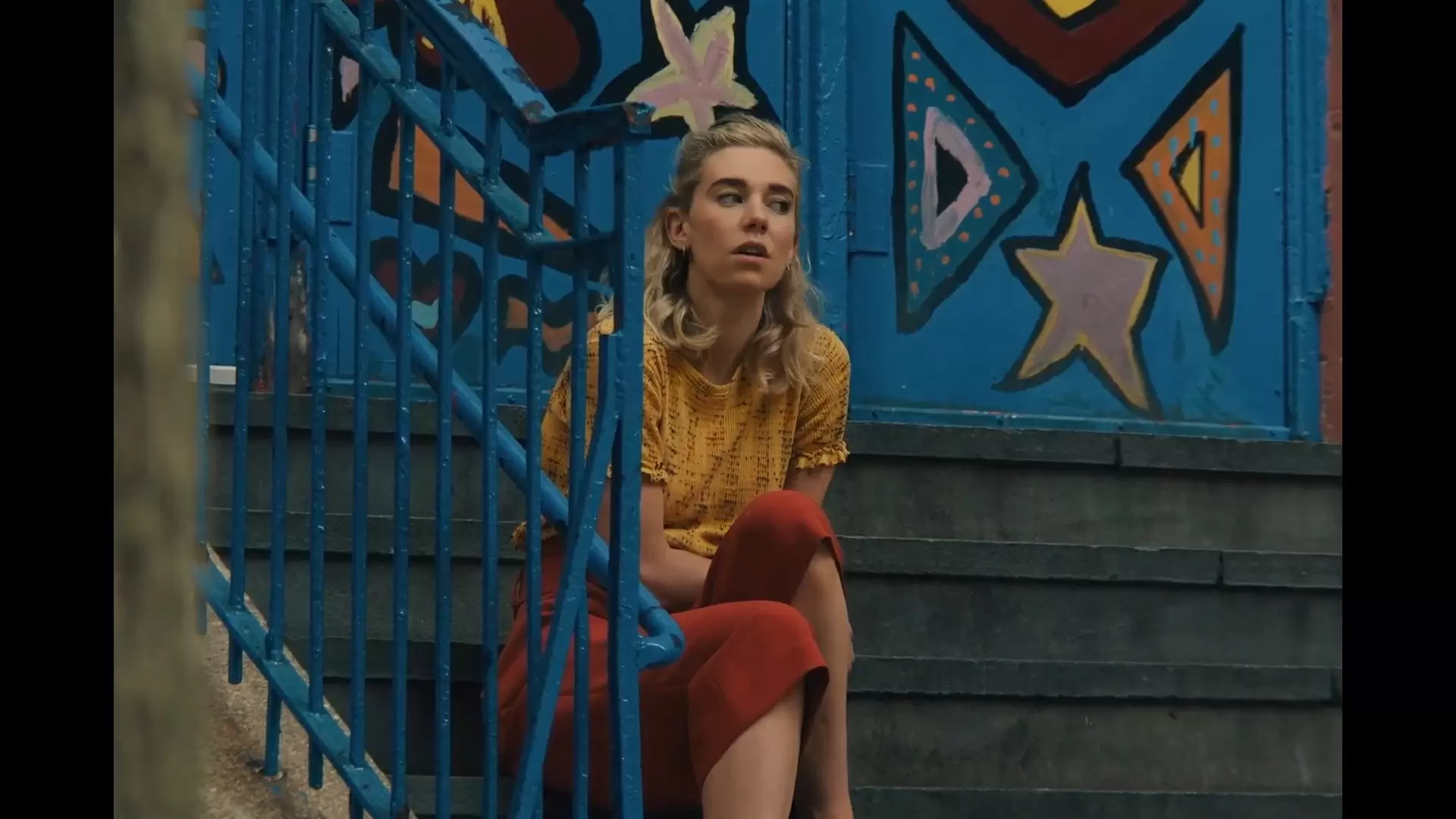
We’ve all probably experienced not recognizing someone or being unable to recall a situation someone tells us about. This kind of mundane awkwardness, when used in narrative art, is often more than just a slip of human memory—it usually serves as a starting point (or at least a pretext) for a story built around themes like memory loss, split identity, or the protagonist’s paranoia. That’s roughly how Italian Studies by Adam Leon begins, a film that could most succinctly be described as “a movie in which Vanessa Kirby wanders around New York in a state of amnesia.” To the starting point already described, we can add a few more details.
We meet Kirby’s character without knowing anything about her—her name and profession are revealed only gradually, as the fragmented narrative unfolds. In the opening sequence, we see her at a recording session with her husband and a young girl, whom the protagonist doesn’t recognize but who clearly knows her. Their conversation triggers the flashback that forms the main body of the film, showing how the two women actually met. Spoiler alert: the main character suffers sudden amnesia and begins wandering through the city, unaware of who she is or where to go, and starts forming random connections with people she meets. 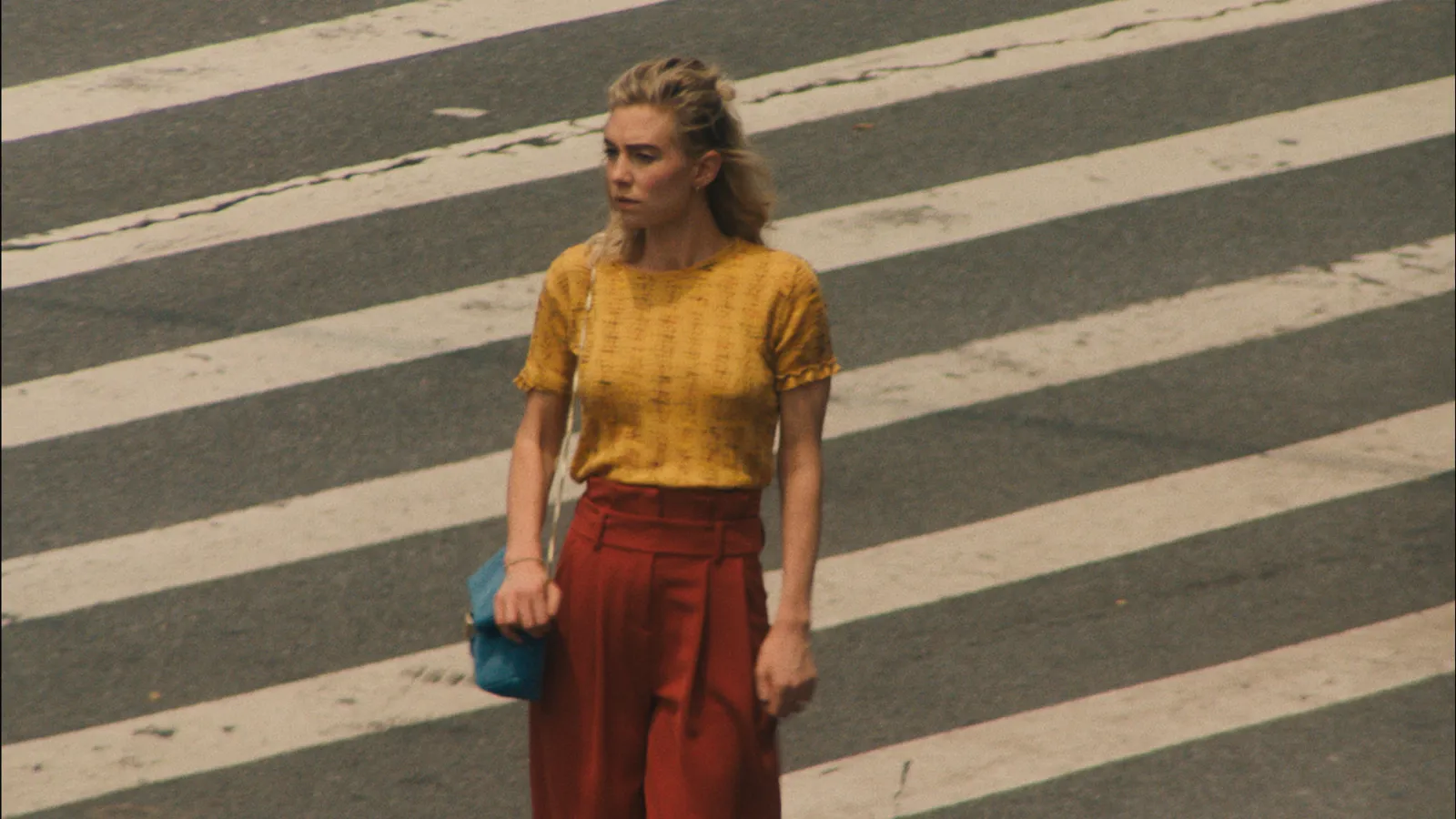
From the fragmented narrative emerges a gently poetic tale of existential turmoil, searching for meaning, and a sense of being trapped or lost in reality—metaphorically, but in her case also very literally. Yet arguably more important than the story itself is Italian Studies’ form—meandering, made up of dreamlike scenes shot in the urban chaos, with a camera that alternates between intimate close-ups of Kirby and wide, distancing shots. At times, Leon’s film evokes memories of iconic urban sequences with Jeanne Moreau from Elevator to the Gallows and La Notte, especially since Vanessa Kirby succeeds in crafting characters just as intriguing as Moreau’s. Cinematographer Brett Jutkiewicz seems almost a co-author of the film alongside the director.
If Italian Studies stands out as an intriguing auteur project, it’s thanks to its atmospheric cinematography—creating a drifting sensation that mirrors the protagonist’s experience—and Kirby’s ambiguous and engaging performance, which fits perfectly with the loose, street-level structure. One might even argue that the essence of Italian Studies lies in this experience of drifting through the city, with the narrative skeleton merely serving as a framework to justify the ambient form. 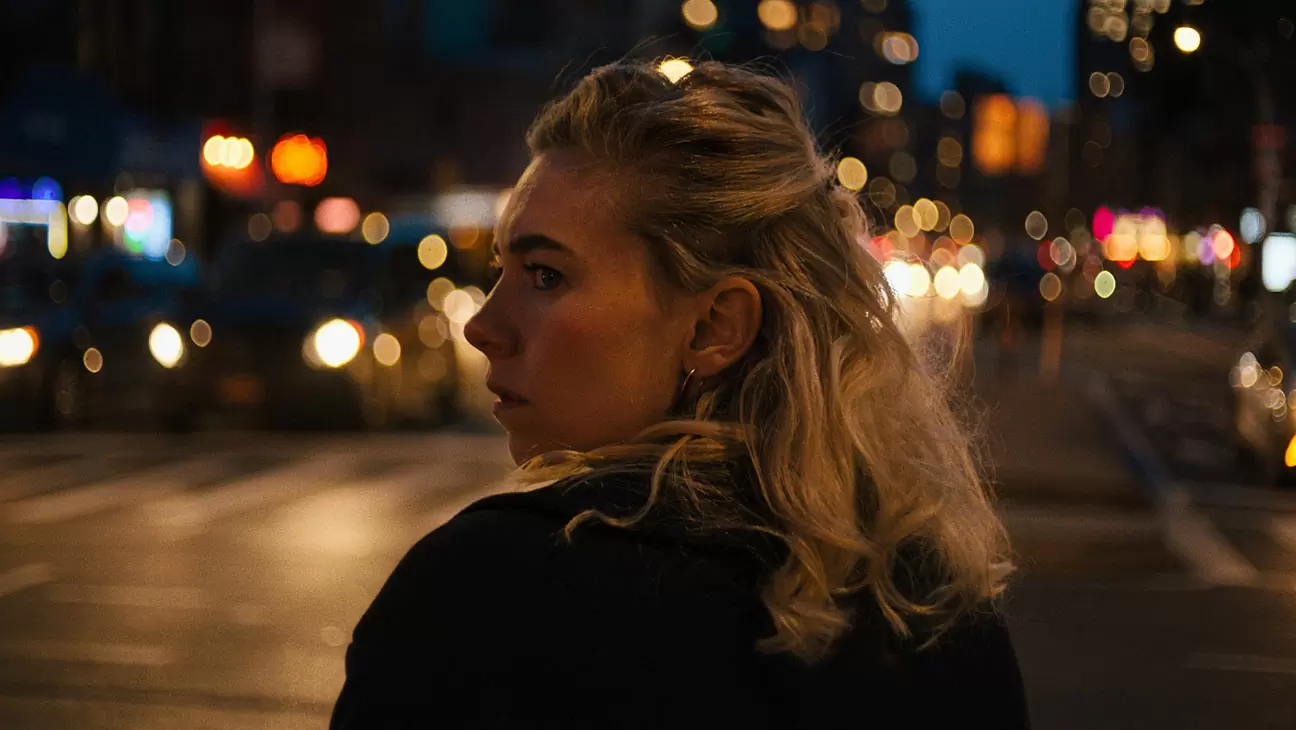 Because when it comes to the plot, things are more hit-or-miss—it tends to veer into cliché. In one scene, Alina talks at a party about a short story from Italian Studies in which “a young guy smokes a lot of weed and has life problems,” prompting a quick-witted teen to reply that it’s a pretty stereotypical and uninspired take. The same critique could be aimed at Leon’s film—the amnesia motif feels more like a convenient excuse for the formal experimentation, providing a few easy mechanisms for transitions and loose narrative connections. The creators take full advantage of these devices, but there’s a sense that they don’t actually say much about the protagonist herself.
The use of a flashback as a framing device tied to a conversation memory is somewhat disappointing—it immediately reduces the viewer’s sense of confusion and essentially defines the story’s ending upfront. All the dialogues and situations Alina is drawn into reveal very little about her inner feelings. There’s not even much of a suggestion that behind Vanessa Kirby’s gaze—at times empty, at times hypnotic—there’s anything more complex going on than what we see on the surface. Every aspect of the character is spelled out explicitly, leaving very little in the realm of suggestion or interpretation (which is usually the most interesting part in such a poetic style).
The subplot involving the teenagers, led by Simon, is more compelling. They’re given space to deliver partially improvised monologues and dialogues, from which the director, along with Alina, tries to extract something resembling the spirit or voice of a generation. This comes across as surprisingly natural and unforced, which is a credit to Leon’s ability to work with young people, as well as to the authenticity of the nonprofessional actors he cast in these scenes. This thread of teenage reflection essentially becomes a second, parallel story—and that’s one of the issues with Italian Studies: otherwise well-executed scenes with the young cast feel like they belong to a different order, and their loose connection to the main plot shows its seams.
Still, that’s a detail only nitpicky critics are likely to dwell on—it doesn’t fundamentally disrupt the film’s flow, especially in the second half, when more puzzle pieces are already in place.  Italian Studies is a rather curious case of a film that is both highly formulaic and built on a fairly uninspired premise, yet at the same time captivating—occasionally even absorbing—thanks to its leisurely, tangled structure. It would certainly lose much of its merit without Vanessa Kirby, who carries it with her charisma and solid craft, and in return receives plenty of camera attention and, with it, room to deliver an unforced showcase of her acting talent.
A showcase in a visually beautiful and often interesting film that nonetheless ends up somewhat disappointing in the straightforwardness of its content. But maybe, in this case, formal beauty comes at a price.

