Horror Movies
DEAD OF NIGHT: An Excellent Nightmare You Will Want More Of
And what of fear in Dead of Night? someone may ask. Fear not—it’s there. At first hidden, it gradually asserts itself, waiting for the opportune moment.

Horror anthologies have no equivalent in other film genres. One will search in vain for an anthology action film, anthology drama, or anthology historical epic. Attempts continue to be made, yet they do not bring about a revolution leading to the birth of a new subgenre. Occasionally one encounters a comedy composed of shorter stories (such as Four Rooms), a mere oddity, a curiosity, standing somewhat outside the genre.
Dead of Night
With anthology horror it is different. It has its own tradition; we distinguish the period when it celebrated its greatest triumphs (the turn of the 1960s and 1970s was rich in such productions, the most famous being Kobayashi’s Kwaidan and the horrors of the British Amicus studio), and each new such film is greeted with the hope that a work as successful as the finest of its kind has emerged. The two entries in V/H/S and the somewhat earlier Terrifier have been enthusiastically received by genre fans, though not necessarily in terms of each individual story.
Such is the charm of these films and, in a way, their hallmark—even if the quality of the segments is uneven, the film under review is something more than the sum of its stories. What matters more is the impression it leaves behind and its concluding twist.
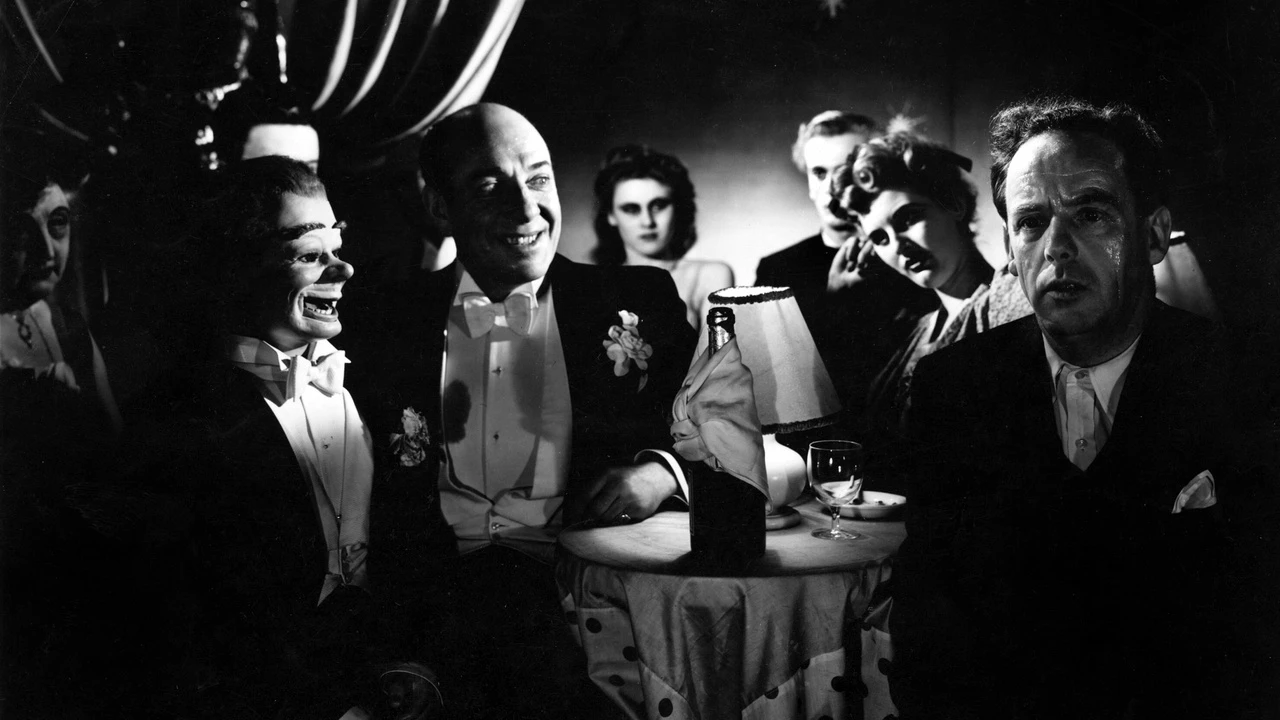
Dead of Night (1945), from the famed comedy-specializing Ealing studio, is not the first horror anthology—with all due thanks to the German Expressionists for their invaluable legacy—but it is certainly one of the most famous, a model for future horror anthology makers. Directed by Alberto Cavalcanti, Basil Dearden, Robert Hamer, and Charles Crichton (who more than forty years later would direct A Fish Called Wanda), it is, as one sees, the product of a collaborative effort common to such projects. And it begins quite innocently, though with hints that something ominous and inevitable hangs over the characters.
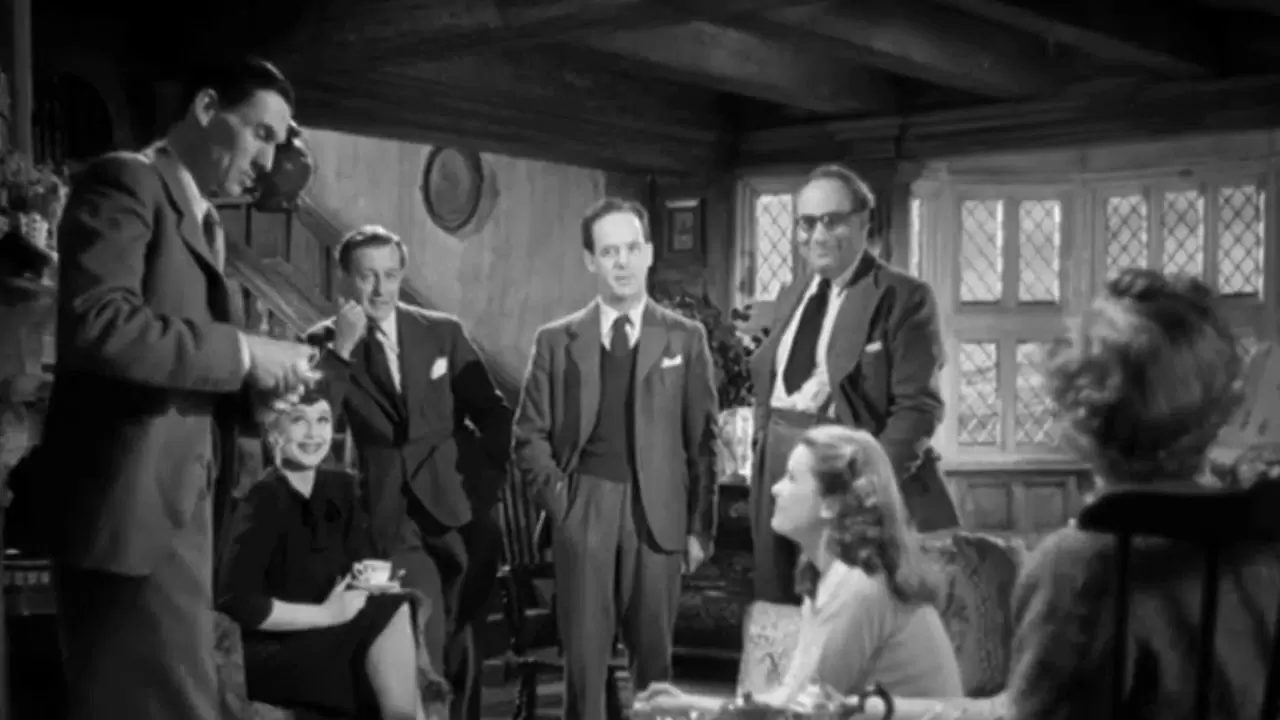
Architect Walter Craig arrives at country estate owner Eliot Foley’s retreat to spend the weekend drafting plans for expanding the house.
Yet from the first moments he senses that he knows the place and the guests gathered there, despite never having been before. It turns out that his arrival and everything that follows has dreamed him many times, only to become a nightmare. The assembled guests, surprised by Craig’s confession, are more amused than frightened, while one of them, Dr. Van Straaten, attempts to rationally explain Craig’s knowledge and his prophecy of a terrifying ending. Meanwhile, Foley’s friends begin to share incredible tales among themselves, daring the psychiatrist to provide sensible explanations.
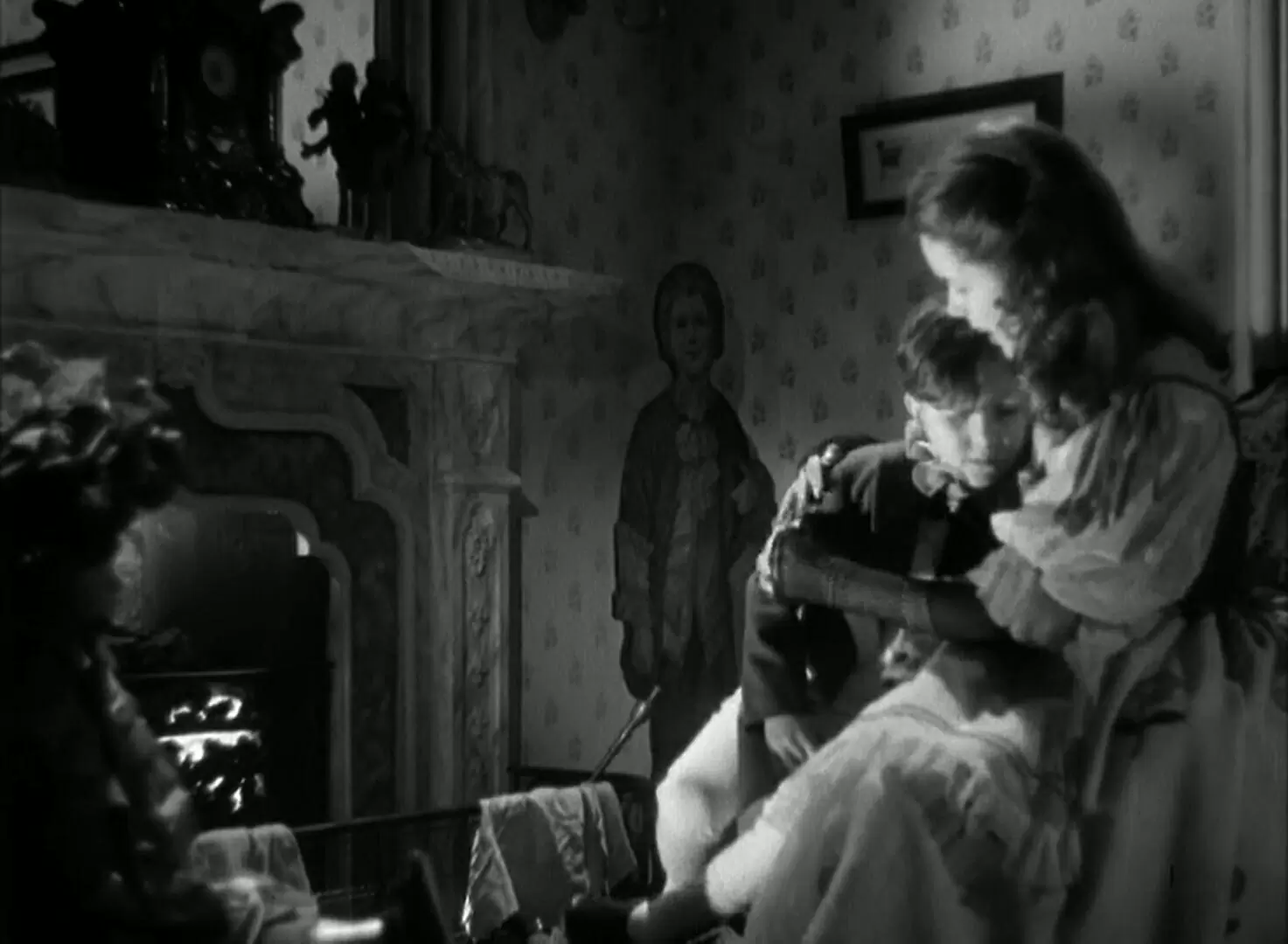
The first story concerns a wounded rally driver who, while in hospital, experiences a vision that ultimately spares him from certain death. In the second, a young girl at a holiday party encounters the ghost of a murdered boy. Next, we watch a man unable to free himself from the spell of an antique mirror, a gift from his future wife. Has he gone mad, or does he truly see something in the reflection he should not? The fourth tale, a fantastical humorous vignette, recounts the rivalry of two friends—professional golfers—for the affections of a beautiful woman. Events take an unexpected turn when one of them dies.
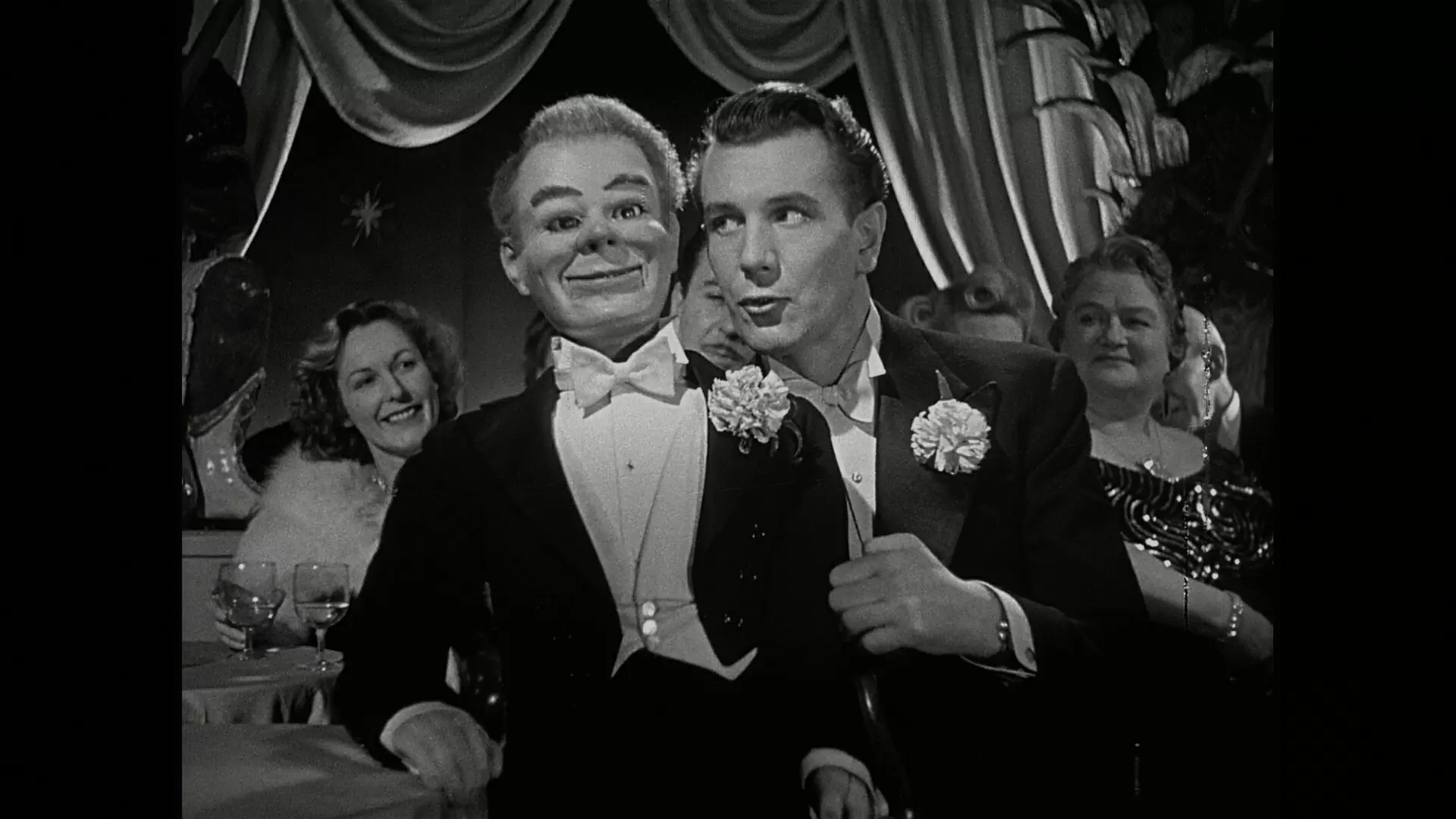
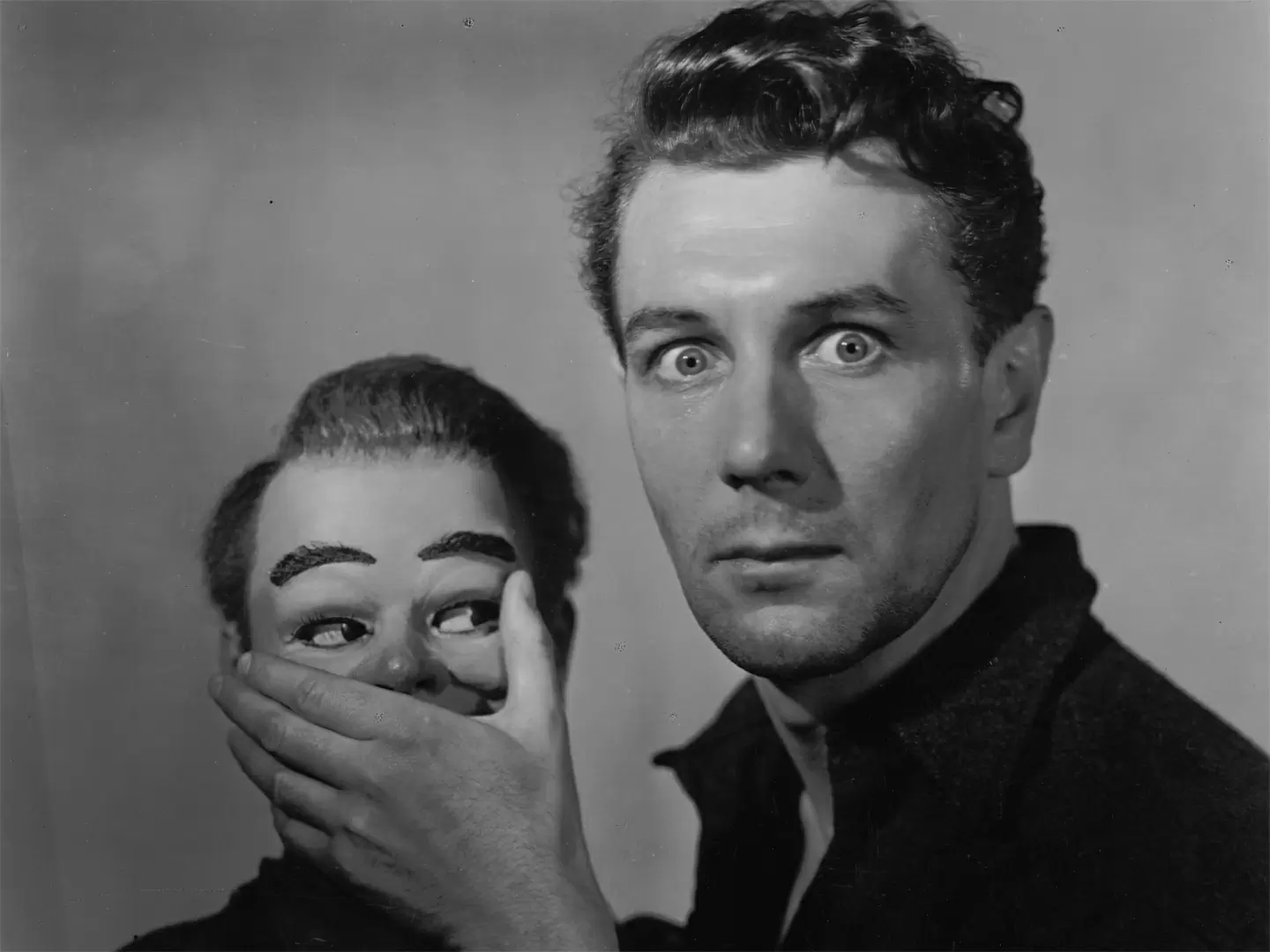
Dead of Night is best known for its final story, in which a young ventriloquist is accused of attempting to murder a fellow performer. His puppet, Hugo, may prove the key to his freedom. In the finale we discover Mr. Craig’s fate.
If one were to judge Dead of Night solely by the quality of its stories and the filmmakers’ ability to frighten, the result would not be astounding. The first two segments are mere sketches, scenes that lack development and end the moment the protagonists realize something uncanny has occurred. Only the third and fifth tales are fully realized horror stories, expertly paced with escalating tension and a shocking climax, but between them we have a light, amusing anecdote that momentarily spoils the aura of mystery.
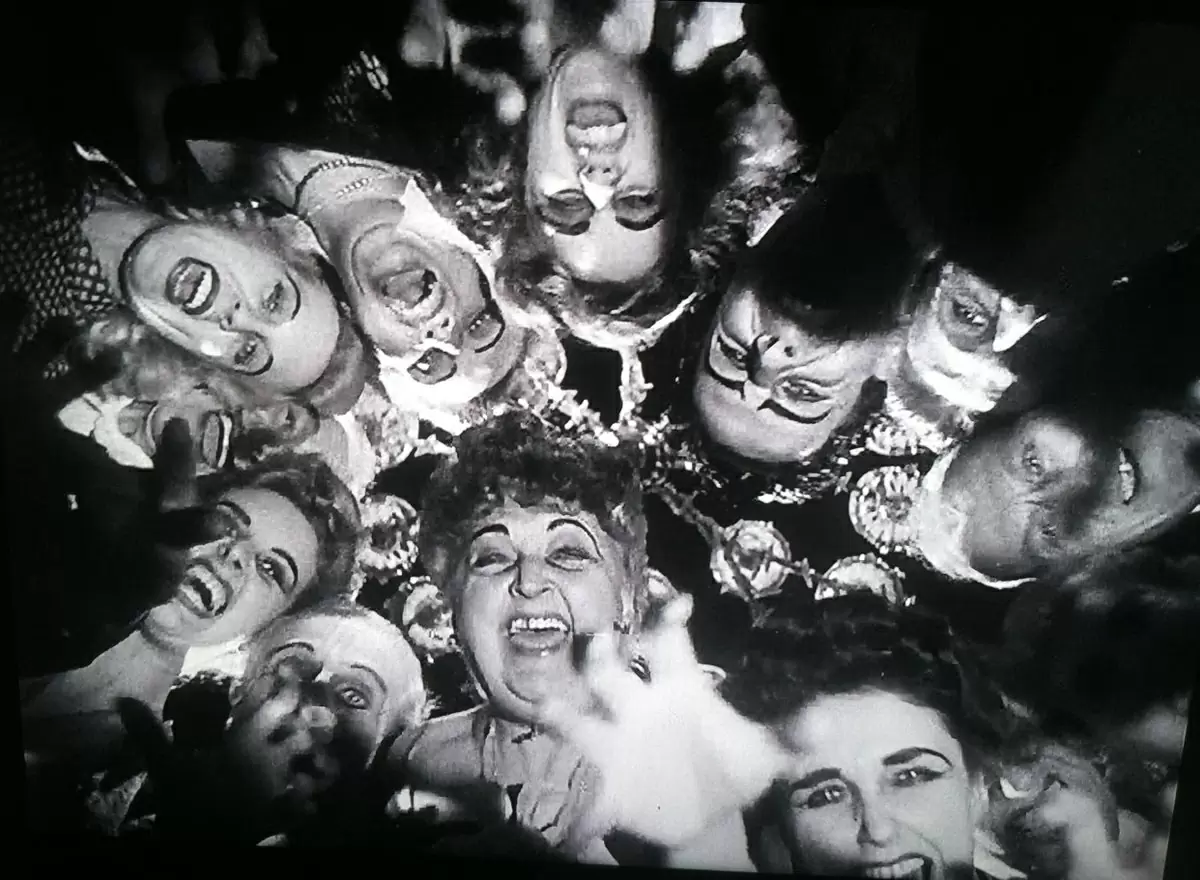
One can, however, view the whole differently—the opening serves to build up to the first burst of the uncanny, then a moment of respite allows the final shock to hit even harder. Such a structure suits a feature-length horror, where one cannot frighten in every scene without exhausting the material and numbing the fear. Introduction, development, and conclusion. Even in an anthology work composed of smaller parts, this principle holds for the creator. In this too lies the success of Dead of Night and the reason it has served as a model for many later horror anthologies. For it is not always the quality of each tale but their arrangement that matters.
But more important still is the connective tissue binding the stories. In many subsequent anthologies—even successful ones—that element was trivialized and usually resolved in the same way. It sufficed to place characters together, making them both narrators and protagonists of their own stories, only to reveal in the end that they are… dead or soon to die. In the tales they share there is no room for happy endings (after all, they concern their final moments), but rather a prevailing macabre tone that overshadows any moralizing.
One searches in vain for any of this in Dead of Night, perhaps because the link between the segments is itself an intriguing story of the duel between rationalism and belief in the supernatural. We are dealing with horror, so it is easy to predict the victor, yet that does not mean the ending will not astonish many.
And what of fear, someone may ask? Do not worry, it is there.
At first hidden, but gradually asserting itself more and more, waiting for the moment when poor Mr. Craig (and the viewer) realizes that it is already too late. It will spring upon him, only to do so again and again, relentlessly, without any possibility of escape. It will use that cursed puppet—a seemingly ordinary dummy, though we know full well it is far from ordinary—to deliver the final blow…
No, I will not reveal that. I must not. The twist is lethal.