
Review
LOLO. Refreshing antidote to the American romantic comedies
Lolo remains a refreshing antidote to the often disappointing output of American romantic comedies — and a reminder of Delpy’s distinctive, cinematic voice.


In a film-directing landscape long dominated by men — and let’s be honest, the noise around patriarchal Hollywood didn’t come from nowhere — Julie Delpy has for years stood out as a notable exception. Balancing acting and directing with equal confidence, she gradually built a body of work both in front of and behind the camera. After five feature films and two shorts, the actress once discovered by Jean-Luc Godard returned with Lolo, a charming romantic comedy that today reads like a particularly self-aware chapter in her directorial career.
With the engaging 2 Days in… duology, Delpy had already proven her knack for dissecting complicated relationships between women and men — relationships rarely grounded in pure understanding or idealized romance. Approaching fifty at the time, she once again turned her attention to an unconventional love story, this time from the perspective of a mature woman slightly embittered by emotional disappointments. We meet Violette, a wealthy Parisian working in the fashion industry, in a setting tailor-made for casual flirtation: a seaside resort in Biarritz, where she vacations with a close friend who is equally disillusioned with love.

It is the cynical Ariane — flawlessly played by Karin Viard — who convinces Violette to lower her standards and indulge in a holiday affair. This decision lands Violette in bed with the good-natured local Jean-René (as reliably charming as ever, Dany Boon), whose very name betrays his provincial roots.
What initially seems like a relationship doomed by class and cultural differences soon takes an unexpected turn. Violette falls hard for the disarming provincial, who, despite his small-town manners, turns out to be ambitious and professionally gifted. Thanks to his programming skills, Jean-René quickly climbs the corporate ladder, enabling a move to Paris and seemingly clearing the way for the relationship’s development. Their growing closeness, however, is disrupted by a crucial figure: the titular Lolo, Violette’s fully grown son, with whom she shares an uncomfortably close bond. His scheming interventions — fueled by an unresolved Oedipal complex — become the source of escalating tension between the unsuspecting lovers.

These three threads — romance after forty, the cultural divide between Paris and the rest of France, and the unhealthy dynamics of a mother–son relationship — constantly intertwine in Lolo, forming the backbone of a genuinely funny and sharply observed story.
Delpy clearly delights in skewering metropolitan intellectuals more interested in name-dropping painters and philosophers than in genuine conversation. From the moment he appears, Lolo — played with bravura by Vincent Lacoste, then one of the most promising young French actors — sets out to discredit his mother’s partner by highlighting his failure to meet the standards of Parisian bohemia. Predictably, his manipulations backfire, leading to confrontations that only deepen Violette’s affection for Jean-René and reinforce her attraction to his sincerity and lack of pretension — an appealing escape from the cold superficiality of the fashion world.
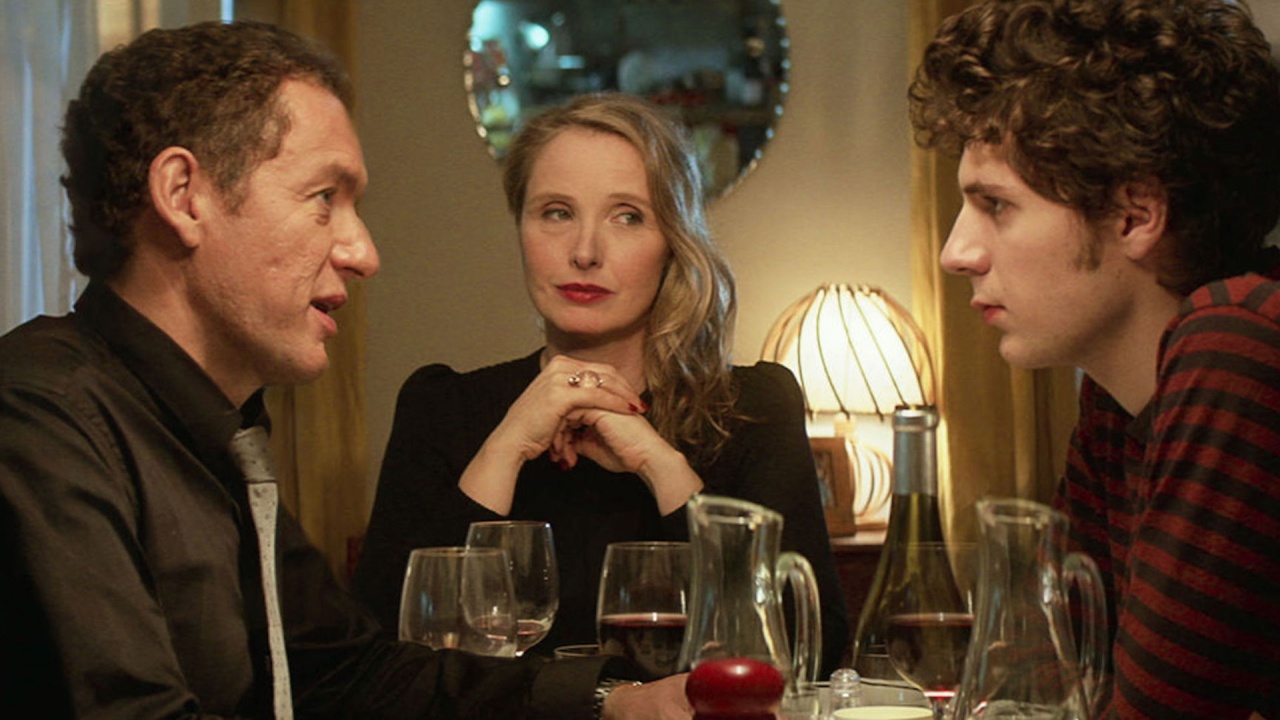
Dany Boon, doing what he does best, inhabits the role of a simple yet dignified man with remarkable ease. His Jean-René is ambitious and self-aware, conscious of his origins but equally aware of his own worth. He has no intention of bowing to the capital’s intellectual elite. Rather than being dazzled by Paris, he seeks to tame it on his own terms, guided in part by his feelings for Violette.
At times, Lolo flirts with the conventions of a classic comedy of errors, but its witty, intelligent, and fast-paced dialogue places Delpy’s film somewhere between Woody Allen’s conversational comedies and the populist charm of Dany Boon’s work. Boon’s presence clearly shaped the film’s rhythm, yet the abundance of feminist-leaning jokes leaves no doubt as to whose voice ultimately defines Lolo. Delpy may not have made a masterpiece, but she delivered a film that meets every expectation of a smart romantic comedy. With its sharp humor, well-crafted dialogue, and excellent performances, Lolo remains a refreshing antidote to the often disappointing output of American romantic comedies — and a reminder of Delpy’s distinctive, confident cinematic voice.

