
Review
FATHER MOTHER SISTER BROTHER. Family Album [REVIEW]

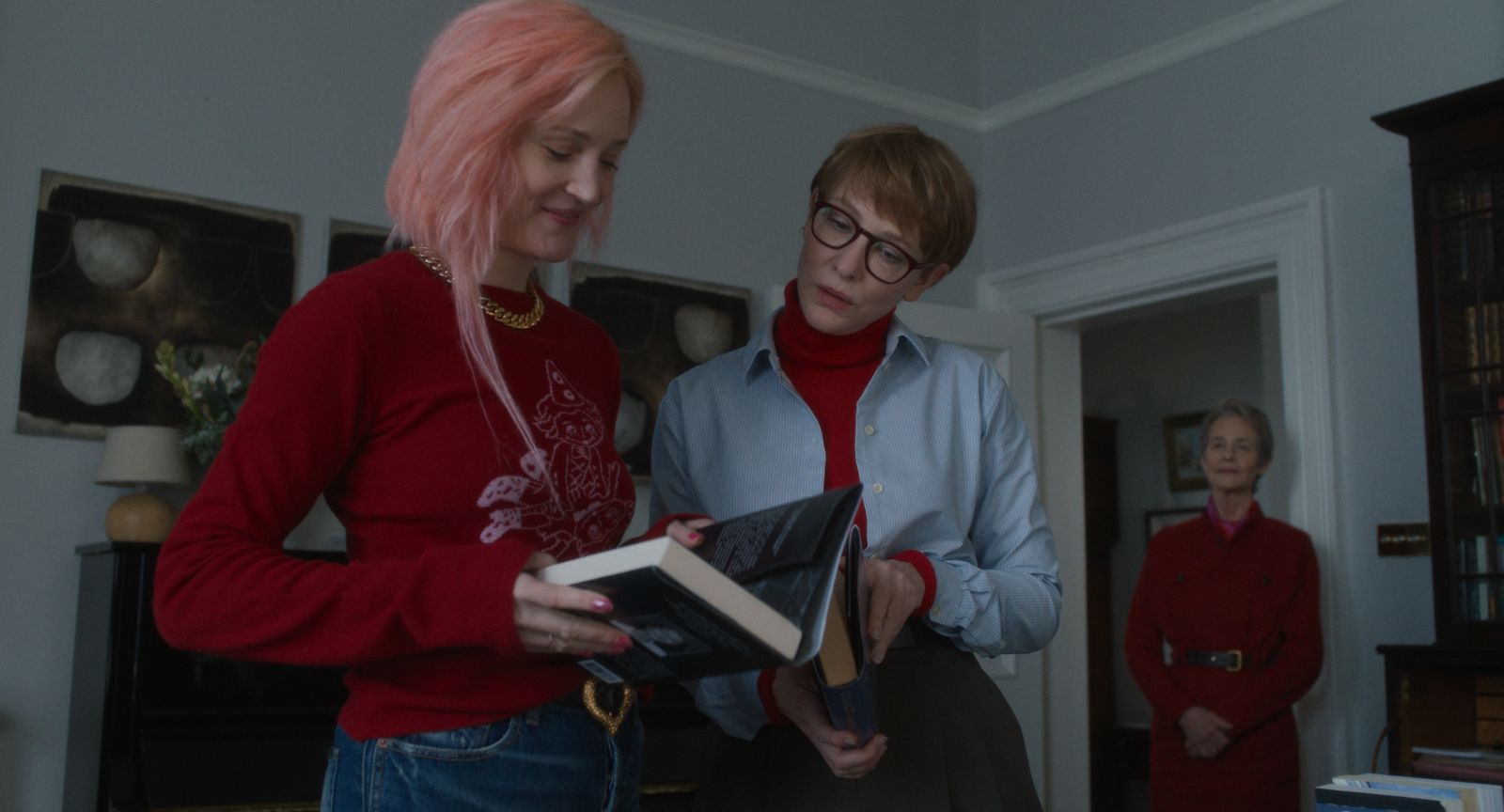
Jim Jarmusch’s work remains unmistakable — his cinema still lives at the intersection of discreet melancholy and discreet humor, finding screen poetry in the most mundane details, with rock classics flowing from radio speakers and relationships built on silence and implication rather than words. In his Golden Lion–winning Father Mother Sister Brother, the director turns his attention to family dynamics and the lack of intergenerational communication, illustrating the theme through three novellas — each set, much like in Night on Earth, in different corners of the world.
The individual miniatures are connected not only by their central theme of family but also through a number of recurring motifs: repeated lines of dialogue, images of skateboarders gliding down empty roads, and recurring songs. Jarmusch essentially presents three variations of the same situation — an awkward meeting between parents and children that exposes a deep communicative gap between generations. True to form, he avoids staging major family dramas; misunderstanding between characters surfaces subtly — as in a brilliant gag with a bouquet of flowers on the lunch table, literally blocking the view between family members.

At first glance, everything seems to be working perfectly. The director repeats his proven stylistic tricks, the cast includes several familiar “Jarmuschian” faces (headed by the ever-excellent Tom Waits), and his unmistakably bittersweet tone is instantly recognizable. The problem, however, lies precisely in that repetition. The first segment — in which brother (Adam Driver) and sister (Mayim Bialik) visit their father (Tom Waits) — works flawlessly, balancing humor and sorrow with elegance, and ends with a twist that neatly encapsulates the film’s central theme. But the subsequent stories begin to feel like mechanical repetitions of the same devices. Instead of complementing one another (as in Coffee and Cigarettes), they simply echo the same observations.
As a result, Father Mother… unfortunately unfolds in an atmosphere of growing tedium. And not the kind of ennui that once defined Jarmusch’s cinema — photogenic in its banality, imbued with a quiet sense of dignity. The absurd small talk of Coffee and Cigarettes, the existential angst of the jaded vampires in Only Lovers Left Alive, or the seemingly monotonous routine of the titular Paterson all took on a fascinating, at times even moving form under Jarmusch’s eye. By contrast, the family woes of Father Mother… feel like a dreary exercise in creative autopilot.

Before the screening, a few friends speculated that Jarmusch’s Venice win this year might mirror last year’s Golden Lion triumph of Pedro Almodóvar’s The Room Next Door — a curious work in which a celebrated auteur seemed to parody his own style. To those worried, I can offer some reassurance: Father Mother Sister Brother still contains moments that will make Jarmusch’s fans feel right at home. In its hazy atmosphere and isolated gags, traces of the director’s former brilliance can still be found.
The film is perfectly watchable — yet this does little to dispel the overall sense of disappointment. Viewers once complained about the heavy-handed social commentary of The Dead Don’t Die, but in hindsight, that film — for all its flaws — at least retained a unique personality. Father Mother…, on the other hand, feels like a hollow shell of Jarmusch’s once-vibrant storytelling. As one friend aptly put it in her (positive) Filmweb review, the Golden Lion here seems less a prize for the film itself than a lifetime achievement award for its creator. Exactly.

