
Review
THE KING AND THE MOCKINBIRD. Perfect for Children and Adults
The world of The King and the Mockingbird recalls, on one hand, the absurdist prose of Franz Kafka, and on the other, the robotic fairy tales of Stanisław Lem.

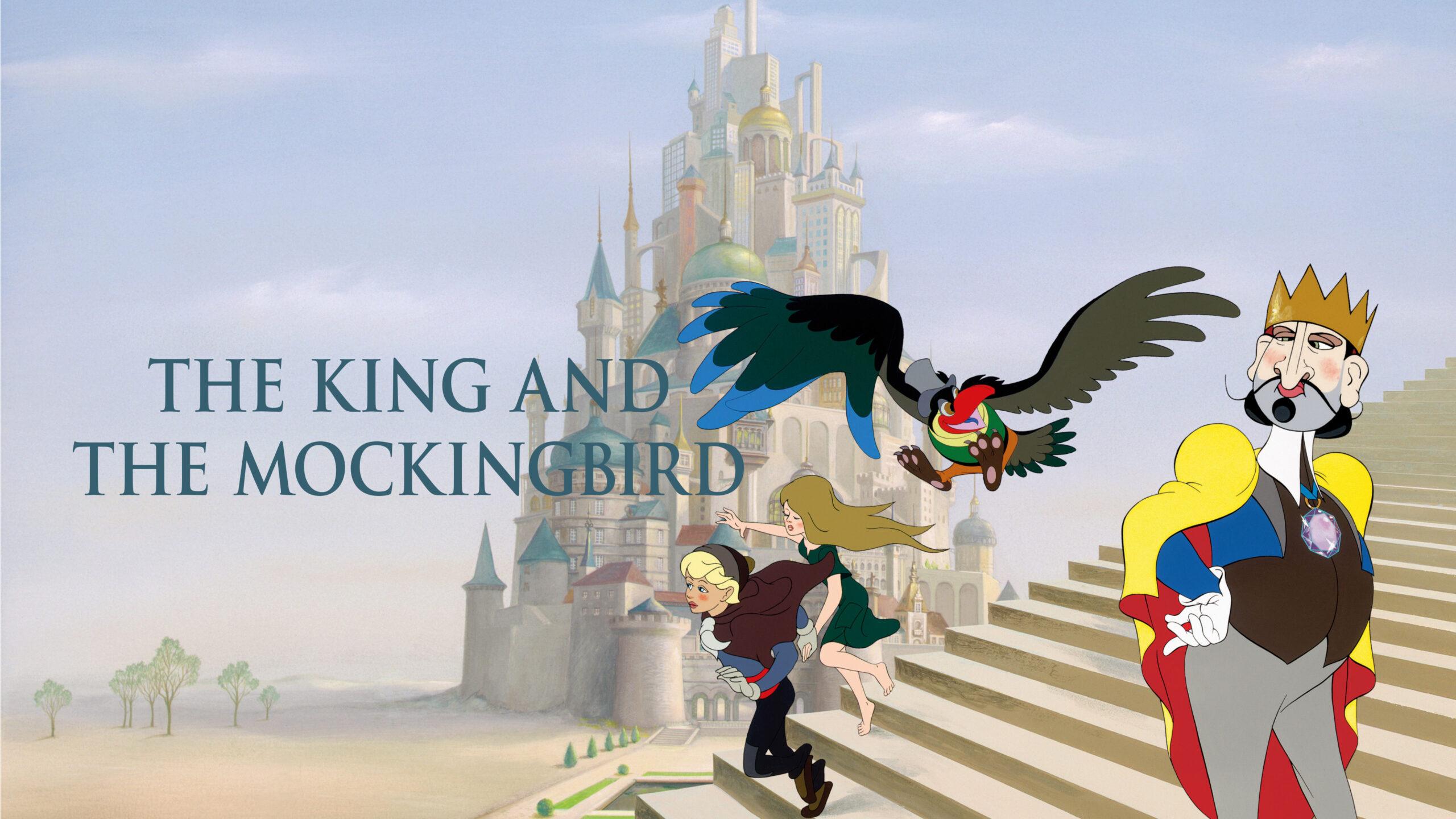
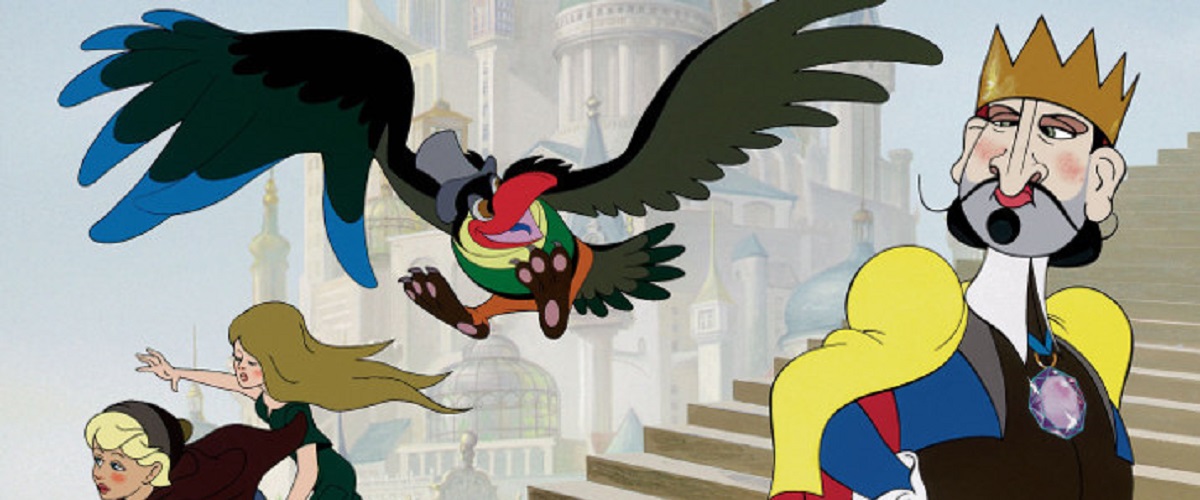
The greatest strength of The King and the Mockingbird lies in the refined way its creators blend the conventions of a childlike, at times naïve fairy tale with a mature visual sensibility, making it an ideal film for both children and adults. At its center stands the ruthless King Charles XVI, ruler of the kingdom of Takicardia. The monarch resides in a massive castle that reaches the clouds. He delights in tormenting his subjects for no reason, constantly sending them to the dungeons. In his spare time, he sadistically shoots at birds — often without even leaving his throne. He merely replaces his crown with a hunter’s cap, grabs his gun, and takes aim at animals tied to stakes.
Charles XVI embodies every vice of despotic power: he is self-absorbed, intolerant of dissent, and utterly indifferent to others. A single look devoid of admiration is enough to earn a death sentence. The king revels in limitless wealth, privilege, and the blind devotion of his royal guard. He is a monster with a human face.
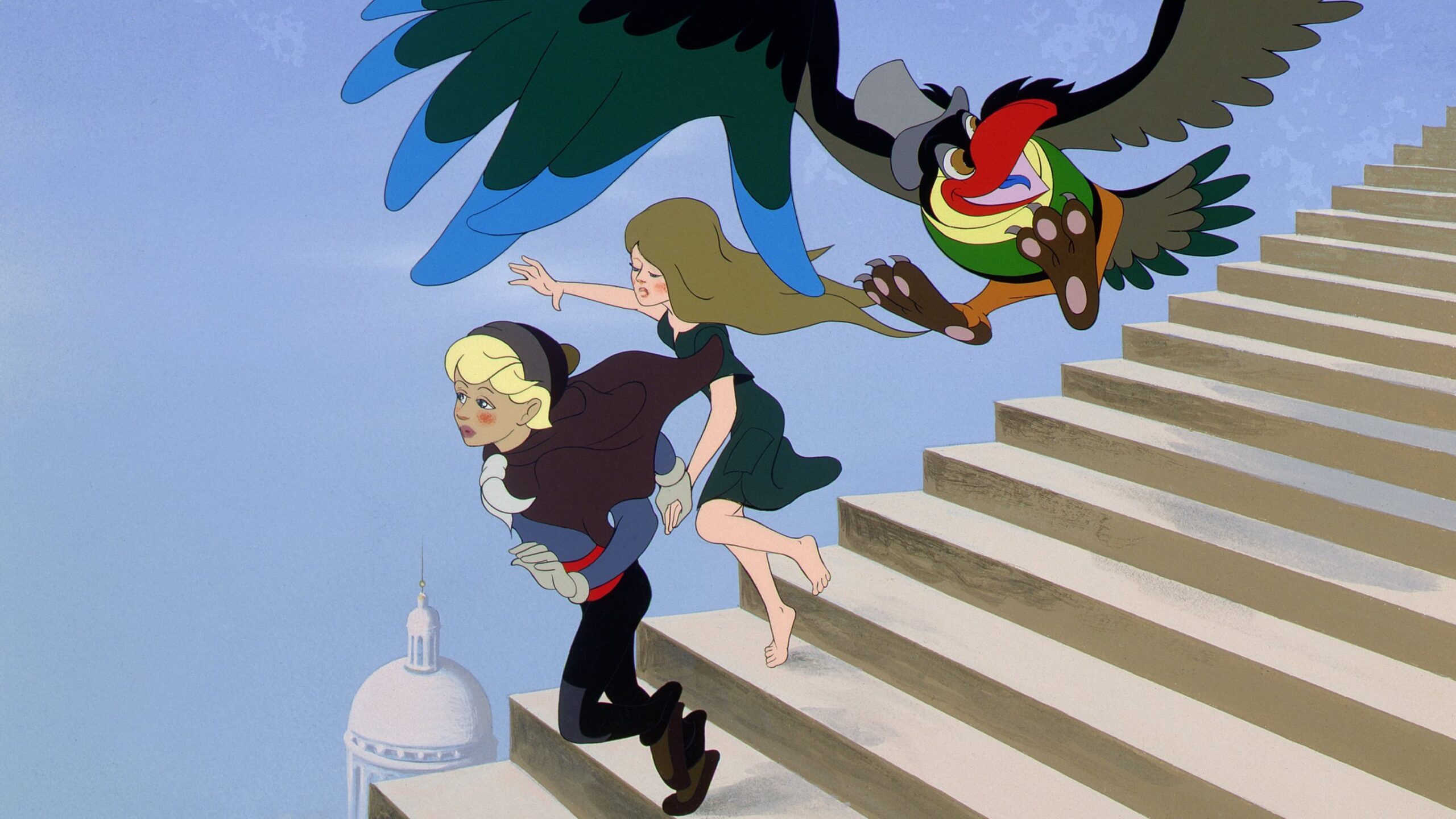
The only character who openly and fearlessly opposes the king is a bird — a caring father raising four chicks on his own. His mate was shot by the monarch, a traumatic event that continues to fuel his defiance. He seizes every opportunity to voice his contempt for the ruler and to support anyone brave enough to stand against him. The bird (unnamed in the film) constantly reminds the king of his vile deeds and calls him a murderer. He also tries to awaken the conscience of the people, urging them to see Charles XVI for what he truly is.
What we get, then, is a clear-cut moral dichotomy — characters defined by their virtue or vice. From this contrast emerges the moral of this 1979 French animated film, which celebrates noble values such as empathy, compassion, and selflessness, as well as a proper ethical stance. Yet this is only the film’s surface. The first act may suggest we are watching a conventional, innocent fable — until a fascinating narrative twist occurs. One evening, King Charles invites a painter to create his latest portrait. When the work is finished, the monarch studies it — his image nearly perfect — yet he finds himself dissatisfied.
He dismisses the artist, covers the painting with a cloth, and goes to sleep. His chamber is filled with works of art: musical instruments, ornate chessboards, and antique sculptures. The walls, of course, are packed with paintings. On one hangs a shepherdess; on another, a chimney sweep — direct nods to Hans Christian Andersen’s The Shepherdess and the Chimney Sweep, on which the film is based. When Charles drifts into sleep, the painted figures come to life and flee the royal bedroom. Awakened by the noise, the king discovers that the boundaries between dream and reality have not dissolved — they now coexist.
The painted image of the king steps out of its frame, overthrows its original, and takes his place. His goal: to marry the shepherdess he so desires. The new monarch proves no less loathsome or cruel than the old one. Much more unites the two than mere resemblance.
The filmmakers blur the line between imagination and reality with breathtaking confidence — a particularly fascinating device within the context of animation itself, a medium inherently devoted to reinterpreting reality through exaggeration, idealization, caricature, or trivialization. In The King and the Mockingbird, this operates on two levels: the animated film references the real world of its viewers, while the painting within the film refers to the internal world of the story — a representation of a representation. This tension reaches its peak in the scene where the king locks eyes with his painted double.
A series of close-ups forces the viewer to ask: which of the two holds power, and which is more real? The relationship between truth and its reproduction — though not explored further — makes the chamber scene a striking and ambitious digression.
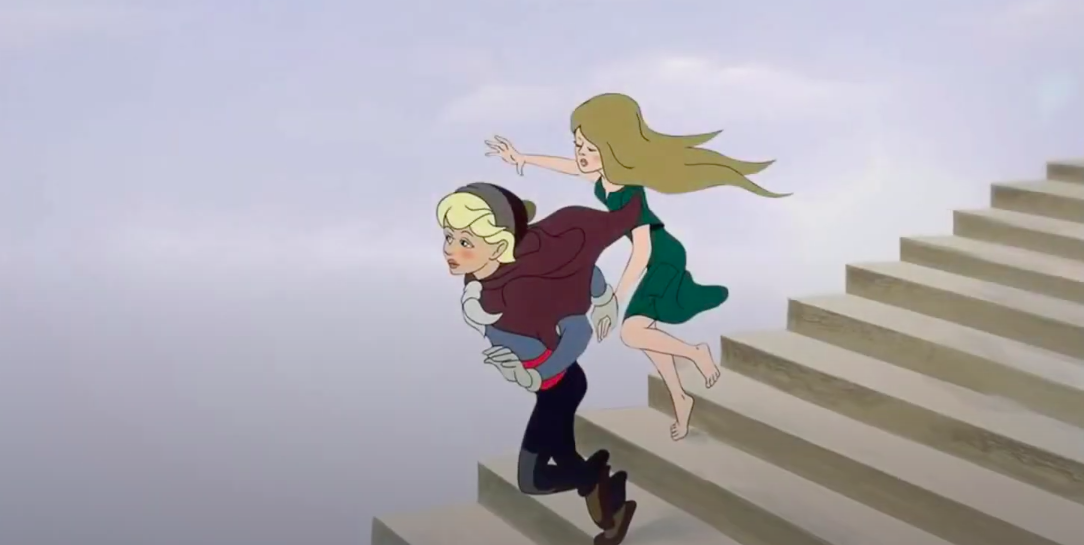
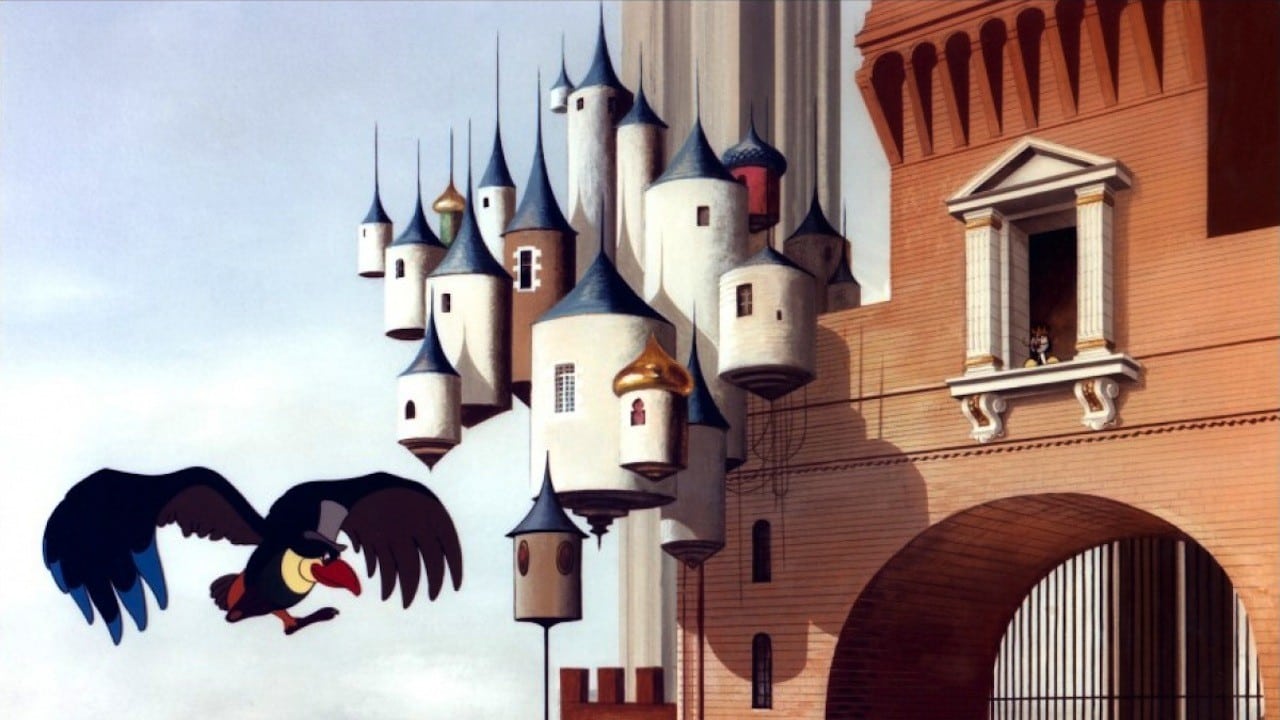
Moreover, The King and the Mockingbird unfolds within an exquisitely designed space. The castle has a labyrinthine structure, full of levels and corridors. As King Charles ascends by elevator to his lofty residence, a narrator lists the names of the many institutions, warehouses, and palace divisions he passes: the winter, summer, and spring prisons; the Ministry of War and Hostility; the Treasury; Military Supplies; the Department of Fans; the Subsecretariat of Peace; Fireworks; Last Bullets; Taxes; Parasols for Sun and Rain; Compulsory Detentions; Dungeons; Catacombs; Haberdashery; the Gallery of Ancestors; the King’s Hanged Men; and even his personal barber.
This endless litany of places and things creates a mood of absurdity, but also of dread. Everything is delivered with the same monotonous indifference, as if none of it were extraordinary — whether it’s the royal manicurist’s floor or the execution chamber. In Takicardia, terror and cruelty are everyday routine.
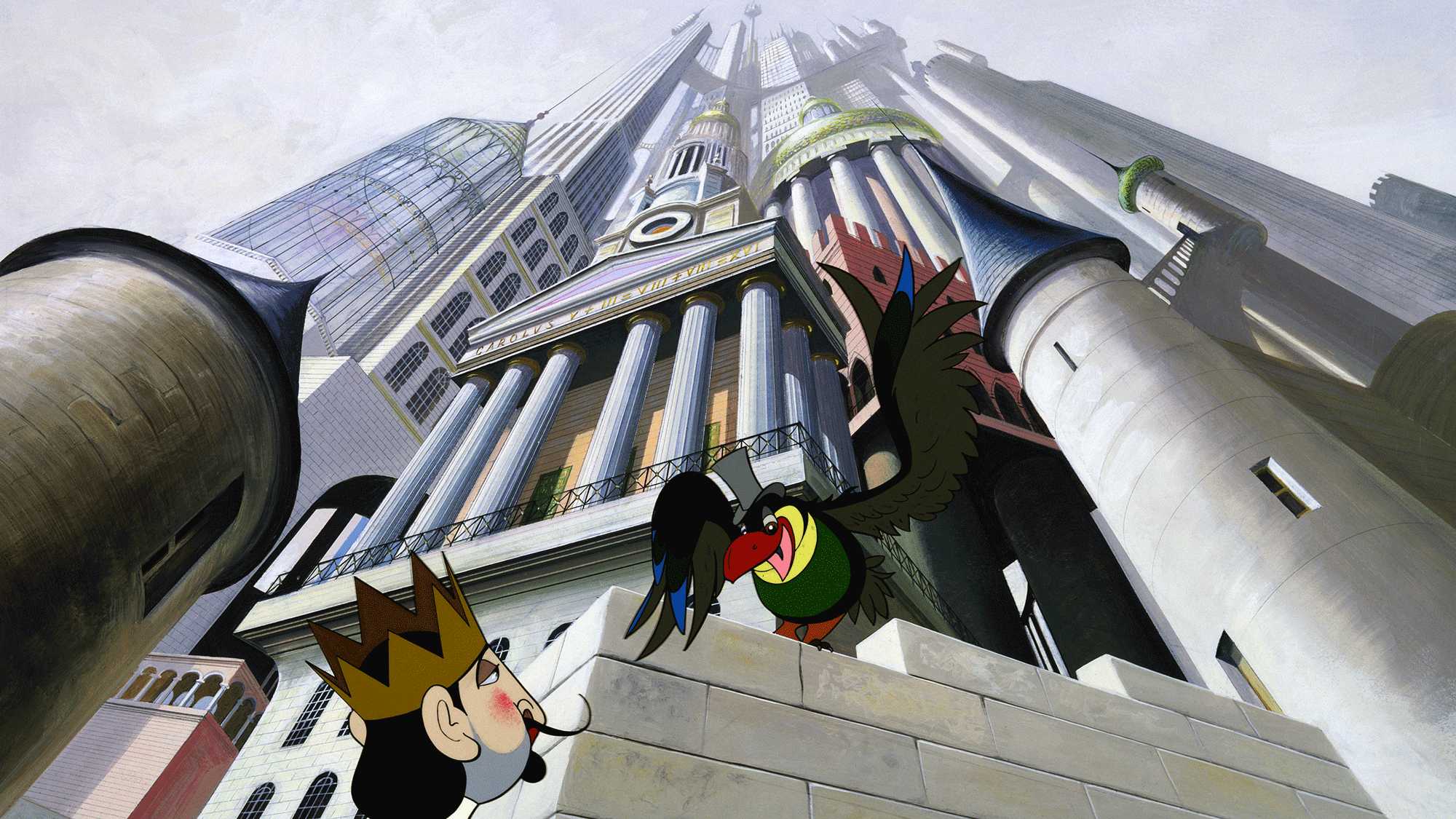
The world of The King and the Mockingbird recalls, on one hand, the absurdist prose of Franz Kafka, and on the other, the robotic fairy tales of Stanisław Lem. Paul Grimault’s animation merges the chivalric trappings of old legends with elements of science fiction. The film captivates not through conflict between its characters but through the richness of what surrounds them and what lies beyond the main plotline. Its surprising ending leaves a pleasant sense of ambiguity, opening multiple avenues of interpretation — always the mark of cinema at its finest.

