
Review
CRAZY RICH ASIANS. Ultimately, Money Doesn’t Matter
In hindsight, Crazy Rich Asians distinguished itself less through reinvention than through setting and casting.

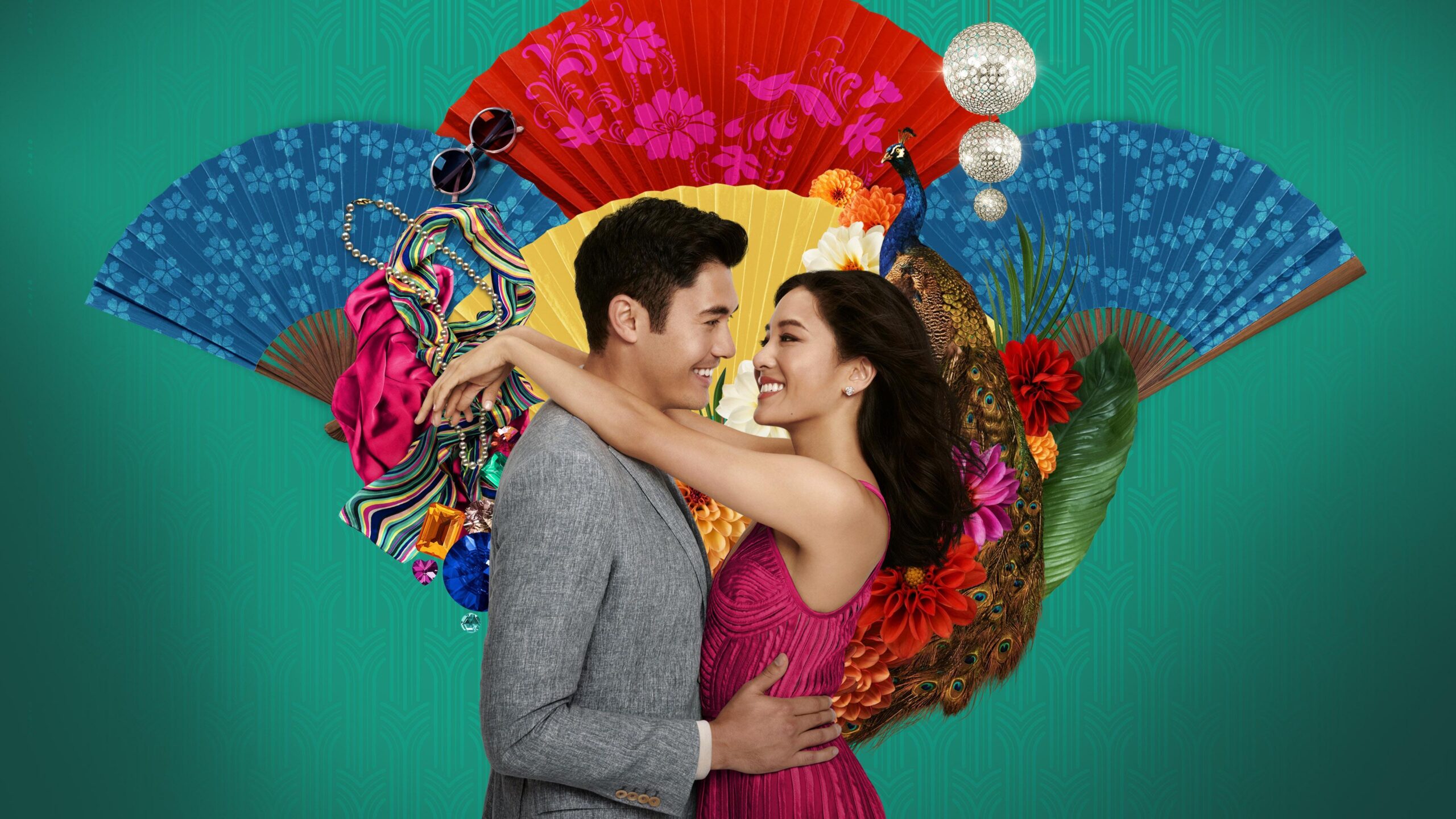
Looking back, Crazy Rich Asians remains one of the most surprising box-office success stories of the late 2010s in the United States. The adaptation of Kevin Kwan’s bestselling novel became a genuine commercial hit, winning over both critics and mainstream audiences. The surprise was amplified by the fact that the film was directed by Jon M. Chu (now famous for Wicked), whose earlier credits — including G.I. Joe: Retaliation, Now You See Me 2, and a pair of Justin Bieber documentaries — hardly suggested a future romantic-comedy phenomenon.
Equally significant was the casting: it was the first major Hollywood studio film in decades to feature an almost entirely Asian ensemble. At the time, this was widely celebrated as a long-overdue shift in representation — though, in retrospect, the film’s success cannot be reduced to cultural timing alone.

Before seeing it, one might have suspected that the enthusiasm stemmed primarily from the sociopolitical climate — from heightened awareness around diversity and minority representation. Indeed, some praise initially focused on the fact that Chu avoided exoticizing or patronizing portrayals of Southeast Asia. And rightly so: in less capable hands, the region could easily have been reduced to a gaudy curiosity cabinet, colorful but alien.
Instead, Chu directs his fascination not at “otherness,” but at extravagance. The film revels in spectacle: opulent mansions, kaleidoscopic décor, shimmering couture, and jewelry that practically glitters through the screen. In this sense, Crazy Rich Asians adheres to one of melodrama’s oldest rules — allowing ordinary viewers to peer into the lives of the ultra-wealthy.

For all its Singaporean skyline views and playful touches like a Cantonese-accented rendition of Material Girl, the film remains firmly rooted in the traditions of the romantic comedy. Its structure is comfortingly familiar.
Rachel (played by Constance Wu), an economics professor from New York, travels to Singapore with her boyfriend Nick ( Henry Golding ) for a friend’s wedding. What she doesn’t initially realize is that Nick is heir to an immense fortune. His family is not merely wealthy — they are dynastic. While Rachel is initially welcomed with warmth, the façade cracks upon meeting Nick’s formidable mother, Eleanor, portrayed with steely precision by Michelle Yeoh. Eleanor embodies the archetypal disapproving matriarch, determined to ensure her son marries “appropriately.”
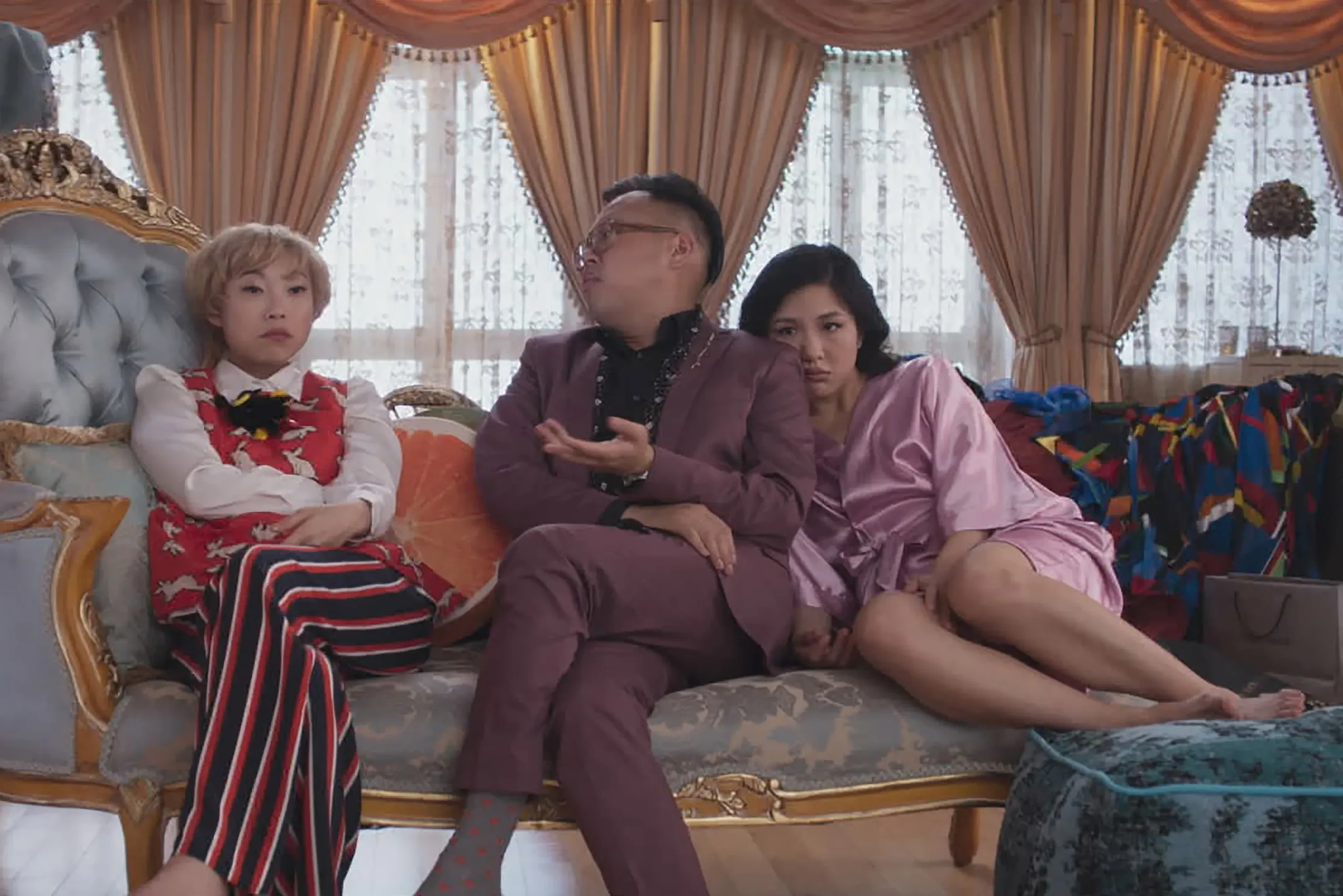
Soon, much of the extended family reveals similar reservations. Rachel becomes an outsider among snobs and traditionalists who scrutinize her finances, background, and partial American upbringing. The narrative proceeds along well-worn tracks: the “ordinary” woman confronting elite hostility, questioning whether she belongs, and bracing for a showdown with a statuesque guardian of tradition. It’s a classic mismatch romance — albeit delivered in a glossy, comedic package.
Despite the serious undertones — familial expectations, cultural identity, generational tension — the film never tips fully into melodrama. Tears, when they appear, are usually followed by laughter. The buoyant tone owes much to the colorful supporting cast. The gallery of characters is as vibrant as the interiors of their mansions.
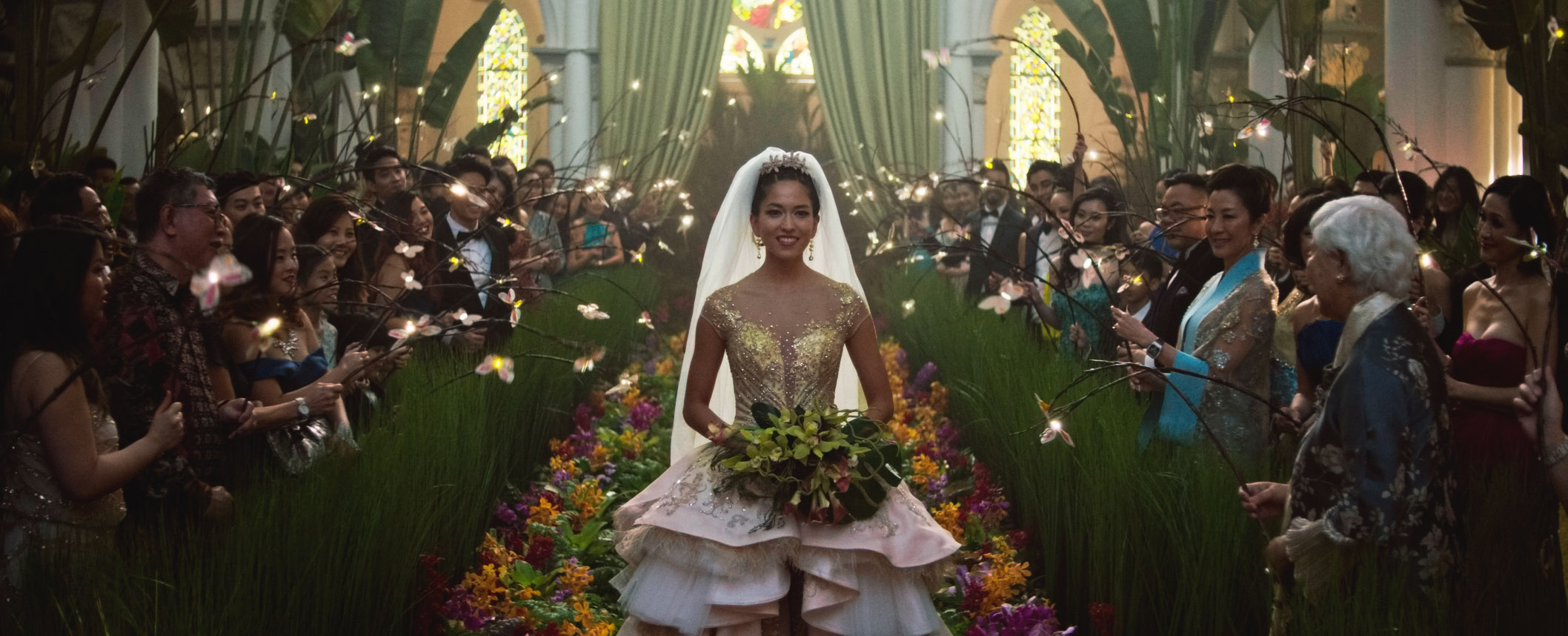
Standouts include the boisterous father of Rachel’s friend, played by Ken Jeong, the flamboyant Oliver ( Nico Santos ), and the perpetually partying Bernard ( Jimmy O. Yang ). Above all, Awkwafina steals scenes as Peik Lin, Rachel’s fiercely loyal and unfiltered confidante — a performance that injects the film with much of its comic vitality.
On the more dramatic end of the spectrum, Yeoh delivers gravitas, while Gemma Chan lends emotional weight in one of the film’s more restrained roles. Anchoring these tonal extremes are Wu and Golding, whose chemistry balances romantic lightness with credible internal conflict.
The film’s financial triumph quickly paved the way for sequel discussions, promising even more gold-plated bathrooms, extravagant ceremonies, and recognizably human dilemmas beneath the surface. In hindsight, Crazy Rich Asians distinguished itself less through reinvention than through setting and casting. At its core, it remains a classic romantic comedy — free of crudeness and cheap gags — driven by love, aspiration, and the comforting illusion that, ultimately, money doesn’t matter.

