
Review
CALL MY AGENT! Excellent – Original, Engaging, and Funny!
Call My Agent! is a very successful production – intelligent, funny, and engaging. It maintains consistency and brilliance for all four seasons.

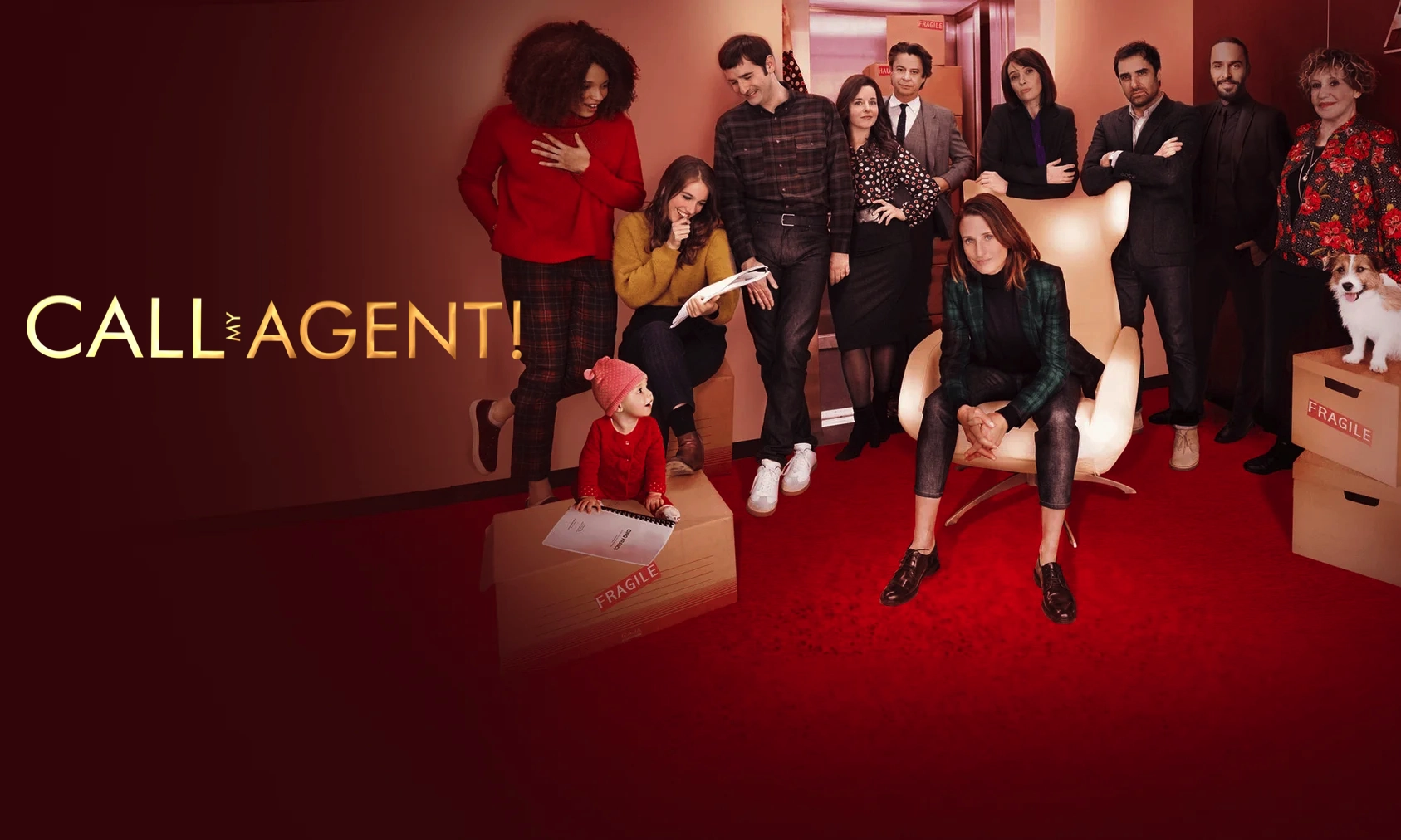
The elevator is out of order. You have to take the stairs.
My clients take the stairs only in Cannes.
I can roll out the red carpet. (Call My Agent!)
The original title Dix pour cent means Ten percent – the share of actors’ earnings taken by their agents. And it is precisely about them that the French production tells a story, which on Netflix can be found under the title Call My Agent!
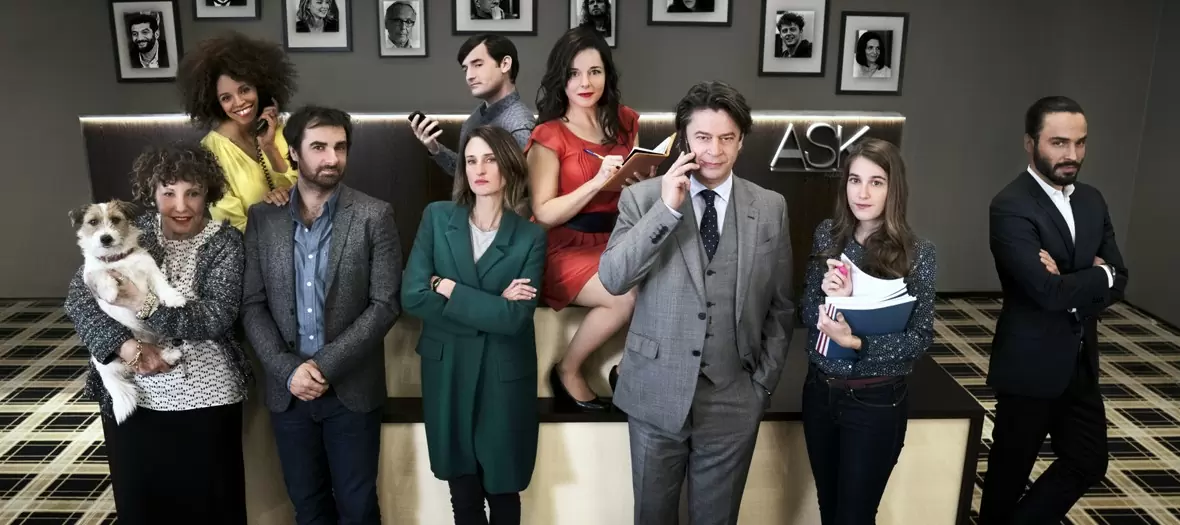
This is a series divided into four six-episode seasons, making a 24-episode production.
In French television, the premiere of the first season took place in October 2015, the last one exactly five years later… In the finale, one of the characters says: Maybe I should write a series about a talent agency?, to which her industry colleagues respond: And who would watch that? I imagine such discussions could have taken place before 2015, when the idea first appeared, but once the first season was ready, it was clear how well it worked on screen. A good knowledge of the industry certainly helped, but so did several other factors.
The plot revolves around the Samuel Kerr Agency (ASK) in Paris. Its founder and main shareholder dies, putting the fate of the employees and their clients into question.
ASK continues to function thanks to four main agents: Andréa Martel (Camille Cottin), Mathias Barneville (Thibault de Montalembert), Gabriel Sarda (Grégory Montel) and Arlette Azémar (Liliane Rovère). When Andréa’s assistant quits her job, Camille Valentini (Fanny Sidney) applies for the position, hiding a certain secret that could harm her career. Viewers get to know each of the characters not only professionally but also privately. Soon, 60 percent of the company’s shares are purchased by entrepreneur Hicham Janowski (Assaad Bouab), who has Moroccan-Polish roots. Under his leadership, the company comes back to life, but new complications also arise.
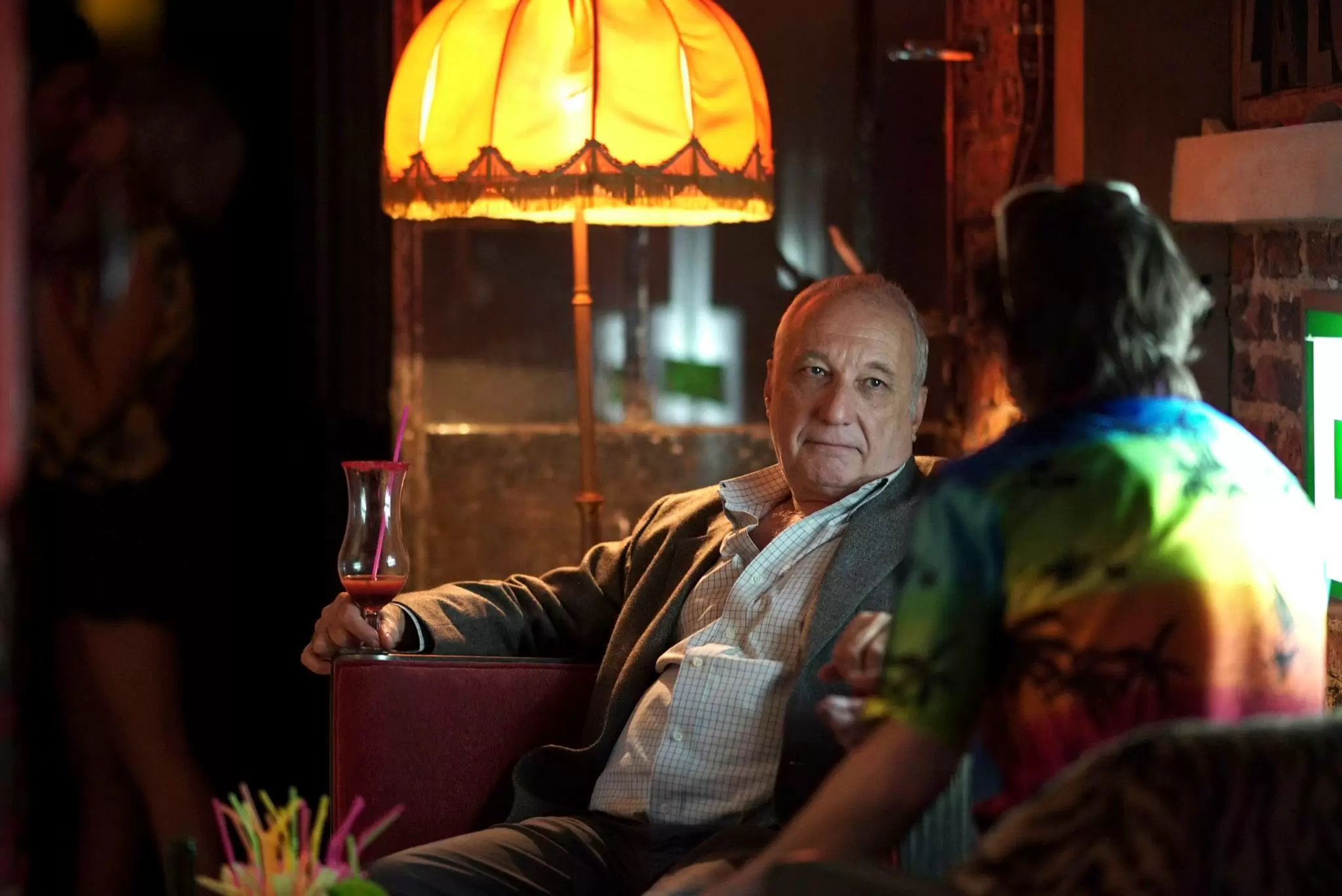
Depardieu had to get drunk to get out of the role of Rodin.
The idea came from Dominique Besnehard, who since the 1970s had worked as a casting director on, among others, Pirates (1986) by Roman Polanski, The Name of the Rose (1986) by J.J. Annaud and the films of Jacques Doillon, whose daughter Lola directed two episodes.
Between 1986 and 2008 Besnehard worked for the Artmedia agency, gaining a reputation as one of the most important talent scouts in France. He discovered, among others, Béatrice Dalle and Cécile de France, and after leaving Artmedia he founded the production company Mon Voisin Productions, which he ran with Michel Feller, former manager of Isabelle Adjani.
They decided to create a series in which they could use their long-standing experience in the industry, and thanks to their acquaintances with many popular actors they could count on hiring them for the series.
However, there was a long way from idea to giving the series its final shape. Nicolas Mercier was chosen as the first head writer, but the direction he proposed for the plot development was not accepted by the producers. Fanny Herrero handled it better and became the head writer for three seasons, having no influence only on the finale. She gave the characters psychological depth and the whole story credibility. She cared about the style of the series and the language so that the whole thing would not be filled only with human dramas but would also contain humor and a so-called distance to the world and the industry.
It was important to show famous actors not as gods but as people in ordinary, often unpleasant situations, to give actors the opportunity to poke fun at their own image, to play themselves but against reality.
Because if Cécile de France really could not ride a horse, she would not have any scenes in the saddle, and if François Berléand could not swim, he would not have been pushed into the pool. The actors here are like big children, and the agents play the role of their guardians, who are also shown in a rather unflattering light. A good agent can not only defend the client but also manipulate people and deceitfully trick them, which goes beyond the office and complicates their love life.
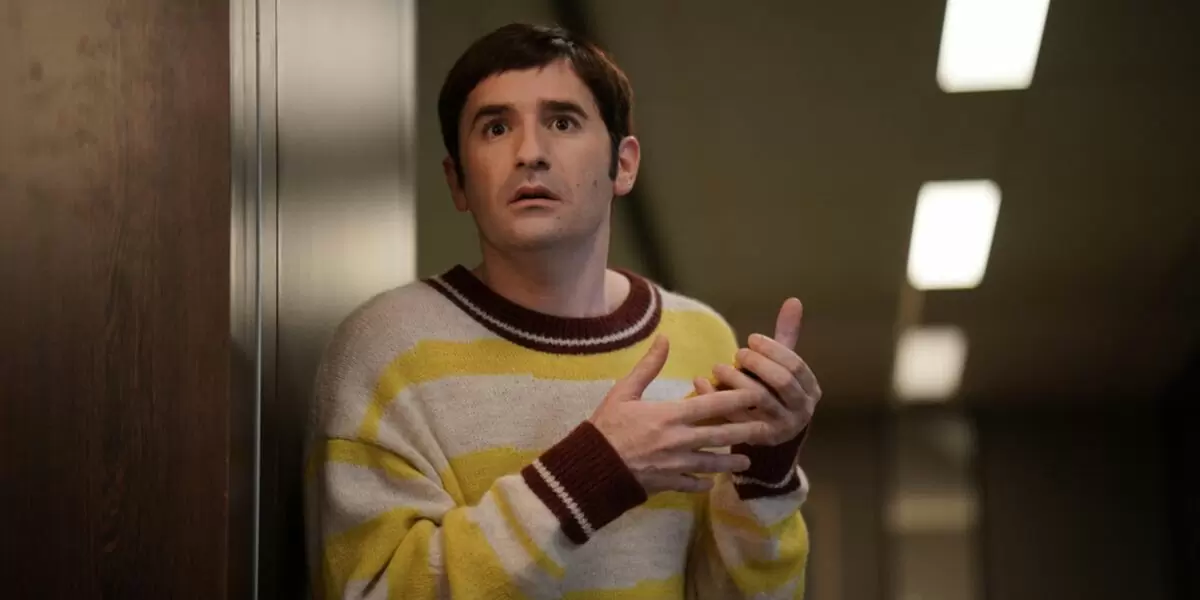
Ms. Cécile de France?
No. Her mother.
In the first episode, Cécile de France learns horse riding for Quentin Tarantino’s new film, but her candidacy is rejected because of her age – the 40-year-old actress is to be replaced by a younger one. This is the real nightmare of many actresses, who after turning 40 get fewer and fewer interesting offers. The director of this episode was Cédric Klapisch, who served as supervising director in the first season. He also directed the episode with Nathalie Baye and her daughter Laura Smet (from her relationship with Johnny Hallyday), which was probably based on the experiences of their manager Dominique Besnehard. He had often worked with mother and daughter, and among his clients were also Jane Birkin and Charlotte Gainsbourg, as well as Marlène Jobert and Eva Green.
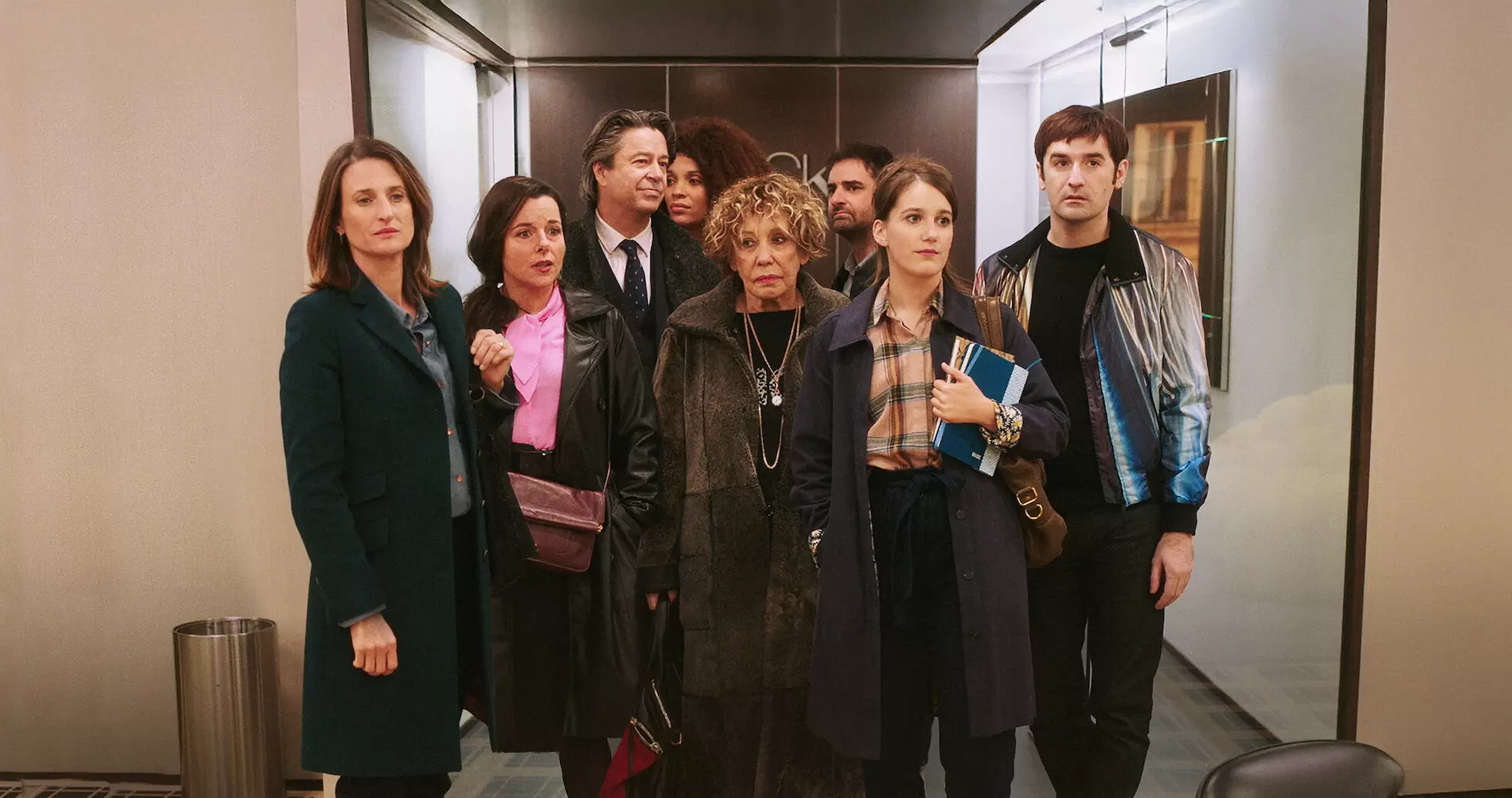
In the second season, the issue of equal pay between actors of different genders was addressed. Also important for the whole series is the motif of using tricks to lure valuable clients away from a rival agency. A bitter comedy of errors is created when Isabelle Adjani becomes interested in the script of a young Palme d’Or winner. He resents the actress for having once rejected his proposal.
In fact, the script never reached her because her agent saw no potential in it. Season three shows Jean Dujardin, who immersed himself so deeply in the character he was playing that long after the end of shooting he could not get out of the role. In another episode, Isabelle Huppert plays a workaholic who, despite signing an exclusive contract, takes on other projects, thus putting the agency at risk of legal trouble and financial loss. You can also smile when Monica Bellucci pretends to be single and sneaks incognito (as the blonde Chantal) into a private party.
In the final season, Charlotte Gainsbourg is faced with a challenge: to play in a terrible movie to save a friendship.
You cannot refuse. The internal regulations of my ambition forbid it.
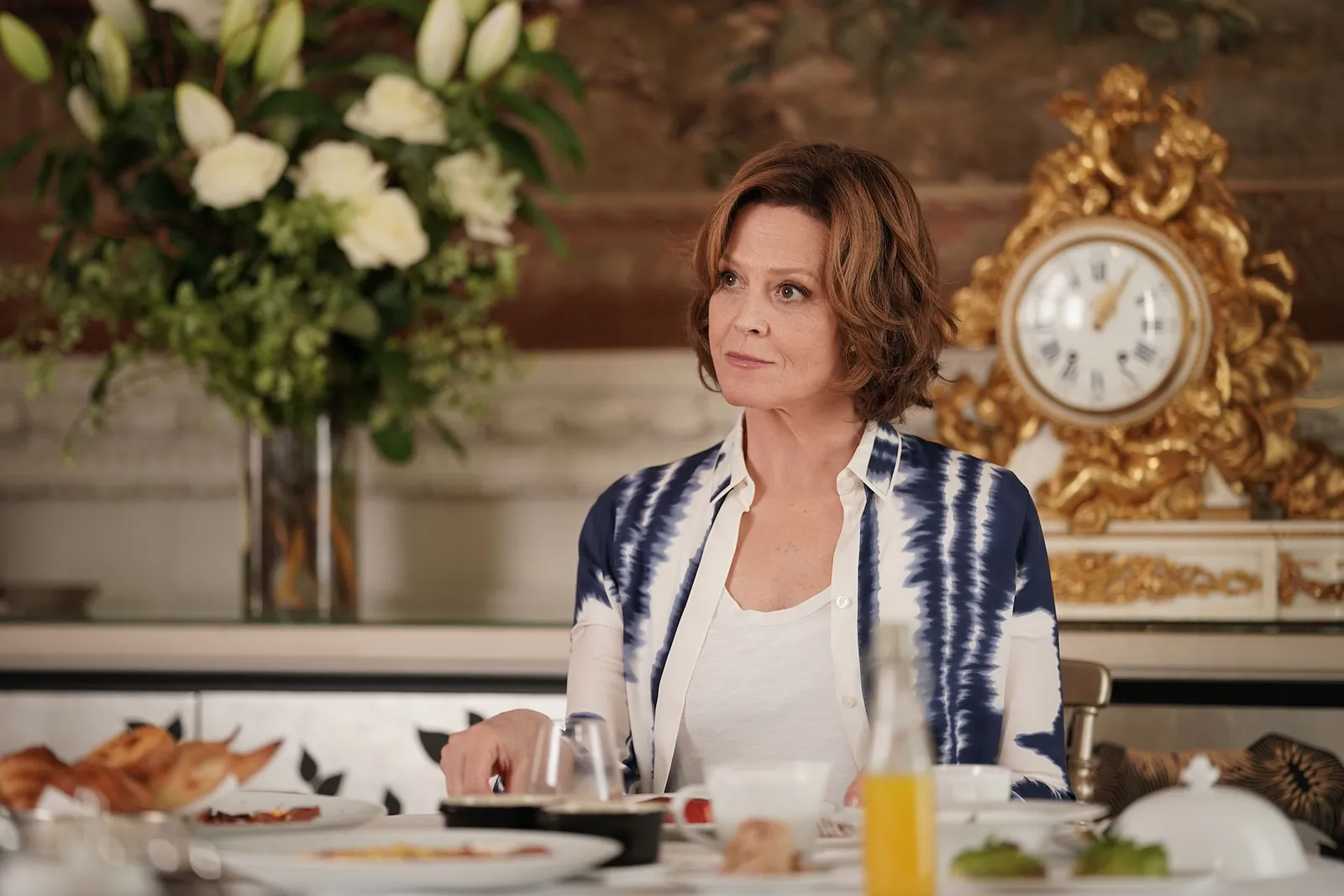
For me, the main reason for reaching for this title were the guest appearances of French cinema stars. In most cases, scripts were not written for specific actors, because although they were theoretically supposed to play themselves, these were still acting challenges.
For example, Guy Marchand (a brilliant role in Le Grand Pardon from 1981) played Guy Marchand, an old actor suffering from dementia. In reality, he is in very good shape, and the character he played was inspired by the biography of François Périer (d. 2002), a French actor struggling with Alzheimer’s disease. On the other hand, in the episode with Sandrine Kiberlain, her namesake Sandrine Bonnaire could have appeared without changing the script – they are the same age and both have won two César Awards. Another plot – Françoise Fabian (My Night at Maud’s, 1969) and Line Renaud (known mainly as a singer) – deals with mutual hatred between actresses, and such conflicts do happen in the industry (see Joan Crawford vs. Bette Davis).
The series would be boring if it did not break conventions, so there are surprises as well. In one episode, the star is played by YouTuber Norman Thavaud, in another by stand-up comedian Muriel Robin, sometimes directors appear (Valérie Donzelli, Xavier Beauvois, Claude Lelouch), and singer Julien Doré also plays himself. A surprise may be the appearance of Christopher Lambert and a Lindy Hop dance performed by 70-year-old Sigourney Weaver.
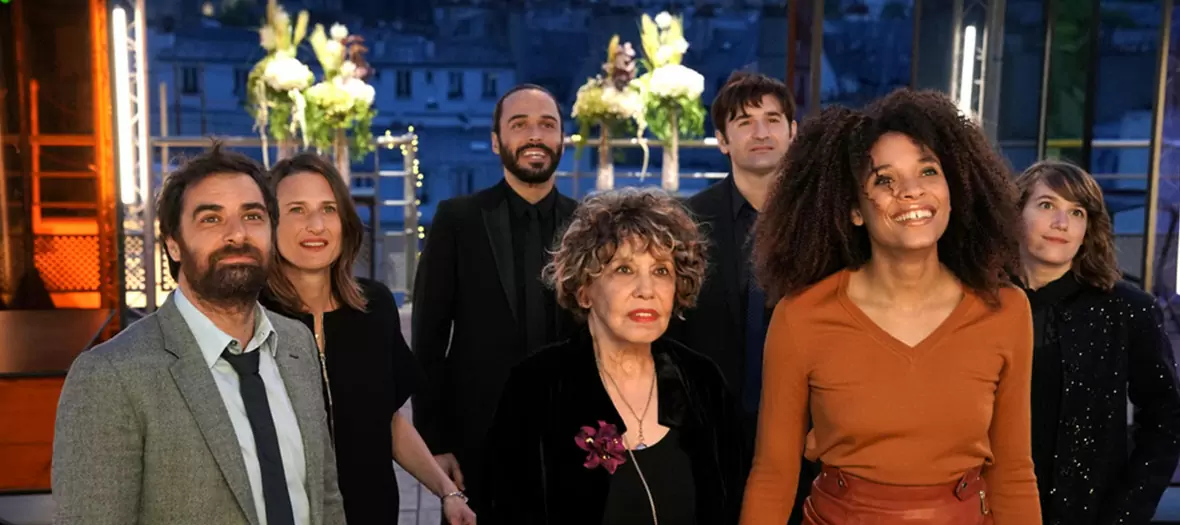
The creators of the series allowed themselves twice to look into prestigious events – the Cannes Film Festival and the César Awards ceremony. They beautifully managed to combine them with the main plots. The dialogues are sharp and witty – a sample of this language has been presented in this text between paragraphs.
A maximum of fifteen steps in one scene. I have it written into my contract.
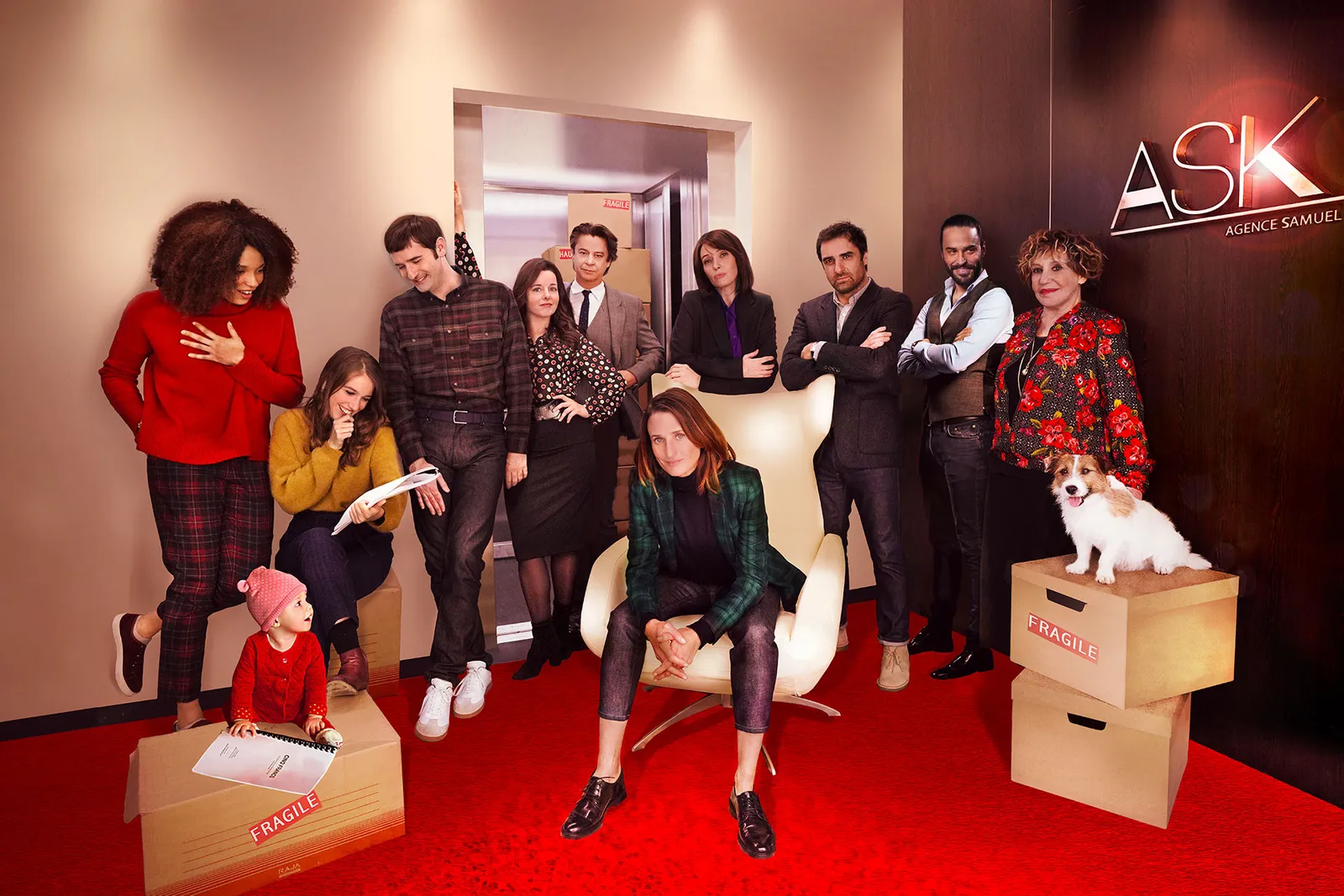
The foreground is occupied by eight employees of the ASK agency.
Each of these characters is solidly developed, has a distinctive personality, and forms interesting relationships with the other protagonists. Camille Cottin showed outstanding acting skills as Andréa Martel. The actress can also be seen in the excellent crime comedy The Mystery of Henri Pick (2019), where she starred alongside Fabrice Luchini. In Call My Agent! they can also be seen together on screen, though only in one episode. Andréa Martel as portrayed by Camille Cottin is incredibly full of character – strong-willed, cunning, and responsible at work; sensitive, seductive, and sometimes completely helpless in her private life. The second female character who impressed me was Laure Calamy playing Noémie, Mathias’s assistant and lover.
Even managers trained in the art of manipulation do not like Mathias, because he is the type of traitor for whom neither ethics nor honor matters. And yet Laure Calamy presented her feelings for him in a convincing way, with great emotional involvement. And one hopes that with her, this man might change for the better.
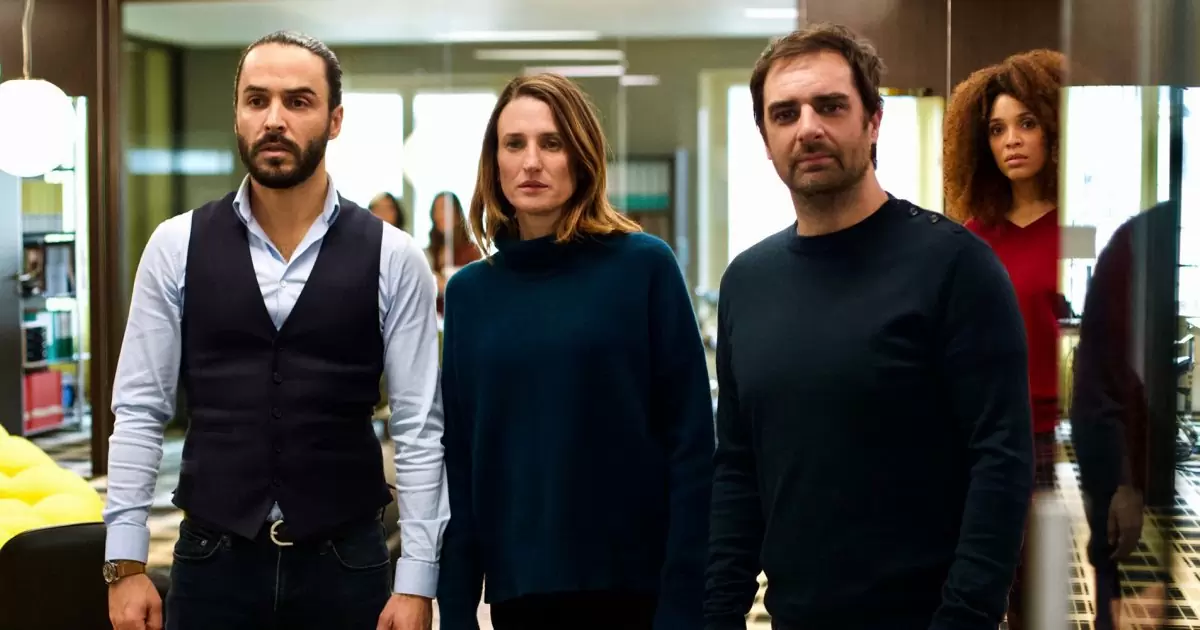
Among the supporting actors, Ophélia Kolb (as Colette Brancillon) left a positive impression, initially appearing as an unflinching tax inspector, but over time her mask of a cold bureaucrat falls away and a sensitive person is revealed beneath.
Sympathy is also evoked by Mathias’s betrayed wife Catherine, played by Philippine Leroy-Beaulieu, daughter of Philippe Leroy known from Jacques Becker’s Le Trou (1960). In the fourth season, there is another quite good, though justifiably suspicious, performance – Anne Marivin (Welcome to the Sticks, 2008). As agent Elise Formain, she becomes excessively kind to the employees of ASK, which raises suspicions. After all, she was long a representative of the rival company StarMedia. The motif of rivalry between the two agencies begins to be evident in season two, when StarMedia and ASK poach each other’s clients.
Jean-Jacques Annaud has had enough of actors, he is filming the second part of The Bear.
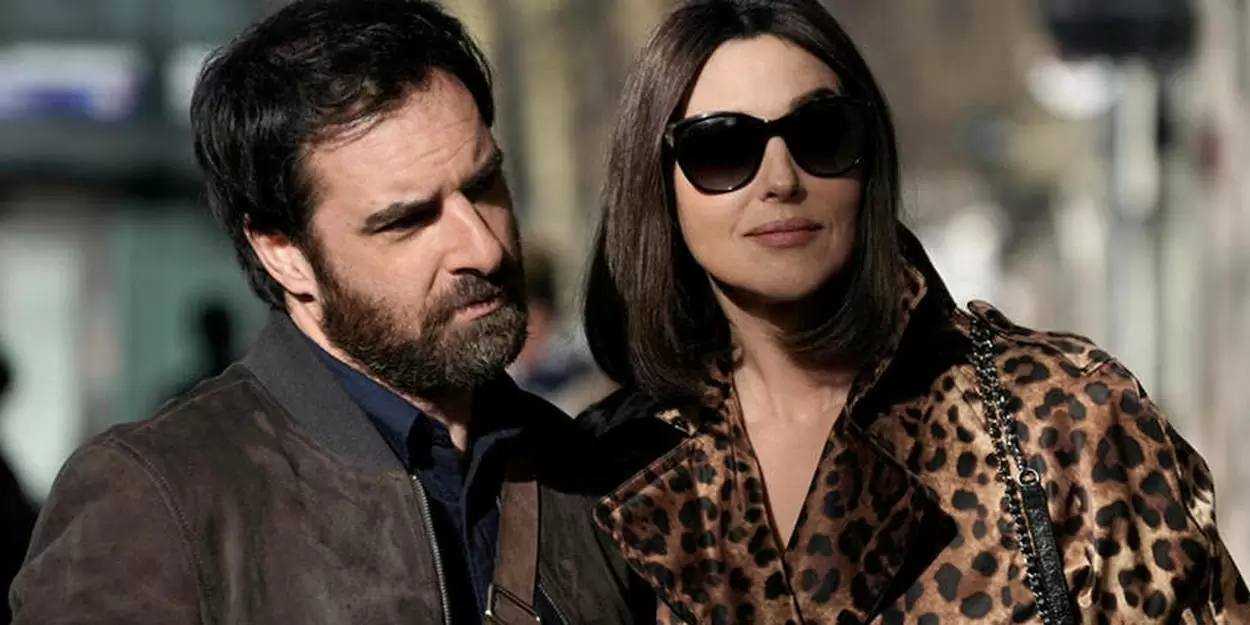
Call My Agent! is a very successful production – intelligent, funny, and engaging. It maintains consistency and brilliance for three seasons, until the party celebrating the 30th anniversary of the Agency. In the fourth and final season, Fanny Herrero, who largely contributed to its success, was no longer involved. It shows a bit, because the ending is not very convincing – slightly more dramatic and unpredictable, but psychologically inconsistent.
To justify this, I must step into spoiler territory. In the previous seasons, it was clearly emphasized that there are no black and white characters, only different shades of gray, yet in the finale, we were presented with a character who is unequivocally evil, well-acted but not entirely believable due to the script. Although he serves as an agent, he turns out to be a better actor than the clients he represents. The last season was helmed by Marc Fitoussi and Antoine Garceau (former assistant to directors Agnès Jaoui, Patrice Chéreau, and Cédric Klapisch).
The work is refined in terms of stories and dialogues, which in turn helped the actors to understand the characters and perform them as convincingly as possible. Many stars refused to participate in this project, or their agents advised them against it. One of the storylines concerns Dany Boon, and his participation in the fourth season had already been officially confirmed. In fact, he was even seen on set, and yet he ultimately did not appear in the finished production. The creators’ dream of persuading Marion Cotillard and Gérard Depardieu to collaborate also did not come true.
The latter was supposed to appear in the final episode, but he did not like the script, he considered it false and caricatured. Jean Reno stepped in instead – Depardieu would have been a better fit here, if only because Jean Gabin is mentioned, with whom he had the opportunity to act and whose successor he was considered to be.
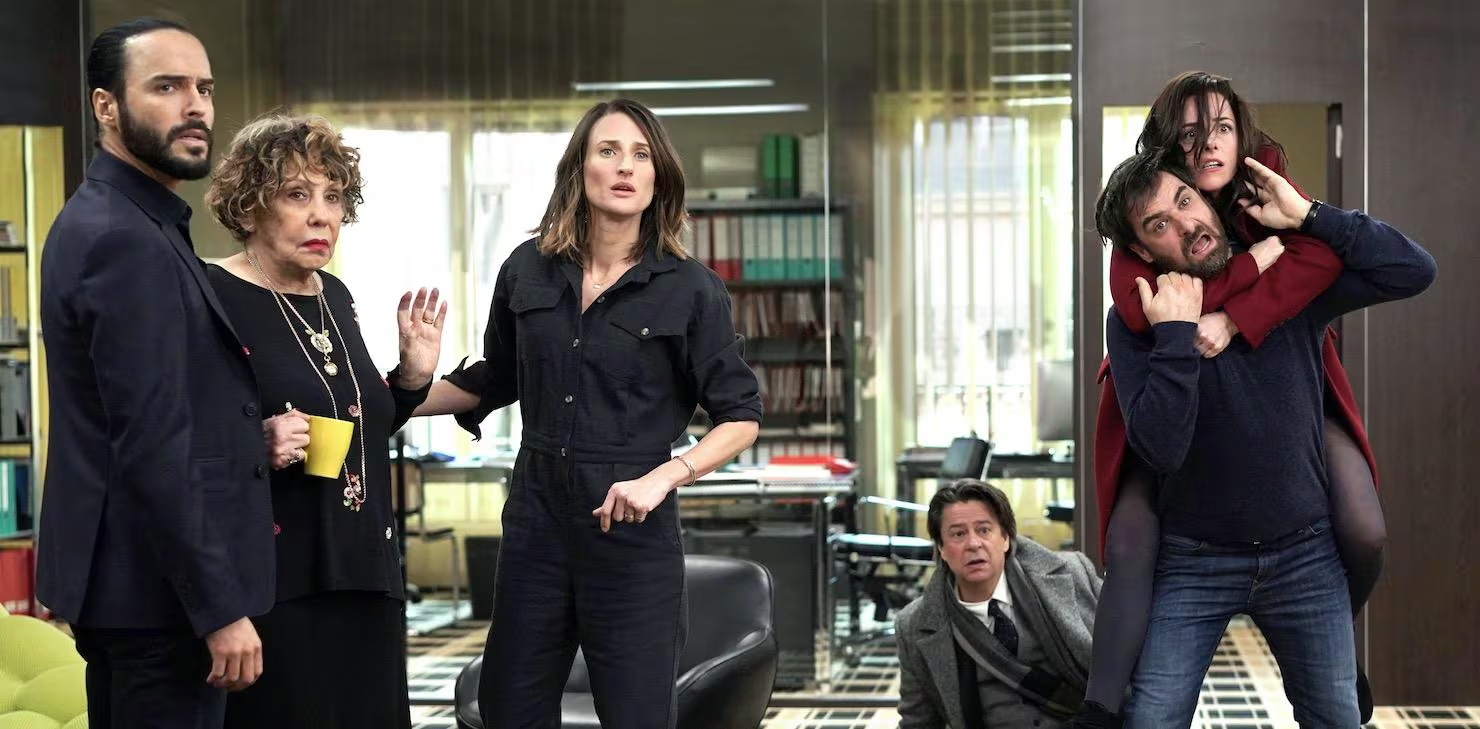
The creators of the series clearly avoided sentimentality and moralizing, presenting show business and the film industry in a subtle but also cynical way.
If someone turns out to be exceptionally perfidious, they evoke negative emotions, but even in those rotten-to-the-core manipulators, one can notice the human side and understand their motivations. The characters mostly evoke sympathy and compassion; we understand their desires, we know their weaknesses, and we experience both good and bad moments together with them. The authors tackled a rather niche topic, as they told the story of an environment rarely presented in the extended format of a television series. However, they did it in such an original and intriguing way that they managed to interest a wide audience. Although there is no shortage of banal conclusions here, for example, that talents can be found everywhere and that an ordinary receptionist can also turn out to be a talented actress, the production is far from clichés such as yesterday I was nobody, and today I am a star. The series also includes LGBT storylines, which are very well executed and certainly not added for the sake of it…


Jae
February 20, 2026 at 23:19
Absolutely!! My favorite. Rare are American series to rise to this level of intelligence, wit, cleverness and Shakespearean mix-ups.