Movies Explained
EYES WIDE SHUT Explained: A Masterpiece Shrouded in Mystery
For many cinephiles, the discovery of the alleged 24 minutes cut from the final version of Eyes Wide Shut will remain a small dream.

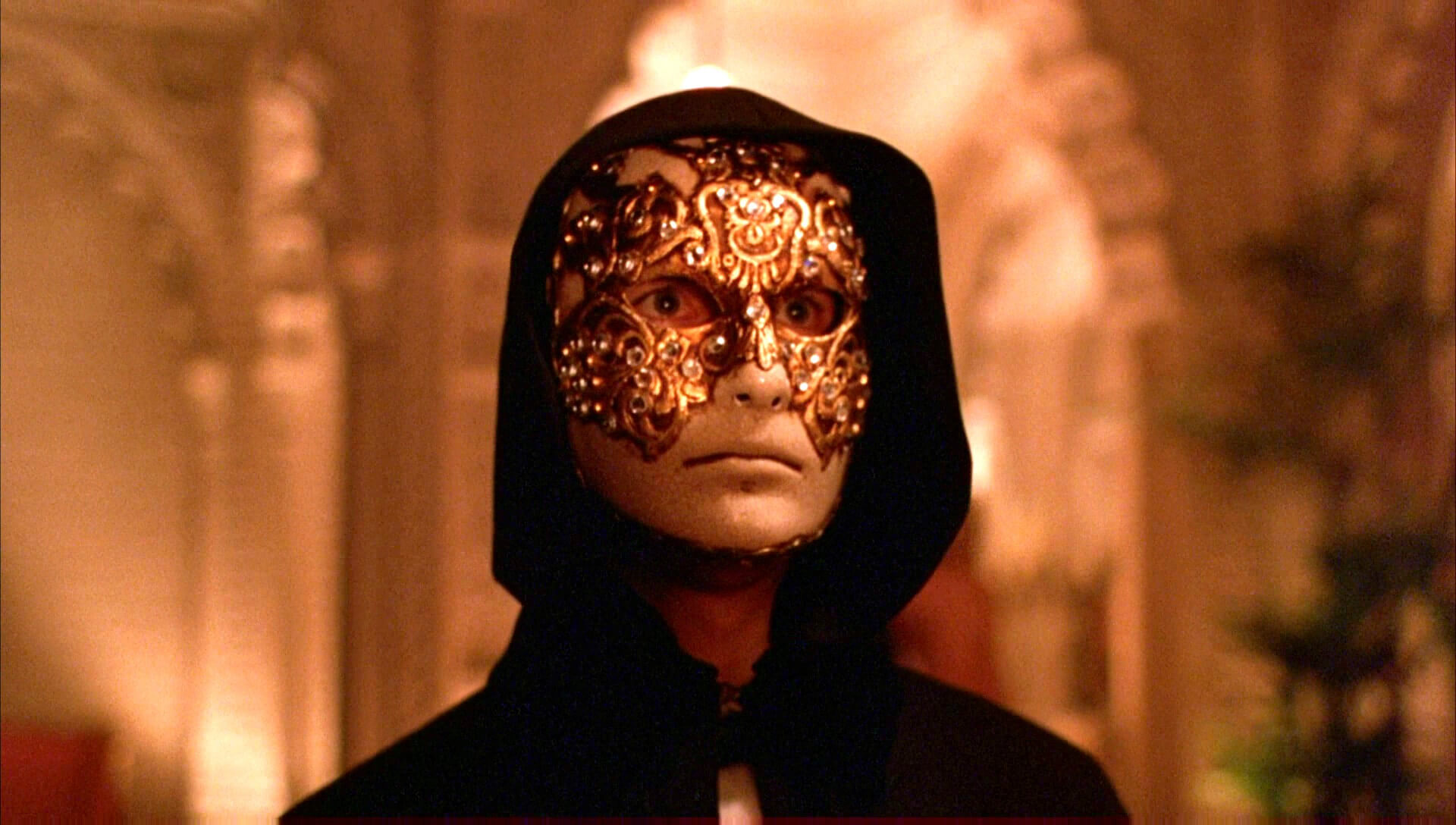
Eyes Wide Shut – the final project of the legendary Stanley Kubrick. Shrouded in mystery and speculation connected with the director’s death, yet also leaving many ambiguities regarding the interpretation of the film itself. The director was known for his obsessiveness and meticulousness – he took enormous care with every detail of his works. A perfectionist who exercised complete control over his projects, down to the selection of books on the shelves in the background of a frame. It is no different in Eyes Wide Shut; numerous details, through references, connect with the real world, providing an intriguing example of how far the artist’s visions reached.
As in many of his earlier works, the final project contains layers of meaning whose deciphering may prove challenging. Countless analyses of Kubrick’s cinema have been created, and even films devoted to interpretations and the search for additional meanings (for example the film Room 237 concerning The Shining). Therefore, in this text, apart from a standard review, I will attempt to highlight how fascinating interpreting his cinema can be.
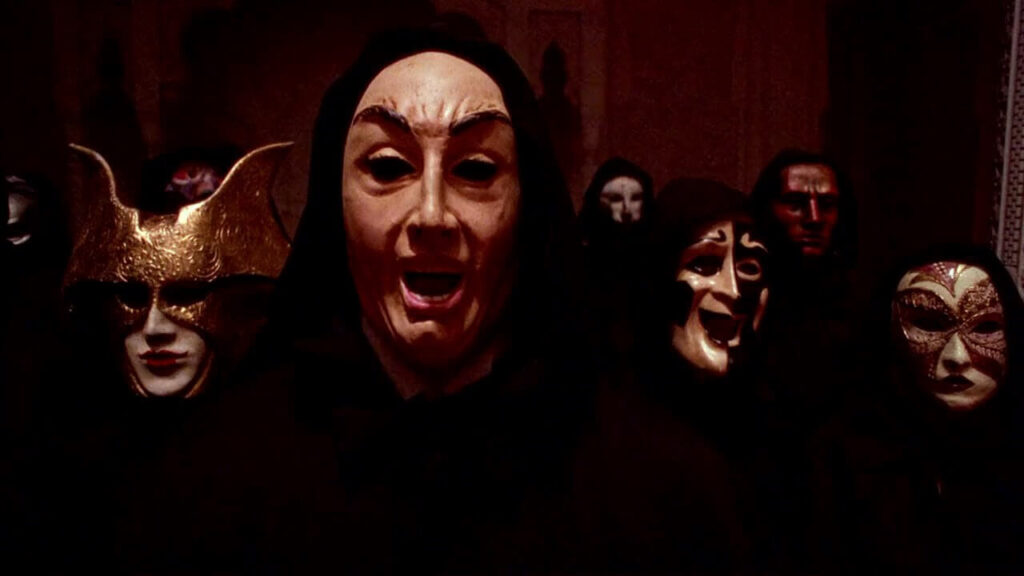
Kubrick once expressed his interest in a literary work titled Traumnovelle, suggesting that he might make a film about it. Traumnovelle speaks about the fact that men desire stability, security, repetition and order in their lives, and at the same time they have a tendency to escape, to encounter adventure […] – said the author of The Shining during an interview for the French film magazine Positif. Although a film about the mentioned novella was never made, it seems that the director captured the stated essence of that work well in his final creation. In part, Eyes Wide Shut concerns precisely male desires that can lead to the disruption of life’s order.
Eyes Wide Shut is above all a film of dense atmosphere, in which the narrative slowly moves forward, revealing fragments of mysteries. Kubrick masterfully weaves intrigue – distributing clues and ultimately answering questions only halfway. The whole is never fully clear; it rather gives the impression of one great dreamlike hallucination – a nightmare created by a man’s subconscious. All the temptations that Bill encounters along the way can therefore be treated as hidden fears or desires, the fulfillment of which pulls him away from the peaceful harmony of married life.

Stanley always spoke about films as dreams, including daydreams and nightmares […] – wrote journalist and co-writer of Full Metal Jacket, Michael Herr, in his memoirs about Kubrick.
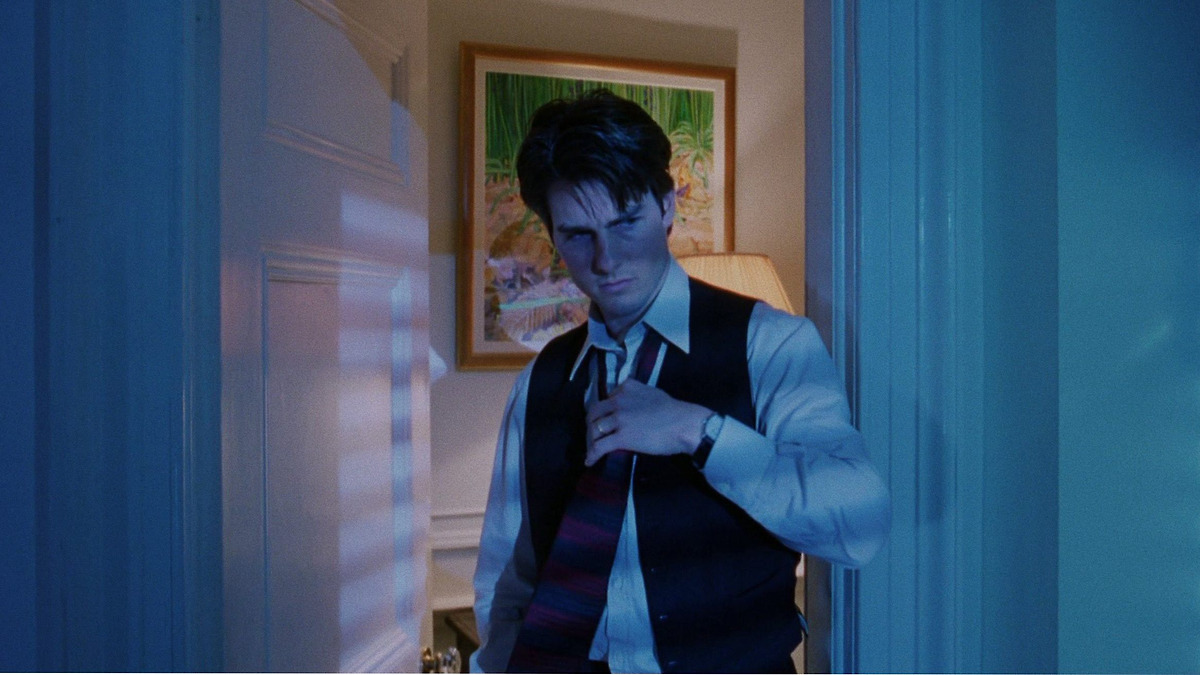
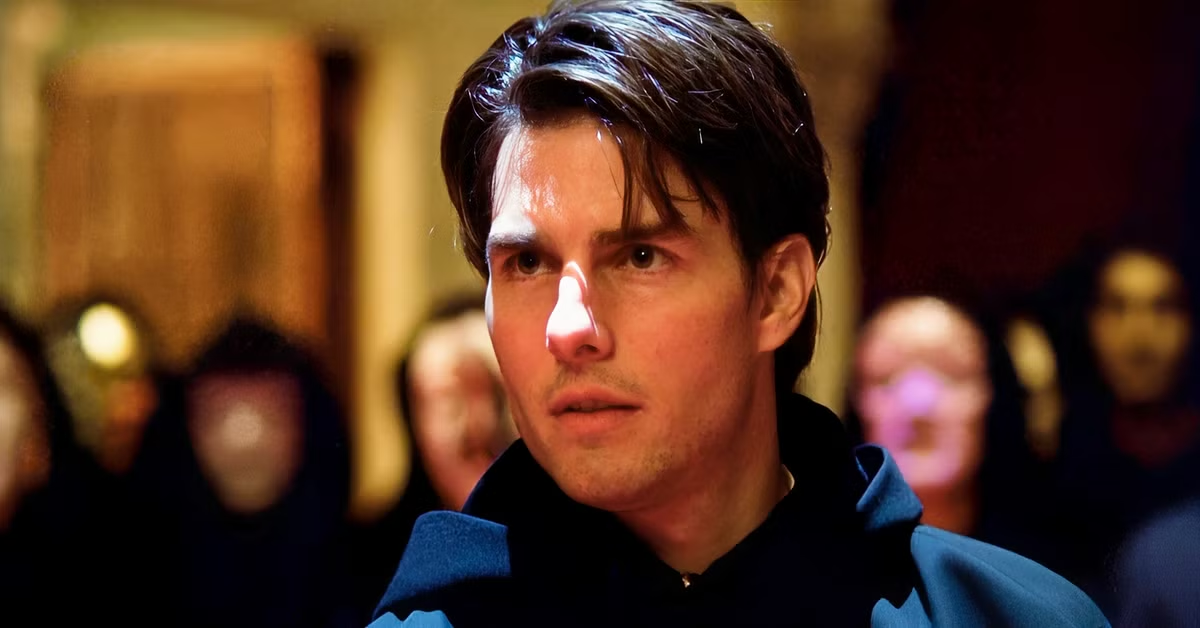
The events of the film are told from Bill’s perspective – a New York doctor portrayed by Tom Cruise himself. Although at that time for many primarily associated with appearances in Mission: Impossible or Top Gun, he was chosen for a role of a completely different character. He proved himself perfectly. The actor has participated in an impressive number of productions during his career, often in leading roles. Alongside performances in such films as Magnolia, Interview with the Vampire, Born on the Fourth of July or Collateral, this is, in the opinion of many, one of his most convincing creations.
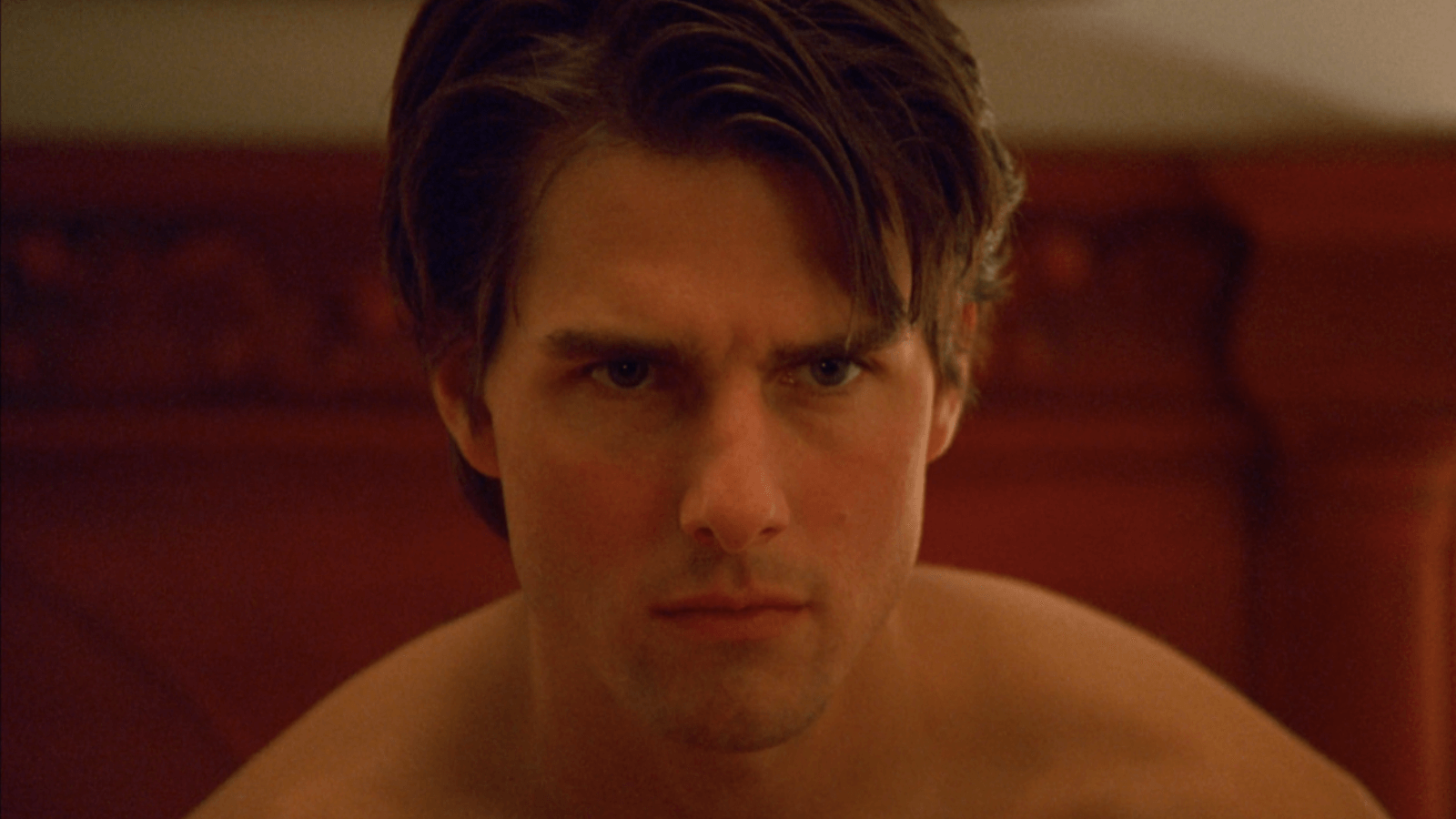
With his gaze and facial expressions he perfectly conveys the anxiety and curiosity that accompany the young man. Equally popular, yet decidedly more acclaimed, is Nicole Kidman portraying Alice – Bill’s beautiful wife. Her contribution to the production is also significant. One cannot speak here of as spectacular an acting performance as in The Hours (dir. Stephen Daldry) or Dogville (dir. Lars von Trier), yet it is still a performance worthy of praise. She acts in an intriguing and erotic style. In her own way she is a very unsettling character – mainly thanks to penetrating glances and peculiar smiles.
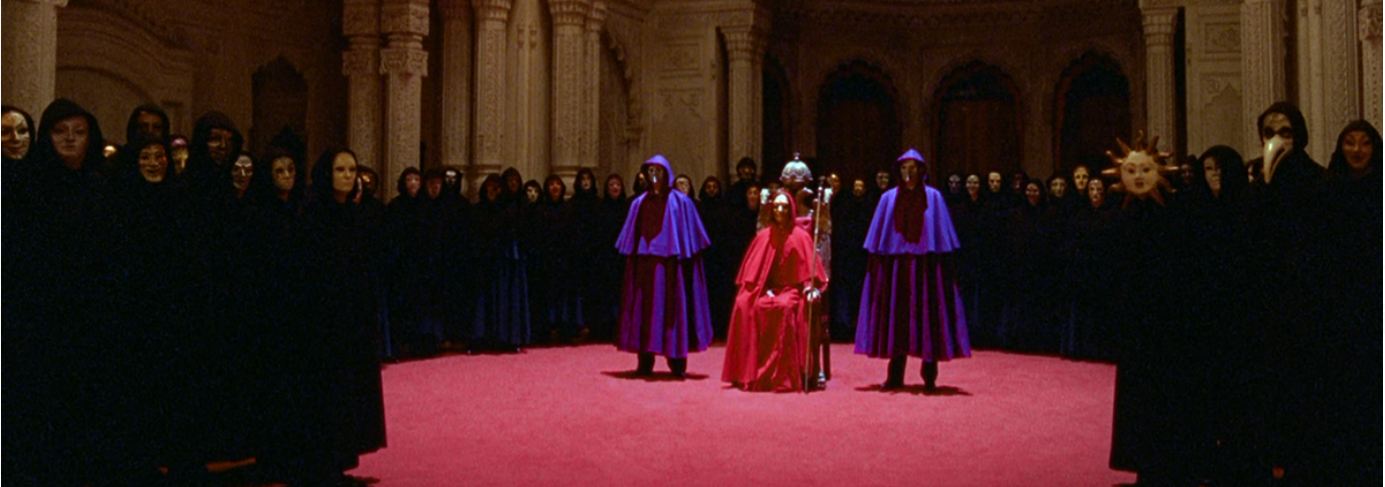
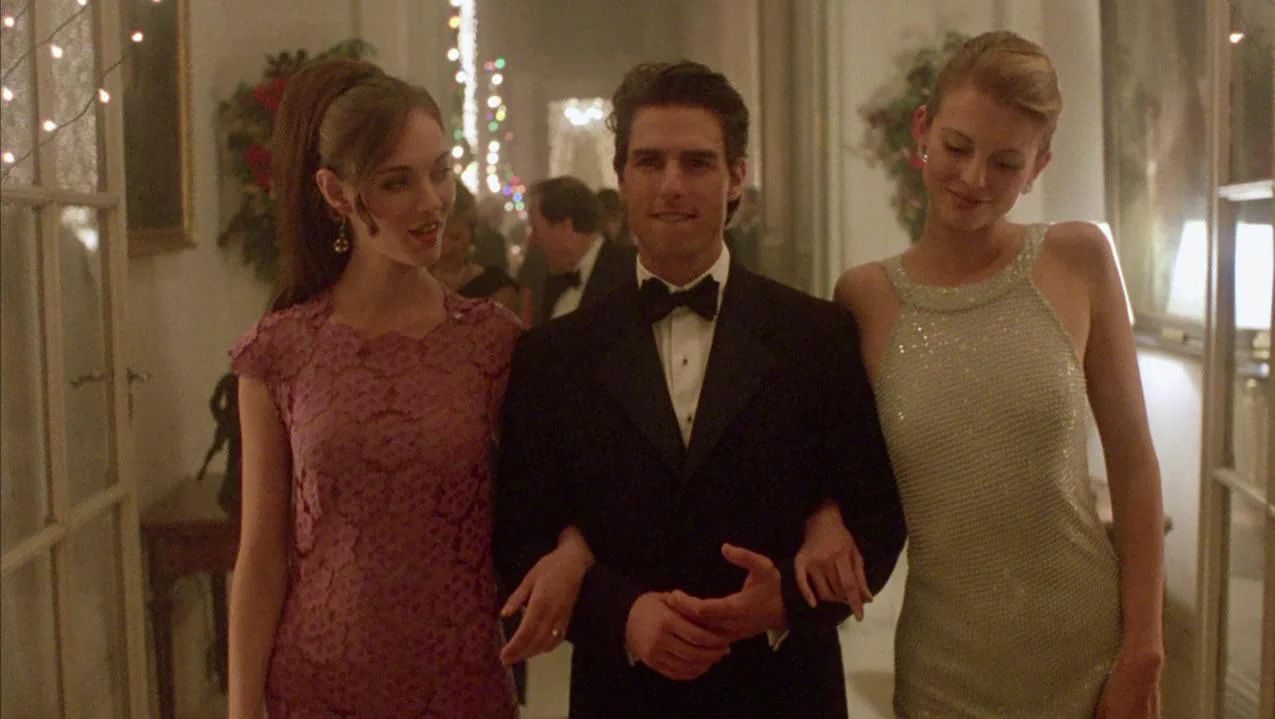
The first scenes of the film present the married couple going to a party hosted by a wealthy man – Bill’s acquaintance and client. During the event they begin to notice flirtatious behavior toward other guests. After drinking champagne, when they return to their apartment, the couple becomes involved in an argument. Alice brazenly confesses her lustful thoughts about other men. After such confessions Bill leaves the apartment to embark on a nocturnal journey full of opportunities for infidelity. The nighttime streets of New York lead him through various temptations, ultimately bringing him to a mysterious society, where the man becomes a hidden observer of a sexual orgy with occult overtones.
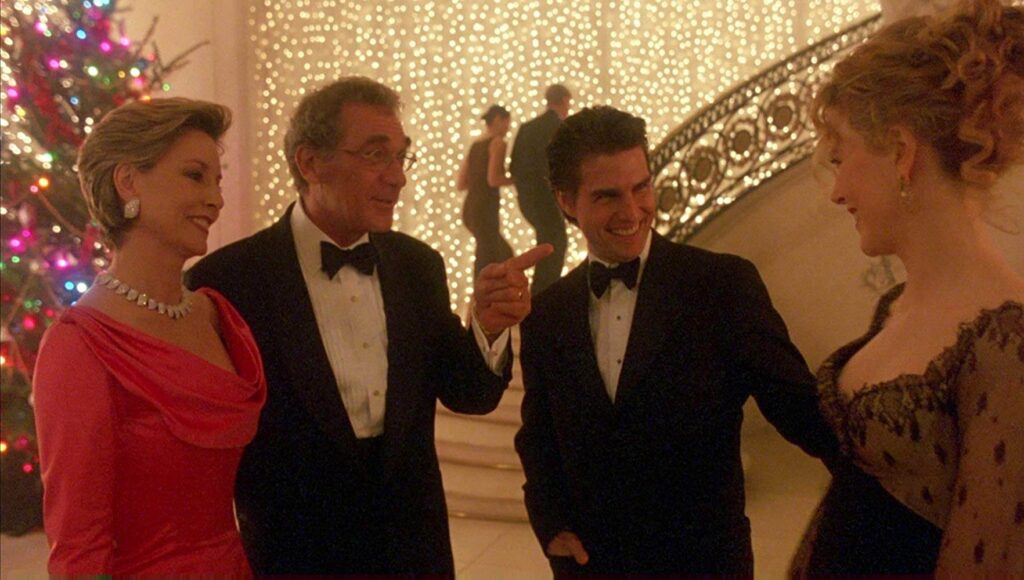
With each subsequent scene it becomes more intriguing, atmospheric, darker. Through Bill’s nocturnal escapade Kubrick addresses the theme of marital relations and fidelity, yet the most fascinating motif is that of the mysterious society itself – what exactly it is, who the people belonging to it are, what the presence in such an environment will lead to.
In the film, apart from the context of marital fidelity, one can perceive another layer of meaning. Eyes Wide Shut significantly corresponds with the already emerging at that time, and continuing to this day, change in social consciousness – the degradation of authorities in the eyes of society. Formerly accepted notions of the moral superiority of elites, politicians or even celebrities fade due to ever new scandals and affairs. As Håvard Friis Nilsen notes in his essay Deterioration of Trust: The Political Warning in Kubrick’s Eyes Wide Shut, Kubrick’s film, by turning the camera toward sexual orgies taking place in the milieu of people highly placed in society (as later becomes apparent in the film), well reflects the mentioned social moods.
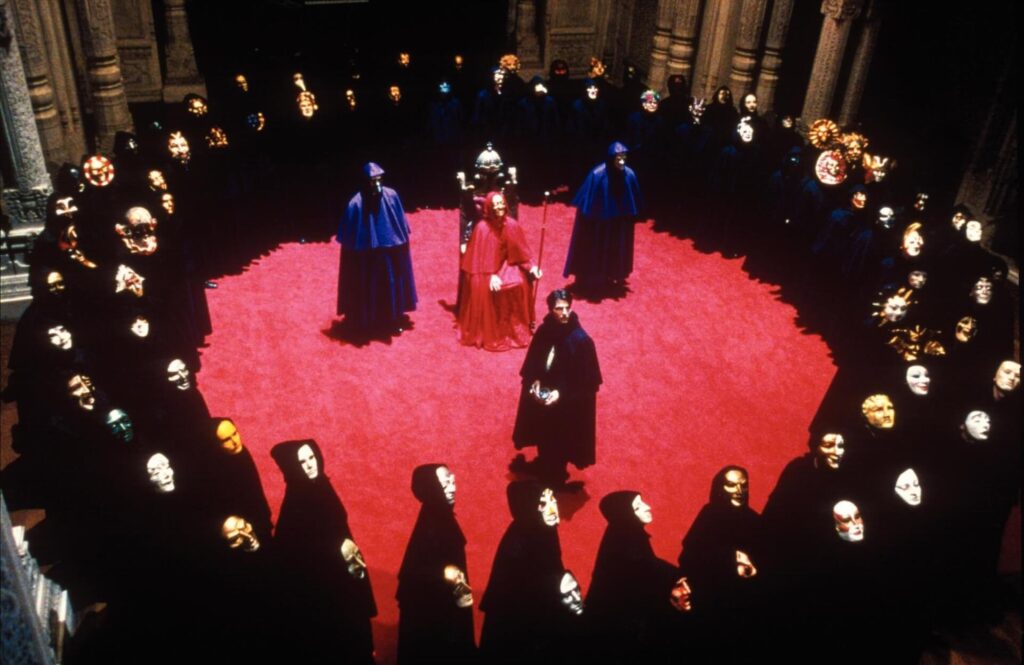
Initially we follow the events in the film as if through a keyhole, seeing only selected fragments, suspecting what may be hidden in the area inaccessible to the eye. We observe in a way comparable to observing politicians or social elites – we see only as much as we are able to notice through the fences of their estates. As the film develops, Kubrick directs the camera into the depths of a private villa, illustrating social suspicions as to how influential people truly behave.
Kubrick is an unquestionable master of directing. An example may be the scene in which he reveals the identity of one of the influential figures and indicates to which group the remaining members of the mysterious society may belong. This concerns the scene in which Bill is confronted with the cover-up of a murder that may have taken place at the mentioned estate. The man to whom Bill confides about witnessing a strange event sets a condition before the doctor. He suggests suspending suspicions, which will allow him to continue his ambitious life. Further moving within a socially respected circle must be tinged with bitter awareness of the rules prevailing there.
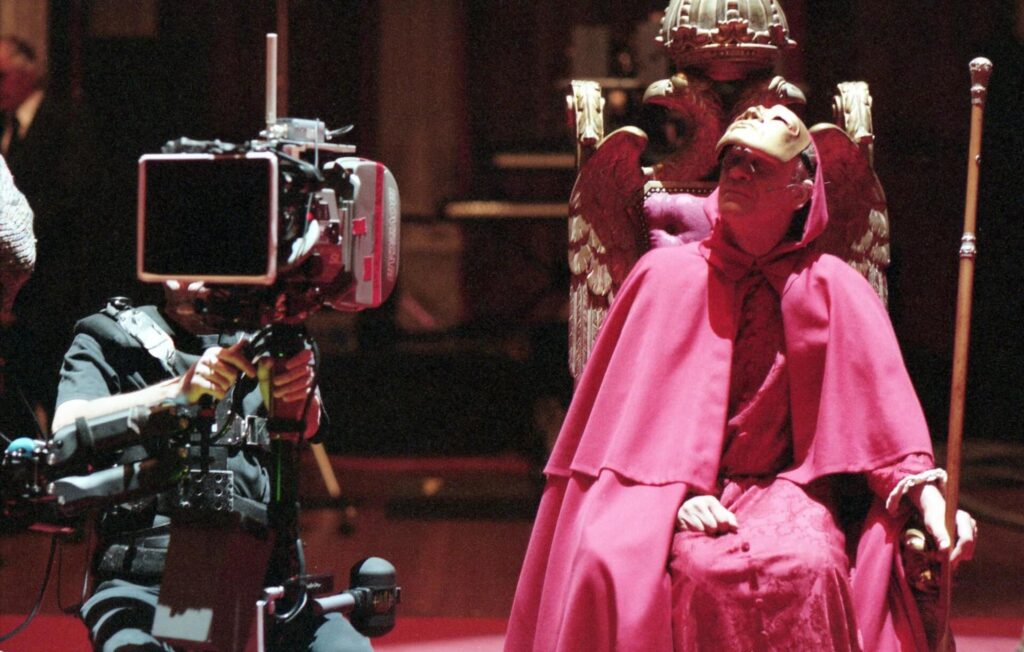
They were not ordinary people. If I told you their names – I will not tell you their names. But if I did, I do not think you would sleep so well. Impressive, however, is the very directorial unveiling of the face of the man who presents Bill with the conditions. We learn that the man with whom the young doctor is conversing is in fact the masked figure who led the sexual orgy at the private estate. The leader of the ritual characteristically used a staff, tapping it on the ground in a specific rhythm. A perceptive viewer will notice that Bill’s interlocutor handles a billiard cue in a manner analogous to the ceremony leader.
As I mentioned at the beginning – in Kubrick’s cinema every detail had significance. Apropos of directorial perfectionism, I will cite an anecdote about Harvey Keitel’s unrealized role (known among others from Bad Lieutenant, Pulp Fiction, Reservoir Dogs, The Piano). Initially he was to be cast in the director’s final project; however, as he says – he resigned after repeating the same scene 68 times. Therefore it is not surprising that such significant formal elements as image or music in Kubrick’s projects were always excellent. The audiovisual side does not fall short of earlier, most highly valued productions.
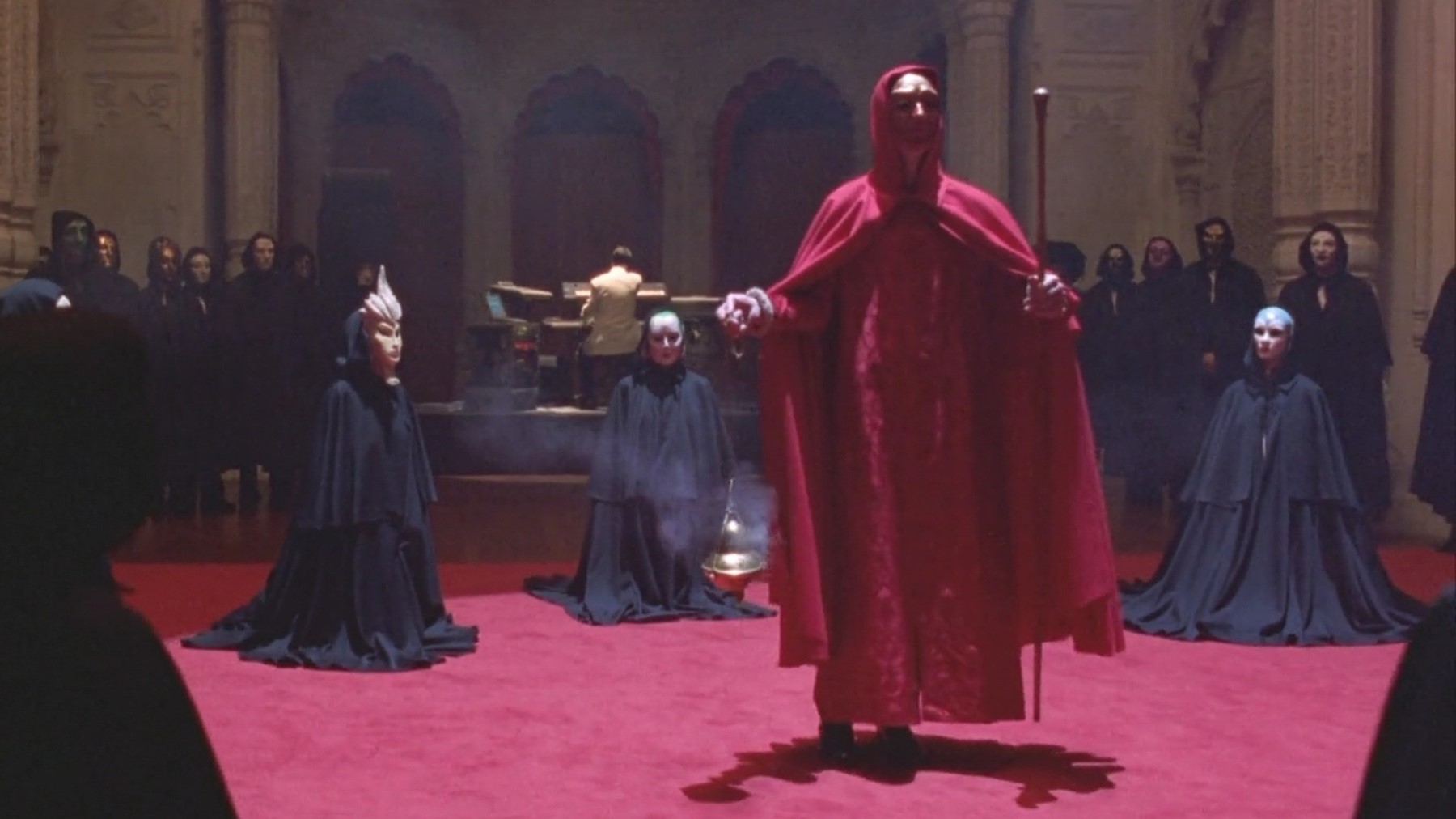
The cinematography and camera work are simple, yet satisfying and well conveying the character of each sequence. Behind the camera stood Larry Smith, for whom, interestingly, this was his debut as a cinematographer. Meanwhile the soundtrack is synonymous with anxiety. For example the memorable ritual scenes at the masked ball, combined with the booming musical motif, using reversed speech, make a powerful impression (reversed speech – an editing and sound technique most associated with the monologues in the red room from Twin Peaks).
For composer Jocelyn Pook this was also the beginning of her career. The soundtrack authored by her received Golden Globe nominations. Whether this is due to the talent of beginning creators or the coordination of their work by the director, the effect is excellent. In one interview another cult director – Martin Scorsese – was asked what he values in Kubrick’s films. He replied that Kubrick creates a kind of cinema that reaches into areas that the viewer himself would not want or would not be able to reach, and that he addresses provocative themes.
The creator of Taxi Driver also emphasized that films from Kubrick’s hand are those that grow in the viewer’s mind – watching them several times over the years, one notices new meanings in them. In accordance with Martin Scorsese’s thought, the director is famous for placing secondary content in his productions, or at least for the rich interpretations popular in the internet environment regarding hidden meanings.
As an example one may cite the cult The Shining, in which among other things political references to colonialism were smuggled in. In the film with the brilliant performance of Jack Nicholson we can observe references to Indigenous people (for example Native American images, cans with Native American logos). After the arrival of new tenants America was flooded with the blood of the inhabitants like the room in the memorable scene from the film. Meanwhile Kubrick’s final project – Eyes Wide Shut – conceals within itself far more riddles.
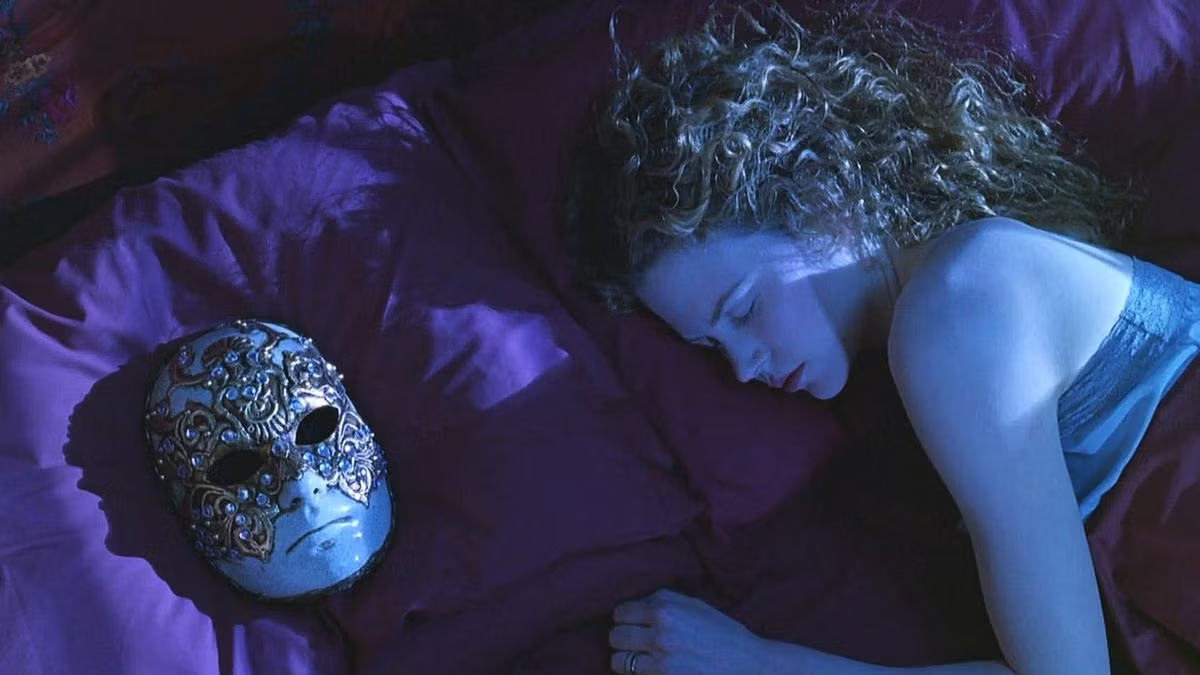
Kubrick’s final work, whose premiere was preceded by his death, is exceptionally strongly connected with many speculations. The film is the subject of the same kind of analyses that led people to conclude that Kubrick staged the moon landing and then revealed his deception to the world on Danny Torrance’s sweater (the boy wearing a sweater with a rocket, with the inscription Apollo 11 USA in The Shining). Although in the case of Eyes Wide Shut the suppositions that viewers weave are closer to earth, they are no less interesting or controversial. One such supposition in the context of the final film are the reports spoken and described in books by Fiona Barnett.
Accusations were directed among others at Nicole Kidman’s father, who lived part of his life in Australia. The very drastic description of events from the childhood of a woman who also grew up in Australia may bring to mind the ritual scenes from the film. Some internet users claim that the director chose Nicole Kidman for the role due to her father’s connections with the associations presented in Eyes Wide Shut.
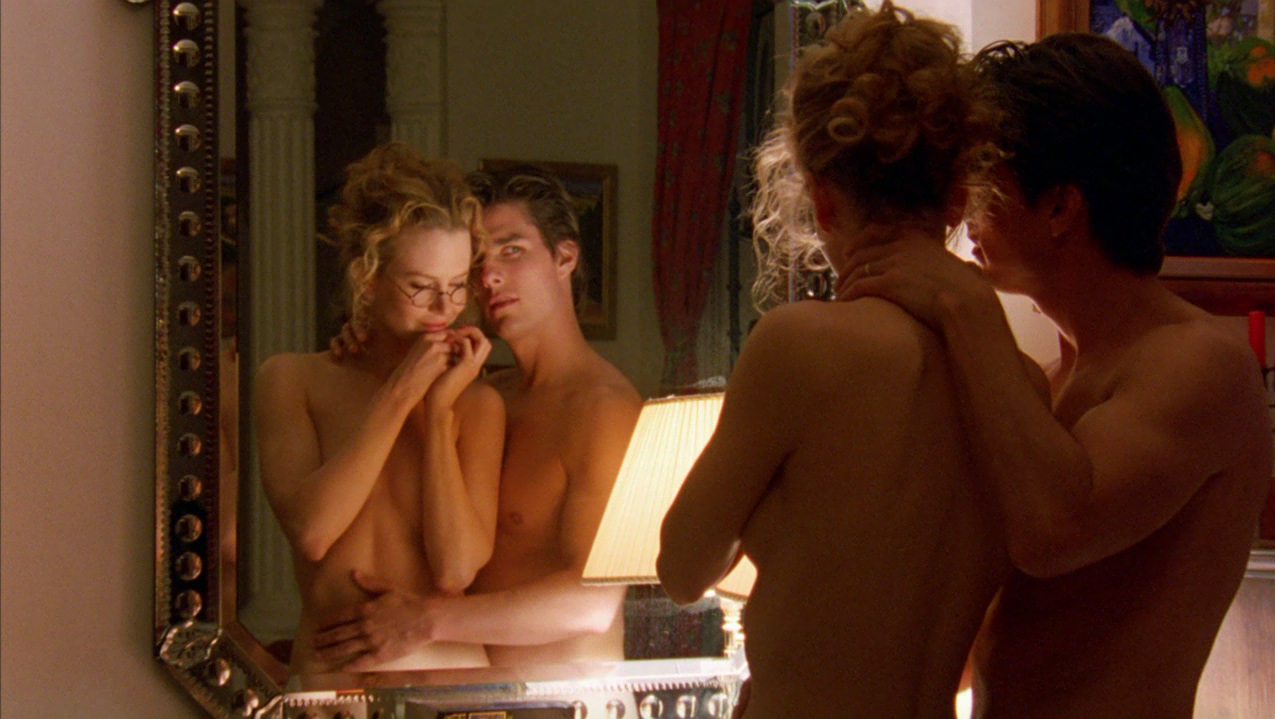
Interestingly, and lending credence to the theory of a second layer behind the casting – Tom Cruise together with Nicole Kidman as a married couple were for years strongly connected with an organization of religious coloring, the popular and controversial in the United States group of Scientology. The celebrities admitted that the organization had a very negative influence on their relations with family and marriage, and that freeing themselves from the tentacles of the milieu was a long and demanding process.
In interviews during the promotion of the film, for DVDvision magazine, Nicole Kidman mentioned Kubrick’s obsession that led him to create this film. As the actress says, the director spent considerable time studying secret societies and their rituals. Following this trail, one should note another significant similarity between the world presented and real events – in December 1972 Baroness Marie-Hélène de Rothschild organized a ball in a surrealist style for an intriguing mixture of politicians, bankers, artists and celebrities. Since the Rothschilds are one of the most influential banking families, conspiracy theories about the true nature of the event continue to multiply.
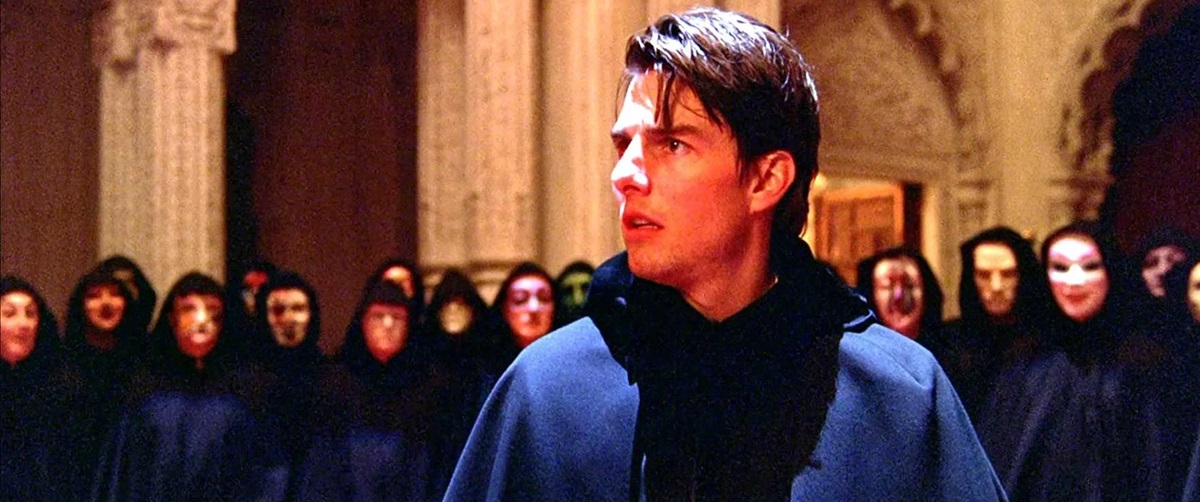
According to magazines and the few photographs, invitations for the selected guests to the ball contained hints regarding attire – black ties, long dresses and surreal heads (masks). Servants, meanwhile, were dressed as cats, plates were covered with fur, and tables with plastic dolls. The surrealist painter – Salvador Dalí himself – designed many costumes for the party. One of the invited actresses was Marisa Berenson, who later was cast in Kubrick’s Barry Lyndon. However, far more significant is that to shoot the ritual scenes of masked meetings in Eyes Wide Shut the director chose an estate belonging precisely to the Rothschild family – the Mentmore Towers manor.
The content of the film or the choice of filming location make the reference to the costume ball of 1972 seem probable. Such clues can be treated merely as far-fetched curiosities, possible overinterpretations that fuel speculation that Kubrick was murdered because of the content of his film. However one approaches it, the entirety of these tidbits causes the film, through its references, to permeate reality and intensify the aura of mystery created.

Another riddle of the film certainly worth mentioning is an absolute classic of conspiracy theories from the world of cinema. It concerns the original, director’s version of the film, which was allegedly edited before final distribution. Although neither Warner Bros. nor any member of the production crew ever unequivocally confirmed the existence of specific, content-significant removed material, for many years a theory about it has circulated, regularly mentioned by people associated with the film industry and fans of the film. More specifically, it concerns the alleged 24 minutes that were removed after the creator’s death, and because of that the film may give the impression of being narratively incomplete closer to the ending.
Nicole Kidman’s statement for The Hollywood Reporter may suggest that there indeed existed a version different from the theatrical release. The fact that Stanley died before the premiere of the film… Well, everything seemed so dark and strange. Stanley sent us the version he considered finished, Tom and I watched it in New York – and then he died. The only official comment from Warner Bros. regarding interference with the film material concerns the resignation from scenes with visible nudity. This was done due to agreements concerning imposing an R rating on the film (age restriction), which could have had an impact on its financial profitability.
One version of speculation about the removed content was cited by Roger Avary in a conversation on Joe Rogan’s podcast, where he appeared together with Quentin Tarantino (what would Joe Rogan’s podcast be without a conspiracy theory). Avary explains that the cut material may consist in extinguishing the motif of two men following Bill throughout the entire plot of the film. He refers to the men who can be observed in the final scene, during the visit of the married couple with their daughter to a toy store. The couple then conducts a not entirely clear conversation, yet one can feel in it deep sadness, inner conflict and indecision.
Their daughter at that time looks around at toys from holiday promotions, and the parents do not take their eyes off her. At one moment Bill and Alice place their hands on the child’s head and shoulder, saying gently hey, as if in farewell. At that moment they separate from the child, who walks toward two older men. The girl, walking ahead, turns one last time toward her parents. This sequence of images in itself seems quite suggestive, though ambiguous. As Roger Avary suggests, the alleged cut material could more directly refer to the somewhat unclear events of the film’s ending.
Kubrick died on 7 March 1999 – 6 days after screening the final version of the film for his family and cast. It was 4 months before the official theatrical premiere. He died unexpectedly of a heart attack, in his sleep. Among those who delivered funeral speeches were his brother-in-law Jan Harlan, Terry Semel (President of Warner Bros.), Steven Spielberg, Nicole Kidman and Tom Cruise.
I hope that the above text has at least somewhat conveyed how many emotions Kubrick’s productions evoke and how intriguing his final film is. One can debate which of the director’s works is the most perfect in screenwriting or formal terms, but probably most viewers will agree – the last entry in his filmography is shrouded in the greatest mystery, and for many cinephiles a small dream will remain the discovery of the alleged 24 minutes cut from the film.