Review
SPIDER-MAN: INTO THE SPIDER-VERSE. Defining Achievement
Into the Spider-Verse remains astonishing even years later. Its street-art aesthetic, bold character design, and explosive action sequences still feel radical.

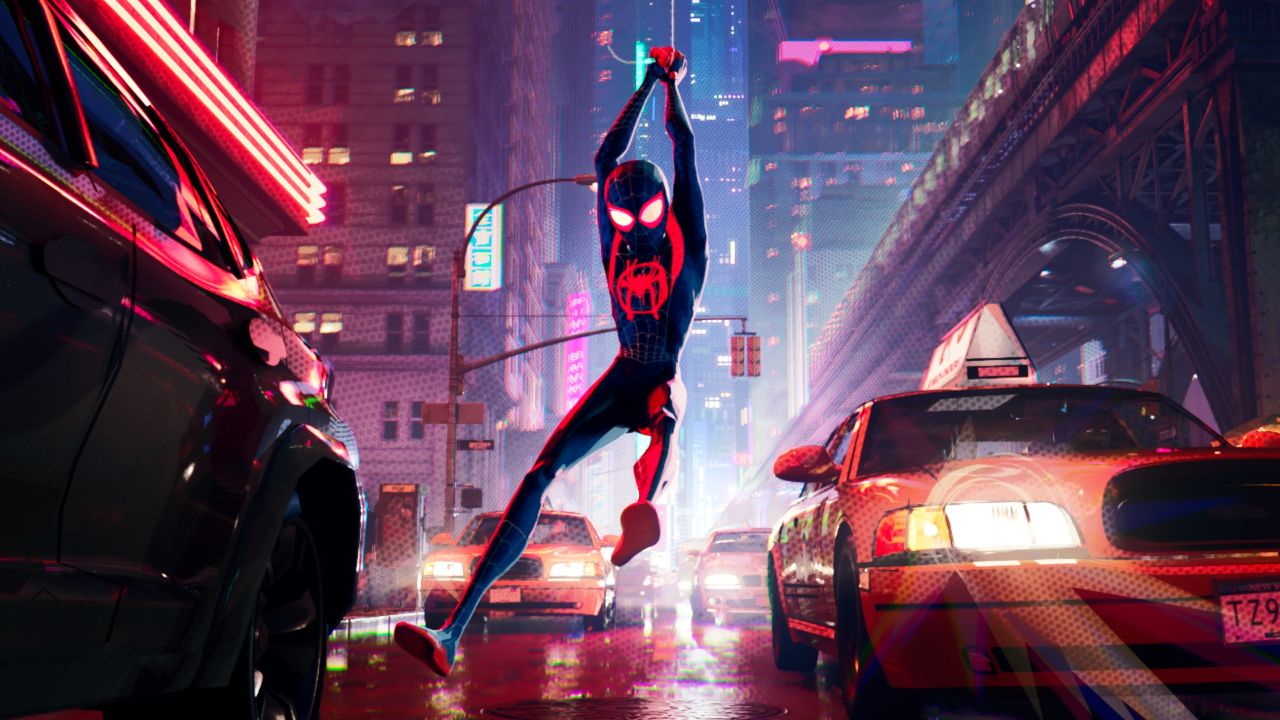
An unusually low frame rate by contemporary animation standards, eye-searing colors, and a seemingly absurd high-concept premise… Judging solely from a half-watched trailer, it would have been easy back in 2018 to dismiss Spider-Man: Into the Spider-Verse as a flashy but unnecessary attempt to cash in on a lucrative brand. That would have been a spectacular miscalculation. What many initially mistook for aesthetic overkill turned out to be not only the best animated film of its year, but the beginning of one of the most creatively ambitious superhero sagas of the decade. At a time when comic-book fatigue was quietly setting in, this film jolted the genre awake.
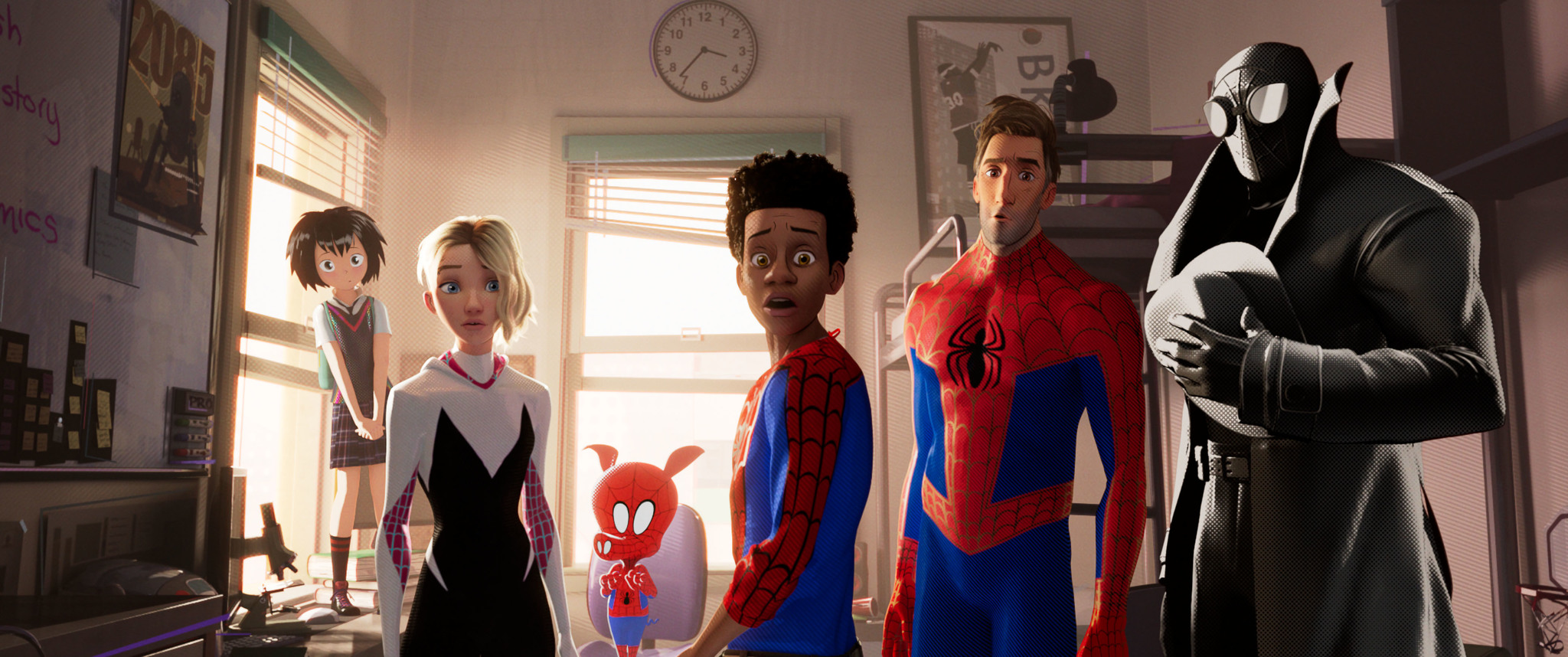
It begins simply enough — or rather, deceptively so. There are many worlds, many New Yorks, many Brooklyns. Infinitely many. In one of them lives Miles Morales, a teenager who acquires powers identical to those once granted to Peter Parker. Except this time, Spider-Man isn’t a singular figure. When Parker is taken out of the equation, Miles must step into the red suit and swing between skyscrapers as a new protector of the city. He isn’t alone for long. A dimensional rift brings other Spider-people into his world — four of them, to be precise — including a slightly washed-up, middle-aged Peter Parker who strongly resembles the Tobey Maguire incarnation and unexpectedly becomes Miles’ reluctant mentor.
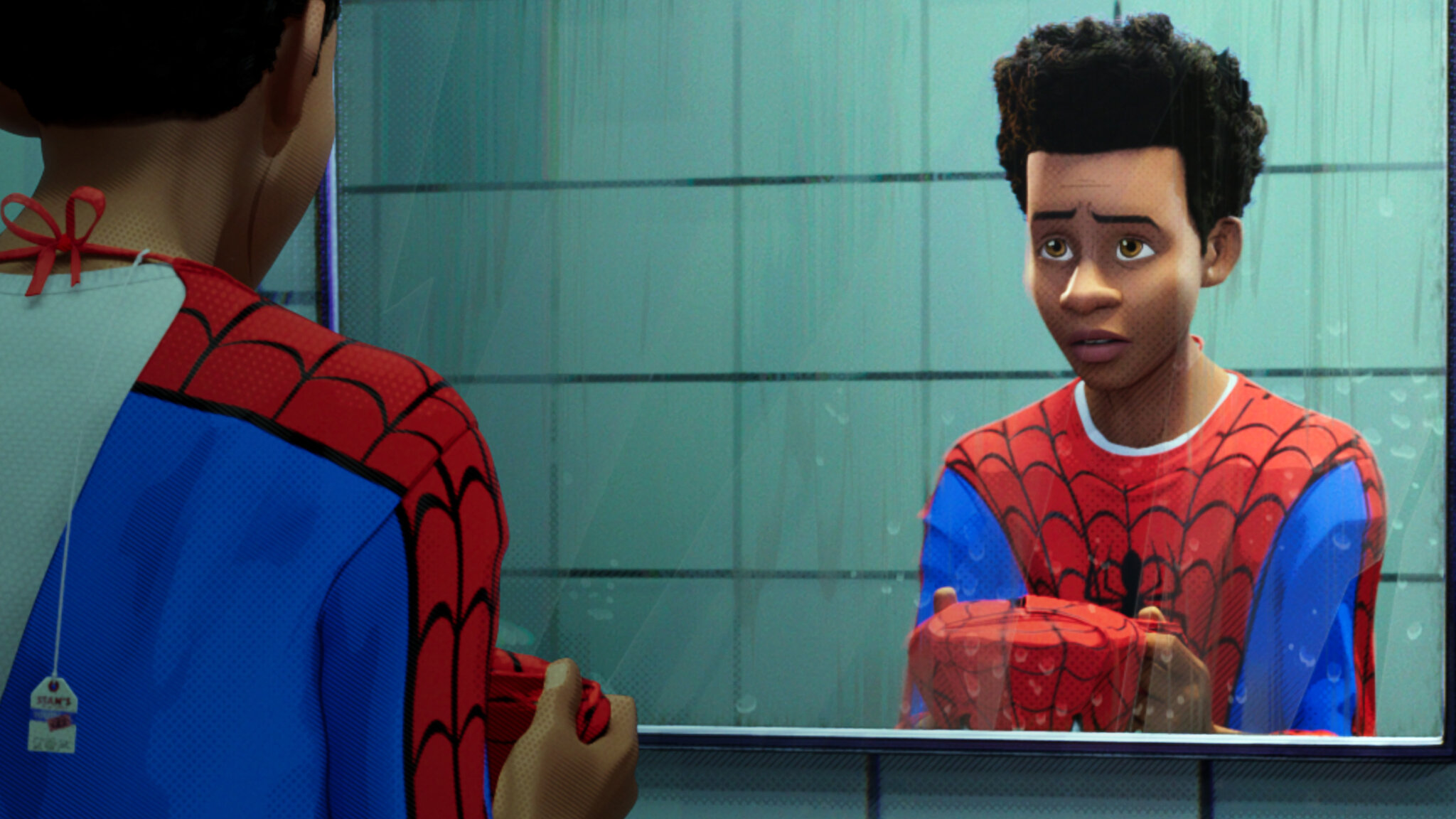
As long as the interdimensional collider remains in the hands of Kingpin, no universe is safe. One Spider-Man — especially a rookie — isn’t enough to wrestle with quantum paradoxes. Five barely seem sufficient. Yet watching them try is precisely where the film finds its pulse.
Visually, Into the Spider-Verse remains astonishing even years later. Its street-art aesthetic, bold character design, and explosive action sequences still feel radical. The reduced frame rate — initially jarring to some viewers accustomed to the polished smoothness of mainstream animation — ultimately became one of its greatest strengths. It gave movement texture, weight, and rhythm. When the climactic collider sequence unfolds in a kaleidoscope of collapsing dimensions, the film doesn’t just dazzle; it crackles. The visual experimentation demands attention and rewards patience, inviting the viewer to linger on frames that look like living comic panels.

The animation’s audacity mirrors the screenplay’s structure. Phil Lord’s sensibility — often described as “controlled chaos” — defines the film’s narrative momentum. Though directed by Bob Persichetti, Peter Ramsey, and Rodney Rothman, the tonal fingerprints of Lord (with Chris Miller producing) are unmistakable. The film moves at breakneck speed, packed with exposition, jokes, reversals, and emotional beats, yet it never collapses under its own weight. The storytelling is frenetic but disciplined, playful but coherent.
The filmmakers reach their creative peak when explaining the mechanics of the multiverse without sacrificing narrative wit. The film gleefully acknowledges its comic-book roots, visually referencing panels, captions, and onomatopoeic flourishes, sometimes flirting with psychedelia. Yet even at its most surreal, the storytelling remains lucid — reminiscent, in spirit, of the smartest episodes of Rick and Morty. Crucially, the characters feel authentic to decades of Marvel mythology, ensuring that the project satisfies longtime fans while remaining accessible to newcomers who may have stumbled into the Spider-Verse by accident.

The voice cast, too, proved inspired. Liev Schreiber’s Kingpin carries gravitas, while Nicolas Cage’s gleefully self-aware Spider-Man Noir performance adds an unexpected layer of meta-humor that only grew more appreciated with time. The soundtrack — blending rap, indie rock, and electronic influences — captured both Miles’ identity and Spider-Man’s broader pop-cultural history. In retrospect, even the localized versions held up remarkably well, preserving the film’s rhythm and energy across languages.
Ultimately, the film’s enduring strength lies in its production choices. It was bold without being cynical, stylized without being hollow. Sony, long criticized for its uneven live-action handling of the character, seemed to channel every unrealized creative impulse into animation — and, freed from formula, found something genuinely new. What once looked like a risk now reads as a turning point. Not just the surprise of its year, but one of the defining animated achievements of its era.