
Review
TRON: LEGACY. The sequel that aged well [REVIEW]

The first part of “Tron,” although an unusual and visually original film, was not a box office success (though it also didn’t lose money). So no one was in a hurry to return to that universe. In 2003, the computer game TRON 2.0 was released, continuing the storylines of the original. But The Walt Disney Company still didn’t give the green light for another theatrical installment, even though rumors kept circulating. Meanwhile, Lisberger’s film became a cult classic, watched by audiences on VHS tapes, TV, and DVD. Someone at the studio came up with the idea of showing fans a test trailer at the San Diego Comic-Con in 2008 to gauge their reaction. The response to this short footage was overwhelmingly positive, and the decision to make a sequel was finally made.
Over the more than 20 years since the first film’s premiere, the world had changed completely. Computers became an essential part of daily life, and the Internet turned the globe into a “global village.” At the same time, CGI effects made it possible to bring even the wildest imaginings of screenwriters to life. The limitations filmmakers faced in the 1980s were gone. The real challenge now was to present the same world as in 1982—only more technologically advanced—while maintaining visual consistency.

In both the real world and the film, 28 years have passed. Kevin Flynn (Jeff Bridges) disappeared in 1989 on the brink of a great discovery. Now, in 2010, his rebellious and headstrong son Sam (Garrett Hedlund), with the help of Kevin’s old friend Alan Bradley (Bruce Boxleitner), picks up his father’s trail. Soon, he finds himself in Kevin’s secret lab and is transported into the Grid—a digital realm of living programs ruled once again by a despot. There, with the help of unexpected allies, he faces a fierce battle to free this world from its tyrant.
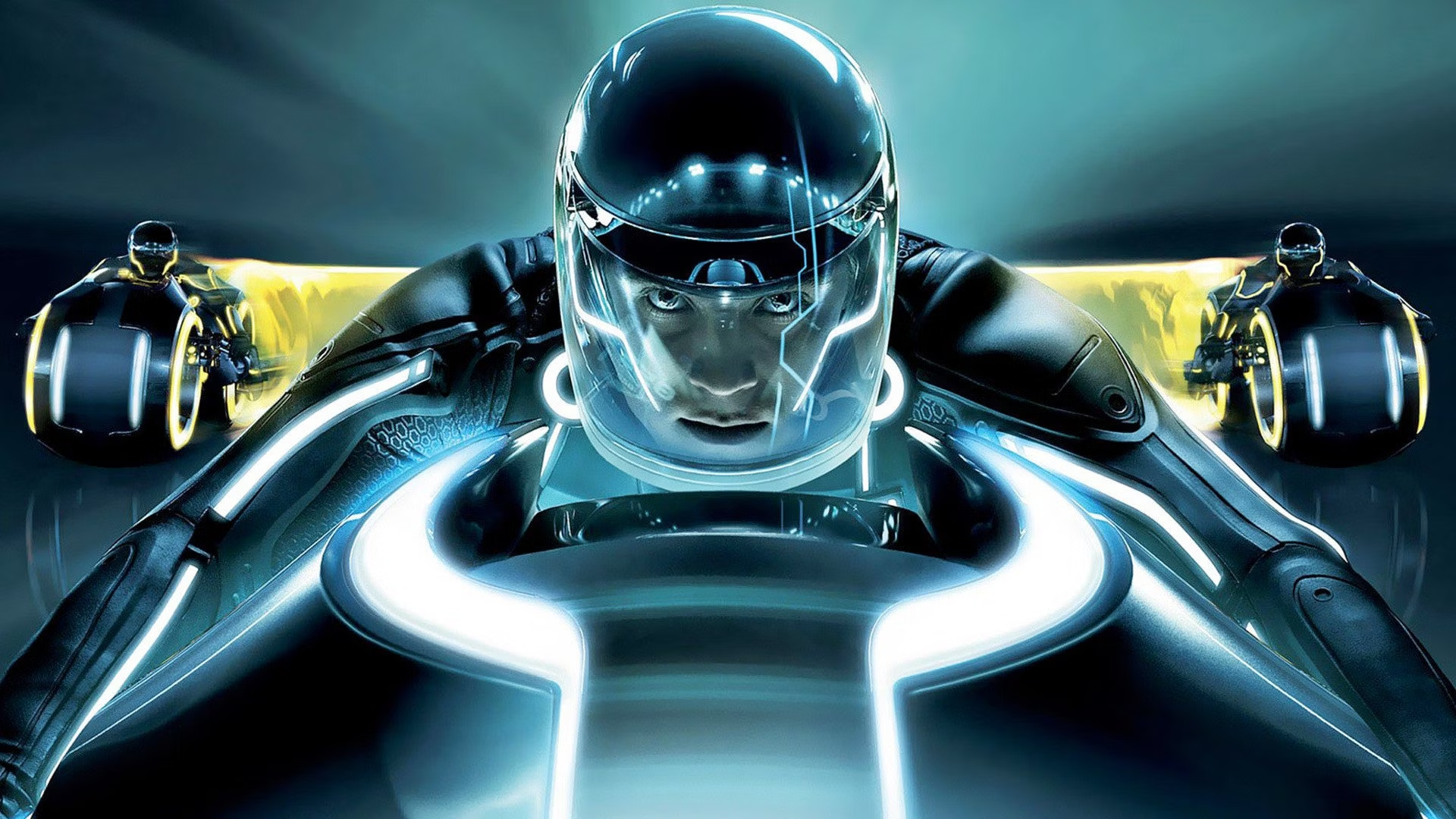
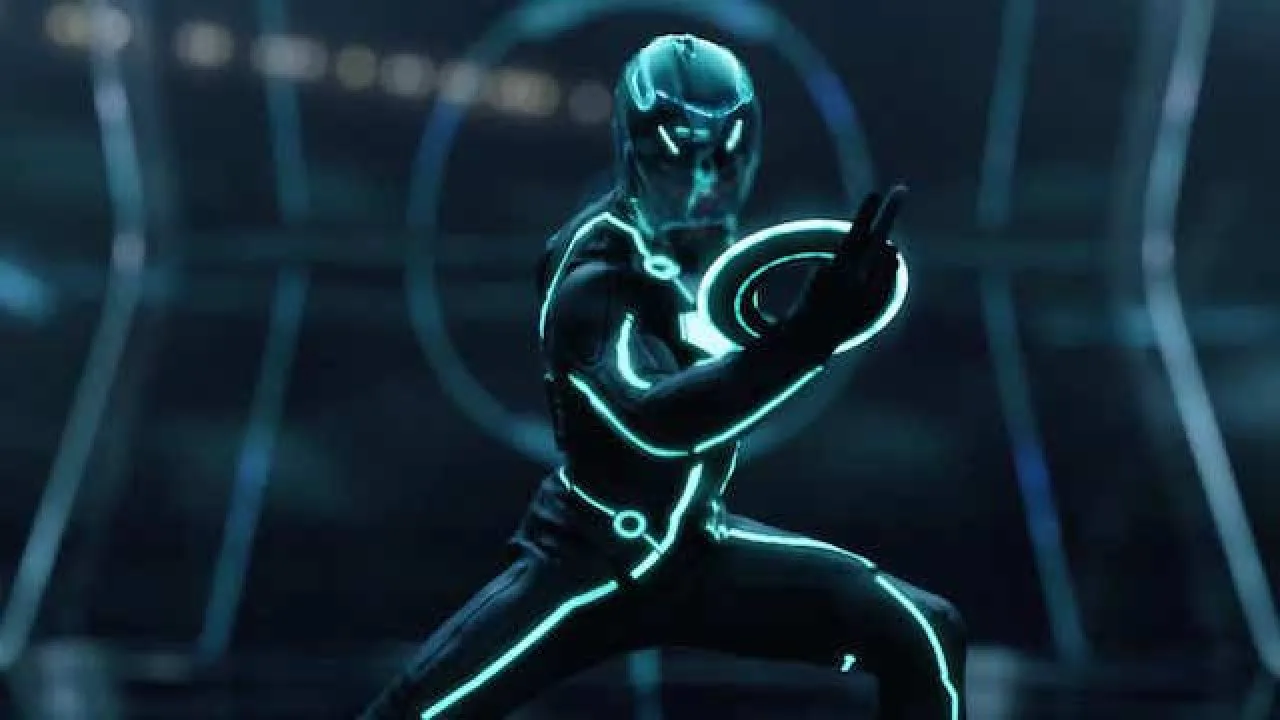
The budget of Tron: Legacy reached a spectacular $150 million. Visually, the film is stunning, and you can clearly see where the money went. The creators serve up updated versions of scenes from the original: futuristic lightcycle races, disc battles, and even a modernized solar sailer. Jeff Bridges and Bruce Boxleitner reprise their original roles, joined by a younger generation—Garrett Hedlund, Olivia Wilde, and… a digitally de-aged Jeff Bridges, who also plays the antagonist, Clu.

Steve Lisberger, the director and creator of the first film, this time limited himself to producing, while first-time director Joseph Kosinski took the helm—years before mesmerizing audiences with the second Top Gun: Maverick. Even in “Tron: Legacy,” Kosinski’s flair for crafting breathtaking visual spectacles was evident. He insisted on building as many practical sets and props as possible and only enhancing them with digital imagery later. Following the fashion of the time, the film was released in 3D. Importantly, the sequences in the Grid (which make up the majority of the runtime) were shot using the same technology employed in Avatar by James Cameron. This made the final product look far better than most blockbusters where 3D was added in post-production.
The soundtrack deserves special praise: electronic, atmospheric, and perfectly synced with the visuals. It was created by Daft Punk, who also make a cameo during the party scene hosted by Castor (Michael Sheen). In keeping with the iron rule of Hollywood sequels, everything here is bigger, faster, and more spectacular. And yet, it somehow feels as though the original had more heart.
The marketing team didn’t disappoint—promotion was in full swing, even involving Playboy. A viral campaign was launched during production, with teaser websites hinting at the upcoming film and expanding its story. Finally, on December 17, 2010, the sequel hit theaters. Audiences left $410 million at the box office. Unfortunately, that wasn’t enough to immediately greenlight a third installment, despite the fact that the ending of “Tron: Legacy” clearly set one up. The third film wouldn’t be made until fifteen years later—but that’s another story.
“Tron: Legacy” is a visual feast, and unlike the original, it has aged remarkably well (with one exception—more on that below). Narratively, it doesn’t break new ground, but this world doesn’t need intricate, tangled plots. Its greatest strength lies in its audiovisual design, and in that regard, it’s flawless. The creativity and imagination on display in depicting the digital realm deserve nothing but praise. The sequel also explores the world effectively—balancing enough familiar elements to satisfy fans of the original while offering plenty of fresh ideas. The theme of digital life and its relationship to the real world is especially promising, though only lightly touched on here. It’s intriguing to imagine what a director like Denis Villeneuve might have done with such material.

I have only two complaints. One is general, the other more personal. The first is the digital de-aging of Jeff Bridges, which has aged quite poorly. Even at the time, critics and audiences complained about Clu’s “plastic” look—comparable to cutscenes in bad video games. You could argue that the character is a digital construct, not a real person, but that only masks the issue. It’s better to see this as a product of its era. The second, more serious for me, is Kevin Flynn’s character arc. I don’t like what the screenwriters did with him in the sequel—but that’s a personal reaction, and every viewer will see it differently.
Years later, I returned to the “Tron” universe with genuine pleasure. While the original will always hold a special place in my heart, I can’t help but appreciate the audiovisual feast that is its sequel. It’s a shame that the much later and troubled third film abandoned most of the sequel’s main characters. But more on that soon. I highly recommend watching “Tron: Legacy”—it’s a truly unique blockbuster that might appeal even to those unfamiliar with the original.

