
Review
“The Big Bad Fox and Other Tales”: Just warmth and sincerity
The subtle slapstick humor and delicate hand-drawn animation style give The Big Bad Fox and Other Tales its charm and fleeting quality.


The Big Bad Fox and Other Tales by Benjamin Renner and Patrick Imbert consists of three separate stories, connected by recurring characters and a single location: a peaceful French farm. In the first story, a stork delivering a baby crashes into a nearby tree and breaks its wing. Injured, it’s unable to complete the delivery on time. The task is then taken on by the farm’s inhabitants—a pig, a duck, and a rabbit. This trio of friends is impulsive and clumsy, and their adventures are shaped by both sheer luck and catastrophic misfortune.
In the titular segment, a young, inexperienced, and small fox dreams of being feared as the terror of the forest, proudly bearing the title of predator. Encouraged by a wolf friend, he sneaks onto the farm and steals three eggs. Soon, the chicks will hatch—his supposed first victims. This act is meant to prove his transformation into a ruthless, calculating hunter. No more shameful vegetarian diet; the time for real hunting is near. Although he hides, the fox knows he is a coward. What he never expected was to develop a sense of care and—horror of horrors—paternal instincts.

The final story takes place at Christmas. This time, the trio introduced in the first episode sets out on a mission to rescue Santa Claus—and, with him, Christmas for all children. Never mind that the whole thing results from a misunderstanding, a miscommunication, and a wrong interpretation.
The driving force behind all episodes of The Big Bad Fox and Other Tales is misunderstanding, impulsive reactions, and hasty decisions. Renner and Imbert make use of a wide range of fairy-tale archetypes and motifs familiar from children’s literature. A farm is often one of the first places a child learns to name objects, numbers, and professions, while the forest is a classic symbol of danger and mystery. The animals personify human character traits—fearfulness, cunning, resourcefulness, courage, kindness—and over the course of the stories, these qualities are put to the test.
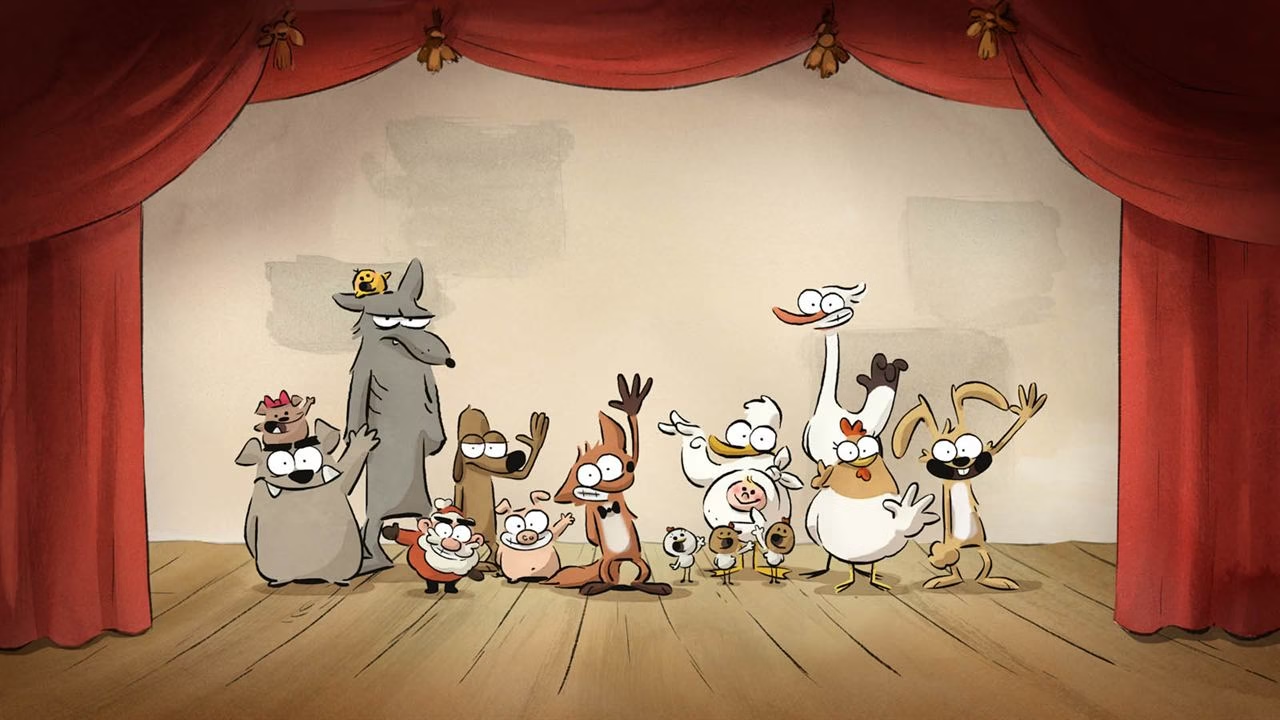
Will the fox be determined enough to stand up to his hostile mentor, the wolf? Will the pig, duck, and rabbit back out, frightened by the challenge ahead? It’s a simple narrative mechanism, but in these fast-paced vignettes, it works perfectly.
The creators of the Oscar-nominated animated film Ernest & Celestine (highly recommended) approach their new film with a unique idea. Each part is introduced from a theatrical stage, reminding the audience of the story’s playfulness. The subtle slapstick humor and delicate hand-drawn animation style give The Big Bad Fox and Other Tales its charm and fleeting quality. The soft, muted color palette adds to the feeling of calm and safety, no matter what happens on screen—something many parents are sure to appreciate.
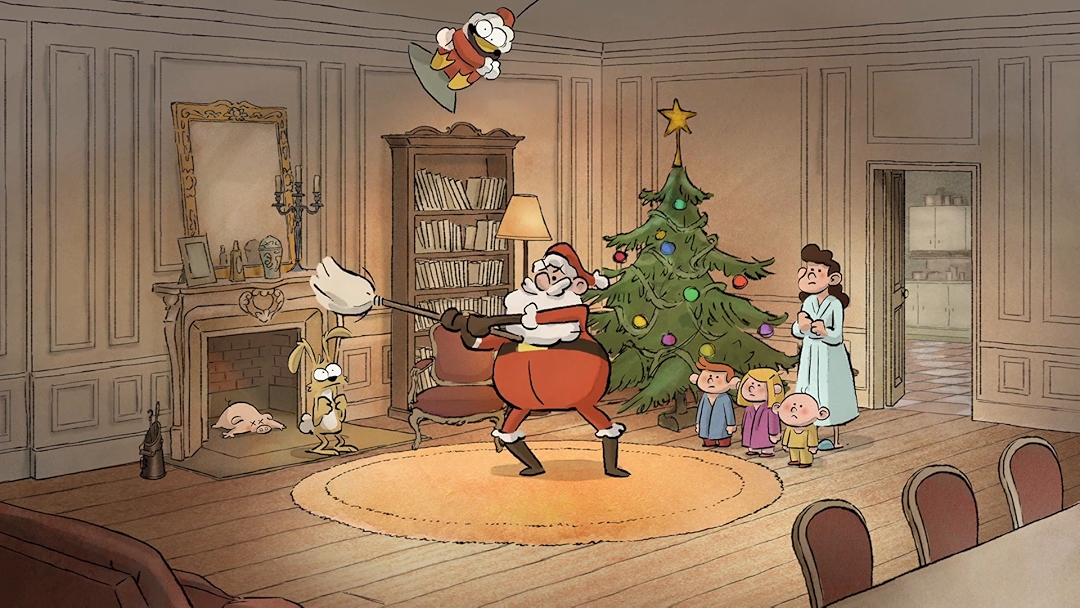
The central theme of each story is the relationship between adults and children—not just in the sense of parent and child, but also as teacher and student, role model and imitator. This relationship carries the lessons, morals, and warnings aimed mostly at the adults. The chicks raised by the fox grow into little daredevils planning to hunt and eat chickens. The first story reminds viewers of the responsibility we have for the youngest, while the final one speaks of sacrifice, meaningful gestures, and empathy.
We know these themes from Winnie-the-Pooh, the fables of Ignacy Krasicki, countless bedtime stories, and children’s books read before sleep. And yet, there’s no sense of oversaturation—just warmth and sincerity.

