
Review
THE SECRET AGENT. Remember Me [REVIEW]
The Secret Agent is a film where vivid colors, pulsating music, and sweeping storytelling take center stage, with a secret ingredient holding it all together.

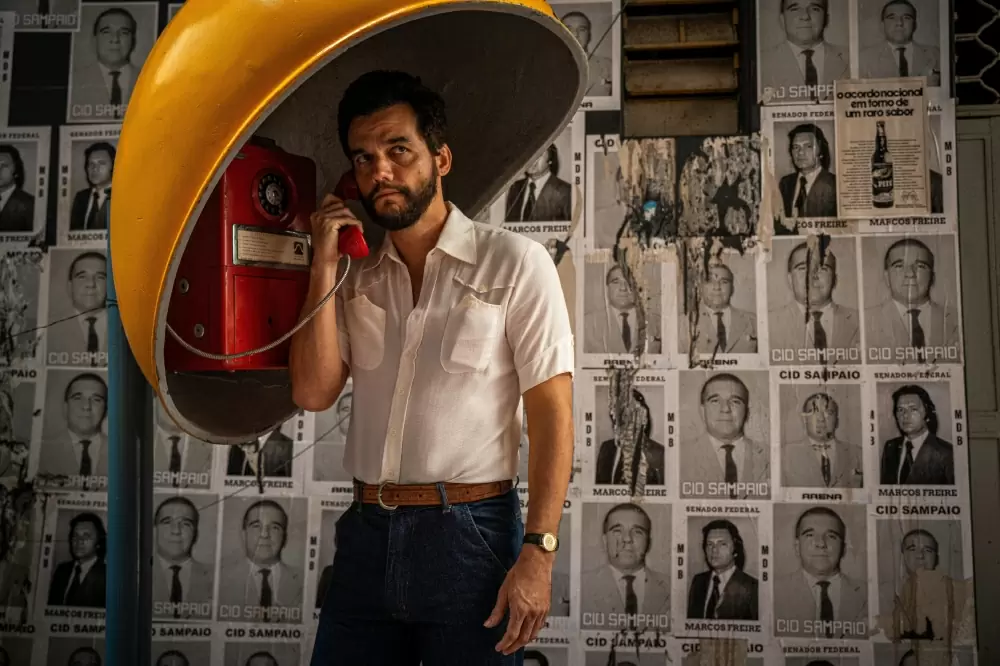
The new film by Kleber Mendonça Filho has many faces, and each of them is excellent. In the hands of another filmmaker, The Secret Agent could have ended up as a simple, polished political thriller about Brazil during the military dictatorship. Meanwhile, the director of Aquarius and Bacurau, previously shown in Cannes, plays with style with evident joy. He delivers a thriller so dense that one might miss the plot. He sketches a portrait of 1970s Brazilian society, touches on themes of memory work and family histories scarred by violence, while simultaneously deflating the seriousness with a solid dose of absurdity and genre pulp (at one point even veering briefly toward a zombie apocalypse).
Above all, he creates a stylistically beautiful, engaging film that stays close to its characters.
Besides the corpse, we’ll also see, for example, a human leg inside a shark’s entrails and a two-faced cat. In the gas station scene, the director also proves himself a master stylist: the frame radiates freshness, whiteness, and vivid, warm colors. There’s no doubt that we are in a place both colorful and sweltering (from heat and emotion).  At first, we know little about Marcelo or the world around him. The viewer’s personal discovery of the story’s layers is part of the pleasure of engaging with Filho’s film, and the very process of reconstructing and creating a narrative is one of its central themes.
At a certain point, it turns out that a woman is listening to tapes from fifty years ago and, from that perspective, tries to reconstruct the protagonist’s life. The film itself is a similar attempt to return to a place and time that now exist only in memory; to recreate 1970s Recife and immortalize it on camera. Marcelo is hired by an office dealing with citizen identification and uses access to documents to find proof of his mother’s death (and thus her existence), searching for a record more permanent than faulty memory. Years later, his son Fernando will remember his father just as vaguely. Here, Filho raises questions about the nature of history and the weight of memory—both national and personal.
In 1977, Filho was nine years old and deeply fascinated by Steven Spielberg’s Jaws. He was too young to watch the film, but he passionately drew its poster. In the film, Fernando does exactly the same. It’s not enough to equate the character with a younger version of the director, but Filho’s childhood memories clearly influenced the final shape of The Secret Agent.
Just like in Paolo Sorrentino’s Parthenope or Alfonso Cuarón’s Roma, we’re dealing with an impressionistic, nostalgic postcard created by someone who knows the city he portrays like the back of his hand—he remembers its textures, smells, and sounds. The latter are especially crucial here. The soundtrack of The Secret Agent is more than a compilation of Brazilian and international hits—music becomes a powerful narrative device in Filho’s hands. 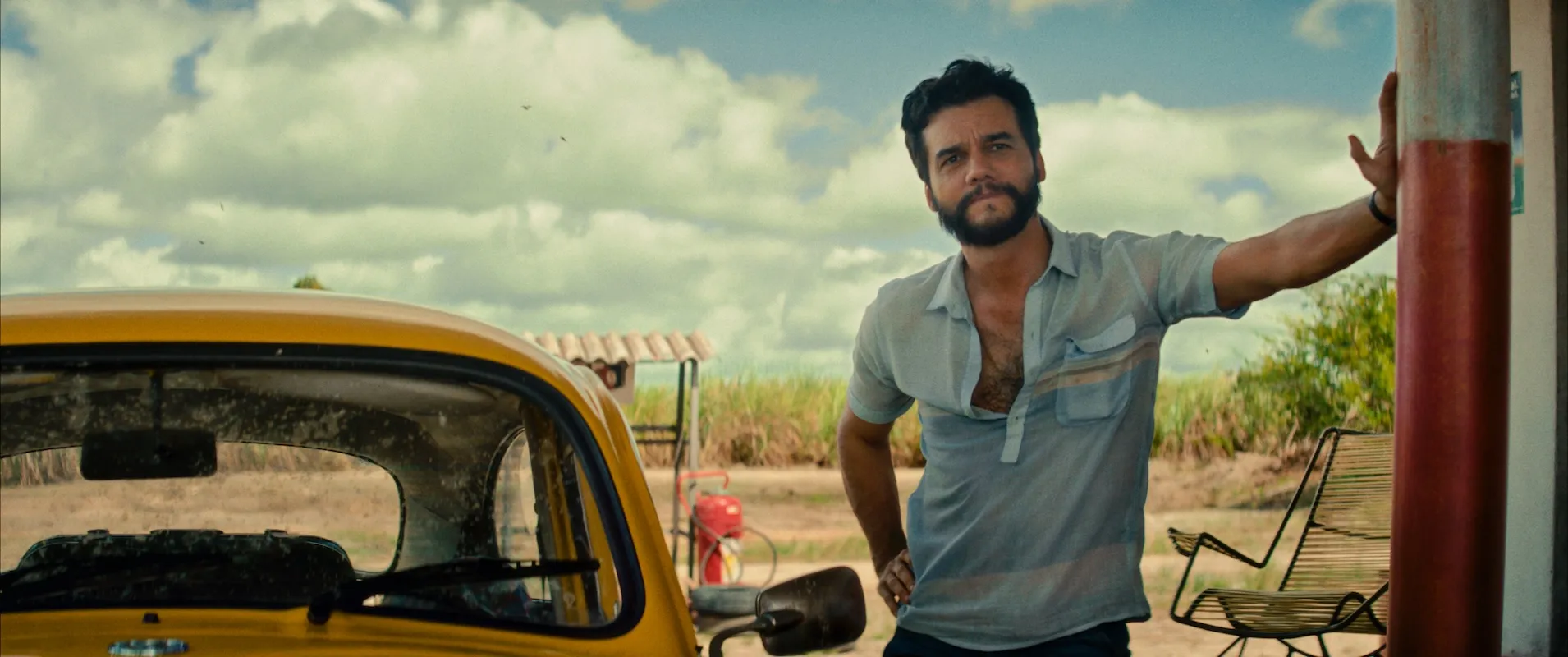 The Secret Agent is a film where vivid colors, pulsating music, and sweeping storytelling take center stage, with a secret ingredient holding it all together: a wink to the audience. This allows the film to talk about serious matters without excessive pomp and rewards the viewer’s patience, which is tested by the somewhat overlong second act. Filho spins his tale of Brazilian history and personal memory in true cinephile style. That’s no coincidence—cinema is, after all, one of the most perfect memory machines. And what better way to share your memories with others than through film? I’ve never been to Brazil. After watching Filho’s new work, I felt as if I had just come back from there.

