
Review
THE DEAD EYES OF LONDON. Forgotten, yet influential

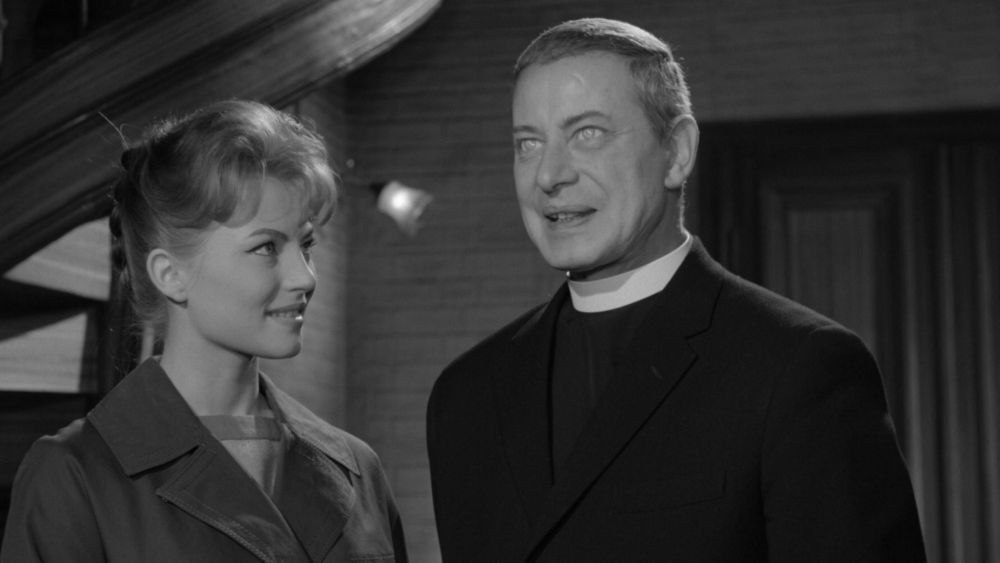
The Dead Eyes of London is a forgotten, yet influential episode in the history of cinema.
In London, a series of deaths of wealthy, elderly men insured for large sums takes place. The pattern is always the same: on foggy nights, someone attacks the magnates, kills them, and throws their bodies into the Thames to stage an accident. Inspector Larry Holt of Scotland Yard suspects that the murders are the work of a gang of blind criminals operating under the codename The Dead Eyes of London. In search of the gangster known as Blind Jack, the inspector, his assistant Sunny, and Nora—a blind nurse whose ability to read Braille proves surprisingly useful in the investigation—visit a church-run shelter overseen by Father Dearborn, as well as the office of lawyer Judd, with whom all the victims were insured. The trail leads to Judd’s assistant and the illegitimate daughter of a Canadian man, who happens to be in possession of her late father’s life insurance check.

Edgar Wallace (1875–1932) was one of Britain’s most prolific writers: in less than three decades he produced over a dozen historical books, two dozen plays, several poetry collections, nearly a thousand short stories, almost two hundred novels, and a handful of screenplays—including an unused draft for Merian C. Cooper and Ernest B. Schoedsack’s King Kong (1933). Wallace’s main specialty was crime fiction, and cinema quickly discovered the potential of his works; the first screen adaptations were made in Britain during the silent era (1916–1929), followed by sound films in the 1930s and 40s. Another series of forty-eight productions, collectively titled The Edgar Wallace Mysteries, was released between 1960 and 1965. Yet at that time, the true powerhouse of adapting Wallace’s works turned out to be… the German film industry.
In the late 1950s, the German studio Rialto Film (built on the remains of a Danish company of the same name), in cooperation with Constantin Film, produced Harald Reinl’s Der Frosch mit der Maske (The Frog with the Mask, 1959), based on The Fellowship of the Frog. The film’s huge box-office success (nearly three million viewers in West Germany) prompted producers to launch an entire series based on Wallace’s crime novels. Between 1959 and 1972, thirty-two films were made, known as krimis (from the German Kriminalfilm). The regular directors of this popular cycle included Reinl, Franz Josef Gottlieb, and record-holder Alfred Vohrer, who signed fourteen titles. The same actors appeared in most of these films: Joachim Fuchsberger, Heinz Drache, Siegfried Lowitz, Fritz Rasp, Pinkas Braun, Eddi Arent, and Klaus Kinski, who truly launched his film career in the krimis.
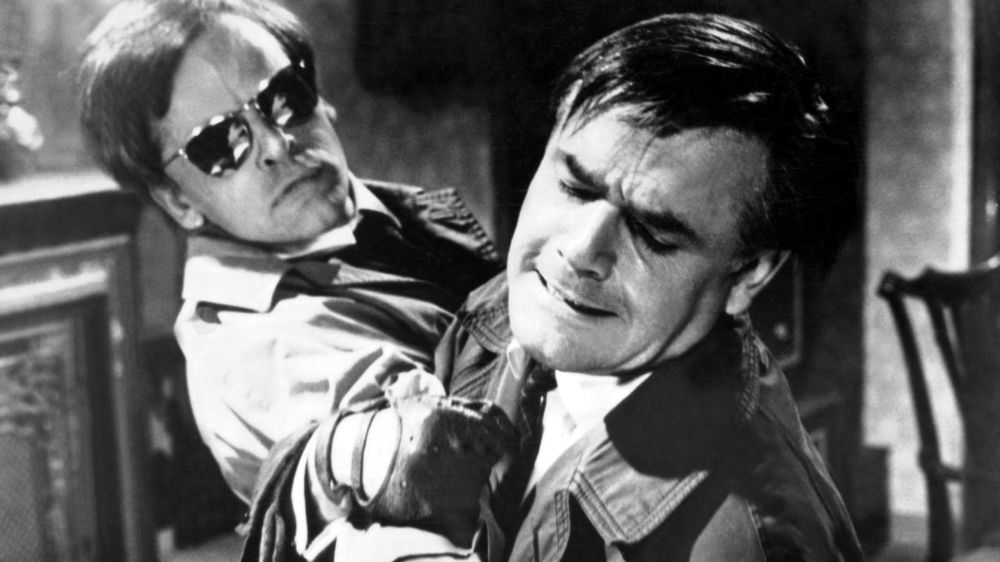
The creators of Wallace’s film adaptations developed a distinctive krimi style, relying on certain techniques (close-ups, creative editing, long takes, and panoramic shots) and locations (castles, country estates, nightclubs, shelters, and girls’ schools). Central characters were, on the one hand, police officers and detectives, and on the other, mysterious villains—often masked, gloved, and whose identities remained hidden until the very end. The films depicted both police investigative procedures and crimes shown from the villains’ perspective. All these elements strongly influenced the Italian giallo genre—to such an extent that Massimo Dallamano’s What Have You Done to Solange? (1972) and Umberto Lenzi’s Seven Blood-Stained Orchids (1972) were marketed as Wallace adaptations, even though they had nothing to do with the writer’s work.
The Dead Eyes of London, based on the 1924 novel, was Vohrer’s first krimi and at the same time one of the finest entries in the entire cycle. It combined all the trademark features of the krimis in perfect proportions. The film’s greatest asset is its atmosphere—dense as London fog (all the more impressive given that it was shot entirely in Germany, with London scenes taken from archival footage). Fuchsberger was convincing as the cunning Inspector Holt, Austrian wrestler Ady Berber (a dead ringer for Tor Johnson) created a terrifying figure in Blind Jack, and the false leads can still throw viewers off track. Unfortunately, over the years the series became increasingly formulaic, losing not only its originality but also audience interest. Nevertheless, the krimis remain an influential chapter in the history of cinema—even if today they are largely forgotten.

