
Review
THE CONJURING: LAST RITES. Family Comes First [REVIEW]
The engine has already worn out, and it’s worth looking for something fresher within the profitable franchise than The Conjuring: Last Rites

![THE CONJURING: LAST RITES. Family Comes First [REVIEW]](https://filmfolly.com/wp-content/uploads/2025/09/THE-CONJURING-LAST-RITES.-Family-Comes-First-REVIEW.webp "conjuring-1 | FilmFolly.com")
The Conjuring cinematic universe has been haunting the imagination of thriller fans for over a decade. Launched by James Wan, the series based on the work of lay exorcists Ed and Lorraine Warren has firmly embedded itself into the landscape of horror cinema, significantly contributing to the genre’s strong condition and enduring popularity. While spin-offs devoted to the demonic figures of Annabelle and the Nun have played their part in strengthening the brand, the core and most crucial element of the series remains the saga centered on the Warrens themselves, the story from which it all began.
Now, as the universe clearly begins to lose momentum, the demon-fighting couple once again comes to the rescue—this time, however, (supposedly) for the last time, to provide a conclusion to the central narrative.
The Conjuring 4 opens in a familiar way: a prologue that sets the context of the Warrens’ activities, a sinister title card announcing “the most terrifying and unlike any other” case, followed by parallel threads showing the everyday life of the amateur demonologists and the gradual haunting of a poor American family—step by step leading to Ed and Lorraine’s encounter with the victims. The case chosen this time by screenwriters David Leslie Johnson-McGoldrick (writer of part three, The Devil Made Me Do It, and co-writer of The Conjuring 2), Richard Naing, and Ian Goldberg (co-creators of The Nun II), is the 1986 haunting of the Smurl family in Pennsylvania.
Thus, we get the familiar and tested formula of a haunted house, possessed objects, and the Warrens, who, while confronting Evil, also overcome their own personal struggles.
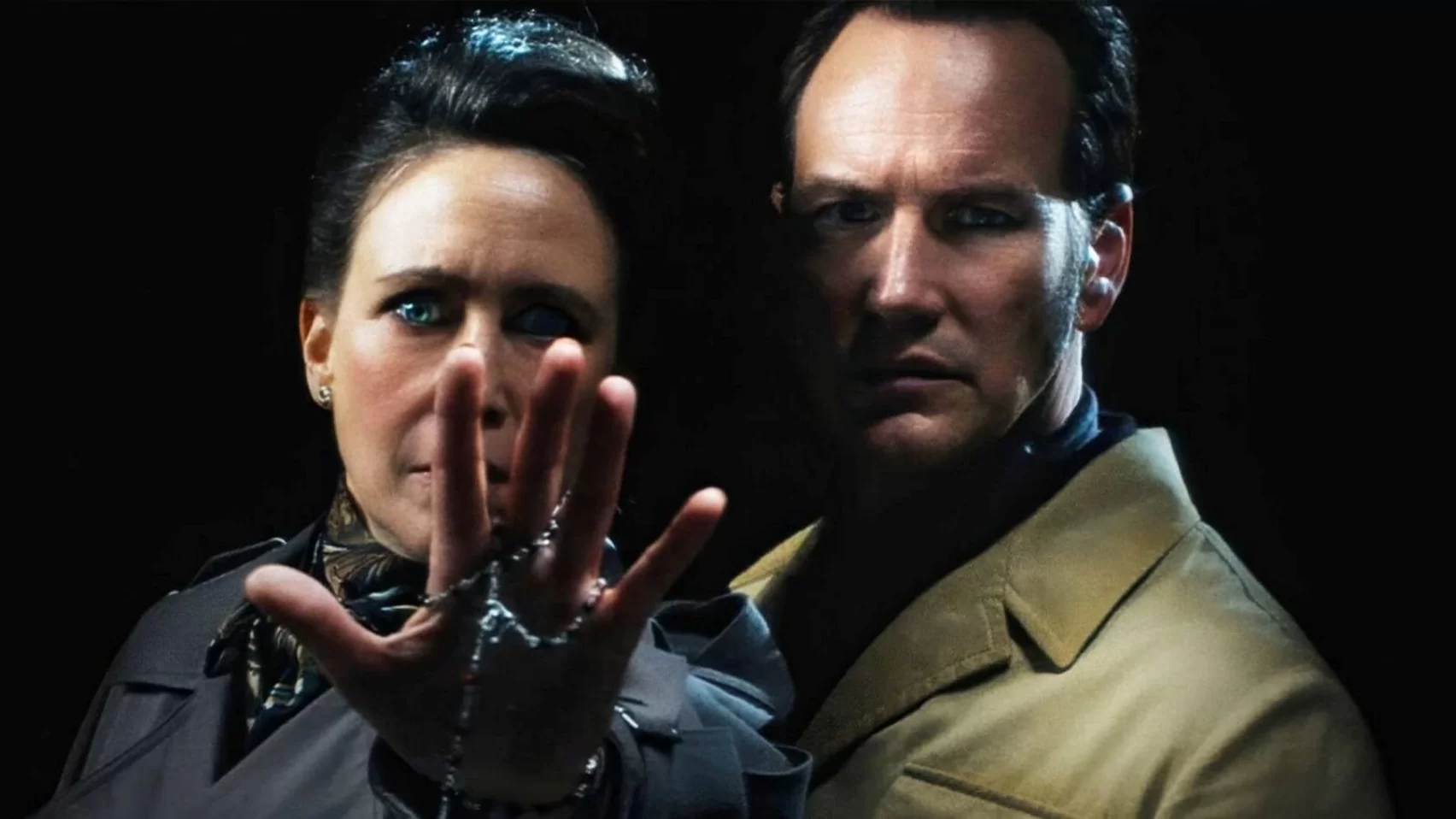
A certain novelty in this dynamic is the Warrens’ initial status: they have retired from exorcism, focusing solely on lecture tours and tending to the health worn down by years of adrenaline-fueled investigations. This time, their daughter Judy plays a prominent role—now an adult woman, who in the first act of Last Rites introduces her parents to her boyfriend, Tony. Much of The Conjuring 4 revolves around this family drama, with Ed, unable to accept his age and its limitations, predictably bristling at his beloved daughter’s young partner, while Lorraine worries over Judy’s developing visions, mirroring her mother’s abilities. What we get is less a story of another case in the demonologists’ career, and more their involuntary return from retirement, forced by the involvement of their daughter in the occult narrative.
The consequence of this expanded Warren storyline, and the closer-than-ever intertwining of Ed, Lorraine, and Judy’s lives with the case, is the drastic reduction of the Smurl family’s role. The haunted family is given barely a handful of minutes to establish the demonic context in their home—only enough to set the plot in motion. Their story is handled so hastily that at times it feels as though we’ve skipped entire sequences that should have built the drama between scenes. In Last Rites, the Smurl case boils down to just a few haunting-house sequences and a discussion along the lines of “something bad seems to be happening—what do we do?”, after which the family passively awaits the Warrens’ intervention, heralded first by Father Gordon (returning from the first two films).
This makes it impossible for the audience to build any meaningful connection with the eight-member family being “rescued,” leaving us with no real empathy for the victims—the only stakes left belong to the Warrens’ personal demons.

This careless stitching together of the overarching series arc with the canvas of this specific entry isn’t the only problem of Last Rites. Its over two-hour runtime contains surprisingly little substance, with the first and second acts dragging along tediously, repeatedly circling shallow dilemmas of the protagonists and the franchise’s surface-level spirituality. The entire introduction of the Warrens’ relationship with their daughter and son-in-law could easily be cut in half without harming the story. More than ever, what’s missing is deeper psychological development of the Warrens, whose portrayals remain virtually unchanged across four films. It seems the series has finally been caught by the curse of the contract signed with Lorraine Warren and her heirs—any attempt to nuance the central figures is blocked by the obligation to present them positively and cut away controversial or openly negative aspects of their biography.
Bound by this slavish preservation of a specific image, the script circles around clichéd generational conflict and acceptance of aging, rather than touching genuine emotions.
What keeps Last Rites at a reasonably solid level is its execution. Michael Chaves, who replaced James Wan as director starting with part three, may lack Wan’s flair, but here he delivers horror staging on par with what made the first two Conjuring films genre hits. The composition of individual shots, well-placed jump scares, and well-controlled pacing of confrontations set Chaves’s film apart from generic horror fare (and even from weaker entries of the same universe). Once we slog through the overlong setup and the real horror begins, The Conjuring 4 proves it still represents the strongest horror brand today.
The ever-reliable Vera Farmiga and Patrick Wilson also deliver—despite the weak script and somewhat stagnant characters, they imbue their roles with charisma that meshes seamlessly with the escalating horror atmosphere. Though Mia Tomlinson and Ben Hardy (as Judy and Tony) fare far worse, Farmiga and Wilson ensure that, despite everything, this is once again a horror film with engaging, vivid protagonists.
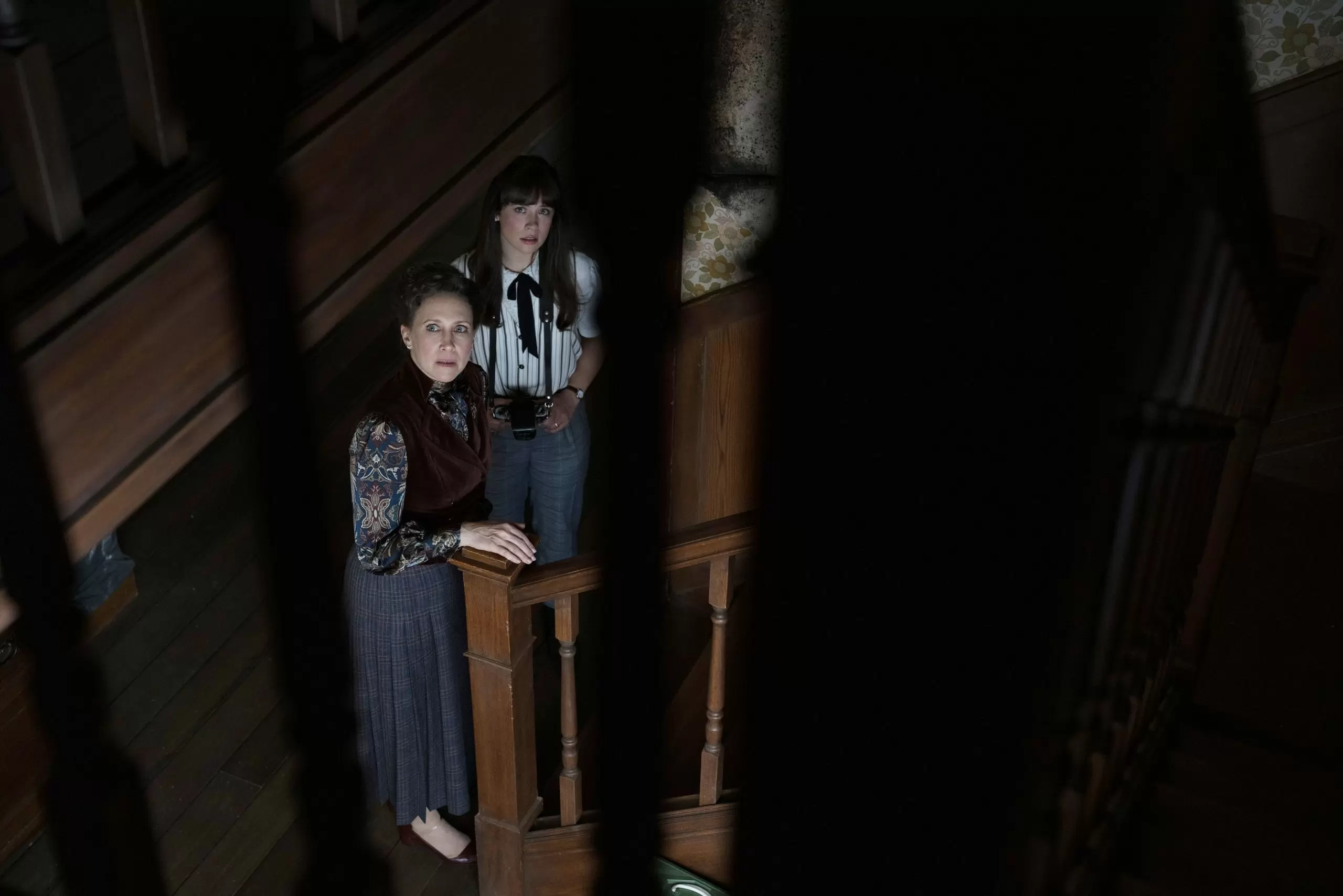
As the title itself suggests (Last Rites, with its double meaning), The Conjuring 4 is clearly meant to close out the main series of the franchise. New Line Cinema has already announced a “second phase” for the brand—possibly no longer centered on the Warrens, or with a reduced role for them (pun intended). In that respect, Last Rites does its job fairly well: it ties up overarching threads, sends the heroes off to a well-earned rest, while leaving the door ajar for future projects in the universe. And it’s good that the producers are making this move now—before the Warrens’ story gets completely watered down, while their tetralogy still holds a certain level of quality.
The question remains whether The Conjuring can survive without the charismatic leads of Farmiga and Wilson—films without the Warrens suggest the results may be mixed. Still, it’s worth retiring them now, since the engine built by the Hayes brothers and Wan is clearly worn out, and this lucrative brand needs something fresher than The Conjuring 4: Last Rites.

