
Review
SEVEN SECONDS. Nobody Gives a Damn About the Truth
Seven Seconds tries to neutrally capture the essence of an issue that moves millions of Americans. The catch is, the pressure was (probably) too much.

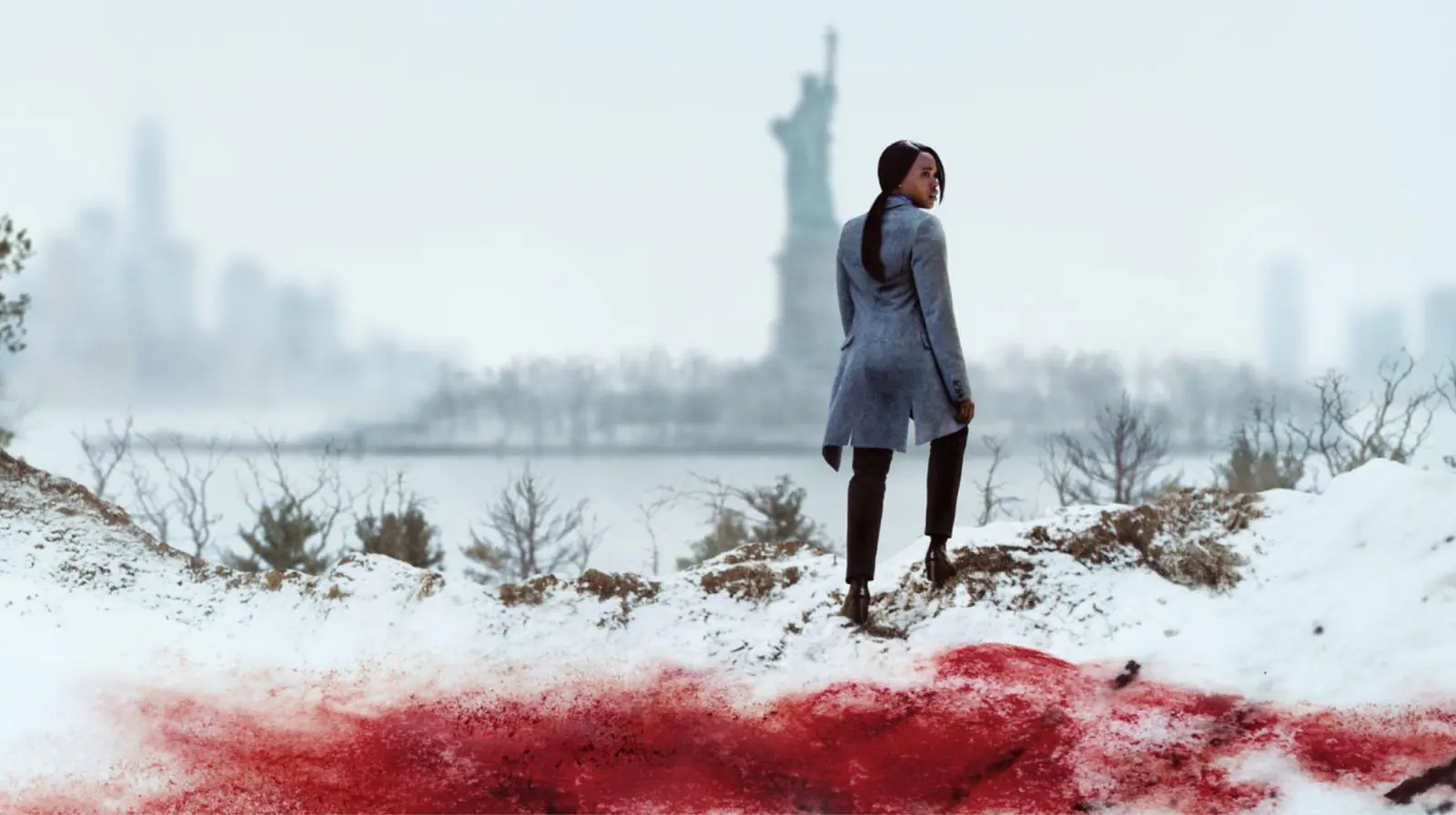
After seeing the first trailer for Seven Seconds, it struck me as a creation dictated by the need to fit into social moods – I was afraid we would see another clichéd tribute to brave African Americans who do not give up in their fight against evil white folks wanting to destroy (or better yet, take!) their lives. It’s hard to imagine another association when the plot revolves around a white cop who hits a Black teenager and then, together with his colleagues, covers it up. Luckily, this material landed in the hands of Veena Sud – producer and co-writer of The Killing, supported by screenwriters and directors with genuinely solid CVs.
Thanks to that, Seven Seconds tries to neutrally capture the essence of an issue that moves millions of Americans. The catch is, the pressure was (probably) too much.
On the morning of February 15th, Peter Jablonski (Beau Knapp, Super 8, The Signal) is speeding recklessly through Liberty Park in Jersey City. Traffic regulations are the last thing on his mind. The young narcotics officer is on his way to the hospital, where his pregnant wife has just been admitted.
However, on his way he encounters fifteen-year-old Brenton Butler (a nod to another high-profile racially charged case), who is riding his bike through the park. Jablonski hits the boy going nearly 100 km/h; in shock, he calls his superior, Mike Diangelo (David Lyons), who brings along two more unit members – Gary Wilcox (Patrick Murney) and Felix Osorio (Raúl Castillo). They confirm the boy’s death and decide to cover up the incident. Seven Seconds takes place in today’s political reality, so references come quickly – when Peter wants to confess, he hears: They’ll screw you for Ferguson, Chicago, Baltimore. Message received.

The theme of bad cops and an idealistic rookie is quite worn-out, but a closer look at Seven Seconds reveals many textbook solutions. Still, it’s been a long time since I saw a production that, despite such a schematic structure, manages to surprise to some extent. Here, it often feels like we can predict the next twist, only for the creators to subvert expectations with something completely different. It’s as if familiar tropes were meant to lull us so the twists would deliver that so-called wow effect. It doesn’t always work, but I appreciate the effort.
Above all, Seven Seconds is a study of suffering that, contrary to appearances, affects every side of the conflict.
Leading in this regard is the victim’s father, Isaiah (Russell Hornsby, Fences) – a devout Catholic who tried to raise his son with a firm hand. The way he copes with the growing revelations about his only child and the tragedy that unfolds is truly moving! Slightly less convincing (surprisingly) is Regina King (The Leftovers) playing Brenton’s mother, though it must be said her role is significantly harder. Of course, the pain is not limited to the victims – Jablonski is still green, and everything caused by his accident contradicts his ideals.
Yet he listens to his boss, who at times behaves like he’s starring in a gangster movie. It makes an impression.

On the trail of the law-twisting officers are an alcohol-dependent, not particularly successful assistant district attorney KJ Harper (Clare-Hope Ashitey) and the honest cop Joe “Fish” Rinaldi (Michael Mosley) – personally, I found it strange getting used to his appearance, and in the first part of the season he behaves as if his task was to add comic relief to the story.
And when he played More than a Feeling by Boston… that had to be an Easter egg for fans of Scrubs. It just had to be! Nevertheless, the duo is clearly contrasted – they differ from each other and stand out strongly from the rest of the cast. Ultimately, KJ Harper is the only character I wouldn’t want to see in a potential second season.
Seven Seconds is technically very competently made. No fireworks, but the series performs well on a technical level. At times, however, the lulling of alertness I mentioned takes the form of unbearably dull sequences that usually could have heightened the drama – unfortunately, instead we hear more dialogue repeating not only what the average viewer has already deduced but also things that have literally been stated already.
The worst part, however, is how it portrays the emotions raging on both sides of the courtroom.

The whole season revolves around the slow unraveling of the Brenton Butler case, so it’s no surprise that the final episodes are spent mostly in court. And here, the creators clearly begin to stumble over their intentions.
Leading the case, the Black Harper constantly brings up the victim’s race, and she moves awkwardly through the legal world – one that was aptly diagnosed by the union-appointed police lawyer Sam Hennesy (Gretchen Mol, Manchester by the Sea): Welcome to the world of justice, where nobody gives a damn about the truth.
The problem is, this thesis applies to both the “good” and the “bad”. Moreover, the creators have long tried to argue that there are neither. Every character was crafted to make their complexity challenge the viewer’s subjective stance on the central theme.
Though I was quite skeptical about transplanting a powerful story from a Russian backdrop (the series is based on the film The Major by Yuri Bykov) onto politically correct American soil, the first episodes build a sense that Seven Seconds might actually become an important voice in the discussion – but to achieve that, courage is needed. And that courage abandons the creators in the final moments. In the end, I am torn.

Just as a foul-tasting frosting ruins the effort put into making a cake, certain plot decisions seem to indicate that during script development (or even during production) someone lost their nerve.
The story of the young deceased fades into the background, and racial divides take center stage. This affects the plot, which begins revolving around the absurdities of the American justice system, where on one hand some groups (in this case police officers) occupy a privileged position, and on the other, the actual offense doesn’t matter, only how it’s interpreted (such as the charge of racially motivated murder against someone who hit a cyclist and fled the scene). And if anything hinted that this narrative shift was meant to criticize the borderline-racist accusations of African Americans… No. Black Lives Matter wins over All Lives Matter again.

