
Review
CONCLAVE. George Smiley in a Cassock [REVIEW]
Edward Berger’s Conclave, the story of a turbulent struggle for the papal throne, belongs to the category of “films of the moment.”

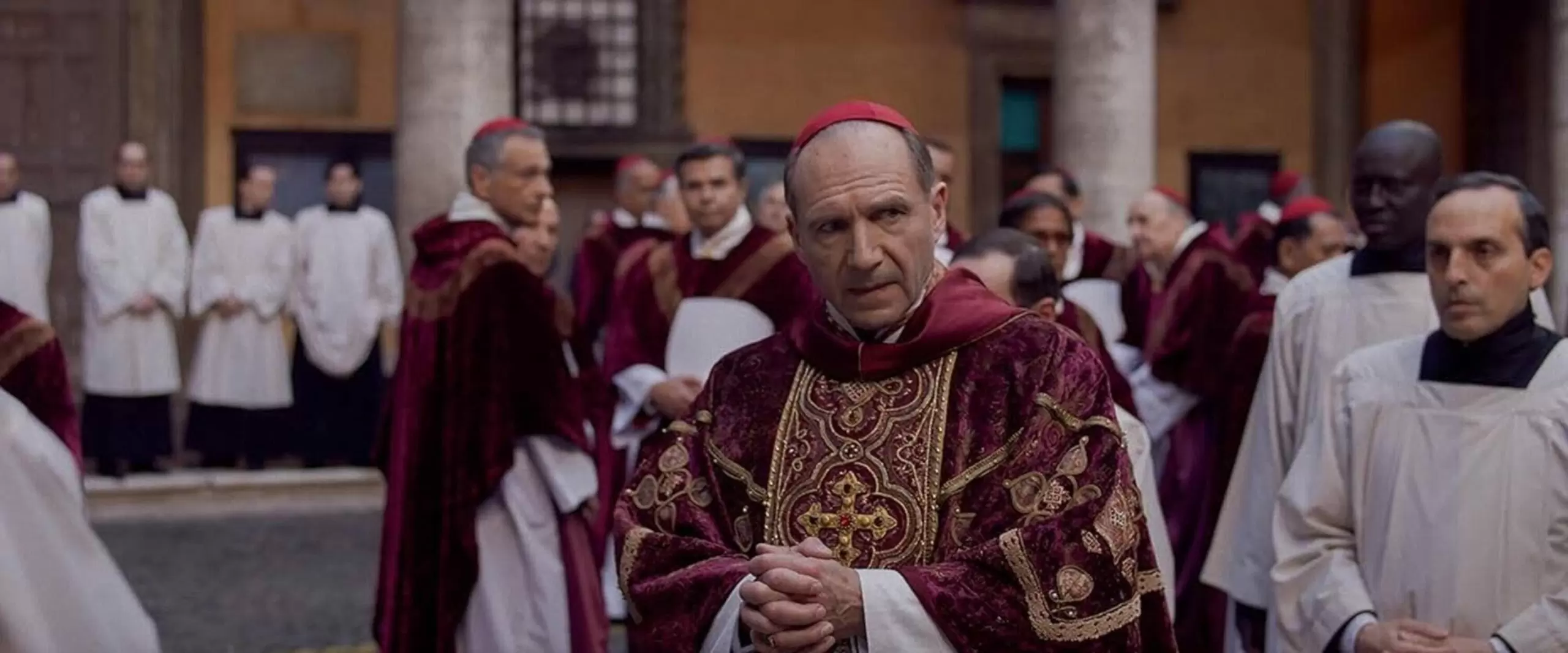
Edward Berger’s Conclave, the story of a turbulent struggle for the papal throne, belongs to the category of “films of the moment.” A glance at the topics tackled by the German director is enough: the crumbling authority of the Church as an institution, ruthless power plays, and the clash between liberalism and conservative reactionism. The adaptation of Robert Harris’s novel fits squarely into both the ongoing debate about the Catholic Church and the current political climate (the film premiered in the U.S. before the presidential election). Thankfully, however, the filmmakers avoid turning it into cinematic commentary — at its core, Conclave remains a story about individuals entangled in the labyrinth of political maneuvering.
Our guide through the on-screen Vatican is Cardinal Lawrence (Ralph Fiennes), who presides over the titular conclave following the Pope’s death. Though struggling with a long-standing crisis of faith, Lawrence remains one of the few Church figures aware of the urgent need for internal reform. The conclave proceedings quickly escalate into a battle over the ideological “life or death” of the institution. The cardinals, gathered behind closed doors, split into conservative and progressive factions, and Lawrence unintentionally finds himself drawn into the behind-the-scenes machinations aimed at choosing the “right” candidate for the papacy.

Tellingly, the scenes of each vote are regularly intercut with shots of Michelangelo’s Last Judgment. Aesthetic choices reinforce the solemn weight of the conclave itself: under the lens of cinematographer Stéphane Fontaine, Vatican architecture appears almost oppressive, and Volker Bertelmann’s score is a continuous barrage of dramatic strings. This monumental style also signals the film’s genre leanings — Conclave is staged as a first-rate political thriller. Ideological conflicts run parallel with murky backroom scheming, and Fiennes’ Lawrence steps into the role of an accidental detective. He’s a character straight out of a John le Carré novel: weary and disillusioned with the institution he served for years, yet still faithful to the values he holds dear.
Like George Smiley in Tinker Tailor Soldier Spy, Lawrence must dig into the dark secrets of the leading candidates, and his personal investigation sets the pace for the entire narrative.
These two narrative strands — the ideological and the investigative — mesh seamlessly, complementing each other at every turn. On one hand, the debates over the Church’s role in the modern world lend gravitas to Lawrence’s inquiry; on the other, the detective structure allows Berger to explore the ideological conflict in a more nuanced way. Initially, the cardinals representing opposing worldviews are presented in stark contrast, but over time, they’re given space to lower their masks: revealing both the fear underlying reactionary rhetoric and the opportunism lurking beneath progressive slogans.
Berger also doesn’t shy away from breaking the film’s solemnity with subtle humor — visible, for instance, in the recurring presence of props like the electronic cigarette one cardinal constantly puffs on.
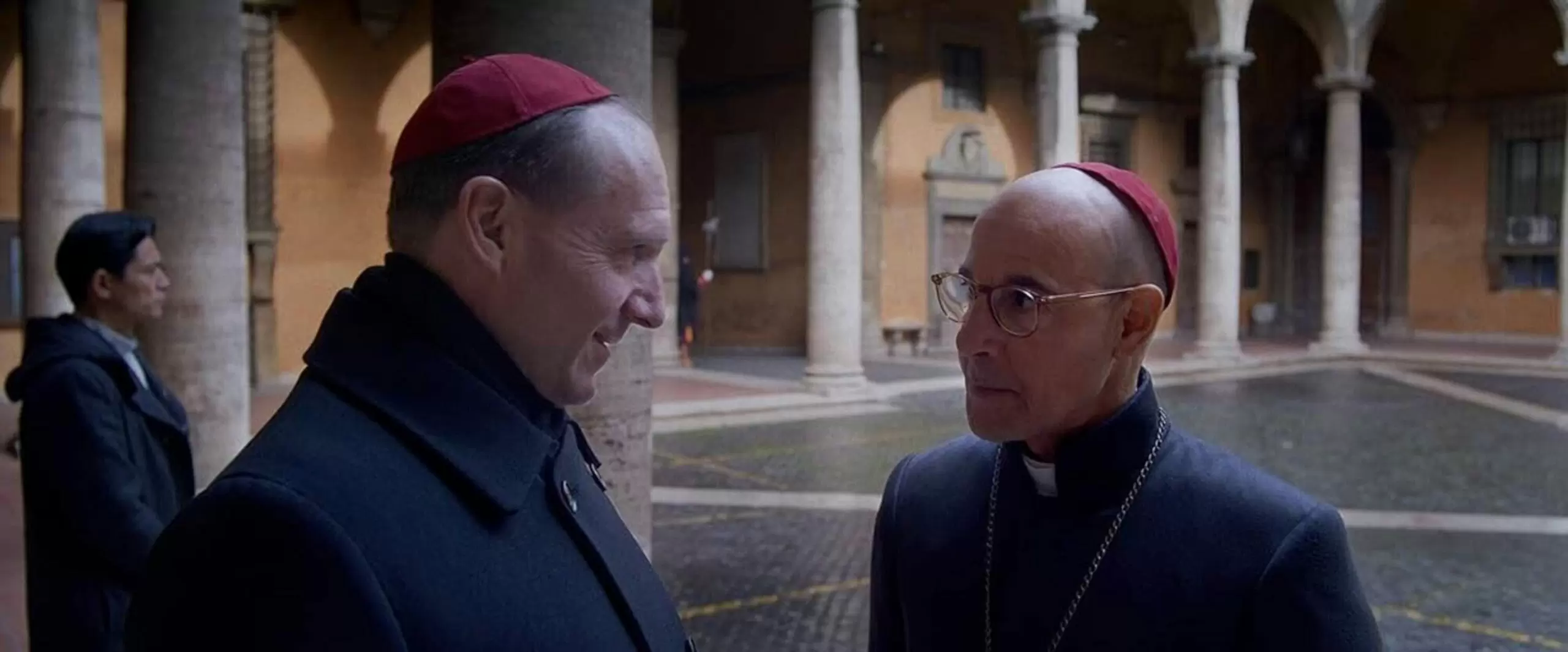
The film wouldn’t work half as well without its pitch-perfect cast. Stanley Tucci commands attention with his calm, understated presence; Sergio Castellitto and John Lithgow, playing Machiavellian powerbrokers, are clearly having a blast. But the greatest accolades belong to Ralph Fiennes. As Cardinal Lawrence, he’s almost never off-screen — the entire emotional weight of the story rests on his shoulders. Often shown in close-up, he conveys exhaustion, doubt, and deeply buried frustration with just a glance. It’s unquestionably one of the finest performances of his career.
Those hoping for a more explicit exposé of the Church’s dirty secrets may leave disappointed. Though Berger occasionally alludes to real-life scandals and clearly signals where his sympathies lie, his ultimate goal seems to be seeking common ground. Some will surely accuse him of naivety — but in today’s fractured world, that may be a message especially worth hearing, not only when it comes to religion or institutions of faith.
Written by Jedrzej Paczkowski

