
Review
Looking Back at CRASH: The Merging of Man and Machine
In Crash, David Cronenberg tackles the theme of the disintegration of the body and its interaction with automotive technology; the merging of man and machine.


David Cronenberg in the most prolific period of his career to date. In 1996, when Crash was released, the Canadian enjoyed a well-established position as a director with vision, an unconventional way of perceiving the film medium, and very distinctive means of expression. The creator of popular and acclaimed productions (going beyond the usual template of B-movie cinema, often used as a starting point). Illustrating on the cinema screen various epidemics (Rabid), deformities (The Fly), and hallucinations of all kinds (Naked Lunch, Videodrome), while remaining faithful to his themes, he continues to surprise.
In Crash, Cronenberg tackles the theme of the disintegration of the body and its interaction with automotive technology. In his suggestive vivisection, he does not stop at the mechanics of the body. The minds of the characters also transform (or perhaps above all), for whom the common denominator becomes the pleasure associated with car accidents and the deformities resulting from them. The director here touches on the issue of a range of sexual preference disorders.
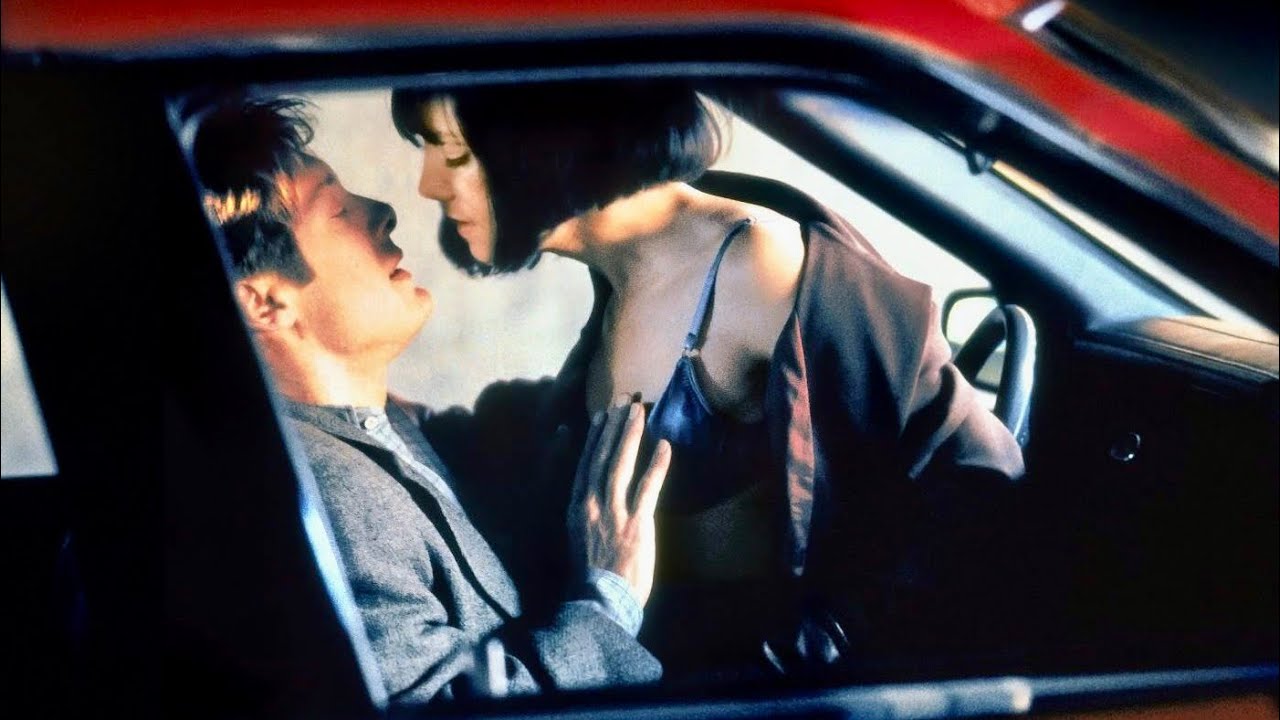
The life of the filmmaker, James Ballard (James Spader), changes as a result of a car accident. He himself suffers a severe leg injury. The second victim of the collision is Helen (Holly Hunter), who also sustained injuries. Their fates intertwine at the hospital, where they both meet Vaughan (Elias Koteas). The man turns out to be a collector of post-accident photographs, reconstructing historical car accidents involving famous people (for example, with James Dean).
Entering this specific, small, and closed environment, the protagonist begins to react increasingly to obsessions related to destroyed cars and deformed bodies. Cronenberg focuses precisely on this transformation. From the beginning of the film, the main character is presented as a womanizer who (apart from a regular romance with a member of the film crew) has a successful sexual life with his wife (Deborah Kara Unger).
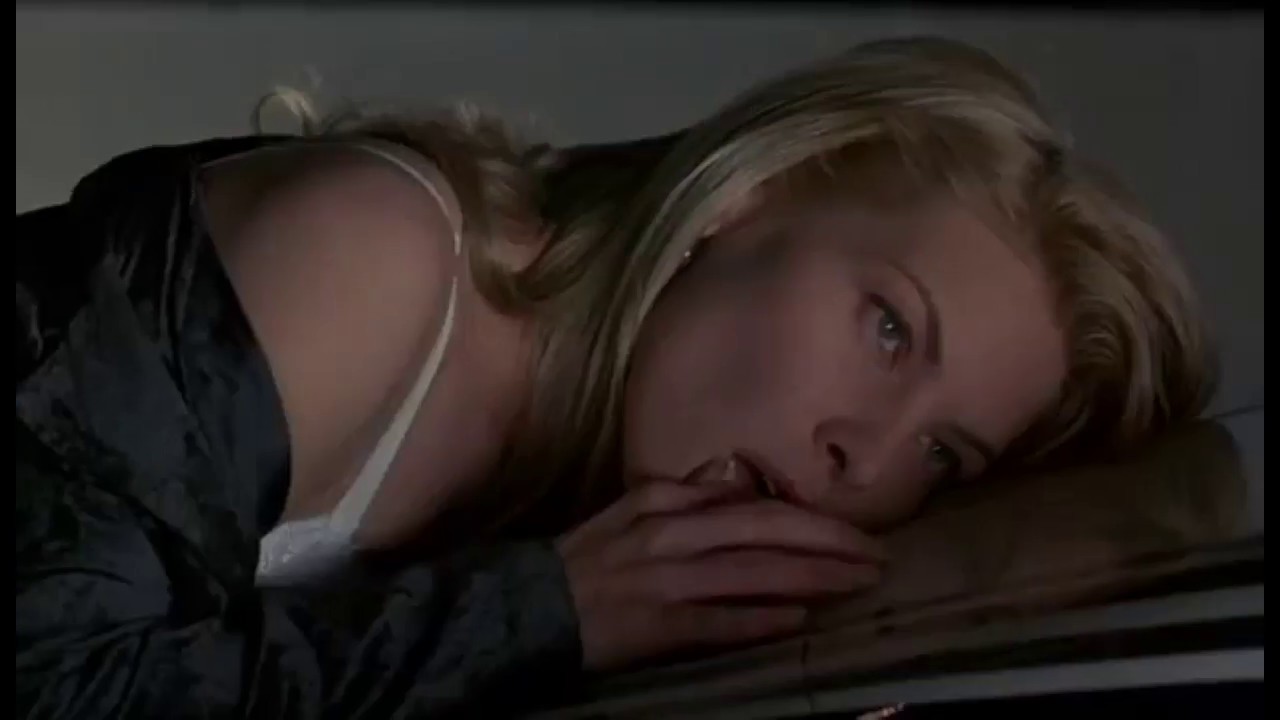
Most of their shared scenes revolve around the physical, and during intercourse these characters engage in the most interesting exchanges of dialogue. Sex also serves as a barometer of their fulfillment in the relationship. The more the new interest consumes James’s wife, the more it interferes with their bedroom relations. Of course, Crash offers many changes in this field. The catalyst for James is the accident, which opens him to a range of completely new experiences.
Initially, he is unhealthily fascinated by street traffic, wanting as soon as possible to return to driving after leaving the hospital. His wife temporarily recedes into the background. Meeting Helen during the collision, he defines this acquaintance through a burgeoning erotic fascination connected with cars as well as with the mutilated body. Their intimacies are linked to their mutual attraction to vehicle interiors; they also make love there, and Helen mentions that she has also had intercourse with previous lovers surrounded by metal and leather seats.

The director constructs a framework from elements familiar to him, yet the concentration of the film’s center of gravity on the fetish of cars (and arousal caused by collisions) produces a completely new image. When James and Helen encounter Vaughan, he surprises both them and the viewer with his directness and open display of his disturbed tendencies. When the protagonist enters his workshop, the complexity of this character becomes apparent.
The adrenaline accompanying risky accidents here constitutes a powerful and desired aphrodisiac. His experience in this field is evidenced by numerous scars on the bodies of Vaughan and his acquaintances. Sado-philic elements appear more frequently the deeper Cronenberg probes the psyche of his characters. In the rough, scarred, and perverse fetishist, Elias Koteas encapsulated many elements that make his character the most well-acted and frighteningly credible.
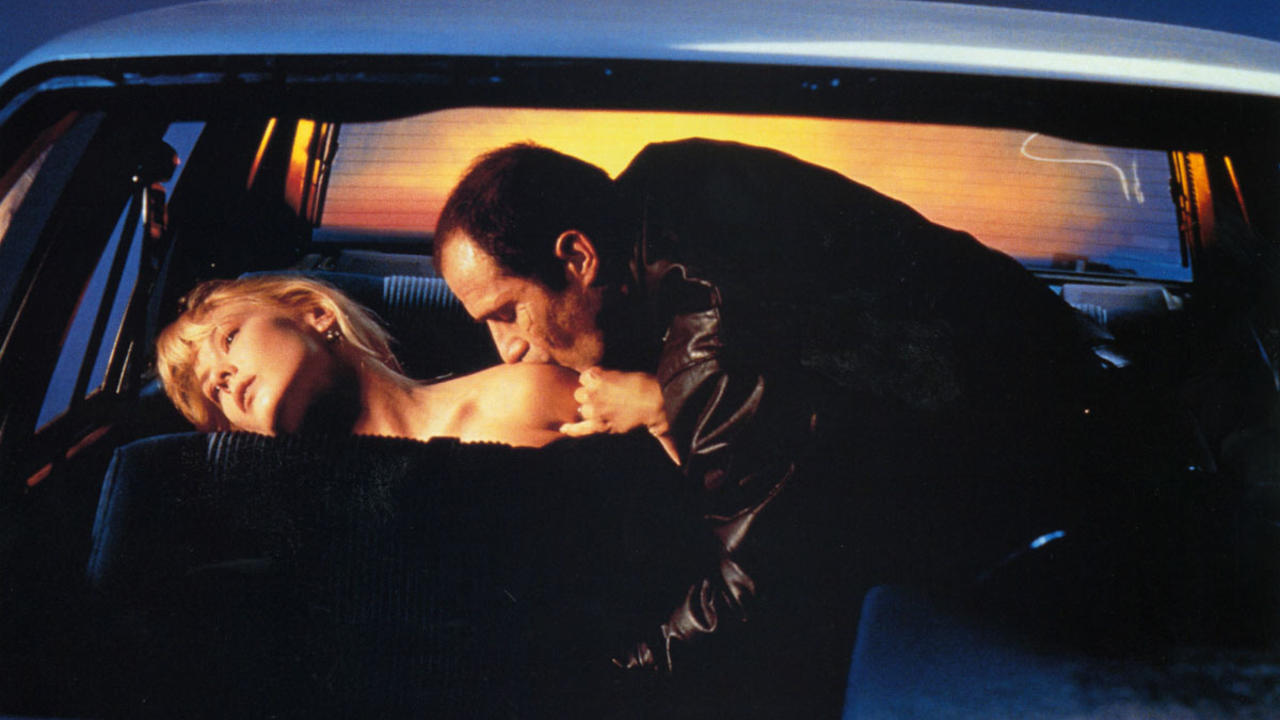
This distinctive actor created a destructive antihero who derives pleasure from his work, both in interactions with women and with men. He is a supporting character, yet at times he manages to overshadow the rest of the cast. James Spader and Deborah Kara Unger performed adequately, but neither created a memorable role here. Holly Hunter’s presence is worth noting, yet an interesting character must be sought among the episodes.
Rosanne Arquette portrays a person from Vaughan’s circle. As a result of a severe accident, her body is scarred and she must also wear an orthosis. Both her legs are encased in rigid splints, while above she wears a special corset. She appears in a few brief scenes, yet both her appearance and the scenes she is in are noteworthy.

Technical details related to deformities please the eye, and one wishes to see more of all these injuries, which in this director’s films always look excellent. Having previous experience making films about automotive themes (Fast Company, 1979), he ensured the detail and credibility of both accidents and chases.
During the scene in his workshop, Vaughan tells James about transforming the human body using modern technology. It is hard not to detect references to the new flesh from Videodrome, whose characters also found pleasure in acts connected with violence and mutilation.

If one were to search for references between Crash and the rest of the Canadian’s filmography, there would certainly be many similarities. However, as a standalone work, this film is difficult to call successful. Individual scenes are interesting, as is the approach to the subject.
The film itself, which deals in part with the merging of man and machine, does not fulfill expectations. There are indeed several beautiful, well-shaped machines and interestingly constructed characters, yet the whole leaves a huge sense of unfulfillment. In the category of films about romantic passions, it serves as an interesting counterpoint to the previous, very surprising David Cronenberg film from 1993 – M. Butterfly.


