
Review
C’MON C’MON. Empathetic and Wise Piece of Cinema
C’mon C’mon is a wise and empathetic piece of cinema. It encourages dialogue rooted above all in attentive listening to what another person has to say.

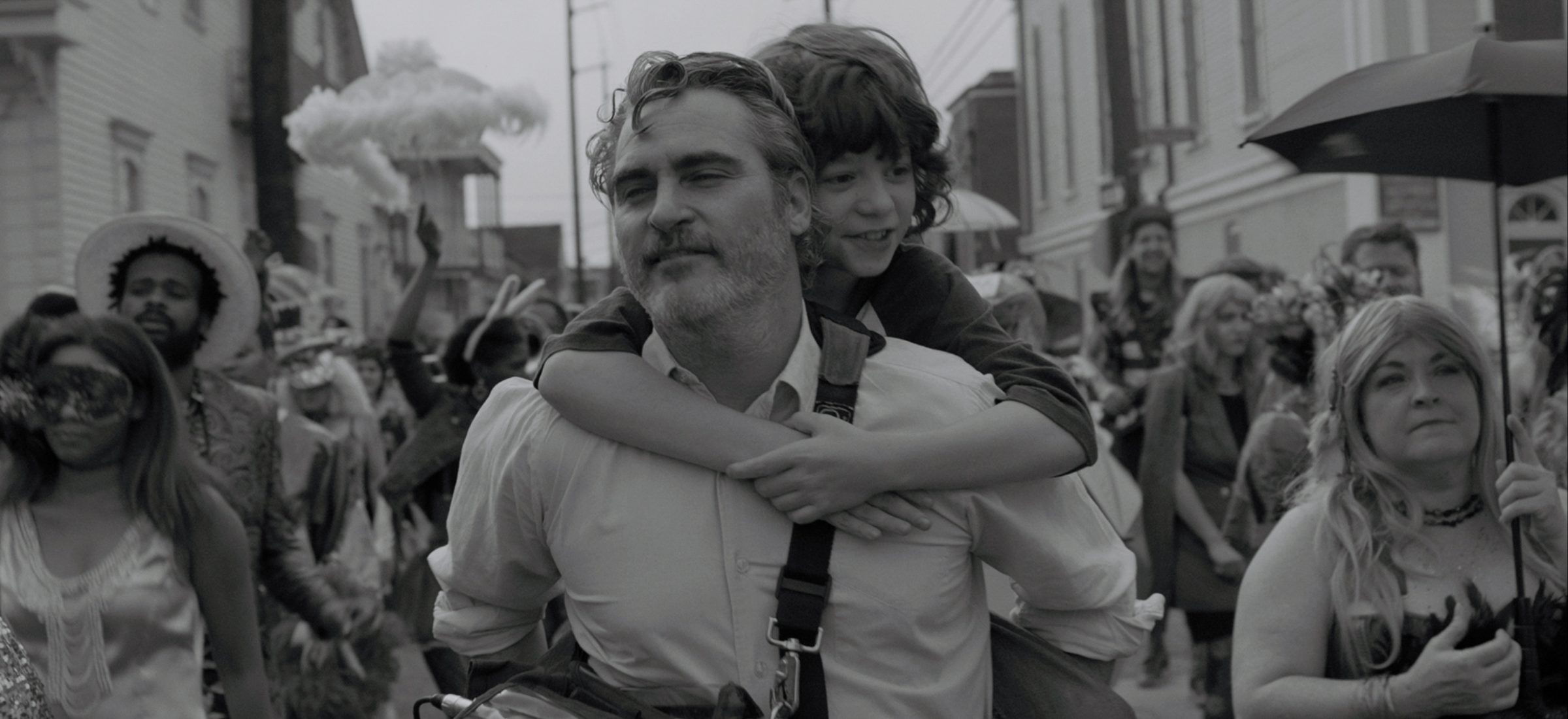
Mike Mills has consistently built the narratives of his films on the foundations of family stories. Beginners was rooted in the story of his father, who came out at the age of seventy-five. 20th Century Women, in turn, functioned as a kind of tribute to Mills’s own mother, embodied on screen by Annette Bening. C’mon C’mon feels like the next logical step in the creative path of the American director—this time inspired by a conversation with his own son, held, of all places, during a bath.
This very specific source of inspiration translates quite directly onto the screen. The narrative begins with the need to take care of nine-year-old Jesse (played with remarkable naturalness by Woody Norman, who is just as charming as he is irritating), whose mother is forced to leave Los Angeles for a few days in order to look after her former partner, who suffers from bipolar disorder. The responsibility falls on the boy’s uncle, Johnny (Joaquin Phoenix)—a somewhat lost radio journalist who travels across the United States, listening to the voices of young Americans. Looking after Jesse temporarily anchors him in Los Angeles, but when the mother’s absence drags on, Johnny takes the boy first to New York and then to New Orleans.

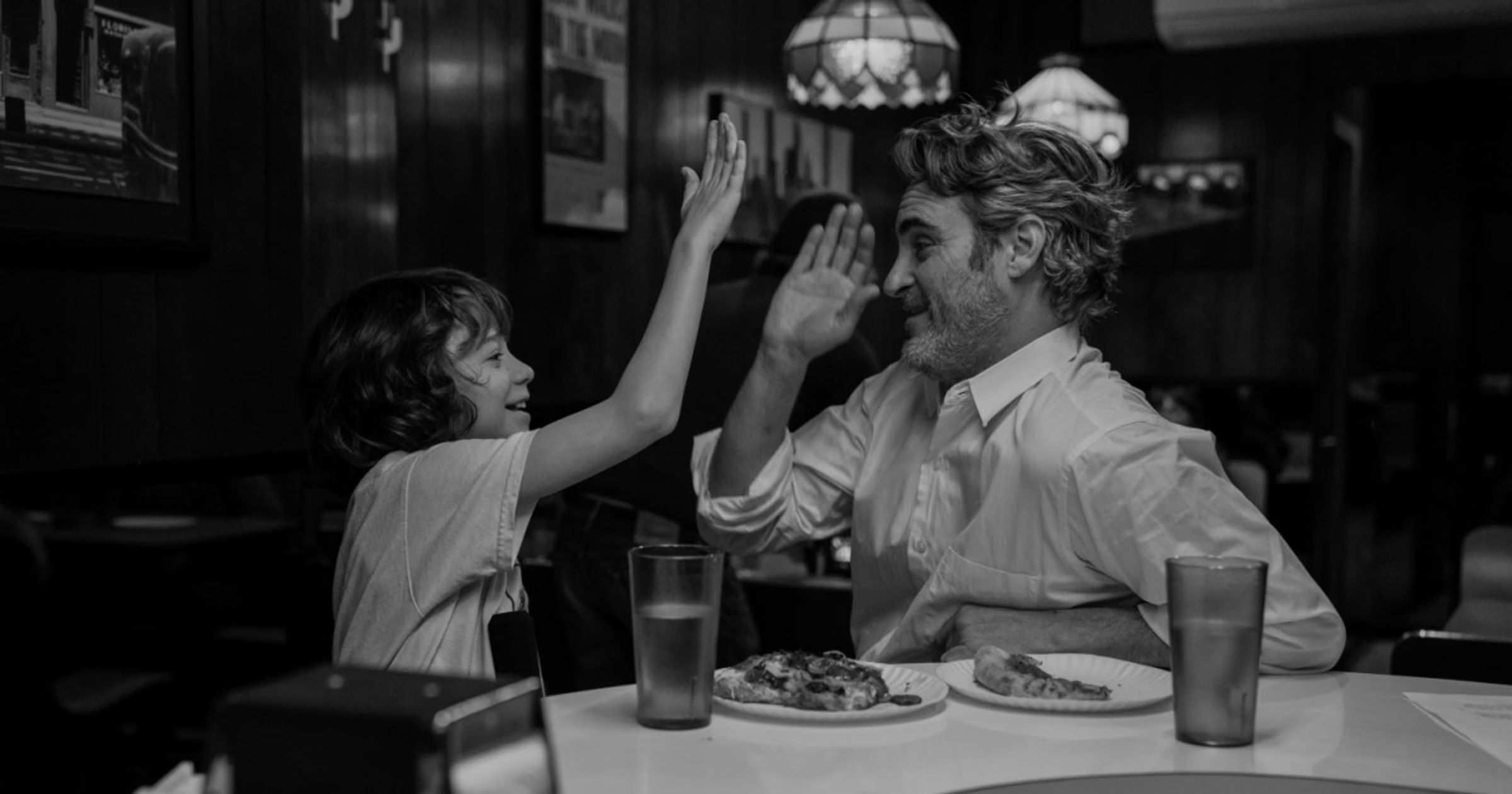
As one might expect, Mills is primarily interested in the peculiar bond that develops during this journey between an adult and a child. An adult whose contact with young people has so far been purely professional, and a child growing up under the care of a single parent. Johnny slowly learns how to deal with a young boy, simultaneously slipping into the roles of a kindly uncle, a substitute father, and a best friend. Jesse does not make things easy for him—at one moment he behaves like a typical nine-year-old, rebelling against bath time and demanding cartoons before bed, only to then invite Johnny into a peculiar game in which he plays an orphan seeking shelter after escaping from an orphanage.
He asks deeply personal, surprisingly mature questions, prompting Johnny not to treat him like a spoiled child but as a fully fledged partner in conversation. Parenthood, Mills seems to suggest, is an intensely individual and unrepeatable experience—online guides will only get you so far, although, as one scene in the film demonstrates, they can sometimes prove helpful after all.
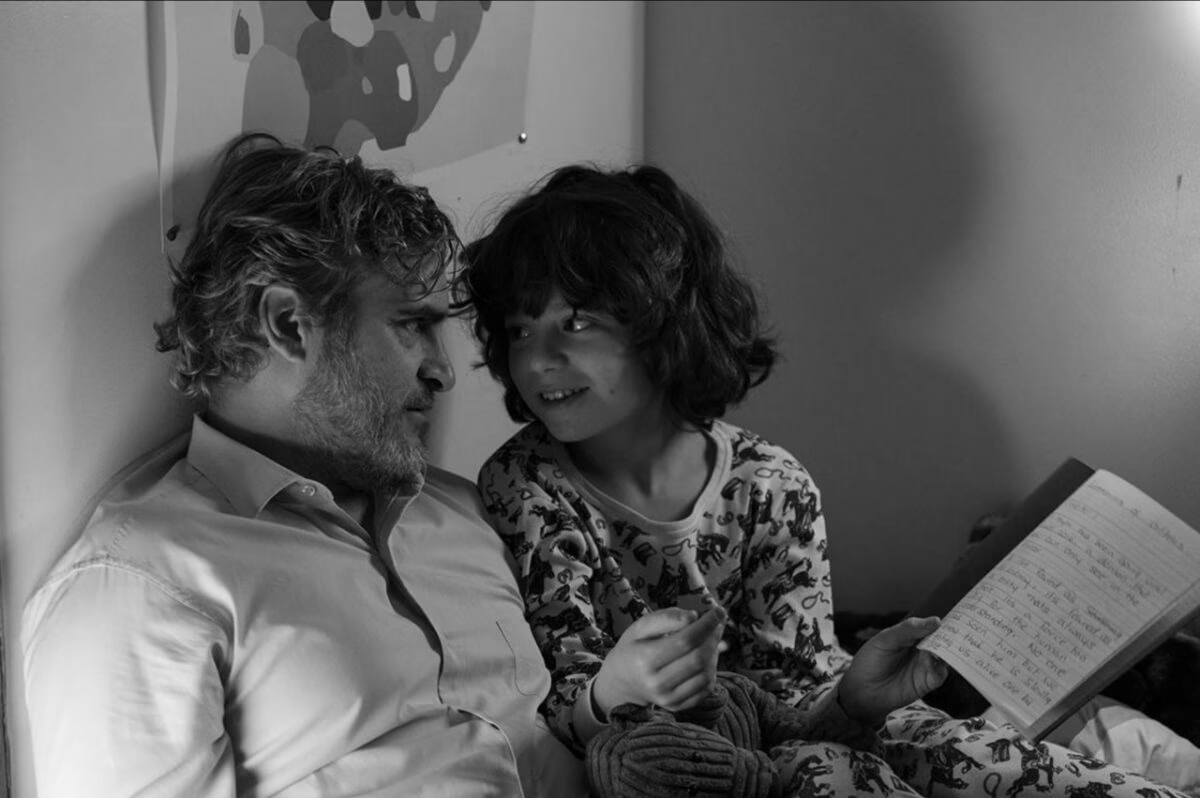
C’mon C’mon was shot in black and white, a stylistic choice that clearly appeals to Mills—he also employed it in his previous project, the short film I Am Easy to Find. The absence of color works particularly well in scenes set in the centers of large cities, subtly estranging urban space while drawing out its hidden beauty and unexpected poetry. At its best, C’mon C’mon visually recalls Woody Allen’s Manhattan—arguably the most beautiful cinematic love letter ever made to the modern metropolis.
Black and white is not the only formal experiment Mills undertakes in this film. An equally bold and successful artistic decision is the blending of purely fictional elements with those firmly grounded in reality. The interviews conducted by Johnny and his colleagues are shot in a documentary style. Through them, Mills quite literally gives voice to the youngest generation—questions about the future of the world allow both fears (most notably those connected to the looming climate catastrophe) and hopes invested in the adult world to resonate clearly.
For one of the boys interviewed by Phoenix, reality proved especially brutal—nine-year-old Devante “D-Man” Bryant was shot and killed on a New Orleans street before the film was even completed. In his memory, Mills dedicated C’mon C’mon to him. During the end credits, a black screen is suddenly illuminated in blue, forcing the viewer to refocus their attention. It is then that the murdered boy’s name appears on screen.
C’mon C’mon is a wise and empathetic piece of cinema. It encourages dialogue rooted above all in attentive listening to what another person has to say. This important, timeless message is articulated by Mills on two levels: in the Johnny–Jesse relationship, where the characters gradually learn how to communicate with one another, and in Johnny’s professional work, which revolves precisely around listening carefully and asking the right, stimulating questions. If this is how we choose to build relationships with others, we may become not only slightly better parents and friends, but simply—better people.

